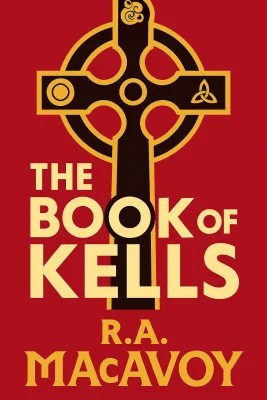
The Book of Kells
Categories
Fiction, Science Fiction, Historical Fiction, Fantasy, Science Fiction Fantasy, Historical, Ireland, Time Travel, Irish Literature, Historical Fantasy
Content Type
Book
Binding
Mass Market Paperback
Year
1985
Publisher
Bantam Books, Inc.
Language
English
ASIN
0553252607
ISBN
0553252607
ISBN13
9780553252606
File Download
PDF | EPUB
The Book of Kells Plot Summary
Introduction
# Through Celtic Spirals: A Journey Across Time and Sacred Art The bog mist clung to John Thornburn's cottage windows like fingers of the past, but nothing could have prepared him for what emerged from his bathroom that October morning. A naked girl, blood-streaked and wild-eyed, burst through a door that should have led nowhere, screaming in a language that sounded like Irish but felt older than memory itself. Her auburn hair whipped around wounds that spoke of Viking brutality, and clutched against her chest were fragments of carved stone that pulsed with an otherworldly light. Dr. Derval O'Keane arrived on horseback to find her quiet Canadian friend barricaded outside his own bedroom, trembling as he tried to explain the impossible. The medieval historian took one look at the stone fragments and felt her academic world tilt on its axis. These weren't museum pieces or careful replicas. They were genuine tenth-century artifacts, carved with spirals that seemed to breathe and shift in the lamplight. When the girl pressed her bloodied palm against John's tracing of the ancient cross pattern, reality cracked open like an egg, spilling them all into a world where Vikings still raided Irish monasteries and the old gods walked among mortals wearing the faces of saints.
Chapter 1: The Portal Opens: When Ancient Art Becomes Living Gateway
The transformation began with John's obsessive sketching. For weeks he had been tracing the spirals of an ancient Celtic cross, his pencil following patterns that seemed to guide his hand rather than obey it. The Uilleann pipes wailed from his stereo as he worked, drowning out the world beyond his cottage walls. Each spiral was perfect, identical to those carved by unknown hands centuries ago, and with each completed curve, something stirred in the space between worlds. When Ailesh burst from his bathroom, naked and screaming, John's first thought was that he had finally lost his mind. The girl couldn't have come through that window. It was painted shut, sealed with years of neglect. But the blood on her body was real, the terror in her hazel eyes genuine, and the stone fragments she clutched bore the same spiral patterns he had been tracing with such desperate precision. Dr. Derval O'Keane's arrival changed everything. The dark-haired professor dismounted from her massive gray gelding with the fluid grace of someone born to command, her riding boots clicking against the pavement like a countdown to revelation. She had known John for years, had brought him to Ireland to study illuminated manuscripts, had watched his brilliant artistic gift waste away in isolation and self-doubt. Now something had finally happened to shake his careful, frightened world. The girl called herself Ailesh, and when Derval spoke to her in carefully pronounced Old Irish, the terror in those eyes shifted to desperate hope. Her story poured out in archaic phrases that made Derval's academic heart race. Vikings had attacked her monastery, Ard na Bhfuinseoge. Her father Goban, the master stone carver, had thrown her against his greatest work, the cross of Saint Bridget, and somehow she had passed through solid stone into John's bathroom. As they tended to her wounds, John returned to his tracing with obsessive focus, and when Finbar Furey's pipes reached their crescendo, the air began to glow pink with otherworldly light.
Chapter 2: Stepping Through Time: Arrival in Medieval Ireland's Darkest Hour
They sent a chicken through first. Mrs. Hanlon's prize hen, with a string tied to its leg, pecked around the ancient grass for a moment before vanishing when they tried to pull it back. The string came through empty, and Derval cursed their carelessness. One Rhode Island Red loose in medieval Ireland. What paradoxes might that create? When Ailesh stepped through the glowing portal, Derval followed without hesitation. John had no choice but to join them when the girl grabbed his sleeve and pulled him into the light. The bathroom doorway became a limestone cross carved with spirals, and at its base lay Goban MacDuilta, his skull crushed by Viking axes. The master craftsman had died defending his greatest work, hammer still clutched in his stiffening fingers. The world they entered was both familiar and utterly alien. The hills matched the geography around Greystones, but they were covered in ancient forest. Black oak trees stretched to the horizon, broken only by rough tracks and the occasional wisp of smoke from distant settlements. The air itself felt different, cleaner and sharper, alive with possibilities their modern lungs had forgotten how to breathe. Ailesh keened over her father's body while Derval scouted the ruins of Ard na Bhfuinseoge. The monastery was a charnel house. Monks and nuns lay butchered where they had fallen, cattle slaughtered, the great hall collapsed in smoking ruin. But the Vikings hadn't left. Their dragon-headed longboats were drawn up on the shore, and armed men still prowled the devastation. When they tried to return through the cross, they found it shattered. Twenty Vikings had toppled the sacred stone, breaking it into fragments too heavy to move. The portal was destroyed, the way home sealed.
Chapter 3: The Monastery's Ashes: Discovering the Viking Massacre
The ruins of Ard na Bhfuinseoge rose from the hillside like broken teeth against the morning sky. What had once been a thriving center of learning now lay in smoking devastation. The round tower that had called the faithful to prayer was a blackened stump. The scriptorium where illuminated manuscripts had been lovingly created was nothing but charred timbers and ash. They found Labres MacCullen, the chief poet of Leinster, bleeding from sword wounds but still breathing. His young harper Caeilte lay beside him, beyond help. The poet's golden hair was matted with blood, but his eyes burned with the cold fire of a man who had seen too much and would not forget. As Derval worked to save his life, she catalogued the horror with her historian's mind. Bodies sprawled where they had fallen. Monks, craftsmen, children. The Vikings had been thorough in their destruction, dedicating every living soul to their god Odin. MacCullen stirred as she bound his wounds, his voice carrying the weight of ancient law even as his strength ebbed. He spoke of duty, of the need to reach Dublin and demand justice from King Olaf Cuarán. The poet's words carried supernatural force in this world. His voice could topple kings or raise armies. But first they had to survive, and the forest around them held too many shadows. Among the dead, Derval found evidence that some had escaped. Footprints leading away from the monastery, signs of desperate flight into the wilderness. The Vikings hadn't achieved total victory. Somewhere out there, survivors were running for their lives, carrying with them the precious knowledge that made Irish monasteries the envy of Europe. The trail led north toward Dublin, toward the court of the Norse king who ruled the greatest Viking stronghold in Ireland.
Chapter 4: Divine Intervention: Saint Bridget's Blessing and the Road to Dublin
They fled into the black oak forest, carrying the wounded MacCullen on a makeshift litter. The poet had recovered with supernatural speed, his wounds closing as if blessed by divine intervention. He spoke of his urgent business in Dublin, of King Olaf Cuaran and the delicate politics between Irish clans and Viking settlers. His presence changed their small band from refugees to something approaching a diplomatic mission, protected by ancient laws that made poets sacred throughout Ireland. As night fell, they built a small fire and roasted Mrs. Hanlon's chicken. The forest pressed close around them, ancient and watchful, while Viking chants echoed from the ruined monastery. Then she appeared. An old hag in a nun's habit, naked beneath her cloak, her withered body shameless in the firelight. She called herself Bride the Brewer and spoke in riddles about old ale and new. John fainted when she displayed herself to him, overcome by revulsion and something deeper. A terror of the feminine divine that his Christian upbringing couldn't process. But as the crone climbed the hill to leave them, she transformed. Her bent back straightened, her gray hair became golden fire, and around her danced all the creatures of earth and sea in patterns of living light. Saint Bridget herself, the ancient goddess-saint of Ireland, her face terrible and beautiful beyond description. Derval wept to see the Mother revealed. John's mouth filled with the taste of honey mead as artistic visions flooded his mind. Illuminated manuscripts more beautiful than any human hand could create. And Ailesh, who had seen only an old woman sharing their meal, woke the next morning to find every wound healed, her body unmarked by Viking violence. The miracle strengthened their resolve, but it also marked them as people touched by powers beyond the ordinary world.
Chapter 5: Confronting Power: The Poet's Challenge to King Olaf's Court
Dublin rose before them like a wooden fortress beside the dark waters of the Liffey. The city bustled with Norse merchants and Irish craftsmen, a crossroads of cultures bound together by trade and conquest. Ships crowded the harbor. Longships with dragon prows, trading vessels heavy with cargo from across the known world. This was the beating heart of Viking Ireland, where two civilizations met in an uneasy dance of commerce and conflict. King Olaf Cuarán held court in a great hall that resembled an upturned ship, its smoke-blackened timbers echoing with the voices of petitioners seeking justice. The king sat on his throne of narwhal tusks, carved ironically by Ailesh's own father, while courtiers and petitioners crowded the smoky space. Olaf was old, his golden beard clearly dyed, his once-powerful frame running to fat. But his eyes still held the cunning that had kept him alive through decades of Viking politics. MacCullen's formal challenge rang through the hall like a sword striking stone. He spoke in the ancient manner, his words carrying the weight of law and tradition. The massacre at Ard na Bhfuinseoge was not just a crime but a betrayal of sacred bonds between protector and protected. Justice demanded compensation, and if Olaf would not provide it, then he was no true king. The court erupted in nervous laughter as the king dismissed the poet's claims with casual cruelty. When Ailesh stepped forward to tell her story, to speak of her father's murder and her own violation, the king's men laughed at her shame. It was then that John saw the true face of power in this medieval world. Not the romanticized nobility of later stories, but the raw, brutal reality of men who took what they wanted and cared nothing for the suffering they caused. MacCullen began a fast on the very steps of the royal hall, the ultimate challenge to a ruler's legitimacy that could not be ignored or dismissed.
Chapter 6: Flight and Pursuit: Hunted Through the Irish Wilderness
The king's response came swiftly and brutally. Assassins struck at midnight, axes splintering the door of their host's house. Snorri the Icelander, a shipwright who had befriended John, fought with deadly skill. His sword pierced the first assassin while Hulda, their Saxon hostess, strangled another with her belt. John found himself wielding Ailesh's hammer, the same tool that had carved stone now crushing skulls. They fled through rain-soaked hills, a bedraggled company of scholars and warriors united by shared peril. Clorfíonn, the elderly judge who had sheltered them, abandoned her comfortable home to join their exile. Her legal knowledge made her as dangerous to Olaf as MacCullen's poetry, and age had not dimmed her defiance. The wilderness tested them in ways the city had not. Food ran short, and every sound in the forest might herald pursuit. Their enemies were not so easily fooled. Holvar Hjor, the Viking leader who had destroyed the monastery, tracked them with grim determination. His berserkers had tasted blood and wanted more. The forest that sheltered the fugitives also concealed their hunters, and the gap between predator and prey narrowed with each passing day. When they encountered war bands on the road, Derval's quick thinking and knowledge of history turned potential enemies into unwitting allies. The monastery of Domnach Sechnaill appeared in its valley like a jewel in a green setting, its round tower reaching toward heaven while humble buildings spoke of lives dedicated to prayer and learning. The abbot welcomed them with genuine warmth, offering sanctuary to all who sought it. But even this haven was not safe. The Vikings had followed their trail, driven by some dark compulsion that went beyond mere greed.
Chapter 7: The Final Stand: Battle at Domnach Sechnaill and the Choice Between Worlds
Dawn came like a blade across the Irish sky, revealing the full extent of their peril. Holvar's Vikings had surrounded the monastery completely, their weapons glinting in the early light. These were hard men, veterans of countless raids, and they had come to finish what they started at Ard na Bhfuinseoge. The Viking leader was a man possessed by his own twisted vision of divine purpose, having dedicated his victims to Odin, and the god demanded completion of the sacrifice. The battle began with words rather than weapons. MacCullen, dressed in the robes of a priest, rode out to face Holvar in single combat of poetry rather than swords. The two men traded verses like blows, each trying to summon the power of their respective gods. The Viking called upon Odin, the one-eyed god of war and death. The Irish poet invoked Christ and the ancient spirits of the land itself. When words failed, steel took their place. The monastery's defenders charged out to meet the Viking line. Monks with farming tools, Dublin cavalry on their small horses, and warriors like Snorri clashed in a collision of worlds that left the ground soaked with blood. John found himself in the heart of chaos, clinging to the back of the monastery's great black bull as it charged through enemy ranks. When he was finally thrown from his unlikely mount, John landed where young Delbeth had died defending his poet-master. Vikings charged toward him, their faces twisted with battle-fury, when he began to sing. Not complex melodies Derval had tried to teach him, but a simple Newfoundland sea-chanty his grandfather had sung. The familiar tune opened a gateway, and the green portal that appeared swallowed the charging Vikings completely, sending them stumbling through a doorway that led to the cold shores of Vinland, a thousand years in the future.
Summary
In the end, John chose to remain in medieval Ireland while Derval returned to the twentieth century, carrying with her the responsibility of preserving what they had witnessed. The quiet Canadian had found something in this brutal, beautiful world that his modern life could never offer. A place where art and faith were not mere abstractions but living forces that could literally reshape reality. His trembling hands, once uncertain, now moved with divine purpose across stone and parchment. The monastery bells rang out across the valley, calling the faithful to prayer and thanksgiving. The Vikings were gone, scattered across time and space by powers they could never understand. The old learning would survive, passed down through generations of scribes and scholars until it reached the modern world that John and Derval had left behind. In choosing love over safety, faith over certainty, John had helped ensure that the light of knowledge would never be extinguished, no matter how dark the times might become. Some bridges between worlds are meant to be crossed only once, but the patterns they reveal echo forward through all the centuries that follow, waiting for eyes that know how to see.
Best Quote
“Grabbed in the ass by fate," his father used to say about coincidences like this. If there were coincidences like this. If there were coincidences...” ― R.A. MacAvoy, The Book of Kells
Review Summary
Strengths: The book is praised for its historical accuracy and engaging storytelling, particularly in its depiction of 10th-century Ireland. It effectively explores Celtic traditions and offers a humorous and optimistic narrative. The inclusion of a Celtic deity adds depth to the story, and the novel provides an intriguing explanation for Viking artifacts in Canada. Weaknesses: Criticisms include poor writing quality, inconsistent point of view, underdeveloped and unlikeable characters, and a confusing storyline. Some readers found it slow-paced and difficult to engage with. Overall: The book receives mixed reviews, with some appreciating its historical depth and narrative style, while others criticize its execution and character development. It may appeal to those interested in Gaelic culture and historical fantasy but could disappoint readers seeking a more polished and engaging read.
About Author

R.A. MacAvoy
MacAvoy crafts immersive narratives that integrate historical detail with fantasy, focusing on the personal and moral journeys of characters. Her approach connects readers to unconventional forms of heroism, challenging formulaic tropes and emphasizing richly developed characters within complex, historical settings. Known primarily as an American fantasy author, MacAvoy brings a quirky and well-written style to her work, often drawing on Celtic and Taoist themes for her storytelling canvas.\n\nHer debut novel, "Tea With The Black Dragon", exemplifies her thoughtful approach to fantasy, showcasing her ability to blend historical elements with fantastical narratives. Meanwhile, her "Damiano" trilogy, set in post-Black Death 14th-century Italy, further illustrates her unique voice, focusing on personal and smaller-scale adventures rather than epic tales. This methodology allows readers to explore nuanced themes of heroism and morality, making her books both demanding and rewarding for those who engage with them.\n\nThis bio highlights how MacAvoy's writing benefits those seeking a richly rewarding reading experience through complex narratives. Her longest work, "The Book of Kells", explores Irish/Celtic-inspired fantasy, solidifying her influence in genre fiction. MacAvoy’s contributions to the field are not only evident in her literary achievements but also in her recognition with the John W. Campbell Award for Best New Writer in 1984. Her works continue to resonate with readers who appreciate detailed historical scholarship intertwined with fantasy.
Read moreDownload PDF & EPUB
To save this Black List summary for later, download the free PDF and EPUB. You can print it out, or read offline at your convenience.
The Book of Kells
by R.A. MacAvoy
