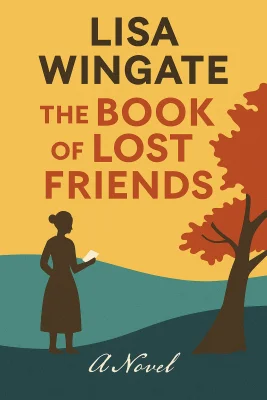
The Book of Lost Friends
Categories
Fiction, Audiobook, Historical Fiction, Adult, Family, Book Club, Historical, African American, Adult Fiction, Civil War
Content Type
Book
Binding
Hardcover
Year
2020
Publisher
Ballantine Books
Language
English
ISBN13
9781984819888
File Download
PDF | EPUB
The Book of Lost Friends Plot Summary
Introduction
# Lost Friends: Echoes of Connection Across Time The nightmare always begins the same way. Six-year-old Hannie stands in a muddy slave trader's yard, watching her family torn apart like pages from a book. Her mother Mittie pleads desperately as buyers circle, selecting human merchandise with the casual indifference of farmers choosing livestock. Hardy sold to Big Creek. Het to Jatt. Baby Rose ripped from their mother's arms while Mama fights and screams. Each name burns into Hannie's memory like a brand, each destination a thread in the tapestry of their shattered family. Now eighteen and working as a sharecropper on the same Louisiana plantation where she was born, Hannie Gossett wakes from these visions clutching three blue glass beads—all that remains of her grandmother's African legacy. The year is 1875, and freedom has come with its own cruel mathematics. Legal emancipation cannot heal the wounds of separation, cannot restore the millions of families scattered like seeds across the South. When a mysterious mixed-race girl named Juneau Jane arrives at Goswood Grove with tales of danger and missing persons, Hannie finds herself drawn into a perilous journey that will transform her from a frightened sharecropper's daughter into something far more dangerous: a woman who refuses to let the lost remain forgotten. Their quest will carry them through the treacherous backwaters of Reconstruction-era Texas, armed with nothing but courage and a growing collection of newspaper advertisements—desperate pleas from freed slaves searching for their scattered loved ones in the pages of "Lost Friends" columns.
Chapter 1: Chains of Separation: When Families Are Torn Apart
The cloaked figure moves through moonlight like a ghost seeking vengeance. Hannie watches from her cabin window as the woman approaches Goswood Grove, her long dark hair flowing free in the night breeze. Something about this midnight visitor promises trouble, the kind that sweeps away carefully constructed lives like a hurricane tears through cotton fields. Morning brings revelation. The stranger calls herself Juneau Jane, claims to be Old Master William Gossett's daughter by a Creole woman in New Orleans. Her gray eyes hold secrets that make Hannie's skin prickle with recognition, and her French accent wraps around English words like silk around steel. This is no ordinary runaway seeking shelter. Juneau Jane carries a letter speaking of danger, of Old Master's flight to Texas, of his legitimate daughter Missy Lavinia taken by men who deal in human misery. The plantation's account books have vanished along with the contracts promising ten years of honest work would earn the freedmen their own land. Dreams built on sweat and hope crumble like morning frost under the sun's harsh light. Hannie finds herself standing in the ruins of other people's futures. Tati, Jason, John—all the former slaves who stayed to work the shares—face uncertainty as vast as the Texas sky. Without those contracts, they are nothing more than squatters on land that has drunk their ancestors' blood for generations. The decision comes to Hannie like lightning strikes a tree—sudden, inevitable, transforming. She will leave the only home she has ever known. She will cross into unknown territories where desperate men make their own laws. She will find Old Master and bring his children home, because someone must hold the threads together when the world tries to tear them apart. The three blue beads at her throat seem to pulse with ancestral approval, connecting her to a grandmother who survived the Middle Passage and a future she can barely imagine.
Chapter 2: The Book of Lost Friends: Collecting Voices of the Scattered
The abandoned church rises from the Louisiana swamp like a monument to forgotten prayers. Its walls are papered with pages from the Southwestern Christian Advocate, each sheet containing dozens of small advertisements that make Hannie's heart clench with recognition. These are the Lost Friends notices—desperate pleas from people searching for family members sold away during slavery's long nightmare. Juneau Jane, educated and able to read, begins copying the names into a ledger book with careful script. "Information Wanted of Caroline Dodson, who was sold from Nashville, Nov. 1st, 1862, by James Lumsden to Warwick, a trader, who said he was going to Mobile, Alabama. She had with her two children, Robert and Betty." Each entry represents a family torn apart, a heart still hoping against hope. The rescue that brought them here nearly cost three lives. Hannie had followed Juneau Jane and Missy Lavinia to a New Orleans river landing, watched in horror as the girls disappeared into wooden trunks carried by dangerous men. The sounds from those boxes were not animal noises, despite what the captors claimed. Days of fevered flight through mosquito-infested swamps led them to this sanctuary, where Missy Lavinia rocks in catatonic silence, her mind shattered by whatever horrors she endured. Soon other travelers begin approaching their small camp, pressing coins into Hannie's palm as they share their stories. "My mammy's name was July Schiller," whispers one man. "You tell their names for me everyplace you go, I'd be grateful." Another speaks of brothers sold south twenty years ago, marched away in a trader's coffle to settle a debt. The names multiply like prayers: Rutha, Lolly, Persha, Solomon, Flora, Henry, Isom, Paul. The Book of Lost Friends takes on a life of its own, becoming their sacred charge. Each name represents not just loss, but the possibility of reunion. In a world that sought to reduce people to property, the book insists on their humanity, their worth, their right to be remembered and mourned and sought after. Hannie begins to understand that her own loss is part of a vast constellation of grief, that slavery's end brought legal freedom but could not heal the emotional chains that still bind millions of souls.
Chapter 3: Dangerous Crossings: Journeys Through Hostile Territory
The steamboat Katie P churns through Louisiana's muddy arteries, carrying its cargo of dreamers and predators toward Texas. Hannie has bound her breasts and cut her hair, transforming herself into a boy named Hannibal. The disguise feels strange but necessary—the world shows little mercy to young women traveling alone, especially those with dark skin and dangerous knowledge. The boat's passengers whisper in fear of the man they call Lieutenant, a scarred Confederate with an eye patch who commands a group of diehards refusing to accept defeat. They speak of British Honduras, of a new slave empire rising from the ashes of the old. They deal in human cargo, and Missy Lavinia bears the scars of their attention, rocking endlessly in traumatized silence. When Moses, the Lieutenant's tall black enforcer, corners Hannie in the shadows, she expects death. Instead, he presses close and whispers urgent words: "You swim?" Before she can answer, he throws her overboard into the black water. As the paddle wheel churns past her head, Hannie realizes this is not murder but salvation—Moses has given her the only gift he can, a chance to escape before worse things happen. She surfaces gasping, her grandmother's blue beads torn away by the current and lost forever in the muddy depths. The loss feels like losing her ancestors all over again, severing the last tangible connection to a family scattered by slavery's cruel mathematics. But survival demands she keep swimming, keep fighting, keep believing that somewhere in the vast expanse of Texas, answers wait. The riverbank offers temporary refuge but no safety. Confederate deserters and federal troops patrol these waters with equal brutality, and a young black woman alone faces dangers that make drowning seem merciful. Hannie wraps herself in stolen clothes and begins walking west, following the river toward an uncertain reunion. The Book of Lost Friends, miraculously dry in its oiled pouch, becomes her compass and her prayer book, each name a promise that love refuses to surrender to circumstance.
Chapter 4: Unexpected Allies: Finding Help in Dark Places
Fort Worth sprawls before them like a fever dream of civilization, all mud and ambition and barely controlled violence. Hannie has somehow reunited with Juneau Jane and the broken Missy Lavinia, but their quest seems hopeless in this frontier town where law and lawlessness dance together like drunken lovers. The jail cell stinks of desperation and unwashed bodies, but it offers shelter from worse fates. Hannie finds herself imprisoned after a street altercation, separated from her companions and facing a future as bleak as a Texas winter. Then a familiar face appears at the barred window—Gus McKlatchy, the freckled boy from the riverboat, grinning like salvation itself. He has saved her grandmother's blue beads from the deck where Moses threw her overboard, carrying them across Texas because he promised to help her find her people. The three glass orbs, worn smooth by generations of hands, feel warm in her palm as he presses them through the bars. They connect her to a lineage stretching back to Africa, giving her strength for the trials ahead. The freight company needs drivers for the dangerous run south through Indian territory, and Gus has convinced them to bail Hannie out of jail. The crew is a brotherhood of outcasts—colored soldiers, Indian scouts, and white men running from their pasts. They teach her to handle a rifle, to read the horizon for signs of trouble, to survive in a land where death rides the wind like a hunting hawk. Pete Rain, their mixed-blood wagon master, shares stories that make Hannie's blood run cold. Tales of the Marston Men, a growing army of Confederate fanatics who kidnap and kill to fund their dreams of a new slave empire. General Marston promises his followers a fresh start in Central America, built on the bones of anyone who stands in their way. The freight wagons offer escape from Fort Worth's immediate dangers, but they are rolling toward something far worse. As they prepare to leave, Hannie spots the Lieutenant conducting mysterious business in the town's shadowy alleys. Moses prowls nearby with deadly purpose, his scarred face revealing nothing of his intentions. The past refuses to stay buried, following them like a bloodhound on a scent trail.
Chapter 5: Confronting the Past: When Hidden Truths Surface
Fort McKavett rises from the prairie like a monument to federal power, its limestone walls sheltering buffalo soldiers and broken dreams. They find Old Master William Gossett dying in the post hospital, his body ravaged by infection from a gunshot wound. The man who once owned four thousand acres lies beneath a thin sheet, reduced to rattling breath and fevered whispers. Juneau Jane collapses beside the bed, her careful composure finally cracking like ice in spring. This is her father, the man who loved a Creole woman enough to risk scandal but not enough to marry her. His gray eyes, so like her own, flicker with recognition before sliding away into delirium. Years of searching have led to this moment of bitter reunion. The story emerges in fragments from the post surgeon and wounded soldiers. Old Master was bushwhacked while being transported from Mason jail, where he had been held for riding a stolen army horse. The attack killed one soldier and left him with a bullet in his leg that festered until poison claimed his blood. He had been chasing ghosts across a thousand miles of hostile territory, driven by a father's love for a son who never deserved it. The arrival of Deputy U.S. Marshal Elam Salter changes everything. The man Hannie knew as Moses stands revealed as a federal lawman, his dark skin bearing ritual scars from his time among the Indians. He had infiltrated the Marston Men to bring down their leader, risking his life to gather evidence of their crimes. His presence stirs something in Hannie she has never felt before—a hunger that has nothing to do with food, a restlessness that makes her skin burn when he looks at her. Elam brings news that should end their quest. Lyle Gossett, the son Old Master sought, is dead, killed by Texas Rangers six weeks earlier. The old man has been pursuing a phantom, his paternal devotion blinding him to his son's true nature. But death has not finished with them yet, and the past comes riding out of the morning mist in familiar, terrible forms.
Chapter 6: Sacrifice and Courage: The Price of Standing for Others
The ambush comes at a river crossing, bullets whining through canvas and wood while horses scream in terror. Jep Loach emerges from Hannie's nightmares made flesh—the slave trader who destroyed her family years before, his face scarred beyond easy recognition but his voice carrying the same cold cruelty that haunts her dreams. He has brought allies: young Lyle Gossett, very much alive despite the Rangers' reports, and a gang of Marston Men drunk on dreams of empire. They want the Gossett daughters for leverage, for ransom, for the sick pleasure of breaking what remains of an old enemy's bloodline. War and violence have twisted them into something less than human, creatures that feed on suffering and call it justice. Soldiers fall around them, their blood mixing with muddy water as Jep Loach reveals the depth of his hatred. He blames Old Master for his disfigurement, for years of exile and pain. Now he will claim Goswood Grove through the simple expedient of murdering everyone who stands between him and the inheritance. His laughter echoes across the water like the cry of carrion birds. But Missy Lavinia, broken and silent for so long, finds her voice in violence. The derringer hidden in her reticule speaks once, twice, and Jep Loach crumples to the earth with his dreams of vengeance. Young Lyle dies beside him, shot by his own greed when family loyalty proves less important than gold. The girl who once terrorized slave children with her tantrums has found courage enough to save them all. In the sudden silence that follows, Hannie kneels beside Missy's still form and understands that some victories cost everything. The sacrifice will echo through generations yet unborn, a reminder that heroism often comes from the most unexpected sources. Elam Salter gathers the survivors, his marshal's badge gleaming in the afternoon sun as he surveys the carnage. The Marston Men are finished, their leader dead and their dreams scattered like smoke on the wind.
Chapter 7: Reunion and Recognition: Connecting the Lost and Found
Austin City sprawls along Waller Creek like a promise half-kept, all ambition and rough edges in the Texas heat. Hannie walks its dusty streets with The Book of Lost Friends clutched against her chest, following the thread of an old story toward an uncertain reunion. The Irish horse thief's tale had seemed like desperate fiction—a little white girl wearing three blue beads, serving water in a creek-side café. But truth has a way of surviving in the most unlikely places, and her grandmother's beads have traveled their own long road to this moment. She finds them both at the well behind the traveler's hotel: the red-haired child and the woman whose face has lived in Hannie's memory for fifteen years. Mary Angel has grown tall and strong, her copper skin glowing with health, her own three blue beads catching the morning light. The reunion is everything Hannie dreamed and nothing she expected. Tears and laughter mingle with the sound of running water as three generations of women hold each other in the Texas sun. Mary Angel married well, built a life of dignity and purpose, never stopped hoping that her scattered family might someday find each other again. The years have been kind to her, blessing her with children and a husband who treats her with respect. The sweetest discovery waits in the hotel's kitchen, where an old woman stirs soup with hands that remember slavery's chains. Mama has survived the trader's yard, borne another daughter to a white man who treated her with something approaching kindness, never forgotten the children stolen from her arms. Her embrace feels like coming home after a lifetime of wandering. The Book of Lost Friends has served its purpose, bringing together what slavery tore apart. But Hannie understands now that her real work is just beginning. There are thousands of other names in that book, thousands of other families still searching. She will carry their stories across the country, speak their names in churches and town squares, refuse to let them be forgotten. Love has proven stronger than the forces that would tear families apart.
Chapter 8: Enduring Legacy: How Stories Bridge Generations
Years later, when the stories are told and retold, people remember the day Hannie Gossett Salter returned to Louisiana. She comes not as the frightened sharecropper's daughter who fled in the night, but as a woman transformed by love and loss and the long journey between them. Elam survived his injuries, though he will never again ride the frontier trails. They married in Austin, traveled the lecture circuit together, sharing the story of the Lost Friends with audiences hungry for tales of reunion and redemption. The Carnegie Library rises like a cathedral of learning, its marble steps worn smooth by the feet of those seeking knowledge. In its cornerstone lies a time capsule filled with documents and photographs, letters and memories that will wait a century before seeing light again. The Book of Lost Friends rests there too, its pages yellow with age but its message eternal. Juneau Jane claimed her inheritance at last, not the grand plantation her father promised, but forty acres of good bottomland where she built a school for children whose parents were denied education. She never married, never bore children of her own, but mothered generations of students who carried her lessons into an uncertain future. Her classroom became a sanctuary where the past was honored and the future was shaped by knowledge rather than prejudice. Hannie stands in the library's shadow, watching children play where once her ancestors labored in chains. The three blue beads at her throat catch the afternoon sun, connecting her to a grandmother she barely knew and a future she can hardly imagine. She thinks of Missy Lavinia, whose sacrifice made this moment possible, and of all the names still waiting in the book's pages. The threads that bind families together prove stronger than the forces that would tear them apart. Each story shared from the Lost Friends brings someone one step closer to wholeness, one name closer to reunion. In a world that sought to reduce people to property, the book insists on their humanity, their worth, their right to be remembered and mourned and sought after.
Summary
The parallel journeys of Hannie Gossett and the Lost Friends reveal the enduring power of love to transcend the cruelest circumstances. From the slave trader's yard in Louisiana to the reunion at Austin's creek-side hotel, Hannie's quest transforms her from a frightened girl into a woman who refuses to let the lost remain forgotten. Her grandmother's blue beads, torn away and miraculously restored, become symbols of connection that survive even when families are scattered like seeds across a hostile continent. The Book of Lost Friends serves as more than a collection of names—it becomes a sacred text, a testament to the unbreakable bonds that connect us across time and distance. Each advertisement placed by a searching parent or sibling represents a refusal to accept loss as final, a declaration that some things are too important to forget. When Hannie carries these stories across the country, speaking their names in churches and town squares, she joins an unbroken chain of memory that stretches from slavery's darkest days toward a more hopeful future. The threads that bind us prove stronger than the forces that would tear us apart, and in that strength lies our hope for generations yet to come.
Best Quote
“We die once when the last breath leaves our bodies. We die a second time when the last person speaks our name.’ The first death is beyond our control, but the second one we can strive to prevent.” ― Lisa Wingate, The Book of Lost Friends
Review Summary
Strengths: The review highlights the book's foundation on true historical facts and records, emphasizing its rich depiction of post-Civil War Louisiana and Texas. The narrative is praised for its depth in humanity and history, with each chapter beginning with authentic "Lost Friends" newspaper ads. The characters are described as believable, and the dual timelines add depth to the story. The novel is noted for being both captivating and educational, bringing history to life. Weaknesses: The review mentions a slow start to the book, suggesting that the beginning may not immediately engage all readers. Overall: The reader expresses a positive sentiment, recommending the book for its engaging storytelling and educational value. The novel is appreciated for its ability to intertwine historical facts with a compelling narrative, making it a worthwhile read.
About Author

Lisa Wingate
Wingate delves into the complexities of family dynamics and personal resilience, drawing readers into narratives rich with emotional depth. Her work often incorporates historical events, offering a lens through which the power of love and hope is explored. For example, "Before We Were Yours" delves into the Tennessee Children’s Home Society scandal, providing not only a compelling storyline but also historical insight, which appeals to a broad audience interested in human resilience.\n\nLisa Wingate's approach to writing is marked by her ability to weave real-life stories into fiction, which makes her books both thought-provoking and accessible. This method of storytelling engages readers by presenting familiar themes in a new light, thereby enriching their understanding of historical and personal struggles. Her novels, like "The Book of Lost Friends" and "Shelterwood", are testament to her skill in creating narratives that are not just stories but explorations of deeper truths. These works are well-suited for readers seeking narratives that entertain while prompting reflection on larger societal issues.\n\nRecognized for her contributions to literature, Wingate has been the recipient of awards such as the Goodreads Choice Award for Historical Fiction in 2017 and was named among the 2023 Distinguished Alumni of Oklahoma State University. Her books have been selected for community One Book reads and are published in over 40 languages, reflecting her global reach. This international recognition underscores her impact as an author whose works resonate with readers worldwide, offering both entertainment and insight into the human spirit.
Read moreDownload PDF & EPUB
To save this Black List summary for later, download the free PDF and EPUB. You can print it out, or read offline at your convenience.
The Book of Lost Friends
by Lisa Wingate
