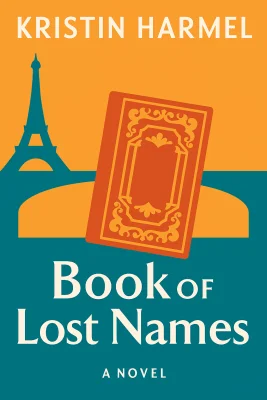
The Book of Lost Names
Categories
Fiction, Audiobook, Historical Fiction, Romance, Book Club, Historical, Holocaust, World War II, Books About Books, War
Content Type
Book
Binding
Hardcover
Year
2020
Publisher
Gallery Books
Language
English
ISBN13
9781982131890
File Download
PDF | EPUB
The Book of Lost Names Plot Summary
Introduction
# The Book of Lost Names: Echoes Across Time The newspaper trembles in Eva's weathered hands as she stares at a photograph that resurrects sixty years of buried memories. There, displayed in the New York Times, sits a leather-bound volume she thought lost forever—*Epitres et Evangiles*, an eighteenth-century book of Catholic prayers that once held the most dangerous secrets of World War II. The German librarian holding it speaks of mysterious codes hidden within its pages, dots and stars scattered across ancient text like constellations of meaning he cannot decipher. But Eva knows exactly what those markings mean. She created them herself in a hidden church library in occupied France, encoding the real names of Jewish children whose identities had been erased to save their lives. Each tiny mark represents a child who survived by becoming someone else, their true selves preserved only in this sacred text that she called the Book of Lost Names. Now, at seventy-seven, this quiet Florida librarian must decide whether to reclaim the past she spent decades trying to forget, or let those names remain lost forever in the shadows of history.
Chapter 1: The Photograph That Changed Everything: A Librarian's Discovery
Eva Abrams stands frozen behind the circulation desk of the Winter Park Library, her coffee growing cold as she studies the newspaper photograph. The book stares back at her from the page—worn leather binding, gilded spine, that distinctive corner where the cover had begun to peel. Otto Kühn, the German librarian featured in the article, holds it like a puzzle he cannot solve, speaking of the mysterious markings scattered throughout its pages. The memories crash over her like a tide she has spent sixty years holding back. A young woman fleeing Paris with forged papers. A Catholic priest who opened his church to refugees. The brilliant forger named Rémy whose kiss had tasted like hope and whose disappearance had shattered her world. And the children—dozens of Jewish children whose real names she had hidden in that ancient book, ensuring they would not be lost to history even as their identities were stripped away. Jenny Fish, her assistant librarian, appears at her shoulder with characteristic suspicion. "Mrs. Abrams, are you talking to that newspaper?" But Eva barely hears her. The past is calling, and this time she will not turn away. Within hours she books a flight to Berlin, leaving behind her comfortable American life to reclaim the secrets buried in those coded pages. The girl who once believed in fairy tales and happy endings had learned that some stories do not end—they simply wait, patient as ancient prayers, for the right moment to continue.
Chapter 2: From Student to Fugitive: Escape from Occupied Paris
The knock comes at four in the morning, sharp and insistent in the darkness of their Marais apartment. Eva Traube presses her face to the neighbor's window and watches in horror as French police drag her father from their home. Leo Traube, typewriter repairman and gentle dreamer, disappears into a truck filled with other Jews—part of the Vel d'Hiv roundup that will claim thirteen thousand lives in a single night. Her mother Mamusia collapses in grief, but Eva feels something harder crystallizing in her chest. The false papers she hastily forged using skills learned from watching her father repair machines get them out of Paris, but barely. Now they are refugees in their own country, traveling south with identities stolen from neighbors who betrayed them without hesitation. The train to Aurignon wheezes through the French countryside, carrying them deeper into what had once been the free zone. Eva clutches the crude documents she created while her mother stares eastward toward Poland, toward the camps where Leo has been sent. "He will not come back," Mamusia whispers as darkness falls. "He will die there." The words hang between them like a curse that will prove prophetic. Aurignon emerges from the hills like something from a fairy tale, its stone buildings crowned with red clay tiles, window boxes overflowing with geraniums despite the war. The town seems untouched by the darkness consuming France, but Eva has learned not to trust appearances. When Madame Barbier tests her mother's claimed Russian identity with rapid-fire questions, Eva holds her breath. One wrong answer will doom them both. Somehow they pass, and as Eva falls asleep in their small room, she does not know this mountain town will become the crucible where she transforms from frightened student into something far more dangerous.
Chapter 3: The Sacred Forge: Creating Lives in Hidden Sanctuaries
Père Clément limps through the shadows of Saint-Alban church like a man carrying invisible weights. The Catholic priest has kind eyes behind wire spectacles, but Eva senses steel beneath his gentle manner. When he leads her into the hidden library behind the altar, surrounded by centuries-old books and stained glass windows that paint the walls in jeweled light, she feels as though she has stepped into another world. "We need someone with your particular talents," he says simply, gesturing to blank documents spread across the wooden table. Identity cards, travel permits, birth certificates—all the papers required to transform a hunted Jew into a French citizen. Eva's crude forgeries from Paris impressed him, but what he asks for requires precision that can fool German inspectors trained to spot fakes. Then Rémy arrives, dark-haired and sharp-tongued, with hazel eyes that seem to see straight through her careful defenses. He is already the church's forger, a chemistry student turned document artist who has perfected techniques for erasing official ink with lactic acid. Their first meeting explodes in wounded pride and territorial disputes, but gradually they find their rhythm, working side by side in the candlelit library. The work consumes her. Hour after hour, she bends over the table with art pens and chemicals, learning to replicate the exact pressure of official stamps, the precise shade of government ink. Her fingers grow stained with blue and black, her eyes burn from strain, but with each completed document she feels herself growing stronger. These are not just papers—they are lifelines thrown to drowning people. "You are not bad for an amateur," Rémy admits grudgingly after watching her reproduce a perfect prefecture stamp. Eva bristles at the condescension, but she cannot deny the electricity that sparks between them whenever their hands accidentally touch over the work.
Chapter 4: Codes of Memory: Preserving Names in Ancient Pages
The children arrive in winter, hollow-eyed and silent, their parents already swallowed by the Nazi machine. Eva watches them being shuffled into hiding places throughout Aurignon—attics, cellars, farmhouses—their Jewish identities scrubbed away and replaced with Christian names and fabricated histories. It is necessary for survival, but it feels like a second death. "Someone has to remember who they really are," Eva insists to Père Clément as she holds the list of their true names. Frania Kor, whose name means "free," reduced to "Anne" on false papers. Johann, the chess-playing boy, becomes "Octave." Each transformation is a small erasure, necessary but devastating. Rémy understands her anguish in a way that surprises her. Working through the night, he devises an ingenious solution—a code hidden within the pages of *Epitres et Evangiles*, an ancient book of Catholic epistles that no one would think to examine. Using the Fibonacci sequence, they begin marking letters with tiny dots and stars, encoding the children's real names in a pattern so subtle it appears to be random aging of the old pages. "Page one is only for you," Rémy says softly as Eva inscribes her own name in the code. "Page two is only for me." The intimacy of the moment makes her breath catch. They are creating something precious together—a secret record that will outlast the war, ensuring these children will not be lost to history. Night after night, they work by candlelight, their shoulders touching as they bend over the ancient book. Eva traces the letters while Rémy fills in the false documents that will carry the children to safety. Each name they preserve is an act of defiance against the Nazi machinery of erasure. The book grows heavier with secrets, its pages filled with invisible stories of survival and loss that will outlive them all.
Chapter 5: Love in the Shadows: Hearts Divided by War and Faith
Eva's mother watches her with narrowing eyes across their small dinner table, suspicion radiating from every line of her body. "You are throwing away a God-given opportunity," Mamusia declares when Joseph Pelletier appears in Aurignon as a Resistance leader. Handsome, Jewish, from a good family they knew in Paris, he is everything a mother could want for her daughter. But Eva's heart has already chosen its path. Every day spent working beside Rémy in the hidden library has wound invisible threads between them, binding her to this Catholic boy who makes her laugh even in the darkest moments. When he kissed her on a train to Paris—ostensibly to fool a suspicious German soldier—the world had shifted on its axis. She tasted possibility in that kiss, a future she never dared imagine. "You are forgetting who you are," her mother accuses, watching Eva return late from the church each night, ink-stained and glowing with purpose. "Your father and I sacrificed everything to give you a Jewish life, and you are throwing it away for a papist." The words cut deep because they carry truth—Eva is changing, becoming someone her parents would not recognize. The tension crystallizes when Joseph arrives for dinner, charming and confident, speaking easily of his connections and his ability to inquire after Eva's deported father. He is everything Rémy is not—safe, appropriate, approved. When he kisses her goodnight, gentle and respectful, Eva feels nothing but guilt. Her heart belongs to the wrong man, and everyone seems to know it except her. In the church library, surrounded by the tools of their dangerous trade, Eva and Rémy dance around their growing attraction. Their hands brush as they pass documents, their eyes meet across the candlelit table, but always they pull back. She is Jewish, he is Catholic. She has obligations to her family, he has duties to the Resistance. Love is a luxury they cannot afford in a world where tomorrow is never guaranteed. Yet the heart wants what it wants, regardless of faith or family or the fury of war.
Chapter 6: Betrayal and Sacrifice: When Networks Crumble
The news arrives like a blade to the heart: Joseph has been captured by the Germans. But worse follows—faced with execution, he chooses collaboration over death, trading Jewish lives for his own survival. The charming boy from the Sorbonne becomes the monster who will destroy everything they have built. Père Clément moves swiftly to evacuate the children, but it is too late for some. Madame Barbier, who sheltered Eva and her mother, disappears into German custody. Mamusia, caught in the wrong place at the wrong time, refuses to reveal Eva's location even under interrogation. Her final words, according to a sneering French gendarme, are about being proud of her daughter's courage. Eva learns of her mother's execution too late to save her, too late for forgiveness, too late for anything but grief that will follow her across decades. The woman who sacrificed everything to keep her daughter's Jewish identity alive dies protecting the girl who fell in love with a Catholic forger. The irony tastes like ashes in Eva's mouth. Rémy vanishes into the forest with the remaining Resistance fighters, leaving only a hastily scrawled note and a promise to find Eva when peace comes. She clutches the Book of Lost Names to her chest, knowing it may be all she has left of their work together. The ancient prayers now hold not just the names of saved children, but the story of a love that bloomed in darkness and may not survive the light. The network they built crumbles like paper in rain, but the names remain. Hidden in dots and stars across centuries-old text, the children's identities wait patiently for someone to remember them. Eva does not yet know she will spend sixty years believing both Rémy and the book are lost forever, or that both will find their way back to her when she needs them most.
Chapter 7: The Atlantic Crossing: Building New Lives from Grief
Paris in 1946 tastes like disappointment and broken promises. Eva waits on the steps of the Mazarine Library every day for two years, hoping against hope that Rémy will appear as he promised. Père Clément tells her gently that Rémy died in June 1944, killed while confronting a collaborator. The Book of Lost Names has been looted by fleeing Germans, taking with it the secret message Eva left for Rémy—her coded confession of love that he will never read. Louis Abrams finds her there one autumn morning, weeping over a ghost. The kind American tourist offers her coffee, then conversation, then something she thought impossible—a future. He speaks of Florida sunshine and fresh starts, of libraries that need librarians and a country that does not ask too many questions about the past. When he proposes six months later, Eva accepts not from love but from exhaustion. She has spent too many years fighting, too many nights remembering. The ship to America carries her away from everything she has ever known. She stands at the rail watching France disappear into the horizon, her hand resting on her still-flat belly where Louis's child grows. The girl who forged documents to save Jewish children becomes a woman who will raise an American son, her wartime heroism buried beneath decades of deliberate forgetting. In Winter Park, she builds a quiet life among books and routines. She learns to love Louis in her way, bears him a son named Ben, becomes someone else entirely. The forger who saved hundreds of children becomes a librarian who recommends mysteries to retirees and helps students with research papers. Only sometimes, in dreams, does she return to that candlelit church where a dark-haired boy taught her that love could bloom even in the darkest soil. The past becomes a country she visited once, long ago, when she was young and brave and foolish enough to believe that love conquered all. She does not speak of it, does not write of it, does not let herself remember the weight of ancient books or the sound of Rémy's laugh. Some stories are too dangerous to tell, even to yourself.
Chapter 8: Return to Berlin: When Lost Books Reveal Living Hearts
Sixty years later, a newspaper photograph changes everything. Eva recognizes her lost book in a German library, its coded secrets still intact. Against her son's protests, she flies to Berlin, determined to decode the names one final time. Otto Kühn, the young German librarian, welcomes her with genuine remorse for his country's crimes and eager curiosity about the mysterious markings. But as Eva opens the familiar leather cover, her hands trembling with age and emotion, she discovers something impossible. The book contains not just her old messages but new ones—dots and stars that were not there before. Someone else has been writing in their secret code, someone who knew their system, someone who lived. A voice calls her name in French outside the library. She turns to see an elderly man with white hair and familiar hazel eyes, and the years collapse like paper walls. Rémy survived after all—wounded, hospitalized in England, tangled in bureaucratic delays that kept him from returning until she had already fled to America. They have spent sixty years apart, each believing the other dead, each carrying a love that never dimmed. "I waited on those library steps until 1950," he tells her as they sit in a Berlin café, their hands touching across the small table. "Every day for four years. Then I found the book in a flea market and began adding my own messages, hoping somehow you would see them." His fingers trace the lines time has carved around her eyes. "I never stopped believing you were alive somewhere." The Book of Lost Names, which began as a desperate attempt to preserve children's identities, becomes the vessel for their own reunion. Eva learns that some stories do not end—they simply wait, patient as ancient prayers, for the right moment to continue. In the shadow of Berlin's library, two lovers separated by war and time finally decode their last message, written not in dots and stars but in the simple miracle of still being alive to find each other again.
Summary
The book returns to America with Eva, but its real treasure is not the coded names of forgotten children. It is proof that love, like memory, can survive any attempt at erasure. In a world that tried to reduce people to numbers and erase entire populations, Eva and Rémy discovered that the most powerful resistance is remembering—remembering names, remembering faces, remembering that every person contains multitudes worth preserving. Their Book of Lost Names becomes, in the end, a book of found souls. The children whose identities they preserved in ancient prayers grew up to have children of their own, carrying forward the names that Eva and Rémy saved from oblivion. The love story that began in a hidden church library finds its epilogue in a Berlin café, proving that some bonds transcend time, distance, and even death itself. In an age when identity feels fluid and memory seems fragile, their tale reminds us that the stories we preserve today become the hope that sustains tomorrow.
Best Quote
“Once you’ve fallen in love with books, their presence can make you feel at home anywhere, even in places where you shouldn’t belong.” ― Kristin Harmel, The Book of Lost Names
Review Summary
Strengths: The review notes that the audiobook narration was smooth and clear, which facilitated the listening experience. The reviewer also appreciated that the author did not manipulate emotions excessively, a common pitfall in WWII stories. Weaknesses: The reviewer found it difficult to connect with the story and characters, particularly criticizing the protagonist Eva's lack of depth and indecisiveness. The portrayal of Eva's mother was deemed unrealistic and irritating, detracting from the story. Additionally, the romance subplot was considered overly central and unengaging. The book was perceived as lacking originality and depth within its genre. Overall: The reader expressed disappointment, finding the book unoriginal and lacking in complexity. Despite some positive elements, the reviewer would not recommend it for those seeking innovation in WWII narratives.
About Author

Kristin Harmel
Harmel investigates the profound narratives of resilience and identity through historical fiction, often set against the backdrop of World War II. Her books, such as "The Book of Lost Names" and "The Forest of Vanishing Stars," draw on true stories and meticulous research, highlighting the experiences of Jewish refugees and the challenges they faced. Harmel’s commitment to depicting human connection during adversity allows readers to explore themes of survival and hope. This approach not only deepens the emotional impact of her work but also provides a lens through which historical events are humanized and understood in new ways.\n\nWhile Harmel's transition from journalism to fiction writing began during a break from her work at PEOPLE magazine, it was her early career as a sportswriter that laid the foundation for her storytelling skills. Her professional journey includes contributions to various publications, illustrating her versatility as a writer. The evolution of her career from sports reporting to acclaimed novelist underscores a dedication to capturing the stories of ordinary individuals facing extraordinary circumstances. As an author, Harmel has achieved significant recognition, with her novels being translated into over 30 languages, appealing to a global audience that values narratives of perseverance.\n\nThe reader benefits from Harmel's ability to weave historical facts with engaging storytelling, providing both educational and emotional experiences. Her books serve as a testament to the impact of well-researched fiction in illuminating lesser-known historical narratives. Moreover, her work as a co-host of the podcast Friends & Fiction showcases her commitment to fostering literary communities. Through her novels, readers gain insight into the complexities of history and the enduring strength of the human spirit, making her bio a compelling exploration of both her literary and personal journeys.
Read moreDownload PDF & EPUB
To save this Black List summary for later, download the free PDF and EPUB. You can print it out, or read offline at your convenience.
The Book of Lost Names
by Kristin Harmel
