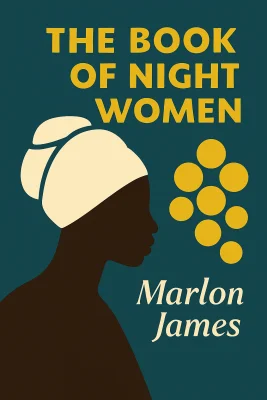
The Book of Night Women
Categories
Fiction, Audiobook, Historical Fiction, Literature, Book Club, Historical, African American, Novels, Race, Literary Fiction
Content Type
Book
Binding
Hardcover
Year
2009
Publisher
Riverhead Books
Language
English
ISBN13
9781594488573
File Download
PDF | EPUB
The Book of Night Women Plot Summary
Introduction
# Green Eyes in Darkness: The Blood Circle of Bondage The year is 1801, and on Montpelier plantation in Jamaica, blood has its own currency. In the shadow of sugar cane fields where thirty-three slaves toil for every white soul, a child is born with emerald eyes that cut through darkness like shattered glass. Lilith emerges from violence—her mother barely thirteen, destroyed by the overseer's brutal appetite—carrying both African blood and her rapist father's pale features in a world that demands absolute categories. The plantation operates on simple mathematics: terror so complete it has its own rhythm, whippings and brandings calculated to break not just bodies but spirits. Yet beneath submission's surface, something darker stirs. In slave quarters, women gather in whispered conspiracy, speaking of Saint-Domingue where slaves became masters and masters became corpses. The cotton tree stands like a gallows in Montpelier's center, its branches heavy with memory, while beneath its shadow, revolution takes root in the fertile soil of accumulated rage.
Chapter 1: The Birth of a Cursed Child: Lilith's Genesis at Montpelier
The cotton tree casts its shadow across Montpelier like a promise of death. Beneath its branches, Lilith grows from child to woman under Homer's watchful eye—the head house slave whose own children were sold like livestock, whose back bears crosshatch scars from countless whippings. Homer's mind remains sharp as obsidian, cataloguing every cruelty, storing them like ammunition for an undeclared war. Lilith's green eyes mark her as different, drawing unwanted attention from both slaves and masters. The plantation operates on Jack Wilkins' brutality—her unknown father, the overseer whose violent appetites created her. He watches his mixed-blood daughter with pride and revulsion, protecting her from the worst while embodying everything she should hate. This contradiction tears at her soul, creating fractures that will eventually shatter into revolution. The other house slaves whisper that she carries darkness within her—not skin's darkness, but something deeper, more dangerous. They're not wrong. When the plantation's cruelest driver corners her in the kitchen one night, his hands groping, breath reeking of rum, something snaps inside her. The knife finds his throat before conscious thought intervenes. She watches with fascination as his life drains onto wooden floors, the killing awakening something primal that both thrills and terrifies her. Homer shapes her destiny, teaching her to read in secret while filling her head with rebellion stories. "Every negro walks in a circle," the old woman tells her, "but sometimes that circle leads back to the master's throat." These words plant seeds in fertile ground, seeds that will bloom into something beautiful and terrible. The girl who once trembled now moves with predator's grace, her green eyes reflecting futures written in blood and fire.
Chapter 2: First Blood and Awakening: The Kitchen Knife's Lesson
The Coulibre plantation burns like hell's vision, orange flames licking at Caribbean sky. Lilith stands in the master's bathroom, her hands pressed against Massa Roget's chest as he drowns in his own bathwater. His heart attack provided opportunity; her rage provided will. She holds him under until bubbles stop rising, until struggles cease, until water turns pink with blood from his bitten tongue. But killing one master isn't enough. When Mistress Roget discovers the scene, Lilith chases her through the house like an avenging spirit. The woman's screams echo through corridors until she tumbles over the balcony, her neck snapping with the sound of breaking kindling. The children come next—two young boys who would have grown into monsters like their father. Lilith's hands work with mechanical precision, snuffing out their lives before they can comprehend their fate. Fire consumes everything: bodies, evidence, the grand house itself. Lilith watches from cane fields as her handiwork burns, smoke carrying sweet stench of roasted flesh into night sky. She feels no remorse, only strange emptiness where humanity used to live. The other slaves will blame Francine, a house girl who will hang for Lilith's crimes. Another life added to the ledger, another weight on her soul. When she returns to Montpelier, the other slaves sense change in her. She moves differently now, carries herself with confidence of someone who has crossed a line and found the other side to her liking. Homer sees it too, ancient eyes gleaming with approval. "Now you know what you are," the old woman whispers. "Now you're ready to learn what you can become." The transformation is complete—victim has become killer, and killer will become revolutionary.
Chapter 3: House of Secrets: Homer's Teachings and the Night Women
Deep in caves beyond cane fields, six women gather by candlelight to plan the impossible. Homer leads them, her scarred body testament to decades of suffering, her mind sharp as obsidian. Beside her sits Callisto, the one-eyed warrior whose rage burns cold and steady. Pallas hides red hair beneath headwrap, marking mixed heritage. Iphigenia covers coal-burned skin from neck to toe. Gorgon, small and vicious, carries Jack Wilkins' blood and capacity for cruelty. Hippolyta, tall and silent, bears scars around her throat where they cut away her voice as a child. They call themselves the Night Women, planning for years. Word reaches them from other plantations—Worthy Park, Jackson Lands, Ascot Pen—where similar circles plot in darkness. The rebellion will not be hot-headed men charging into musket fire, but careful orchestration of women who understand true revolution requires patience, planning, and willingness to do whatever necessary. Lilith joins their circle reluctantly, drawn by Homer's insistence and her own growing hunger for violence. The women teach her about Saint-Domingue, where slaves became masters and masters became corpses. They speak of Tacky's rebellion, crushed because it relied on masculine pride rather than feminine cunning. This time will be different. This time, they will not merely rebel—they will exterminate. The plan unfolds like a dark flower: poison for masters, fire for houses, death for every white soul within a hundred miles. They will coordinate with other plantations, striking simultaneously when militia is distracted elsewhere. Men will provide muscle, but women will provide brains. When it's over, they will flee to mountains and establish their own kingdom, free from white rule forever. The circle tightens, and revolution takes shape in whispered promises and sharpened blades.
Chapter 4: The Fatal Ball: Pride, Punishment, and the Breaking Point
The New Year's ball of 1801 showcases Montpelier's refinement to Jamaica's colonial elite. Governor Nugent and his wife attend, along with planters from across the parish. Lilith, pressed into service as server, wears Andromeda's blue uniform—the former slave having died under mysterious circumstances that still haunt the estate. She moves through elegant crowds like a ghost, her green eyes taking in everything, remembering faces that will soon know terror. Miss Isobel Roget arrives like a vision in white silk, blonde hair perfectly arranged, manner suggesting both breeding and barely contained wildness. She is Master Wilson's intended, though no formal engagement exists. Her presence commands attention, and Lilith finds herself both fascinated and repelled by the young woman's casual cruelty toward house slaves. The evening's disaster strikes without warning—carrying scalding soup, Lilith collides with Miss Isobel's elderly chaperone. The woman's screams fill the ballroom as boiling liquid sears her neck and chest. Elegant gathering dissolves into chaos, ladies fainting, gentlemen shouting orders, and Master Wilson's face transforming into pure, uncontrolled rage. His fists find her face before she can speak, before explanation or apology. Assembled guests watch in horrified fascination as their host beats a sixteen-year-old girl with fury of a man possessed. Robert Quinn finally intervenes, dragging Wilson away while Lilith lies bleeding on polished floor. The real horror begins after guests depart. Slave drivers, drunk on violence and masters' tacit approval, drag Lilith to the stables. What follows goes beyond punishment, beyond even plantation life's casual cruelty. When they finish with her, she lies broken in dirt, innocence and faith in any form of justice destroyed forever. Homer finds her at dawn, tending wounds with practiced hands of someone who has seen too much suffering. But something has changed in Lilith during those dark hours—the girl who served tea with downcast eyes is gone, replaced by someone harder, colder, infinitely more dangerous.
Chapter 5: Exile and Fire: Coulibre's Destruction and Return
The whip falls across Lilith's back with the sound of tearing silk, each lash opening new wounds while reopening old ones. She hangs from the cotton tree, wrists bound above her head, feet barely touching ground. Overseer Richardson counts each stroke with sadistic precision: "Forty-seven... forty-eight... forty-nine..." Blood runs down her legs, pooling in dust below. Her crime was simple: being in the wrong place when suspicion fell on her for the Coulibre fire. Though no evidence links her to the blaze, her green eyes and defiant spirit mark her as trouble. The beating continues until she loses consciousness, body going limp against ropes. When she wakes, it's in the overseer's cottage, tended by hands that smell of whiskey and tobacco. Robert Quinn, the Irish overseer, cuts her down and carries her to safety. His touch is gentle despite calloused hands, voice soft despite authority. He tends her wounds with surprising skill, cleaning cuts and applying salve with lover's care rather than master's duty. Something passes between them in those moments—recognition, perhaps, or simply acknowledgment of shared humanity in a world that denies such things. But Lilith's body heals faster than her spirit. The scars on her back tell the story of her defiance, each raised line testament to her refusal to break. She returns to the great house changed, harder, more dangerous than before. The other slaves see it in her eyes—the look of someone who has stared into hell and found it wanting. Homer nods approvingly when she sees her protégé's transformation. The girl is ready now, ready to become the weapon they need. The circle of violence continues, but now Lilith stands at its center, no longer victim but architect of destruction to come.
Chapter 6: Forbidden Love: The Overseer's Bed and Revolutionary Bonds
In the overseer's cottage, boundaries blur like watercolors in rain. Robert Quinn teaches Lilith to read, his finger tracing words across pages while her eyes follow the movement of his lips. The Faerie Queene becomes their shared language, archaic verses bridging their separate worlds. When he speaks of honor and chivalry, she hears longing in his voice for something nobler than surrounding brutality. Their relationship evolves in stolen moments and whispered conversations. He calls her "lovey" in his Irish brogue, the endearment carrying weight beyond simple syllables. She learns to call him Robert instead of "massa," though the word feels strange on her tongue. In his bedroom's privacy, they create their own country where skin color matters less than warmth of bodies pressed together in darkness. But love between master and slave is a contradiction that cannot be sustained. During the day, Quinn must play his role—overseeing work gangs, enforcing discipline, maintaining the system that keeps her people in chains. At night, he holds her close and whispers promises he cannot keep. The other slaves watch with mixture of envy and disgust, seeing her as either blessed or cursed by white attention. Homer warns her repeatedly about such attachments' danger. "White man's love is like white man's justice," she says. "Pretty words that disappear when the sun comes up." But Lilith finds herself caught between two worlds—the revolutionary sisterhood demanding her loyalty and tender moments that make her feel almost human. The choice between love and freedom looms like a storm on the horizon, and she knows she cannot have both. Revolution demands sacrifices, and love is war's first casualty.
Chapter 7: The Circle Completes: Planning the Great Atlas Revolt
The abeng horn's call echoes across the plantation like an ancient god's voice. Hidden in caves, the Night Women make final preparations. Weapons are distributed—cutlasses sharpened to razor edges, muskets loaded with deadly precision, bottles filled with lamp oil for fires to come. Each woman knows her role in the dance of death that will begin at two o'clock, when field hands are hungriest and overseers drowsiest. Lilith straps Callisto's knife to her thigh, blade cold against skin. She has been assigned to kill Miss Isobel, the master's intended bride, whose laudanum addiction has made her an easy target. The irony is not lost on her—she who has loved a white man must now murder a white woman. But revolution demands sacrifices, and personal feelings cannot interfere with the greater cause. The plan unfolds with military precision: poison in masters' food, fire in cane fields, death in every corner of the plantation. Field hands will rise when the horn sounds, overwhelming overseers through sheer numbers. House slaves will secure weapons and eliminate the family. By nightfall, Montpelier will be a graveyard, its white inhabitants feeding crows. But doubt gnaws at Lilith's heart like cancer. She thinks of Robert Quinn sleeping peacefully in his bed, unaware that his lover plans his destruction. She thinks of Jack Wilkins, brutal father and unlikely protector, who saved her from worse fates. Revolution demands their deaths, but her conscience rebels against necessity. As the hour approaches, she must choose between the woman she loves and the cause that defines her. The circle of violence prepares to complete itself, and blood will wash away all previous sins.
Chapter 8: Blood and Ashes: Revolution's Price and Memory's Burden
The abeng sounds at two o'clock precisely, its mournful wail cutting through afternoon heat like a scythe through grain. Across six plantations, the signal triggers an explosion of violence that will be remembered as the Great Atlas Revolt. In cane fields, slaves drop tools and pick up weapons, their faces transformed from submission to fury in an instant. Callisto leads field hands in a charge against overseers, her cutlass singing through air as it separates heads from shoulders. McClusky, the brutal driver who once tried to rape Lilith, dies screaming as blade opens his throat. Other whites try to run, but there is nowhere to go—they are surrounded by a sea of black faces, each carrying decades of accumulated rage. The great house burns like a funeral pyre, windows exploding outward in showers of glass and flame. Homer drags the old mistress from her bed, settling accounts for years of cruelty with methodical precision. The woman's screams echo through corridors until cut short by rifle's roar. Miss Isobel suffers a different fate—violated by the very slaves she once whipped, her cries for mercy falling on deaf ears. But revolution is chaos, and chaos consumes both guilty and innocent. Robert Quinn dies in the fields, cut down by men who see only his white skin, not the gentleness in his heart. Lilith finds his body hours later, his blood soaking into earth he once walked as master. She cradles his head in her lap, tears mixing with his blood as the plantation burns around them. Love and revolution prove incompatible, and she has chosen her side too late to save what mattered most. The circle of violence completes itself, leaving only ashes and the bitter taste of justice too long delayed.
Summary
The gibbets line the road to Montpelier like a grotesque avenue of the damned, thirty-seven iron cages hanging from trees, each containing a rebel slave left to die slowly in Caribbean sun. Lilith survives because she carries Robert Quinn's child, her belly swollen with the future. The rebellion's failure teaches harsh lessons about freedom's price—the Night Women are dead or scattered, their dream of a black republic buried with their bodies. Yet something fundamental has changed. The absolute power of masters has been shaken, if not broken, and fear now runs both ways on the plantation. In the overseer's cottage, Lilith writes by candlelight, her daughter sleeping beside her, recording the story of the Night Women—their courage and failure, love and hatred. Her green eyes, inherited from her rapist father, now belong to a child who will grow up knowing that rebellion is possible, even if victory remains elusive. The circle continues, unbroken by death, strengthened by sacrifice, eternal as the turning of seasons and the beating of the human heart.
Best Quote
“Hate and love be closer cousin than like and dislike.” ― Marlon James, The Book of Night Women
Review Summary
Strengths: The reviewer highlights the depth and complexity of Marlon James' "The Book of Night Women," noting its ability to reveal new insights upon a second reading. The book's portrayal of racial hierarchies and the nuanced relationship between characters is praised. The reviewer appreciates the historical context and the book's capacity to evoke strong emotional responses. Weaknesses: The review mentions the difficulty in reading due to the graphic depictions of violence, which may be distressing for sensitive readers. The initial reading left the reviewer feeling indignant and helpless, indicating the book's intense emotional impact. Overall: The reviewer expresses a positive sentiment towards the book, emphasizing the value of rereading for deeper understanding. Despite its challenging content, the book is recommended for its insightful exploration of slavery and racial dynamics.
About Author

Marlon James
James situates his narratives within the rich tapestry of Jamaican history, intricately weaving themes of political struggle, identity, and resistance. His writing often explores the legacies of colonialism and the social struggles that define Jamaica. Through works like "A Brief History of Seven Killings," which fictionalizes the attempted assassination of Bob Marley, and "The Book of Night Women," which investigates a slave revolt, James employs a multifaceted narrative style. His method of blending genres, from historical fiction to speculative fantasy, allows him to address complex social themes through vivid storytelling and bold ambition.\n\nFor readers interested in multifaceted perspectives and cultural narratives, James's books offer a profound exploration of Jamaican society and history. His work is notable for its detailed characterization and the use of multiple narrators, providing an immersive experience. "Black Leopard, Red Wolf," part of his Dark Star trilogy, extends his exploration into the fantasy genre, incorporating African myths and legends. This blend of elements invites readers to engage with narratives that are as entertaining as they are enlightening. Meanwhile, his role as an educator at Macalester College reflects his commitment to literature beyond just writing, contributing to his impact on both readers and students.\n\nJames's achievements, including winning the 2015 Man Booker Prize, underscore his status as a prominent figure in contemporary literature. His books not only captivate with their storytelling but also provoke thought and dialogue about societal issues. The author’s bio highlights his journey from Kingston, Jamaica, to gaining international recognition, showcasing a career that inspires both emerging writers and readers alike. Through his novels, James connects with audiences by challenging them to reflect on historical and contemporary themes, making his work a significant contribution to global literary discourse.
Read moreDownload PDF & EPUB
To save this Black List summary for later, download the free PDF and EPUB. You can print it out, or read offline at your convenience.

The Book of Night Women
by Marlon James
