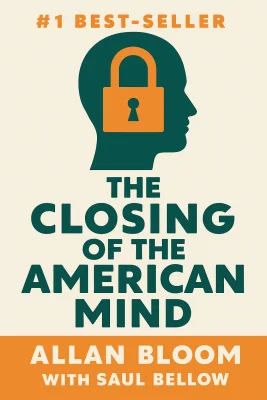
The Closing of the American Mind
Categories
Nonfiction, Psychology, Philosophy, History, Education, Politics, Sociology, Society, Cultural, American
Content Type
Book
Binding
Paperback
Year
1988
Publisher
Simon & Schuster
Language
English
ASIN
0671657151
ISBN
0671657151
ISBN13
9780671657154
File Download
PDF | EPUB
The Closing of the American Mind Plot Summary
Introduction
# The Closing of the American Mind: How Cultural Relativism Destroyed Liberal Education American higher education has undergone a profound transformation that extends far beyond administrative changes or pedagogical innovations. At its core lies a philosophical revolution that has fundamentally altered how students and educators understand the very purpose of learning. This transformation centers on the triumph of cultural relativism—the belief that all values, truths, and ways of life are equally valid—which has systematically dismantled the intellectual foundations that once made genuine education possible. The consequences of this shift reach into every aspect of contemporary life, from the way young people approach relationships and career choices to their capacity for sustained intellectual engagement with life's most fundamental questions. By examining the philosophical roots of this transformation and tracing its practical effects on university culture, we can understand how the pursuit of tolerance and openness has paradoxically created minds that are closed to the possibility of discovering objective truth or achieving genuine wisdom. This analysis reveals both the depth of the current crisis and the urgent need to recover educational approaches that can cultivate souls capable of serious thought and authentic commitment.
Chapter 1: The Rise of Relativism: How Universities Abandoned Truth for Tolerance
The transformation of American universities from institutions dedicated to discovering truth into centers promoting tolerance represents one of the most significant intellectual shifts of the modern era. This change did not occur through deliberate planning but emerged gradually as educators lost confidence in their ability to distinguish between better and worse ideas, values, and ways of life. The result has been the replacement of rigorous intellectual inquiry with a shallow openness that mistakes the suspension of judgment for sophisticated thinking. Cultural relativism gained ascendancy in universities by presenting itself as the antidote to dogmatism and prejudice. Educators embraced the idea that all cultures and belief systems possess equal validity, believing this stance would promote tolerance and prevent the kind of intellectual arrogance that had historically justified oppression and discrimination. This well-intentioned effort to combat narrow-mindedness, however, created new problems by making it impossible to maintain any standards of intellectual or moral excellence. The practical consequences of this shift became evident in classroom dynamics where professors increasingly hesitated to challenge student opinions or to assert that some ideas might be superior to others. The Socratic method, which depends on the teacher's willingness to expose the inadequacies of superficial thinking, gave way to facilitated discussions where all viewpoints received equal respect regardless of their logical coherence or factual accuracy. Students quickly learned that expressing strong convictions or making discriminating judgments was socially unacceptable in academic settings. This relativistic approach fundamentally undermined the educational process by eliminating the tension between ignorance and knowledge that motivates genuine learning. When students believe that their initial opinions are as valid as the conclusions reached by great thinkers through years of careful study, they have no incentive to engage seriously with challenging texts or ideas. The university thus ceased to function as a place where minds could be transformed through encounter with superior wisdom and became instead a space for the mutual validation of existing prejudices. The triumph of tolerance over truth-seeking also corrupted the university's relationship with the broader culture. Instead of serving as institutions that could challenge popular opinion and elevate public discourse, universities became mirrors reflecting whatever values happened to be fashionable in contemporary society. This transformation left society without one of its most important sources of intellectual leadership and critical perspective, contributing to the general degradation of public reasoning and the triumph of sentiment over argument in political and cultural debates.
Chapter 2: The Nihilistic Student: Empty Souls in Search of Meaning
Contemporary students arrive at universities as products of a culture that has systematically deprived them of the intellectual and spiritual resources necessary for serious learning. Having been raised in an environment where all values are treated as matters of personal preference, they possess neither the knowledge of their own tradition that might ground them nor the sense of dissatisfaction with their current condition that might motivate them to seek something higher. This combination of ignorance and complacency creates souls that are fundamentally closed to the transformative possibilities that education traditionally offered. The sexual revolution has played a particularly significant role in shaping the contemporary student's approach to learning by eliminating the tension and longing that once provided emotional energy for intellectual development. Previous generations experienced education as a means of understanding and channeling powerful desires that society had taught them to defer and sublimate. Contemporary students, having been offered easy satisfaction of their appetites from an early age, lack the frustrated yearning that makes great books speak to fundamental human needs and drives the search for wisdom. Popular culture, especially music, has become the dominant force shaping young souls, providing a constant soundtrack of immediate gratification that militates against the kind of reflective silence necessary for serious reading and thinking. Students who have been conditioned to expect constant stimulation find the measured pace of philosophical argument tedious and irrelevant to their lived experience. They approach their education as consumers seeking entertainment rather than as apprentices willing to undergo the slow transformation that genuine learning requires. The breakdown of traditional family structures has left students without models of authority and commitment that might help them understand the value of intellectual discipline and moral seriousness. Having grown up in environments where adult authority was either absent or constantly questioned, they struggle to accept the hierarchical relationship between teacher and student that effective education requires. They expect to be treated as equals in intellectual discussions for which they lack the preparation and maturity necessary for meaningful participation. This combination of cultural impoverishment and premature sophistication creates students who are simultaneously cynical and naive—cynical about the possibility of discovering objective truth or achieving genuine excellence, yet naive about the complexity of the questions they dismiss so casually. They possess neither the innocence that might make them teachable nor the knowledge that might make them worth teaching, leaving educators with the nearly impossible task of awakening minds that have been systematically closed to wonder and aspiration.
Chapter 3: German Philosophy's Conquest: From Natural Rights to Value Creation
The intellectual transformation of American universities cannot be understood without recognizing the profound influence of German philosophical traditions that most Americans neither acknowledge nor comprehend. Concepts that have become commonplace in American discourse—lifestyle, values, commitment, authenticity, creativity—carry with them a complete worldview that fundamentally contradicts the philosophical foundations upon which American democracy was established. This intellectual colonization has occurred largely unconsciously, mediated through psychology, sociology, and popular culture. The German philosophical tradition that emerged in the wake of Kant's critical philosophy developed in explicit opposition to the Enlightenment rationalism that informed the American founding. Where the American founders believed in natural rights discoverable by reason and applicable to all human beings, German thinkers increasingly emphasized the historical and cultural particularity of all human beliefs and institutions. This historicist perspective undermined confidence in universal principles of justice and replaced them with a vision of human existence as essentially creative rather than discovering. The influence of figures like Hegel, Nietzsche, and Heidegger reached American universities through intermediaries who often failed to grasp the radical implications of the ideas they were transmitting. American social scientists and psychologists adopted German insights about consciousness, culture, and historical development while maintaining an optimistic faith in democracy and progress that the original German thinkers had explicitly rejected. This selective appropriation created a confused intellectual atmosphere where nihilistic premises coexisted uneasily with democratic hopes. The practical result has been the emergence of a distinctly American form of nihilism that lacks the tragic awareness and intellectual rigor of its German origins. American students who speak casually about creating their own values and living authentic lives have no understanding of the philosophical arguments that led German thinkers to these conclusions, nor do they recognize the profound challenges these ideas pose to democratic institutions and liberal education. They have inherited the conclusions of complex philosophical developments without the intellectual preparation necessary to understand their significance. This philosophical confusion has made it impossible for American universities to provide coherent justifications for their own activities or for the democratic way of life they supposedly serve. Students who have absorbed German critiques of Enlightenment rationalism find themselves unable to give compelling reasons for their commitment to equality, individual rights, or rational discourse, since the philosophical framework they have inherited undermines the possibility of rational argument about fundamental principles. They are left with nothing but personal preference and cultural conditioning to justify their most basic beliefs about politics and morality.
Chapter 4: The Therapeutic Culture: How Psychology Replaced Philosophy in Education
The rise of therapeutic culture in American universities represents a fundamental shift from the philosophical understanding of education as the pursuit of wisdom to a psychological understanding focused on personal adjustment and self-esteem. This transformation has reduced complex questions about how human beings should live to technical problems that can be solved through proper therapeutic intervention, eliminating the tragic dimension of human existence that has traditionally motivated serious intellectual and moral inquiry. Therapeutic approaches to education treat doubt, dissatisfaction, and intellectual struggle as symptoms of psychological maladjustment rather than as potentially valuable signs of spiritual awakening. Students who experience the kind of productive confusion that results from encountering ideas that challenge their fundamental assumptions are encouraged to see these experiences as problems to be resolved rather than as opportunities for growth. This medicalization of the soul prevents the kind of beneficial suffering that has traditionally been understood as necessary for intellectual and moral development. The language of therapy has gradually replaced the language of philosophy in discussions of human problems, reducing moral questions to matters of psychological health and personal preference. Students learn to speak about their "values" rather than about good and evil, about "lifestyle choices" rather than about right and wrong ways of life. This linguistic shift appears liberating because it frees individuals from the burden of justifying their choices according to objective standards, but it actually impoverishes moral discourse by making rational evaluation of different ways of life impossible. The therapeutic approach to education also undermines the authority relationship between teacher and student that is necessary for genuine learning. When professors are expected to function as facilitators of personal growth rather than as sources of knowledge and wisdom, they lose the capacity to challenge students effectively or to demand the kind of intellectual discipline that serious education requires. Students, in turn, approach their education as a form of therapy designed to make them feel better about themselves rather than as a process of transformation that might require them to abandon cherished beliefs and comfortable habits. This therapeutic understanding of education has created a generation of students who are simultaneously self-absorbed and lacking in genuine self-knowledge. They have been taught to focus obsessively on their feelings and personal experiences while remaining ignorant of the larger questions about human nature and destiny that might give meaning to their individual lives. The result is a peculiar form of narcissism that masquerades as self-awareness but actually prevents the kind of serious self-examination that wisdom requires.
Chapter 5: The University's Betrayal: From Liberal Learning to Professional Training
The modern university has abandoned its traditional mission of providing liberal education in favor of professional training that fragments knowledge and prevents students from encountering the fundamental questions that have animated human civilization. This transformation reflects broader social changes that have made the university's classical role seem obsolete, but it has also contributed to the intellectual impoverishment that makes serious engagement with life's deepest concerns increasingly difficult for educated Americans. The division of knowledge into narrow specializations has made it nearly impossible for students to develop the synthetic understanding that wisdom requires. Each academic department operates according to its own methodology and professional standards, creating barriers to communication across fields and preventing the kind of comprehensive thinking that might help students understand their lives and their world as coherent wholes. Students learn to be competent technicians in their chosen fields while remaining ignorant of the larger human questions that give meaning and direction to specialized knowledge. The emphasis on research and publication has transformed professors from teachers into specialists who are rewarded for contributing to the advancement of their disciplines rather than for their ability to educate students. This has created a situation where the most prestigious faculty members are often the least interested in undergraduate education, leaving the crucial work of introducing students to the life of the mind to graduate students and junior faculty who lack both the experience and the institutional authority necessary for this responsibility. The university's capitulation to student demands for immediate practical relevance has further eroded its capacity to provide genuine liberal education. Courses that once introduced students to the greatest achievements of human thought and imagination have been replaced by offerings that promise direct preparation for careers or that address contemporary social and political issues. This transformation reflects a fundamental misunderstanding of education's purpose, treating it as a commodity to be consumed rather than as a transformation to be undergone. The result has been the creation of graduates who possess technical competence in narrow fields but lack the intellectual breadth and depth necessary for thoughtful citizenship or meaningful personal life. They have been trained to solve specific types of problems but not educated to understand what problems are worth solving or how their professional activities relate to larger questions about human flourishing. This produces a peculiar form of educated barbarism where sophisticated technical knowledge coexists with profound ignorance about the most important aspects of human existence.
Chapter 6: The Corruption of Love: How Sexual Revolution Killed Intellectual Eros
The sexual revolution has fundamentally altered the conditions under which young people approach learning by severing the connection between sexual desire and intellectual curiosity that traditional education understood as essential for the cultivation of wisdom. The early sexualization of contemporary youth has eliminated the period of frustrated longing that once provided the emotional energy necessary for serious intellectual development, leaving students without the motivation required for the difficult work of genuine education. Traditional educational theory recognized that sexual desire and the love of learning spring from the same source in the human soul—the erotic drive toward what appears beautiful and good. This understanding informed educational practices that sought to channel sexual energy toward higher forms of satisfaction through engagement with great books, beautiful art, and profound ideas. The premature satisfaction of sexual desires that characterizes contemporary culture short-circuits this process, leaving students without the inner tension that makes intellectual and artistic achievements appear as genuine fulfillments rather than arbitrary impositions. The therapeutic understanding of sexuality that dominates contemporary culture treats sexual desire as a natural appetite to be satisfied rather than as a complex phenomenon that connects the lowest and highest aspects of human nature. This reductive approach eliminates the mystery and transcendence that once made sexual experience a gateway to philosophical reflection about love, beauty, and the meaning of human existence. Students who have been educated to see sexuality as merely recreational find it difficult to understand why earlier generations treated love as a subject worthy of serious artistic and philosophical attention. The collapse of traditional courtship and marriage has eliminated the social forms that once channeled erotic energy toward lasting commitments and the creation of families. Contemporary students approach relationships with the same calculating rationality they apply to career choices, seeing commitment as a limitation on freedom rather than as the fulfillment of love. This transactional approach to human relationships extends to their relationship with learning itself, making it difficult for them to experience the kind of total dedication that serious intellectual work requires. The result has been the creation of a generation that is simultaneously oversexed and under-eroticized—constantly engaged in sexual activity but lacking the capacity for the kind of passionate longing that makes great achievements in art, philosophy, and science possible. They have been offered easy satisfaction of their bodily desires while being deprived of the spiritual satisfaction that comes from the pursuit of truth, beauty, and goodness. This combination produces souls that are both restless and lethargic, constantly seeking stimulation but incapable of the sustained attention that genuine fulfillment requires.
Chapter 7: Recovering the Life of Mind: The Case for Great Books Education
The recovery of genuine liberal education requires a return to the study of great books—works that have proven their worth over time by continuing to address fundamental human concerns across different cultures and historical periods. These texts provide students with access to the best thinking about perennial questions of human existence, offering perspectives that transcend the limitations of contemporary opinion and popular culture while demonstrating that serious engagement with ideas can be both intellectually rigorous and personally transformative. Great books education works by exposing students to sustained arguments about the most important questions human beings face, showing them how great minds have attempted to understand the whole of human experience and to develop comprehensive visions of how life should be lived. This approach addresses the fragmentation that characterizes contemporary education by demonstrating the unity of knowledge and the connections between different fields of inquiry. Students learn that literature, philosophy, history, and science all contribute to understanding the same fundamental questions about human nature and destiny. The great books approach also provides an antidote to the relativism that has corrupted contemporary education by presenting students with works that make strong claims about truth and value. These books do not treat all opinions as equally valid; instead, they argue for particular positions and invite readers to evaluate their arguments carefully. This process teaches students that some ideas are better than others and that careful reasoning can help distinguish between them, even when dealing with complex questions that admit of no easy answers. Critics raise legitimate concerns about the cultural limitations of traditional great books curricula, but these concerns can be addressed by expanding the canon to include masterworks from different traditions while maintaining the focus on texts that engage seriously with universal human concerns. The key is to preserve the emphasis on quality and depth that makes great books education valuable while ensuring that students encounter diverse approaches to the fundamental questions that all human beings must face. The practical implementation of great books education requires significant changes in how universities organize their curricula and prepare their faculty. It demands professors who are willing to engage with texts outside their narrow specializations and who can help students see connections between different works and ideas. Most importantly, it requires a renewed commitment to the belief that education should aim at wisdom rather than mere information processing or professional training, and that some ways of life are genuinely superior to others.
Summary
The fundamental insight revealed through this analysis concerns the intimate connection between philosophical foundations and educational practice. When universities abandon their commitment to objective truth and the possibility of distinguishing between better and worse ways of life, they inevitably lose both their intellectual coherence and their capacity to provide students with the kind of transformative education that democracy requires. The result is not the open-minded and tolerant citizenry that relativistic education promises, but rather souls that are closed to the possibility of genuine learning and authentic commitment. The path toward recovery requires more than curricular reform or administrative changes; it demands a fundamental philosophical renewal that reconnects education with the human quest for wisdom and meaning. This involves both recovering confidence in the possibility of objective knowledge about how human beings should live and developing the intellectual virtues necessary to pursue such knowledge responsibly. Only through such a comprehensive transformation can universities hope to fulfill their obligation to cultivate minds capable of serious thought and hearts capable of genuine love for what is truly worthy of human devotion.
Best Quote
“The failure to read good books both enfeebles the vision and strengthens our most fatal tendency -- the belief that the here and now is all there is.” ― Allan Bloom, The Closing of the American Mind
Review Summary
Strengths: The book effectively challenges the assumption that all views are equally valuable in a liberal democracy. It highlights the dilution of meaningful discourse in arts and humanities due to a lack of robust vocabulary and the university system's failure to articulate the worth of these subjects. Bloom's call for an intellectually honest openness grounded in reason is a notable strength. Weaknesses: The critique may resonate with conservative ideologies, potentially alienating readers who associate it with socially conservative rhetoric. The review suggests a difficulty in separating Bloom's arguments from conservative and evangelical interpretations. Overall: The reviewer acknowledges the book's thought-provoking nature and its relevance to contemporary discourse, though it may polarize readers due to perceived conservative undertones. The book is recommended for those interested in a critical examination of openness in modern society.
About Author

Allan Bloom
Bloom critiques modern American education systems through his philosophical writings, emphasizing the need for engagement with the Western classics. His book, "The Closing of the American Mind", addresses how relativism and the decline of liberal arts education threaten intellectual development in universities. By advocating for a return to "Great Books" education, Bloom highlights the importance of experiencing "greatness" and pursuing "the good life" in academia, thus fostering a more profound understanding of democratic society. This approach, influenced by thinkers like Plato and Strauss, situates him as a pivotal figure in the cultural debate on educational values.\n\nIn his career, Bloom served at prominent institutions, such as the University of Chicago, contributing to significant intellectual dialogues. His translations of Plato's "Republic" and Rousseau's "Emile" demonstrate his commitment to making classical texts accessible and relevant, thus enriching the reader's engagement with philosophical thought. By interweaving literary sensibility with philosophical rigor, Bloom not only enhances the educational experience but also challenges readers to reflect critically on cultural norms. His work inspires educators and students alike to seek intellectual depth, contributing to the broader discourse on the role of education in shaping society.
Read moreDownload PDF & EPUB
To save this Black List summary for later, download the free PDF and EPUB. You can print it out, or read offline at your convenience.
The Closing of the American Mind
by Allan Bloom
