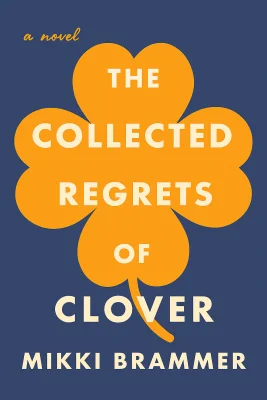
The Collected Regrets of Clover
Categories
Fiction, Audiobook, Romance, Grief, Adult, Book Club, Contemporary, Adult Fiction, Literary Fiction, Death
Content Type
Book
Binding
Hardcover
Year
2023
Publisher
St Martin's Press
Language
English
ISBN13
9781250284396
File Download
PDF | EPUB
The Collected Regrets of Clover Plot Summary
Introduction
The first time Clover Brooks watched someone die, she was five years old. Mr. Hyland, her kindergarten teacher, collapsed mid-story while reading Peter Rabbit, his last words about a particularly naughty rabbit echoing through the classroom chaos. While other children screamed and scattered, Clover sat calmly beside him, holding his hand as life drained from his eyes. She felt no fear, only curious fascination at witnessing the mysterious threshold between existence and void. Now thirty-six, Clover has made death her profession. As a death doula in New York City, she shepherds the dying through their final moments, collecting their last words like precious artifacts. Her notebooks overflow with regrets, advice, and confessions whispered by souls preparing to depart. She lives alone with her pets, surrounded by her deceased grandfather's scientific specimens, existing in the shadowy margins of life while helping others exit it. But when she takes on Claudia Wells, a dying ninety-one-year-old former photojournalist with secrets spanning continents, Clover finds herself pulled into a mystery that will force her to confront the one death she couldn't prevent and the life she's been afraid to live.
Chapter 1: The Observer at the Threshold
Clover's breath misted in the cold Chinatown air as she watched the mortuary van disappear into traffic. Guillermo's cramped studio apartment lay behind her, now empty of its bitter occupant who had just become her ninety-seventh witness to death's arrival. The scent still lingered in her nostrils, that imperceptible shift she'd learned to recognize when mortality pressed close, like autumn's first whisper in summer air. She had spent three weeks visiting Guillermo, a man so angry at the world that even his final confession carried decades of guilt. "I accidentally killed my little sister's hamster when I was eleven," he whispered as death claimed him, the words floating between them like absolution seeking a home. Clover recorded it all in her leather notebook, one of three volumes that catalogued the dying's final messages. The walk home through Manhattan's neon arteries felt different tonight. At thirty-six, Clover moved through the city like a ghost herself, invisible among the living. Her grandfather's rent-controlled apartment waited, cluttered with his scientific specimens and the weight of thirteen years without him. The mason jars filled with preserved creatures seemed to watch her return, fellow observers in the museum of her arrested life. Her phone buzzed with potential work, but tonight the silence felt heavier. Leo Drake, her eighty-seven-year-old neighbor and only friend, knocked with news of fresh neighborhood drama, but even his cheerful gossip couldn't penetrate the familiar ache. Another life had ended, another story collected, and still Clover remained suspended between the worlds of the living and the dead, belonging fully to neither.
Chapter 2: Claudia's Last Romance
Sebastian's nervous energy filled the death café in the library basement as he introduced himself to the circle of strangers. He was there because his family never discussed death, he explained, adjusting his gold-rimmed glasses with trembling fingers. Clover listened from across the room, having lied about a recently deceased grandmother to explain her presence among these seekers of mortality's meaning. Days later, Sebastian called with desperation threading his voice. His grandmother Claudia was dying, he said, pancreatic cancer claiming her with clinical efficiency. But the family had instructed the doctors to hide the diagnosis, leaving her unknowing in her final weeks. Sebastian needed help, he pleaded. He needed a death doula for the grandmother he adored, the one who had saved him from his cold family's emotional wastelands. Claudia Wells commanded attention even from her garden chair, wrapped in cornflower blue but radiating the fierce vitality of someone who had lived on her own terms. At ninety-one, she possessed the sharp wit of a woman who had photographed wars and revolutions, who had chosen marriage over adventure in 1956 and spent sixty years wondering about the road not taken. Her red lipstick was perfect despite the hour, applied with the precision of someone who refused to surrender to time's erosions. The deception began immediately. Sebastian had told his grandmother that Clover was merely a photography enthusiast, not a death doula, creating a fragile fiction they would have to maintain. But Claudia's eyes held too much intelligence, too much awareness of her body's rebellion. She played along with their charade while secretly knowing the truth, grateful for companionship that didn't involve medical procedures or family pity. In her presence, Clover felt something she hadn't experienced in years: the desire to be truly seen by someone before they disappeared forever.
Chapter 3: The Journey to Find Hugo
The photograph emerged from a dusty banker's box like evidence from a crime scene, black and white testimony to a love that had crossed decades. Claudia's breath caught as she recognized the figure on the boat bow, his Breton striped shirt and scarred chin unchanged by time's passage. "Hugo Beaufort," she whispered, her voice carrying the weight of sixty years' silence. The three-legged Jack Russell at his feet confirmed what Clover already suspected: this was the great love that had shaped Claudia's entire life. Sylvie, Clover's new neighbor and reluctant friend, possessed the research skills of a seasoned detective. Through art museum connections and digital archaeology, she traced Hugo's journey from 1950s Marseille to the coast of Maine. The revelation struck like lightning: Hugo had immigrated to America in 1957, following Claudia across an ocean only to discover her already married, already lost to him forever. He had been living three hundred miles away for sixty years while she mourned their separation. Sebastian's hands shook as Clover explained her plan. A road trip to Maine, she proposed, to find this ghost from his grandmother's past and deliver some measure of peace to her final days. The weight of family secrets pressed against his shoulders as he processed the scope of his grandmother's hidden life. She had loved someone else, someone who might still be drawing breath in a coastal town while she prepared to draw her last. The rental car waited outside like a vessel preparing for pilgrimage. Sebastian agreed because love demanded such desperate gestures, because the dying deserved their mysteries solved. They would drive through New England's autumn bones to find a man who might not exist, carrying letters that might never be delivered, chasing a story that could break his grandmother's heart or finally heal it. The miles stretched ahead like a question mark drawn across the northeastern states.
Chapter 4: Letting Others In
The argument erupted somewhere in Massachusetts, words flying between them like shrapnel from a marriage that had never existed. Sebastian accused Clover of being a hypocrite, someone who counseled others about living fully while hiding from life herself. She retaliated by calling him a coward who dated people to avoid being alone with his thoughts. The truth of both accusations hung in the car air like smoke, impossible to clear. Clover fled the gas station on foot, her dignity scattered across the asphalt along with her plans. But Sebastian's harsh assessment had found its mark because it contained the crystalline accuracy of an uncomfortable truth. She did use her work with the dying to avoid intimacy with the living. She had spent thirteen years turning her grandfather's apartment into a shrine while her own life remained suspended in amber. Hugo Beaufort's grandson stood on the dock in Maine like an answer to a prayer they hadn't known how to form. Tall and weathered, with his grandfather's gentle eyes and the easy confidence of someone comfortable in his own skin, he carried news that Hugo had died just months before their arrival. But in his grandfather's final days, the old sailor had spoken of Claudia, the American photographer who had stolen his heart in Marseille and inspired his journey across the Atlantic. The letters emerged from Hugo's possessions like archaeological treasures, pages of longing preserved in a shoebox for six decades. Claudia's handwriting flowed across yellowed paper, her final rejection still sharp with pain. But Hugo's unsent responses revealed the depth of his enduring love, his decision to remain silent when he found her happily married in a Manhattan bookstore. Two hearts had spent their lives yearning for each other while living parallel existences, separated by pride and circumstance and the cruel mathematics of bad timing.
Chapter 5: Confronting Personal Loss
Claudia's breathing grew shallow as November settled over the Upper West Side like a gray shroud. The doctor's pronouncement came with clinical precision: days, not weeks remained. Her family gathered with the awkward choreography of people unaccustomed to emotional honesty, while Sebastian played cello at her bedside and his sisters wept into tissues. The music filled spaces where words had never been allowed to flourish. Clover sat beside the bed reading Hugo's letters aloud, watching peace settle across Claudia's features like sunlight breaking through storm clouds. The old woman's confession came in whispered fragments about a life spent serving others' expectations instead of her own desires. She had chosen security over adventure, duty over passion, and spent sixty years wondering if she had wasted the gift of existence itself. The final words came with twilight: "Don't let the best parts of life pass you by because you're too scared of the unknown. Be cautiously reckless." Claudia's eyes closed with the serene expression Clover had witnessed so many times before, the particular weightlessness that arrived when someone finally released their grip on the world. Sebastian's cello sang her into whatever lay beyond, the notes carrying decades of unspoken love between grandmother and grandson. Leo's death arrived without ceremony or warning, a heart attack claiming him as he prepared their weekly mahjong game. Clover found him clutching his chest in the kitchen, his usual vitality replaced by the calm acceptance she recognized from countless other bedside vigils. But this time the roles were reversed, and she was the one left behind to navigate the wreckage of sudden loss. His final words echoed Claudia's wisdom: the secret to a beautiful death was living a beautiful life.
Chapter 6: Releasing the Past's Hold
The apartment transformation began with Sylvie's ruthless judgment and a growing pile of donations. Thirteen years of preserved grief filled boxes destined for museums and strangers, each discarded object a small liberation from the weight of the past. Clover's grandfather's scientific specimens found new homes where they could inspire fresh curiosity rather than serve as monuments to memory. Between the pages of an entomology textbook, she discovered evidence of her grandfather's secret life: a coaster from an Argentine tango bar with Bessie's looping cursive declaring him her dancing partner. The revelation recontextualized everything, transforming her image of him from solitary scholar to a man who had found love after loss, who had embraced joy even while raising a grieving child. The binoculars came down from their shelf, no longer needed for spying on the couple across the street whose relationship she had idealized. Real life was proving more compelling than voyeurism, more complex than the romantic narratives she had consumed like medicine for her loneliness. The window blinds stayed open now, letting light flood the spaces where shadows had ruled for too long. Hugo's grandson emerged from a different kind of loss, having traded his houseboat solitude for Manhattan projects and the possibility of human connection. His presence in her newly emptied apartment felt like an answer to questions she was only learning to ask. When he kissed her goodbye at the airport, Clover finally understood what Claudia had tried to tell her about being seen by someone who mattered.
Chapter 7: Embracing the Uncertain Future
The customs line at JFK moved with bureaucratic sluggishness, but Clover felt time expanding rather than contracting around her. Three months of solo travel stretched ahead like an unwritten story, each stamp in her passport a small act of rebellion against the cautious life she had constructed. Nepal waited first, then wherever curiosity and courage might carry her. Claudia's ashes traveled in a small container in her backpack, waiting for their final journey to the cliffs of Corsica where a great love story would find its conclusion. The camera Claudia had bequeathed her captured moments of discovery across Asia's ancient landscapes, each photograph a small victory against the fear that had kept her hiding for so long. Hugo's letters arrived in internet cafes and hotel lobbies, carrying news of his New York projects and counting the days until their reunion in France. The distance between them felt temporary rather than permanent, a pause in a conversation that had only just begun. Love, she was learning, required faith in futures that couldn't be guaranteed. Standing on the Mediterranean cliffs three months later, watching two clouds of ash dance together before settling into the sea, Clover felt the presence of everyone who had shaped her journey. Claudia and her Hugo were finally reunited, their grandson's hand warm in hers as they witnessed love transcending the boundaries between life and death. The notebook marked "Adventures" filled with stories she would carry forward, evidence of a life finally lived rather than merely observed.
Summary
In the end, Clover Brooks discovered that death had been her greatest teacher about living. Through Claudia's regrets and Hugo's enduring love, through Leo's wisdom and her grandfather's hidden joys, she learned that the space between birth and death was meant to be filled with connection rather than solitude. The dying had taught her their final lessons: that love required courage, that time was too precious to waste on fear, and that a beautiful death could only emerge from a life lived with passionate intention. The woman who once collected other people's final words had finally found her own voice, her own story worth telling. Standing beside Hugo on those French cliffs, scattering ashes into ancient waters while planning a future that would honor both the dead and the gloriously, terrifyingly alive, she understood at last that the greatest regret would be leaving this world without having truly inhabited it. The threshold she had observed so many others cross was not an ending but a transformation, and she was finally ready to step into the light on the other side of her carefully constructed shadows.
Best Quote
“The secret to a beautiful death is living a beautiful life.” ― Mikki Brammer, The Collected Regrets of Clover
Review Summary
Strengths: The novel is described as sentimental, poignant, and engaging, with a unique and thought-provoking narrative. The character Clover is highlighted as memorable and well-developed, offering a distinctive perspective on life and death. The book's exploration of themes such as the impact of choices, embracing life, and letting go is praised. The storyline involving Clover's journey and her interactions with a terminally ill client adds depth and emotional resonance. Overall: The reviewer expresses a highly positive sentiment, recommending the novel as a unique and inspirational read. The book is considered a one-of-a-kind experience that leaves a lasting impression, making it highly recommended for readers seeking a heartfelt and thought-provoking journey.
About Author

Mikki Brammer
Brammer delves into the complex intersection of life and death through her compelling narratives. Her debut novel, "The Collected Regrets of Clover", delves into the profound regrets and wisdom people share on their deathbeds. Through the character of Clover Brooks, a death doula, Brammer explores the concept of living life fully despite being surrounded by death. This theme is further explored through a cross-country journey, which symbolizes a quest for self-discovery and embracing life. Her curiosity about why death remains taboo in Western society fuels her writing, offering readers an opportunity to confront and embrace mortality with openness.\n\nBrammer's unique background as a journalist informs her literary work with a keen eye for detail and a deep understanding of human emotions. Her diverse experiences, from traveling extensively in the Asia Pacific region to living in various parts of the world, enrich her storytelling. This global perspective is evident in her writing process, which often takes place in dynamic locations like cafes and libraries. Meanwhile, her journalism career, including contributions to prestigious publications like "Architectural Digest" and "Dwell", sharpens her narrative skills, making her novels both heartwarming and thought-provoking.\n\nReaders who engage with Brammer's books are likely to gain a deeper understanding of themes related to grief, loss, and the importance of living life to its fullest. Her works resonate with those who appreciate narratives that challenge societal norms and explore profound human experiences. While "The Collected Regrets of Clover" stands out as a major work, her forthcoming novel "Good Joy, Bad Joy" is anticipated to continue this exploration of complex emotional landscapes. This bio captures the essence of Brammer's literary contributions, showcasing her ability to connect deeply with readers through her thoughtful storytelling.
Read moreDownload PDF & EPUB
To save this Black List summary for later, download the free PDF and EPUB. You can print it out, or read offline at your convenience.

The Collected Regrets of Clover
by Mikki Brammer
