
The Courtiers
Splendor and Intrigue in the Georgian Court at Kensington Palace
Categories
Nonfiction, Biography, History, Audiobook, Historical, British Literature, Research, 18th Century, Royalty, Georgian
Content Type
Book
Binding
Hardcover
Year
2010
Publisher
Walker Books
Language
English
ASIN
0802719872
ISBN
0802719872
ISBN13
9780802719874
File Download
PDF | EPUB
The Courtiers Plot Summary
Introduction
# Power Behind the Crown: The Georgian Court's Hidden Political Drama In the shadowed corridors of eighteenth-century Kensington Palace, where whispered conversations could topple governments and a single royal glance might determine the fate of nations, the early Georgian court emerged as a theater of power unlike any other in British history. Here, beneath the glittering surface of ceremonial splendor, foreign kings struggled to win British hearts while navigating treacherous family feuds that threatened to tear apart the very dynasty they had come to establish. The Hanoverian court was a world where German traditions clashed violently with English expectations, where royal mistresses wielded influence that often exceeded that of cabinet ministers, and where the personal had become inextricably political. Through the intimate dramas of figures like the brilliant Queen Caroline, who shaped policy from her morning toilette, the long-suffering Henrietta Howard, trapped between duty and desire as royal mistress, and the rebellious Prince Frederick, whose defiance of his father created constitutional crises, we witness how individual relationships became the very machinery of statecraft. These were not merely palace intrigues but the birth pangs of modern constitutional monarchy, as the Hanoverians were forced to reinvent royal authority for a changing world. Their struggles with legitimacy, their battles over succession, and their gradual adaptation to British political culture reveal timeless truths about power, family, and the price of ambition that resonate far beyond the gilded walls of Georgian palaces.
Chapter 1: Foreign Dynasty: The Hanoverian Arrival and Cultural Clash
The transformation of British monarchy began on a fog-shrouded morning in September 1714, when Georg Ludwig, Elector of Hanover, stepped ashore at Greenwich as King George I of Great Britain. This moment marked not merely a change of dynasty but a cultural earthquake that would reshape the very foundations of royal power. The new king arrived with an entourage that seemed almost exotic to English eyes: Turkish body servants, German mistresses, and courtiers who spoke little English and cared even less for English customs. George I himself remained stubbornly foreign throughout his reign, conducting business in French and German while treating Britain as a somewhat inconvenient addition to his beloved Hanoverian territories. The early years of Hanoverian rule revealed the profound challenges of transplanting a continental court onto English soil. At St James's Palace, figures like Mohammed and Mustapha, the king's Turkish valets, became familiar yet unsettling presences in the corridors of power, while Melusine von der Schulenberg, the king's longtime mistress, wielded influence that many found unseemly in a woman who was not even English. The court became a curious hybrid of German efficiency and English tradition, creating opportunities for some while alienating others who found themselves excluded from the inner circles of power by barriers of language and culture. This cultural collision created unprecedented opportunities for ambitious individuals willing to navigate between German and English sensibilities. Artists like William Kent found royal patronage by adapting continental styles to English tastes, while courtiers learned to serve as cultural interpreters between the foreign king and his suspicious subjects. The court became a space where traditional hierarchies were disrupted, where foreign customs created new possibilities for advancement, and where the very definition of what it meant to be British began to evolve. Yet beneath this surface adaptation lay deeper tensions that would plague the early Georgian period. The king's obvious preference for Hanover, his frequent absences from Britain, and his reliance on German advisers fueled resentment among English politicians and courtiers who felt themselves treated as second-class subjects in their own kingdom. The persistence of Jacobite sentiment, the growth of opposition politics, and the emergence of a vibrant satirical press all reflected the challenges facing a foreign dynasty struggling to establish its legitimacy. The Hanoverian arrival had begun a process of cultural negotiation that would take generations to complete, as German kings slowly learned to become British monarchs.
Chapter 2: Royal Fractures: Family Feuds That Divided a Kingdom
The most devastating conflicts of the early Georgian period erupted not on foreign battlefields but within the royal family itself, as father-son antagonisms created political crises that threatened the stability of the entire Hanoverian dynasty. The pattern began with George I and his son, the future George II, whose relationship deteriorated into open warfare that scandalized European courts and emboldened the monarchy's enemies. When the Prince of Wales dared to choose his own godparents for his newborn son in 1717, the King's fury knew no bounds, leading to a confrontation that would split the royal family and poison British politics for years to come. The christening quarrel, as it became known, revealed the brutal realities behind royal ceremony. George I's decision to banish his son and daughter-in-law from St James's Palace while keeping their children as virtual hostages demonstrated how personal animosity could override parental affection and political wisdom. Princess Caroline was forced to leave her weeping daughters behind, fainting repeatedly as she said goodbye to children she might never see again. The three elder princesses, held as pawns in their grandfather's war against their parents, grew up as orphans despite having living parents who longed to care for them. This family schism created what contemporaries called the reversionary interest, a dangerous political dynamic where opposition politicians gathered around the heir to the throne, plotting against the current monarch. The Prince of Wales established a rival court at Leicester House, drawing disaffected nobles and ambitious politicians who saw their future in supporting the next king rather than the current one. This pattern transformed what should have been a source of dynastic strength into a perpetual weakness, as each generation of Hanoverians found themselves at war with their own heirs. The consequences extended far beyond palace walls into the very heart of British political life. The royal quarrel emboldened Jacobite sympathizers who saw the divided Hanoverians as vulnerable to challenge, while foreign courts watched with interest as Britain's new dynasty tore itself apart. Domestic politicians learned to exploit royal divisions for their own advantage, creating a system where family relationships became matters of state and personal grievances threatened constitutional stability. The early Georgian court thus became a cautionary tale about how the failure to separate public duty from private emotion could endanger an entire political system.
Chapter 3: Court Politics: Queens, Mistresses and the Art of Influence
Within the ornate chambers of Kensington Palace, a sophisticated network of female influence operated behind the scenes, shaping policy and determining the fate of ministers through methods that were all the more effective for being largely invisible. Queen Caroline emerged as the most politically astute member of the royal family, transforming her morning toilette into a form of political theater where the real business of government was conducted amid the rituals of royal dressing. Her partnership with Sir Robert Walpole demonstrated how informal power could be more effective than official authority, as she learned to manipulate her husband's decisions while maintaining the fiction that he remained in complete control. Caroline's genius lay in her understanding that in a world where women were officially excluded from political power, influence had to be exercised through more subtle means. Her drawing room became the true center of political authority, where ministers sought audiences, where policies were debated through seemingly casual conversation, and where the future direction of the kingdom was often decided over tea and cards. She cultivated relationships with key political figures, developed a sophisticated understanding of parliamentary politics that often surpassed that of her husband, and used her position to advance causes from religious tolerance to scientific progress. The royal mistresses represented a different but equally important channel of female influence. Henrietta Howard, George II's long-serving companion, wielded power that extended far beyond personal relationships into the realm of political patronage and policy formation. Politicians sought her favor, foreign ambassadors courted her friendship, and her modest apartments became an alternative center of power where careers could be made or destroyed. Yet her position remained perpetually precarious, dependent on the king's continued affection and the complex jealousies of court life that could turn allies into enemies overnight. The competition between these women revealed the high stakes involved in royal favor and the sophisticated strategies required to maintain influence in such a volatile environment. Caroline's apparent tolerance of her husband's mistress masked a shrewd calculation that a powerless companion posed less threat than an ambitious rival. By keeping Henrietta in a subordinate position while treating her with public courtesy, the queen maintained control over both her husband's affections and the court's information networks. This delicate balance of cooperation and competition among the women of the court demonstrated how female power operated in the Georgian system, creating informal channels of influence that often proved more durable than official positions.
Chapter 4: Palace Intrigues: Scandals That Shaped Public Opinion
The Georgian court existed under an unprecedented glare of public scrutiny, as the rise of newspapers, satirical prints, and coffee house culture created new forms of accountability that transformed royal scandals from private matters into public spectacles with profound political consequences. Every royal quarrel, every mistress's appointment, every court ceremony became fodder for satirists and pamphleteers who shaped public opinion about the monarchy's legitimacy and competence. This transformation of the court from a private institution into a public theater had revolutionary implications for how the Hanoverians ruled and how their subjects viewed them. The arrival of Peter the Wild Boy in 1726 exemplified this new dynamic between court spectacle and public opinion. Found living wild in the forests of Hanover, this mysterious figure became an instant sensation when brought to George I's court as a living experiment in human nature. Newspapers chronicled his every move, philosophers debated his significance as a test case for theories about civilization and education, while satirists used him to comment on the supposedly uncivilized nature of the Hanoverian court itself. Peter's story revealed how the court had become a stage where every character, no matter how marginal, could become a symbol in the larger drama of royal legitimacy. The sexual scandals that regularly erupted around the court provided particularly rich material for public consumption and political commentary. George II's numerous affairs, the rivalry between his mistresses, and the complex marital arrangements of the royal family all became subjects of intense public interest and moral judgment. Satirical prints depicted the king as a slave to his passions, while ballads and pamphlets mocked the pretensions of his German favorites and questioned whether such a monarch deserved the loyalty of his British subjects. Yet this constant scrutiny was not entirely destructive in its effects on royal authority. The very openness of Georgian court scandals, compared to the secretive nature of many European courts, helped establish a tradition of accountability and public engagement that would serve the monarchy well in later centuries. The British public's right to criticize and mock their rulers, even while accepting their constitutional authority, became a distinctive feature of the political system that emerged from this period. The scandals that seemed to weaken individual monarchs ultimately strengthened the institution by forcing it to become more responsive to public opinion and more conscious of its role in national life.
Chapter 5: Succession Crisis: Frederick's Rebellion and Constitutional Change
The arrival of Frederick, Prince of Wales, in England in 1728 promised to heal the wounds left by previous royal quarrels, but instead opened new fractures that would define the middle years of George II's reign and create the most serious constitutional crisis of the early Georgian period. Frederick's relationship with his parents quickly deteriorated into a hostility that surpassed even the legendary animosity between the first two Georges, as personal grievances escalated into political rebellion that threatened the stability of the entire Hanoverian system. Frederick's rebellion took multiple forms, each more provocative than the last. He aligned himself with opposition politicians who sought to use him as a weapon against his father's government, cultivated relationships with the king's enemies both at home and abroad, and most daringly, established his own cultural court that deliberately challenged royal authority. His patronage of artists, writers, and musicians was not merely aesthetic but deeply political, creating an alternative vision of what the monarchy might become under his eventual rule. The crisis reached its dramatic climax in July 1737 when Frederick, determined to prevent his parents from witnessing the birth of his first child, bundled his laboring wife Princess Augusta into a coach and raced through the night from Hampton Court to St James's Palace. This reckless act, which endangered both mother and child, was motivated by the prince's desperate desire to assert his independence and deny his parents the traditional royal privilege of being present at the birth of an heir. The successful delivery of Princess Augusta created a new generation of the royal family, but at the cost of an irreparable breach between father and son. This succession crisis had profound constitutional implications that extended far beyond family relationships. Frederick's Leicester House became a permanent center of opposition, attracting not just disaffected politicians but also those who genuinely believed in alternative approaches to governance. The prince's court championed causes like patriotism, commercial expansion, and cultural independence that would later become central to British identity. His early death in 1751 left these causes without their natural leader, but also removed a source of instability that had threatened to tear the monarchy apart. The succession crisis revealed both the dangers and the creative potential of the reversionary interest, demonstrating how royal family conflicts could become catalysts for broader political and constitutional change.
Chapter 6: Caroline's Legacy: A Queen's Death and Court Transformation
The death of Queen Caroline in November 1737 marked the end of an era and the beginning of a fundamental transformation in the character of the Georgian court that would have lasting consequences for the nature of royal power in Britain. Caroline had been far more than a royal consort; she was the intellectual heart of the court, the diplomatic bridge between her German husband and his British subjects, and the emotional anchor that held the fractured royal family together through decades of crisis and conflict. Caroline's final illness became a public drama that revealed both the strengths and limitations of the Georgian monarchy. Her courage in the face of excruciating pain from a strangulated hernia, concealed for years out of modesty and political necessity, won widespread admiration from subjects who had come to respect her intelligence and dedication. Her deathbed reconciliation with some of her enemies demonstrated the kind of magnanimity that had made her genuinely popular with the British people, while her gracious acceptance of her fate transformed her death into a national tragedy that united the kingdom in mourning. The queen's passing had immediate and far-reaching political consequences that reshaped the entire structure of court influence. Sir Robert Walpole, who had relied heavily on Caroline's behind-the-scenes support to manage the king and maintain his parliamentary majority, found his position significantly weakened. The delicate balance of court politics that Caroline had helped maintain through her network of relationships and her skill at managing competing factions began to shift dramatically, as various groups maneuvered to fill the power vacuum her death had created. Perhaps most significantly, Caroline's death marked the beginning of the court's decline as a center of intellectual and cultural life that had made it a magnet for the brightest minds of the age. She had been a patron of philosophers, scientists, and artists, using her position to promote Enlightenment ideas and support innovative thinkers who might otherwise have struggled to find support. Without her guiding influence and genuine intellectual curiosity, the court gradually became more insular and less engaged with the broader currents of eighteenth-century thought. This transformation would have lasting consequences for how the monarchy related to British society and culture, as the crown slowly withdrew from its role as a leader in intellectual and artistic innovation.
Chapter 7: Twilight Years: The Decline of Georgian Palace Power
In the final decades of George II's reign, the once-vibrant court at Kensington Palace entered a period of gradual decline that reflected not only the aging king's increasing isolation but also broader changes in British political culture that were rendering traditional court politics obsolete. The grand state apartments that had once hosted glittering assemblies and intellectual salons now echoed with emptiness, their gilded walls bearing witness to a monarchy that seemed to be slowly withdrawing from the center of national life. George II's relationship with his surviving children deteriorated further as the years passed, creating a court atmosphere marked by loneliness and mutual resentment. His daughters were scattered across Europe in political marriages that served diplomatic purposes but provided little personal comfort, while his son William Augustus, Duke of Cumberland, despite his military successes, remained a controversial figure whose brutal suppression of the Jacobites had earned him lasting notoriety. The king's continued devotion to Hanover, manifested in frequent absences that reinforced his image as a foreign ruler, further isolated him from both his family and his subjects. The court's social life became increasingly dominated by the king's mistresses, particularly Amalie von Wallmoden, later Countess of Yarmouth, whose influence grew as other sources of counsel and companionship diminished. While Amalie was generally regarded as well-meaning and politically unambitious, her prominence symbolized the court's drift away from the broader currents of British political and cultural life. The drawing rooms that had once attracted the most brilliant minds of the age now seemed provincial and backward-looking, more concerned with maintaining German customs than engaging with British innovations. This decline was not merely a matter of personal relationships but reflected deeper structural changes in how power operated in eighteenth-century Britain. The rise of a more professional civil service, the growing importance of Parliament as the true center of political authority, and the emergence of new forms of public culture all contributed to the court's diminishing relevance in national affairs. By the 1750s, many observers noted that real power had shifted away from the palace corridors to other institutions, leaving the monarchy increasingly ceremonial in its functions. George II's sudden death in October 1760, alone in his water closet at Kensington Palace, brought to an end not just a reign but an entire era in British royal history, as the court system that had defined the early Georgian period gave way to new forms of constitutional monarchy better suited to a changing world.
Summary
The story of the Georgian court reveals a fundamental paradox at the heart of constitutional development: how institutional weaknesses can become sources of long-term strength through the process of adaptation and reform. The early Hanoverians' struggles with family dysfunction, cultural alienation, and political opposition forced them to develop new forms of royal authority based on accommodation rather than domination, creating a more flexible and responsive system of monarchy that would prove remarkably durable. Their very failures as traditional absolute monarchs made them pioneers of a more modern, limited form of kingship that could survive and thrive in an age of democratic change. The transformation of the court from a center of absolute power to a more ceremonial institution reflected broader changes in eighteenth-century British society, as power shifted from personal relationships to institutional structures and from royal prerogative to parliamentary authority. The Georgian experience demonstrates that successful adaptation often requires the courage to abandon familiar patterns of behavior and embrace new forms of legitimacy based on service rather than dominance. For contemporary leaders and institutions facing similar challenges of cultural change and evolving expectations, the Georgian court offers valuable lessons about the importance of transparency, the dangers of insularity, and the need to find new ways of connecting with changing constituencies while maintaining essential continuity and stability.
Best Quote
Review Summary
Strengths: The review highlights Lucy Worsley's engaging writing style, making historical narratives accessible and relatable. Her examination of the Georgian court is described as witty, poignant, and sympathetic, offering fascinating insights into the lives of courtiers. The book is well-researched, with credible sources, and provides a comprehensive look at life in the court of the first two Georges. The inclusion of personal stories, such as that of Henrietta Howard, adds depth and intrigue. Overall: The review conveys a highly positive sentiment, particularly for fans of British history. The book is recommended for its engaging narrative and insightful exploration of historical figures, making it a worthwhile read for those interested in the period.
About Author

Lucy Worsley
Worsley investigates the intricate tapestry of British history through a blend of scholarly rigor and engaging storytelling. As an author, her books, including "If Walls Could Talk: An Intimate History of Your Home" and "Jane Austen at Home: A Biography", reveal a keen interest in exploring historical narratives through the lens of domestic and social settings. Worsley's approach often synthesizes the lives of historical figures with broader historical themes, making her work accessible to both academic and general audiences. Her book on Jane Austen, for example, provides readers with a vivid portrait of the author's life, blending biographical details with broader cultural insights.\n\nIn her role as a television presenter, Worsley extends her storytelling prowess to the screen, offering viewers insightful documentaries such as "Six Wives with Lucy Worsley". These programs highlight her ability to bring history to life, providing a dynamic medium through which audiences can engage with the past. Meanwhile, her work as a curator has seen her oversee significant projects, such as the refurbishment of the Kensington Palace state apartments, demonstrating her commitment to preserving historical heritage. \n\nReaders and viewers alike benefit from Worsley's unique method of combining detailed historical research with a narrative style that captivates and educates. Her work not only enriches the understanding of Britain's past but also fosters a deeper appreciation for the complexities of history. As a respected figure in the fields of historical scholarship and broadcasting, Worsley's contributions have been recognized with an OBE, underscoring her impact on history and heritage.
Read moreDownload PDF & EPUB
To save this Black List summary for later, download the free PDF and EPUB. You can print it out, or read offline at your convenience.
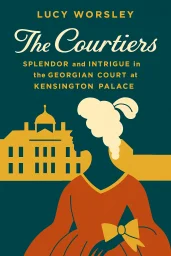
The Courtiers
by Lucy Worsley
