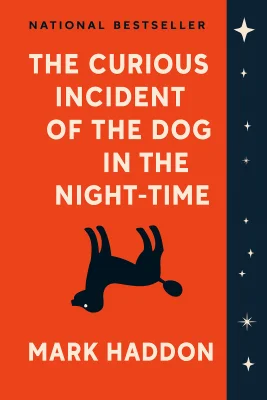
The Curious Incident of the Dog in the Night-Time
Categories
Psychology, Fiction, Classics, Mystery, Young Adult, Autistic Spectrum Disorder, School, Book Club, Contemporary, Novels
Content Type
Book
Binding
Paperback
Year
2004
Publisher
Vintage
Language
English
ISBN13
9781400032716
File Download
PDF | EPUB
The Curious Incident of the Dog in the Night-Time Plot Summary
Introduction
Seven minutes after midnight, fifteen-year-old Christopher Boone discovers Wellington, Mrs. Shears's poodle, dead on the lawn with a garden fork protruding from his body. The sight doesn't horrify Christopher the way it might another teenager. His mind, wired differently from most, immediately begins cataloguing details and forming hypotheses. Christopher has autism, and his world operates on strict rules of logic, prime numbers, and predictable patterns. What begins as a neighborhood mystery transforms into something far more devastating. Christopher decides to investigate Wellington's death, despite his father's furious protests. Armed with the deductive methods of his hero Sherlock Holmes, he starts asking questions that will unravel not just the truth about a dead dog, but the carefully constructed lies that have shaped his entire existence. His journey will take him from the familiar streets of Swindon to the terrifying chaos of London, as he discovers that the greatest mystery isn't who killed Wellington, but what happened to his mother.
Chapter 1: The Curious Case of Wellington's Murder
The garden fork stood perfectly upright, its prongs buried deep enough to anchor it in the earth beneath Wellington's still form. Christopher approached methodically, his hands recording the dog's warmth, the precise angle of the weapon, the absence of other visible wounds. Mrs. Shears's screaming shattered his concentration. She burst from her house in pajamas and slippers, her toenails painted bright pink, shrieking accusations that Christopher couldn't parse through the overwhelming noise. When the police arrived, Christopher found their uniforms and numbers comforting. Structure meant safety. The policewoman had a small hole in her tights, the policeman carried an orange leaf stuck to his shoe. These details anchored Christopher as the questions came rapid-fire, stacking up in his mind like bread in his Uncle Terry's bakery when the slicer couldn't keep pace. The sensation of mental overload triggered his defensive response. He hit the policeman. Not from malice, but from the desperate need to stop unwanted contact. The arrest that followed felt almost routine, the formal language matching what he'd heard on television. In the police cell, a perfect cube measuring two meters in each direction, Christopher calculated escape routes and considered the physics of using his glasses to start a fire. The mathematical precision of the space calmed him. His father's arrival brought both relief and new anxiety. Ed Boone was a patient man who understood his son's need for routine, for gentle handling, for their special greeting of touching fingertips instead of hugging. But even his father's steady presence couldn't quiet the questions multiplying in Christopher's analytical mind. Someone had killed Wellington deliberately, methodically. Someone who knew exactly what they were doing.
Chapter 2: Detective Logic: Following the Clues
Christopher's teacher Siobhan suggested he write about finding Wellington, turning his experience into a murder mystery novel. The format appealed to his logical mind. Mysteries had rules, patterns, solutions. They were puzzles to be solved through careful observation and deduction, just like the math problems that made perfect sense when everything else felt chaotic. Despite his father's increasingly angry warnings to stay out of other people's business, Christopher began his investigation. He mapped their street, Randolph Street, with mathematical precision. He interviewed neighbors, though talking to strangers terrified him more than physical danger. Each conversation was an exercise in brave desperation, his Swiss Army knife gripped tightly in his pocket. Mrs. Alexander, the elderly woman with the dachshund, proved most helpful. She lived at number 39, wore New Balance trainers with red laces, and seemed genuinely interested in Christopher's methodical approach to detection. Her questions felt different from the others, more careful, as if she understood something important that Christopher hadn't yet grasped. The investigation revealed a crucial pattern. Wellington had been killed with Mrs. Shears's own garden fork, taken from her locked shed. This narrowed the suspects to someone with access, someone familiar with her property and routines. Christopher's mind, trained to see connections others missed, began forming a hypothesis about Mrs. Shears's estranged husband. Mr. Shears had left two years ago, around the same time Christopher's mother had begun visiting their house more frequently, cooking meals and providing comfort in her absence. The timeline felt significant, though Christopher couldn't yet see the complete picture.
Chapter 3: Uncovering Buried Letters: Mother Lives
Christopher's search for his confiscated book led him to his father's bedroom closet, where a toolbox sat atop a shirt box he'd never noticed before. Inside, beneath his manuscript, lay dozens of letters addressed to him in familiar handwriting. His mother's handwriting, with those distinctive little circles dotting the i's instead of simple points. The impossibility struck him first. The letters were postmarked months, even years after his mother's supposed death from a heart attack. His father had told him she'd died in the hospital, that her heart simply gave out. But here was proof of her voice, her thoughts, her daily life in London with someone called Roger. She wrote about new jobs, new flats, the everyday details of a life that should have ended two years ago. Each letter revealed more devastating truth. His mother hadn't died. She'd left them, moved to London with Mr. Shears, started over without the burden of caring for a son whose needs exhausted her patience. She described their fights, his screaming episodes in shops, the impossible weight of his behavioral problems that drove her to Roger's understanding arms. She'd tried to say goodbye properly, but Christopher's father had forbidden contact, spinning the lie about her death to spare them all further pain. The physical shock overwhelmed Christopher's system. His carefully ordered world collapsed into chaos as his body rejected this new reality. He vomited, lost consciousness, became trapped in a fog of betrayal so complete it shut down his ability to process anything beyond the fundamental violation of trust. His father had lied about the most important fact in Christopher's universe. If such a massive lie was possible, then nothing could be trusted, nothing was safe.
Chapter 4: Betrayal and Flight: Father's Confession
When Christopher's father found him surrounded by the scattered letters, his breakdown was immediate and total. The man who'd maintained careful emotional control for years crumbled, tears streaming as he tried to explain the unexplainable. He'd meant to show Christopher the letters eventually, when he was older, better equipped to handle the truth. The lie had started small, a temporary cushion against devastating abandonment, then grown too large to retract. But Father's confessions weren't finished. Through his tears came another truth, more shocking than the first. He'd killed Wellington. The admission emerged amid desperate justifications about Mrs. Shears, about feeling abandoned by another woman who'd briefly offered them stability and companionship. The dog had simply been in the wrong place when Father's accumulated rage finally exploded. Christopher's father was a murderer. The man who cooked his meals, who understood his routines, who'd spent years learning to navigate Christopher's complex needs, had killed a living creature in cold blood. The revelation transformed their house from sanctuary to danger zone. If Father could murder Wellington, if Father could lie about something as fundamental as Mother's existence, then Christopher couldn't predict what else he might do. The need to escape became overwhelming. Christopher had nowhere safe to go except to the mother who was alive, who lived at 451c Chapter Road, London NW2 5NG. The address from the letters burned in his memory like a beacon. London terrified him, but staying with Father terrified him more. His logical mind calculated the risks and determined that the unknown dangers of the city were preferable to the known danger of living with someone capable of murder and systematic deception.
Chapter 5: Navigating Chaos: The London Journey
Armed with his father's bank card and the PIN number 3558, Christopher began the most terrifying journey of his life. Swindon train station assaulted his senses with crowds, noise, and overwhelming stimuli that made his head spin. Every stranger represented potential danger, every unexpected sound threatened to trigger complete shutdown. He clutched his Swiss Army knife and relied on the methodical approach that had always anchored him. The train to London became a moving prison filled with unknown people whose unpredictable movements and conversations created constant stress. Christopher found refuge in a luggage compartment, hiding among the suitcases while a policeman searched for him. The confined space reminded him of the airing cupboard at home, a place where the walls provided boundaries and safety. Paddington Station nearly destroyed him. The sheer scale of humanity moving in incomprehensible patterns triggered every defense mechanism he possessed. Christopher's mind, usually so precise in cataloguing details, began to fracture under the sensory assault. He sat paralyzed in the underground station for hours, using mathematical problems to block out the chaos around him, counting the rhythm of arriving and departing trains like a meditation. When his pet rat Toby escaped onto the electrified tracks, Christopher's terror spiked beyond manageable levels. The approaching train, the desperate rescue, the angry confrontation with other passengers, all combined to push him past his breaking point. Yet somehow he survived, retrieved Toby, and continued toward his destination. Each small victory over his overwhelming fear built upon the last, proving to himself that the impossible might actually be possible.
Chapter 6: Reunion and Reorientation: Finding Mother
The address 451c Chapter Road led to a modest flat where Christopher waited in the rain, crouched behind dustbins like a fugitive. When his mother finally appeared with Roger Shears, her shock was absolute. The son she'd been writing to for years, receiving no replies, suddenly materialized on her doorstep, soaked and traumatized but undeniably real. Judy Boone had aged beyond the two years of their separation. The stress of abandoning her child, the guilt of choosing her own survival over his needs, had carved new lines in her face. She moved carefully around Christopher, remembering too late that he couldn't bear being touched, that his autism required patient navigation of physical space. The bath she ran for him became a sanctuary where they could finally talk without the overwhelming complexity of eye contact. Christopher's explanation of his journey, his father's lies, the discovery of her letters, emerged in his characteristic precise style. But underneath his clinical recounting lay devastating hurt that Judy struggled to process. Her ex-husband had declared her dead to their son, stolen years of potential connection, weaponized Christopher's trust in ways that seemed deliberately cruel. The police arrived, summoned by neighbors concerned about the late-night disturbance. Their questions about Christopher's preferences, his safety, his future, felt surreal after his odyssey across London. The official determination that he could stay with his mother represented a victory so complete that Christopher could barely process it. He'd found the parent he thought was dead, escaped the one who'd betrayed him, and proved to himself that his logical mind could navigate even the most chaotic circumstances.
Chapter 7: Return to Order: The A-Level Challenge
Living with his mother and Roger Shears proved more complicated than Christopher had imagined. The cramped London flat, with its single bedroom and shared spaces, violated every principle of order and routine that kept his world stable. Roger's resentment at having his life disrupted by an autistic teenager created constant tension that even Christopher's limited social perception couldn't miss. The most devastating blow came when Christopher learned he'd missed his A-level mathematics exam. The test represented more than academic achievement; it was proof that his exceptional mind could function in the normal world, that his difference wasn't just limitation but also capability. Without the exam, his carefully planned future of university and independence crumbled into uncertainty. When family tensions reached the breaking point, Christopher's mother made the desperate choice to return to Swindon. The journey back felt like defeat, but it also represented something new: his mother choosing him over her own comfort, prioritizing his needs over her relationship with Roger. The gesture couldn't undo years of abandonment, but it suggested the possibility of rebuilding trust. The mathematics exam became a test of more than academic knowledge. Christopher's mental state, fragmented by trauma and exhaustion, made even simple calculations feel impossible. The familiar comfort of numbers and logical relationships had been contaminated by emotional chaos. Yet somehow, through sheer determination and the support of teachers who believed in his abilities, he managed to complete all three papers. The A grade that followed represented victory beyond academic achievement. Christopher had navigated betrayal, abandonment, and terror, had journeyed alone across England, had confronted truths that shattered his understanding of reality. The mathematical proof of his capability became proof of something larger: that his mind, different though it was, could solve even the most complex problems life presented.
Summary
Christopher Boone's investigation into Wellington's death uncovered mysteries far more significant than a murdered dog. His journey revealed the complex mathematics of human relationships, where love and abandonment, protection and betrayal, truth and necessary lies create equations with no simple solutions. His mother's abandonment and father's deception represented failures of adults who couldn't navigate the extraordinary demands of loving someone whose mind works in fundamentally different ways. Yet Christopher's odyssey also demonstrated the remarkable capabilities that accompany his limitations. His logical approach to problem-solving, his attention to detail, his refusal to accept comfortable lies, all proved essential in unraveling the truth. His successful navigation of London's chaos, his persistence through trauma, his ultimate academic triumph, revealed a young man whose differences represent not just challenges but profound strengths. In solving the mystery of Wellington's death, Christopher discovered something more valuable: proof that his unique mind could map any universe, no matter how complex or frightening, and find patterns that led toward truth.
Best Quote
“I think prime numbers are like life. They are very logical but you could never work out the rules, even if you spent all your time thinking about them” ― Mark Haddon, The Curious Incident of the Dog in the Night-Time
Review Summary
Strengths: The review highlights the book's humor and the well-developed, imperfect characters, particularly Christopher Boone. It praises the book's authentic British perspective and its ability to encourage readers to observe the world more closely. The narrative's exploration of social interactions and challenges faced by those uncomfortable with communication is also commended. Overall: The reviewer expresses a positive sentiment, recommending the book to those who enjoyed "The Good Sister" and appreciate British storytelling. The book is noted for its engaging plot and insightful portrayal of a young protagonist's analytical journey, making it a delightful read for those interested in character-driven narratives.
About Author

Mark Haddon
Haddon delves into the intricacies of human perception and communication through his diverse body of work, often emphasizing themes of family dynamics, disability, and mental health. His celebrated book, "The Curious Incident of the Dog in the Night-Time", is a testament to his unique narrative style, presenting the world through the eyes of a teenage boy with Asperger's syndrome. This approach not only blurs the lines between children's and adult literature but also offers readers profound insights into the complexities of understanding and empathy. Haddon's commitment to portraying nuanced characters draws from his early career experiences with individuals facing mental and physical challenges.\n\nWhile Haddon initially made his mark with children's literature, including series like "Agent Z" and "Baby Dinosaurs", he expanded his literary repertoire to include poetry and short stories, such as his poetry collection "The Talking Horse and the Sad Girl and the Village Under the Sea" and the more recent "Dogs and Monsters". His storytelling often employs humor and a childlike perspective, which enriches his exploration of serious themes. Therefore, readers of his works benefit from both entertainment and the opportunity to engage with deeper social issues, reflecting Haddon's dedication to offering more than mere narratives.\n\nRecognition of Haddon's contributions extends beyond literature; his foray into television with "Microsoap" earned him two BAFTAs and a Royal Television Society Award, underscoring his versatility. Meanwhile, his decision in 2023 to decline an OBE reflects his personal convictions, aligning with his known stance as a "hard-line atheist." This multifaceted bio showcases Haddon not just as an author, but as an influential voice across mediums, impacting both the literary and broader cultural landscape.
Read moreDownload PDF & EPUB
To save this Black List summary for later, download the free PDF and EPUB. You can print it out, or read offline at your convenience.
The Curious Incident of the Dog in the Night-Time
by Mark Haddon
