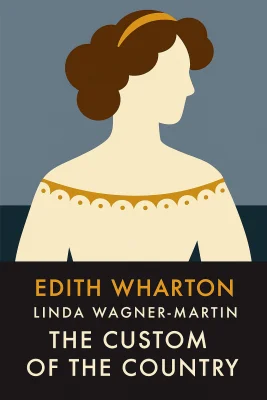
The Custom of the Country
Categories
Fiction, Classics, Historical Fiction, Literature, American, Book Club, 20th Century, Novels, New York, Literary Fiction
Content Type
Book
Binding
Paperback
Year
2006
Publisher
Penguin Books
Language
English
ASIN
0143039709
ISBN
0143039709
ISBN13
9780143039709
File Download
PDF | EPUB
The Custom of the Country Plot Summary
Introduction
# The Custom of the Country: A Gilded Age Social Climber's Rise The crystal chandelier cast fractured light across the marble floor of New York's most exclusive hotel as Undine Spragg adjusted her silk gloves one final time. Twenty-two years old, golden-haired, and devastatingly beautiful, she had arrived from the dusty streets of Apex City with nothing but her looks and an appetite that could devour worlds. Her reflection in the gilded mirror showed perfection, but her steel-gray eyes burned with something darker than vanity. She carried secrets from her past like hidden daggers, and the invitation clutched in her mother's trembling hand could either crown her queen of New York society or destroy her completely. The year was 1905, and America's social battlefield was shifting beneath the feet of its established elite. Old bloodlines trembled as new money stormed their ancient fortresses, and beautiful women had become the currency in this brutal war for status and power. Undine possessed the kind of luminous beauty that could topple dynasties, but in a world where every smile masked calculation and every marriage was a hostile takeover, even the most stunning weapon could cut both ways. Tonight, she would discover whether she was the hunter or the prey.
Chapter 1: Arriving at the Gate: Undine Spragg's New York Social Debut
The Stentorian Hotel's gaudy opulence could not mask the desperation that clung to Undine Spragg like expensive perfume. For two years, she had prowled New York's social periphery, watching from hotel windows as carriages carried the truly elite to destinations she could only imagine. Her father's real estate fortune had bought them respectability, but respectability was not enough. She wanted to belong to the world that whispered behind fans and decided fates over afternoon tea. Mrs. Heeny, the masseuse whose fingers worked magic on both tired muscles and the intricate web of Manhattan gossip, leaned forward with the conspiratorial air of a woman who held secrets. "That young Marvell boy who was asking about you? His grandfather was a Dagonet, dear. Revolutionary War stock." Undine's pulse quickened. The Dagonets represented everything she had dreamed of—bloodlines that stretched back to the nation's founding, a Washington Square mansion, and the kind of effortless elegance that no amount of money could manufacture. But shadows gathered even in triumph. Elmer Moffatt had appeared in New York like a ghost from her buried past, his knowing smile across crowded theaters making her blood freeze. He knew things about her—things that could shatter her carefully constructed image as an innocent young woman worthy of a Marvell alliance. The marriage certificate hidden in her jewelry box felt like a loaded gun, and Moffatt's presence meant someone had their finger on the trigger. When Laura Fairford's dinner invitation arrived, Undine saw her chance. She spent hours preparing, transforming herself into a vision of refined beauty that would make even the most jaded society matron pause in grudging admiration. As she glided into the candlelit dining room, surrounded by portraits of distinguished ancestors, she knew she was auditioning for the role of her lifetime. The stakes could not be higher—acceptance meant everything, rejection meant exile to the social wilderness from which she had clawed her way free.
Chapter 2: The Strategic Marriage: Capturing Ralph Marvell and Old New York
Ralph Marvell fell like a man stepping off a precipice. The sensitive young lawyer, heir to generations of refined poverty and cultural distinction, found himself utterly captivated by Undine's radiant beauty and apparent innocence. In the dim corners of Washington Square drawing rooms, surrounded by faded portraits and first-edition books, he courted her with poetry and passionate declarations that made her feel like a goddess receiving worship from a devoted supplicant. Undine accepted his devotion as her birthright, but her calculations ran deeper than romance. Ralph represented everything she had hungered for—social position, cultural refinement, and entry into the exclusive world where bloodlines mattered more than bank accounts. When he proposed with his grandmother's sapphire ring, she saw not just a husband but a golden key to the kingdom she was born to rule. The engagement announcement in the newspapers marked her victory over every girl who had ever looked down on her provincial origins. Yet even as wedding plans unfolded, battle lines were drawn. Ralph's family, led by the formidable Mrs. Marvell and the sharp-eyed patriarch Mr. Dagonet, regarded their son's choice with barely concealed horror. They recognized in Undine the type of woman who would consume everything in her path, leaving only beautiful ruins behind. But Ralph, blinded by infatuation and convinced of his power to elevate her soul, dismissed their concerns as mere snobbery. The wedding became a spectacular collision of competing visions. Undine demanded the most elaborate ceremony New York had ever witnessed, while the Marvells preferred quiet dignity. Money flowed like champagne—her father's money, spent to satisfy his daughter's vision of herself as a conquering princess. As she walked down the aisle in clouds of imported lace, Undine believed she had won everything. She did not yet understand that in the world she had entered, the real war began after the victory celebration ended.
Chapter 3: Domestic Imprisonment: The Suffocation of Married Life
The honeymoon in Italy revealed the first cracks in Undine's perfect plan. While Ralph lost himself in Renaissance galleries and ancient libraries, finding inspiration for the novel he dreamed of writing, Undine grew restless among the dusty museums and crumbling monuments. She wanted crowds, admiration, the electric thrill of being seen and envied by people who mattered. Instead, she found herself trapped with a husband who preferred dead artists to living society. "I don't care about all this old stuff," she declared, standing before a fresco that moved Ralph to tears of aesthetic rapture. "When are we going somewhere with real people?" Her complaints grew sharper with each passing day, her dissatisfaction more obvious. The romantic dream Ralph had woven around their marriage began to unravel thread by thread, revealing the ugly truth beneath—he had fallen in love with a fantasy, while she had married a man for what he represented rather than who he was. Their return to New York brought fresh disappointments. Instead of the Fifth Avenue mansion Undine had envisioned, they were forced to live in modest quarters, dependent on Ralph's meager income and his grandfather's grudging allowance. The man she had married for his social position proved nearly as poor as he was refined, unable to provide the lifestyle she considered her birthright. Each economizing measure felt like a personal insult, each denied luxury a betrayal of the promises his name had seemed to make. The birth of their son Paul should have brought them together, but instead drove them further apart. Undine regarded pregnancy as a humiliating inconvenience, motherhood as an obstacle to her social ambitions. While Ralph adored the child, she saw only another burden, another chain binding her to a life that suddenly seemed too small for her expanding desires. The nursery became a symbol of her imprisonment, the baby's cries a constant reminder of dreams deferred and freedoms lost.
Chapter 4: Breaking Free: Divorce, Abandonment, and the Price of Freedom
Three years into marriage, Undine had mastered the art of getting what she wanted through other means. When Ralph proved unable to provide the luxuries she craved, she turned to Peter Van Degen, her husband's wealthy cousin-in-law, who slipped her checks with the casual generosity of a man who had never known want. She told herself these were merely loans between friends, but the weight of his gaze and the implications of his gifts created dangerous undercurrents in her carefully managed life. Ralph, meanwhile, had sacrificed his literary dreams to enter the brutal world of New York real estate, hoping to earn enough to satisfy his wife's endless demands. The sensitive young man who once dreamed of writing the great American novel now spent his days calculating profit margins and negotiating property deals. The transformation cost him dearly—his shoulders stooped with exhaustion, his eyes lost their light, and his poetry lay forgotten in dusty notebooks like pressed flowers from a dead romance. The final rupture came not through dramatic confrontation but through the slow strangulation of hope. When Undine announced her intention to spend the summer in Europe without Ralph, funded by mysterious sources he dared not investigate, the pretense of marriage finally crumbled. Her plans included an entourage of fashionable friends and a schedule of pleasures that made a mockery of their wedding vows. When Ralph forbade the trip, her response was swift and merciless—she would go with or without his permission. The divorce proceedings unfolded with surgical precision. Undine had chosen her battlefield carefully, establishing residence in South Dakota where laws favored quick dissolution and minimal scrutiny. Ralph, broken by the public exposure of his private failure, offered no resistance. The custody arrangement reflected his complete capitulation—Undine was granted primary custody of Paul, while Ralph was relegated to the status of occasional visitor in his own son's life. As her steamer pulled away from New York harbor, Undine felt the intoxicating rush of freedom, not yet understanding that she had traded one prison for another.
Chapter 5: European Conquest: Pursuing Aristocratic Status in France
Paris beckoned like a siren song of reinvention and redemption. The Hotel Nouveau Luxe became Undine's headquarters for a campaign more ambitious than any she had previously attempted. Here, among the international set of wealthy Americans and titled Europeans, she could shed her past like last season's gowns. The awkward girl from Apex, the dissatisfied wife from Washington Square—these identities could be discarded in favor of something more glamorous and mysterious. Her first conquest was Raymond de Chelles, a minor French nobleman whose ancient name compensated for his modest fortune. Chelles possessed everything Undine had learned to value—aristocratic bearing, cultural sophistication, and most importantly, a title that would transform her from divorced American adventuress into the Marquise de Chelles. Their courtship unfolded in the glittering salons of the Faubourg Saint-Germain, where Undine's beauty and American directness created a sensation among the jaded aristocrats. But European society proved more treacherous than she had anticipated. The same qualities that had made her irresistible in New York—her ambition, her materialism, her casual disregard for convention—marked her as an outsider among people whose values had been refined over centuries. Chelles's family received her with polite hostility, recognizing immediately that she represented everything they had been bred to resist. Their acceptance was conditional, based on her potential value rather than any genuine affection. The question of her divorce became an insurmountable obstacle. The Catholic Church did not recognize divorce, making remarriage impossible without an annulment that would cost a fortune and require influence she did not possess. Chelles, torn between desire and duty, began to speak of alternative arrangements that would satisfy his passion while preserving his family's honor. Undine, who had sacrificed everything for respectability, found herself being offered the very kind of irregular liaison she had always despised.
Chapter 6: The Circular Return: Elmer Moffatt and Ultimate Material Victory
The chance encounter with Elmer Moffatt in a Parisian hotel lobby struck Undine like lightning illuminating a darkened landscape. Here was her first husband, transformed from the crude opportunist she remembered into a figure of genuine power and sophistication. Success had refined him without diminishing his essential vitality, and she found herself drawn to the confidence that radiated from him like heat from a forge. Moffatt had become everything she had once believed impossible—a self-made millionaire whose wealth dwarfed even the ancient fortunes of European nobility. His art collection rivaled those of museums, his business empire stretched across continents, and his influence reached into the highest circles of international finance. Yet beneath this polished exterior, she recognized the same driving ambition that had first attracted her in their youth, now tempered by experience and sharpened by success. Their renewed relationship unfolded against the backdrop of her crumbling marriage to Raymond. Financial pressures were mounting at the family château, its ancient systems requiring constant and expensive maintenance. When Moffatt offered to purchase the family's priceless tapestries for an astronomical sum, Undine saw salvation. But Raymond's horrified refusal revealed the unbridgeable gap between their worldviews—what she saw as practical necessity, he viewed as sacrilege against family heritage. The confrontation that followed laid bare the fundamental incompatibility of their marriage. Raymond accused her of failing to understand the sacred nature of tradition, while she raged against his willingness to live in genteel poverty rather than sacrifice objects to human need. Their argument echoed with the clash of civilizations—his rooted in continuity and reverence for the past, hers in progress and the ruthless pursuit of advantage. When she finally chose Moffatt over Raymond, it felt less like betrayal than like coming home to her true nature.
Chapter 7: Hollow Triumph: Success Achieved, Soul Lost
The divorce from Raymond and remarriage to Moffatt represented the completion of a circle that had begun in the dusty streets of Apex City. Undine had traveled from obscurity to prominence, from poverty to wealth, from provincial nobody to international figure. As the new Mrs. Elmer Moffatt, she possessed everything she had ever dreamed of—unlimited money, unquestioned social position, and the power to shape her world according to her desires. Their life together unfolded on a scale that dwarfed her previous experiences. The palace Moffatt built for her in New York was a monument to their combined ambitions, filled with treasures that included the very tapestries Raymond had refused to sell. The irony was not lost on her—through Moffatt's cunning and resources, she had acquired the symbols of the world that had rejected her, displaying them now as trophies of her ultimate victory over every force that had tried to contain her. Yet even at the pinnacle of success, Undine felt the familiar stirrings of discontent. The social world that had once seemed so important now appeared provincial compared to the international stage on which she moved. The people who had once intimidated her with their exclusivity now seemed small and petty, their power revealed as largely illusory. She had conquered every world she had encountered, but each victory left her hungrier for the next challenge, the next mountain to climb. The final revelation came with the discovery that there were still doors closed to her—positions and honors that no amount of wealth or beauty could secure. The knowledge that she could never be an ambassador's wife, that her divorces had permanently barred her from certain pinnacles of respectability, struck her like a physical blow. She had achieved everything she thought she wanted, only to discover that her appetite for more remained as voracious as ever, an endless hunger that no feast could satisfy.
Summary
In the end, Undine Spragg had bent the world to her will only to discover that the world itself was not enough. Her journey from small-town nobody to international celebrity was complete, but the hunger that had driven her remained undiminished, a black hole at the center of her being that consumed everything while giving nothing back. She had learned to navigate every social current, to speak every language of power, to claim every prize that society offered—yet the essential emptiness at her core remained unfilled, a void that grew larger with each success. The men who had loved her—Ralph with his gentle devotion, Raymond with his aristocratic passion, Moffatt with his fierce possessiveness—had each offered her a different version of fulfillment, but none could satisfy the bottomless well of her ambition. Her son Paul, growing up in the shadow of her restless pursuits, represented both her greatest achievement and her most profound failure, a reminder of the human connections she had sacrificed in her relentless climb toward an ever-receding summit. The custom of her country, she had discovered, was the endless pursuit of more—more beauty, more wealth, more power, more recognition—a pursuit that promised everything and delivered only the certainty of continued wanting, leaving her forever beautiful, forever successful, and forever alone in her gilded cage of infinite desire.
Best Quote
“She had everything she wanted, but she still felt, at times, that there were other things she might want if she knew about them.” ― Edith Wharton, The Custom of the Country
Review Summary
Strengths: The review highlights the book's brilliant portrayal of the protagonist's relentless pursuit of wealth and social status, drawing parallels to the French genre of stories about ambitious women. The narrative is described as well-written and enjoyable, offering a critical view of American social-climbing and materialism. Weaknesses: The review notes a flaw in the book's focus on the protagonist's drive for money and social domination, suggesting it lacks a moralistic resolution typical in similar French narratives. Overall: The reader finds the book to be a brilliant and enjoyable exploration of ambition and social-climbing, though it may lack a moralistic conclusion. The recommendation is positive, appreciating the book's critical perspective on the American dream.
About Author

Edith Wharton
Wharton delves into the intricate dance between societal expectations and personal desires through her insightful portrayals of upper-class life. She drew upon her intimate knowledge of New York's aristocracy to craft stories that not only reveal the constraints of Gilded Age society but also reflect her broader critique of social norms. Her work, such as "The Age of Innocence," which earned her the distinction of being the first woman awarded the Pulitzer Prize for Fiction, delves into the rituals and regrets of 1870s New York. Meanwhile, novels like "The House of Mirth" and "Ethan Frome" juxtapose urban and rural settings to explore themes of social ambition and emotional repression.\n\nHer writing spans a diverse range of themes and methods, from the tragic exploration of societal pressure in "The House of Mirth" to the incisive rural introspection in "Ethan Frome." Wharton's novella collection "Old New York" revisits upper-class society with keen social commentary, whereas "The Glimpses of the Moon" and "Summer" explore themes of marriage, social mobility, and sexual awakening. Beyond fiction, her nonfiction work like "The Decoration of Houses" and her travel writing, including "Fighting France," demonstrate her diverse literary capabilities and interests.\n\nReaders gain a multifaceted understanding of both personal and societal struggles through Wharton's unflinching, elegant prose. Her ability to dissect the customs of her time and illuminate the emotional depths of her characters provides timeless cultural insights. Her influence is further recognized through multiple Nobel Prize nominations and her connections with prominent figures like Henry James and Sinclair Lewis. This broad legacy makes her work relevant to anyone interested in the intersections of societal norms and individual desires.
Read moreDownload PDF & EPUB
To save this Black List summary for later, download the free PDF and EPUB. You can print it out, or read offline at your convenience.
The Custom of the Country
by Edith Wharton
