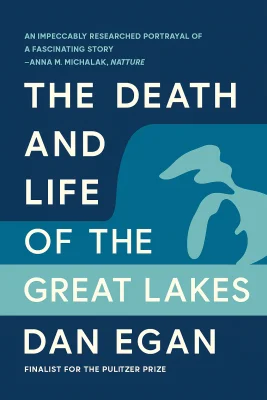
The Death and Life of the Great Lakes
Categories
Nonfiction, Science, History, Nature, Audiobook, Book Club, Natural History, Environment, Ecology, Climate Change
Content Type
Book
Binding
Paperback
Year
2018
Publisher
W. W. Norton & Company
Language
English
ASIN
0393355551
ISBN
0393355551
ISBN13
9780393355550
File Download
PDF | EPUB
The Death and Life of the Great Lakes Plot Summary
Introduction
# The Great Lakes Under Siege: An Ecological Crisis Unfolds Picture yourself standing on a pristine beach, watching waves crash against the shore as far as the eye can see. You might think you're at the ocean, but you're actually witnessing one of Earth's most precious treasures: the Great Lakes, which hold nearly one-fifth of all the fresh water on our planet's surface. These five massive inland seas have provided drinking water, transportation, and livelihoods for millions of people for thousands of years. Yet beneath their sparkling surfaces, an ecological drama is unfolding that rivals any disaster movie in its scope and consequences. What makes this story so compelling is how human ingenuity, meant to improve our lives, has unleashed forces we never anticipated. From tiny mussels that arrived as stowaways on ships to massive fish that leap from rivers like aquatic missiles, the Great Lakes have become a battleground where native species fight for survival against an army of invaders. As we explore this unfolding crisis, we'll discover how a canal built to boost commerce accidentally created a highway for ecological chaos, how fertilizers meant to feed the world are poisoning our drinking water, and how climate change is amplifying problems that began decades ago. This is ultimately a story about the delicate balance between human progress and environmental stewardship, with lessons that extend far beyond the shores of these magnificent lakes.
Chapter 1: Invasive Species: How Ships Unleashed Ecological Chaos
When the St. Lawrence Seaway opened in 1959, it was celebrated as one of humanity's greatest engineering achievements. This massive project, featuring seven locks and channels carved through solid rock, finally connected the Great Lakes to the Atlantic Ocean, allowing ocean-going vessels to sail directly into the heart of North America. Cities like Chicago and Detroit could now become international ports, competing with coastal cities for global trade. The economic promise seemed limitless, and politicians hailed the Seaway as the key to transforming the Great Lakes region into America's fourth seacoast. However, this engineering marvel came with a hidden cost that no one anticipated. Every overseas ship entering the Great Lakes carried ballast water, taken on at foreign ports to balance the vessel's weight. This water, often equivalent to ten Olympic swimming pools per ship, contained microscopic hitchhikers from around the world. When ships discharged this ballast water in Great Lakes harbors, they were essentially injecting foreign DNA into waters that had been isolated for thousands of years. Each ship became what one biologist called a "syringe" delivering exotic species into an ecosystem with no natural defenses against invasion. The irony is profound and tragic. The Seaway was built too small for the container ships that were already revolutionizing global trade. By the time it opened, Malcolm McLean's standardized shipping containers were making the Seaway's narrow locks obsolete. Today, the world's largest cargo ships are more than twice as wide as the Seaway can accommodate, limiting its use to smaller vessels carrying low-value bulk cargo like grain and steel. The economic dreams never materialized, but the ecological nightmare was just beginning. The biological invasion that followed represents one of the most dramatic ecosystem transformations in recorded history. Species that had evolved in the Black Sea, the Mediterranean, and other distant waters found themselves in an environment with abundant food and few predators. Zebra mussels, round gobies, sea lampreys, and dozens of other invaders established thriving populations that fundamentally altered the lakes' food webs. Native fish species that had evolved over thousands of years suddenly faced competitors and predators they had never encountered before. What makes these invasions particularly devastating is their permanence. Unlike chemical pollution, which eventually breaks down, invasive species reproduce and spread on their own. They become permanent residents that continue to alter ecosystems for generations. The Great Lakes now host more than 180 non-native species, making them among the most invaded ecosystems on Earth. Each new arrival can trigger cascading changes throughout the food web, creating a constantly shifting ecological landscape that challenges our understanding of how natural systems function. The Seaway stands today as a monument to the law of unintended consequences. In trying to create prosperity through engineering, we inadvertently opened the door to ecological chaos that continues to unfold decades later. The lesson is clear: when we alter natural systems, we must consider not just the immediate benefits but the long-term consequences that may be impossible to reverse.
Chapter 2: The Lamprey Invasion: Ancient Predators Devastate Native Fish
The sea lamprey looks like something from a prehistoric nightmare. This eel-like creature, which has remained virtually unchanged for 360 million years, possesses a circular, suction-cup mouth lined with concentric rows of razor-sharp teeth. When it attaches to a fish, it uses this horrifying apparatus to rasp through scales and skin, feeding on blood and bodily fluids like an aquatic vampire. This ancient predator survived the extinction of the dinosaurs and four of Earth's five mass extinction events, but when it finally gained access to the upper Great Lakes in the early 20th century, it encountered something it had never faced before: an ecosystem completely unprepared for its assault. For thousands of years, Niagara Falls had served as an impenetrable barrier, protecting the upper Great Lakes from Atlantic Ocean predators like the sea lamprey. This isolation had created what biologists call an "ecologically naive" environment, where native fish species evolved without developing defenses against parasitic predators. Lake trout, whitefish, and other native species had diversified into dozens of specialized populations, each perfectly adapted to specific depths, temperatures, and food sources. Some lake trout grew to massive sizes feeding on schooling fish, while others remained small and fed on plankton near the surface. When the Welland Canal was deepened in 1919 to accommodate larger ships, it inadvertently created a pathway for lampreys to bypass Niagara Falls. The invasion that followed was swift and devastating. Each adult lamprey can kill up to 40 pounds of fish during its year-long feeding phase, and with no natural predators to control their numbers, lamprey populations exploded throughout the upper Great Lakes. The native fish, having no evolutionary experience with such predators, were defenseless against this onslaught. The ecological collapse was both rapid and complete. Lake Michigan's annual lake trout harvest plummeted from 6.5 million pounds in 1944 to virtually zero by 1954. Similar crashes occurred across all the upper Great Lakes, wiping out not just lake trout but also whitefish, several species of native ciscoes, and the commercial fisheries that had sustained communities for generations. The loss of these top predators created a ecological vacuum that would soon be filled by other invasive species, setting the stage for even more dramatic changes to come. The solution came from an unlikely hero: Vernon Applegate, a World War II veteran who became obsessed with understanding every aspect of lamprey biology. Working from a converted Coast Guard station, Applegate spent three years living along lamprey-infested rivers, studying their complex life cycle with scientific intensity. He discovered that lampreys spend years as larvae buried in river sediments before transforming into their parasitic adult form, providing a vulnerable stage where they could be targeted with chemical controls. After testing over 5,000 chemical compounds, Applegate's team found a selective poison that specifically targets the lamprey's primitive physiology without harming other fish. The lamprey control program that emerged from this research represents one of the most successful large-scale pest management efforts in history, keeping lamprey populations at about 10 percent of their peak levels for over half a century. However, this victory came too late to save the intricate web of native fish populations that had taken thousands of years to evolve, leaving the lakes forever changed.
Chapter 3: Engineering Nature: Pacific Salmon Transform Lake Ecosystems
By the mid-1960s, the Great Lakes faced an ecological crisis of unprecedented proportions. With native predators decimated by sea lampreys, invasive alewives had exploded across the lakes like an aquatic plague, reaching densities so extreme they comprised 90 percent of all fish biomass in Lake Michigan. These small, silvery fish were poorly adapted to freshwater life, suffering from stunted growth and extreme sensitivity to temperature changes. When cold water upwellings occurred, billions of alewives would die simultaneously, washing ashore in rotting masses that could pile shin-deep along hundreds of miles of coastline. The summer of 1967 brought the worst alewife die-off in history, with Chicago alone removing enough dead fish to cover two football fields 500 feet high. The stench was overwhelming, beaches became unusable, and the tourism industry faced collapse. Desperate for a solution, fisheries managers turned to an audacious experiment that would fundamentally transform the Great Lakes: importing Pacific salmon to feast on the alewife hordes. It was biological engineering on a massive scale, essentially turning the lakes into a managed aquaculture system. Howard Tanner, the visionary Michigan fisheries biologist who championed this radical approach, understood that restoring the lakes' original ecosystem was impossible. Instead, he proposed creating an entirely new one based on Pacific salmon species that had never naturally occurred east of the Rocky Mountains. Coho salmon, known for their fighting ability and excellent eating quality, were chosen as the primary weapon against the alewife invasion. The first experimental plantings in 1966 were modest, but the results exceeded everyone's wildest expectations. Fed on abundant alewives, these transplanted Pacific natives grew to enormous sizes that dwarfed their ocean counterparts. Coho salmon that typically weighed eight pounds in the Pacific grew to over 20 pounds in the Great Lakes. When the first major runs returned to streams in 1967, "coho fever" gripped the region. Thousands of anglers descended on rivers and harbors, motels filled for 50 miles around popular fishing spots, and tackle manufacturers couldn't keep up with demand for specialized Great Lakes fishing gear. The salmon program's success was immediate and dramatic. Alewife populations crashed as salmon devoured them by the millions, and a multibillion-dollar sport fishing industry was born virtually overnight. Charter boat operators, marina owners, and tackle manufacturers all benefited from what became one of the most successful fisheries management programs in history. The salmon also created a powerful political constituency for Great Lakes protection, as anglers demanded cleaner water and better habitat to protect their prized fish. However, this engineered ecosystem came with hidden vulnerabilities. The salmon program created a biological house of cards, entirely dependent on maintaining precise balances between predators and prey. When zebra and quagga mussels later stripped plankton from the water, alewife populations collapsed, taking the salmon fishery with them. The artificial ecosystem that had seemed so successful proved to be as fragile as it was spectacular, demonstrating the risks of large-scale ecological engineering in complex natural systems.
Chapter 4: Toxic Waters: Agricultural Runoff Threatens Drinking Supplies
On August 2, 2014, nearly half a million residents of Toledo, Ohio, woke up to a crisis that seemed impossible in the 21st century: their tap water had become poisonous. The culprit was microcystin, a liver toxin produced by blue-green algae that had overwhelmed Lake Erie's western basin. Unlike previous water emergencies, this wasn't a problem that could be solved by boiling water. Heat actually concentrates the toxin, making it more dangerous. Mayor Michael Collins found himself making the terrifying announcement that residents should not drink, cook with, or even brush their teeth with tap water. The toxic bloom that paralyzed Toledo wasn't a natural disaster but the predictable result of decades of agricultural practices in the surrounding watershed. Farmers throughout Ohio, Michigan, and Indiana had been applying phosphorus-rich fertilizers to boost crop yields, and when spring rains arrived, this excess phosphorus washed into streams and rivers that feed Lake Erie. The lake's shallow western basin, with an average depth of less than 25 feet, became a perfect breeding ground for toxic algae when warm temperatures and abundant nutrients combined in a deadly cocktail. What made this crisis particularly alarming was how quickly it developed and spread. Satellite images showed a relatively small toxic plume that winds drove directly into Toledo's water intake pipe within hours. The city's water treatment plant, designed to handle normal bacterial contamination, was completely overwhelmed by the concentrated algal toxins. Within hours of the announcement, store shelves were stripped bare of bottled water, restaurants closed, hospitals postponed surgeries, and the National Guard rushed in emergency supplies. The Toledo crisis exposed a fundamental flaw in how we regulate water pollution. The Clean Water Act of 1972 successfully controlled "point sources" of pollution like factory discharge pipes, but it largely exempted agricultural runoff, classified as "nonpoint" pollution. This exemption means that while cities and industries face strict limits on what they can discharge into waterways, farms remain largely unregulated despite being the primary source of the nutrients fueling these toxic blooms. The problem has been exacerbated by modern farming practices, particularly the widespread adoption of no-till agriculture. While this practice helps prevent soil erosion, it leaves crop residue on the surface where phosphorus fertilizers can more easily wash away during storms. The transformation of Ohio's Great Black Swamp into agricultural land also eliminated nature's own water purification system. The swamp once filtered nutrients from water before it reached Lake Erie, but its drainage for farming removed this crucial buffer. Today, the Maumee River carries phosphorus concentrations thirty times higher than the Detroit River, creating perfect conditions for toxic algae blooms that threaten millions of people who depend on Lake Erie for drinking water. The economic and social impacts ripple far beyond Toledo, as other Great Lakes communities realize they face similar vulnerabilities. As Toledo's mayor warned other Great Lakes mayors, what happened in Toledo was just the beginning, not an isolated incident that could be easily prevented elsewhere.
Chapter 5: Climate Change: Water Levels Swing to Dangerous Extremes
Climate change is transforming the Great Lakes in ways that are both subtle and profound, creating a cascade of effects that threaten to fundamentally alter these ancient bodies of water. The most visible impact has been the dramatic fluctuation in water levels, with Lakes Michigan and Huron experiencing their lowest recorded levels in 2013 before rebounding to near-record highs just a few years later. These extreme swings represent a new normal that is testing the limits of both human infrastructure and natural ecosystems. The key to understanding these changes lies in the relationship between ice cover and water temperature. Historically, the Great Lakes froze partially each winter, with ice coverage averaging 25 to 30 percent across all the lakes. This ice cap served as a natural thermostat, reflecting solar radiation back into space and keeping water temperatures relatively cool throughout the year. However, even modest increases in air temperature have dramatically reduced ice coverage, with some lakes experiencing 70 percent less ice than just four decades ago. Without their protective ice cap, the lakes continue absorbing solar energy throughout the winter months, leading to unprecedented increases in water temperature. Lake Superior's average summer surface temperature has risen by nearly four degrees since 1980, while some areas of Lake Michigan have recorded temperatures approaching 80 degrees Fahrenheit. These tropical temperatures in northern waters create ideal conditions for increased evaporation, particularly during the fall and early winter months when cold air masses move over the still-warm lake surfaces. The hydrological consequences have been dramatic and far-reaching. Between 1999 and 2013, Lakes Michigan and Huron lost more than four feet of water to increased evaporation, even during a period when precipitation was above average. This represents a fundamental shift in the lakes' water balance, with the atmosphere now capable of extracting more water than it deposits in some years. The result was the longest period of below-average water levels in recorded history, followed by rapid rebounds when weather patterns temporarily shifted. These changes have profound implications for everything from commercial shipping to coastal ecosystems. Harbors designed for higher water levels become unusable, forcing expensive dredging operations or the abandonment of facilities altogether. Cargo ships must carry lighter loads when water levels are low, reducing efficiency and increasing transportation costs. Wetlands that depend on specific water level ranges are stressed or destroyed, while new beaches appear in areas that were previously underwater. The speed of these changes is perhaps most concerning. In 2013, Lakes Michigan and Huron hit their lowest levels in recorded history. Just three years later, they had risen more than four feet, the fastest rise on record. This rapid fluctuation reflects the intensification of weather patterns, with more extreme precipitation events followed by more severe droughts. Scientists predict that while average water levels may remain relatively stable, the extremes will become more severe, with potential swings of eight to ten feet between high and low periods. This new reality will require fundamental changes in how communities, industries, and ecosystems adapt to life on the Great Lakes.
Chapter 6: The Chicago Canal: Connecting Watersheds, Spreading Invaders
In downtown Chicago, a continental divide once separated two of North America's greatest watersheds. Water falling on one side of this ridge flowed toward the Atlantic Ocean through the Great Lakes and St. Lawrence River, while water on the other side traveled to the Gulf of Mexico via the Mississippi River system. This natural barrier had kept the aquatic life of these vast regions isolated from each other for thousands of years. But in 1900, Chicago destroyed this ancient divide with one of the most audacious engineering projects in American history: reversing the flow of the Chicago River. The Chicago Sanitary and Ship Canal was born from desperation. The city faced a deadly public health crisis as it drew drinking water from Lake Michigan while simultaneously dumping sewage into the Chicago River, which flowed into the same lake. Typhoid fever killed nearly 2,000 Chicagoans in 1891 alone, and the situation was becoming unsustainable. The solution was radical: dig a canal deep enough to permanently reverse the river's flow, sending Chicago's waste toward the Gulf of Mexico instead of into the city's drinking water supply. The engineering feat required moving more earth than the construction of the Panama Canal. Workers carved a channel 28 miles long, 160 feet wide, and 24 feet deep, employing the largest concentration of heavy machinery ever assembled at that time. The project worked exactly as intended, dramatically reducing typhoid deaths and allowing Chicago to continue growing into one of America's largest cities. However, the ecological consequences of connecting previously separate watersheds weren't considered at the time. Today, this artificial connection has become a biological superhighway that threatens to unleash ecological chaos on a continental scale. The most immediate danger comes from Asian carp, massive filter-feeding fish that have colonized much of the Mississippi River system since escaping from Southern fish farms in the 1970s. Silver carp, which can grow to 60 pounds, have become infamous for their tendency to leap out of the water when startled by boat motors, creating dangerous conditions for recreational boaters. Bighead carp, which can exceed 100 pounds, are less visible but even more destructive, consuming up to 20 percent of their body weight daily in plankton. These fish don't just invade ecosystems, they conquer them. In some stretches of the Illinois River, Asian carp now comprise more than 90 percent of the total fish biomass, having essentially starved out native species by monopolizing the microscopic organisms that form the base of the aquatic food web. If they successfully colonize the Great Lakes, they could trigger an ecological collapse that would dwarf any previous invasive species impact, devastating the region's $7 billion fishing industry and fundamentally altering food webs that 40 million people depend on for drinking water. The federal government has spent hundreds of millions of dollars trying to prevent Asian carp from using the canal to reach the Great Lakes, including the installation of electric barriers that shock fish attempting to swim through. However, DNA evidence suggests that some carp may have already breached these defenses. The most permanent solution would be to physically separate the watersheds again, but this would require rebuilding Chicago's entire sewage system at an estimated cost of $18 billion. The canal that once saved Chicago from disease may now threaten the ecological health of an entire continent.
Chapter 7: Native Species Fight Back: Adaptation in Transformed Waters
Despite the massive ecological disruption caused by invasive species, pollution, and climate change, some native Great Lakes species are demonstrating remarkable resilience and adaptability. These success stories offer hope that the lakes' ecosystems retain the capacity for recovery, even in their dramatically altered state. The key appears to be the ability of native species to exploit new ecological niches created by invasive species, essentially turning ecological disasters into evolutionary opportunities. The most striking example is the rapid adaptation of lake whitefish to the mussel-dominated ecosystem. Before the zebra mussel invasion of the late 1980s, whitefish were gentle bottom-feeders that consumed small crustaceans and aquatic insects from the lake floor. When these traditional food sources disappeared, consumed by the billions of filter-feeding mussels now carpeting the lake bottoms, whitefish faced potential extinction. Instead, they underwent one of the most dramatic behavioral and physiological changes ever documented in wild fish populations. Within just a few generations, whitefish evolved stronger stomach muscles capable of crushing mussel shells and began hunting other fish, particularly round gobies, another invasive species that feeds on mussels. Commercial fishermen report catching whitefish with their jaws torn from swallowing whole gobies, a behavior never observed before the invasive species arrived. These fish have essentially evolved from herbivores to carnivores in real time, demonstrating the remarkable plasticity of native species when faced with environmental challenges. Lake trout, the lakes' former apex predator, are also showing signs of natural recovery in areas where invasive alewives have disappeared. Alewives carry an enzyme that causes thiamine deficiency in lake trout, preventing their eggs from hatching successfully. When alewife populations crashed in Lake Huron due to the loss of their plankton food source to invasive mussels, lake trout began reproducing naturally for the first time in decades. Biologists now regularly find significant numbers of wild lake trout that weren't produced in hatcheries, suggesting that natural reproduction is returning to areas where it had been absent for over half a century. The recovery of native species has been aided by their ability to exploit round gobies as a crucial link in the new food web. These invasive bottom-dwellers have become living converters, consuming mussels and transforming them into a form that native predators can digest. Smallmouth bass, walleye, yellow perch, and brown trout have all learned to feed heavily on gobies, and their populations have stabilized or increased in many areas. This suggests that the lakes may be developing a new ecological balance based on complex interactions between native and invasive species. However, this recovery comes with significant trade-offs. The collapse of alewife populations has devastated the Pacific salmon fishery that was artificially maintained for decades, forcing charter boat captains and the recreational fishing industry to adapt to a new reality focused on native species. While these fish don't fight as dramatically as salmon, they represent a more ecologically sustainable future for the Great Lakes. The transition illustrates the difficult choices facing Great Lakes managers as they decide whether to continue supporting artificial fisheries or allow natural recovery processes to proceed, even when the results differ dramatically from both the original ecosystem and the engineered one that replaced it.
Summary
The Great Lakes crisis reveals a fundamental truth about our relationship with the natural world: every action we take to control and exploit natural systems creates ripple effects we cannot predict or control. What began as noble efforts to boost commerce, improve public health, and increase agricultural productivity unleashed cascading ecological changes that continue to reshape these ancient waters in ways no engineer, farmer, or biologist could have foreseen. The lakes today are neither the pristine wilderness that early explorers encountered nor the industrial wasteland they became in the mid-20th century, but something entirely new: hybrid ecosystems where native and invasive species struggle to find new forms of balance under constant human management. This transformation raises profound questions about our role as stewards of the natural world and the responsibilities we have to future generations. How do we balance economic development with ecological protection when the consequences of our choices may not become apparent for decades? Can we learn to work with natural systems rather than simply trying to control them, and what does it mean to manage ecosystems that have been fundamentally altered by human activities? The Great Lakes' story is far from over, and its next chapters will be written by how we choose to answer these questions in the decades ahead, as climate change and growing water scarcity add new pressures to an already stressed system.
Best Quote
“A normal lake is knowable. A Great Lake can hold all the mysteries of an ocean, and then some.” ― Dan Egan, The Death and Life of the Great Lakes
Review Summary
Strengths: The review highlights Dan Egan's effective use of scientific evidence, historical anecdotes, and interviews to explore the transformation of the Great Lakes. It praises the book for detailing the impact of invasive species and human intervention on the ecosystem, providing a comprehensive historical and environmental perspective. Overall: The review conveys a positive sentiment towards "The Death and Life of the Great Lakes," appreciating its thorough examination of ecological changes and historical developments. The book is recommended for those interested in environmental science and history, as it offers an insightful look into the challenges facing the Great Lakes.
About Author

Dan Egan
Egan delves into the pressing ecological challenges facing freshwater ecosystems, with a particular focus on the Great Lakes. His work highlights the intricate balance between environmental threats and policy responses, aiming to raise public awareness about the urgent need for conservation. Egan’s books, such as "The Death and Life of the Great Lakes," delve into issues like invasive species and pollution, while "The Devil’s Element" explores the global phosphorus crisis. These themes reflect his commitment to making complex environmental issues accessible to a broader audience through engaging narrative nonfiction.\n\nIn his role as a journalist in residence at the University of Wisconsin-Milwaukee's School of Freshwater Sciences, Egan connects scientific findings with compelling storytelling. This method not only enriches public discourse but also serves as a bridge between scientific communities and the general public. Readers benefit from his ability to transform technical data into relatable narratives, encouraging a deeper understanding of water policy and its implications. His achievements in environmental journalism are recognized through awards like the Los Angeles Times Book Prize, underscoring his impact in the field.
Read moreDownload PDF & EPUB
To save this Black List summary for later, download the free PDF and EPUB. You can print it out, or read offline at your convenience.
The Death and Life of the Great Lakes
by Dan Egan
