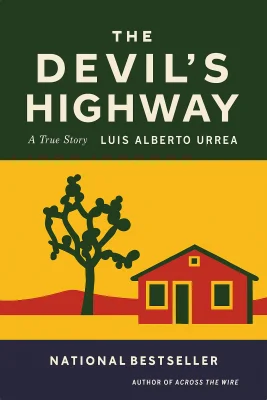
The Devil's Highway
A True Story
Categories
Nonfiction, History, Politics, Audiobook, True Crime, Social Justice, Journalism, Book Club, Crime, Latinx
Content Type
Book
Binding
Paperback
Year
2003
Publisher
Back Bay Books
Language
English
ASIN
0316010804
ISBN
0316010804
ISBN13
9780316010801
File Download
PDF | EPUB
The Devil's Highway Plot Summary
Introduction
In the pre-dawn darkness of May 2001, twenty-six men gathered in a small Mexican border town, each carrying nothing more than a plastic water jug and a dream of earning enough money to build a simple room for their families. They had no way of knowing that within days, fourteen of them would perish in one of the most unforgiving landscapes on Earth, their bodies scattered across the Arizona desert like forgotten prayers. Among them was a father walking beside his fifteen-year-old son, both believing they were just hours away from salvation. This tragedy represents far more than a failed border crossing. It illuminates the complex web of economic desperation, political failure, and human resilience that defines the modern immigration crisis. Through meticulous investigation and compassionate storytelling, we witness how ordinary people become caught in extraordinary circumstances, where survival depends on impossible choices made by individuals trapped between poverty and hope. The story challenges us to see beyond statistics and headlines, revealing the profound humanity in those who risk everything for the chance at a better life, and the dedicated agents who race against time to save them.
Chapter 1: The Breaking Point: How 26 Men Faced Death in the Desert
The morning sun struck like a physical blow as the lost men realized their guide had abandoned them. Jesús López Ramos, a nineteen-year-old with a punk-rock haircut, had promised them they were only hours from their destination. Instead, after three days of walking in circles through the Sonoran Desert, the group found themselves deeper in the wilderness than ever before. The temperature was climbing toward 110 degrees, their water bottles were empty, and their bodies were beginning the fatal process of hyperthermia. Reymundo Barreda Sr. watched helplessly as his teenage son collapsed in his arms, the boy's body unable to cope with the relentless heat that turned their skin to leather and their blood to sludge. When the men could no longer produce sweat, their internal cooling systems failed completely. Some began drinking their own urine, desperately trying to extract any moisture to keep their organs functioning. Others hallucinated, seeing crystal cities and dead relatives, their minds retreating from a reality too brutal to comprehend. The strongest among them stripped naked, their nerve endings so inflamed that clothing felt like sandpaper against their skin. In their final moments, they dug shallow graves in the sand, instinctively seeking relief from the sun that had become their executioner. The desert's assault on the human body follows a predictable and merciless progression. Heat stress gives way to heat exhaustion as the body desperately tries to maintain its core temperature. When that fails, vital organs begin shutting down in sequence, from kidneys to heart to brain. The men of the Wellton 26 experienced each stage of this biological breakdown, their bodies transforming from living beings into the mummified remains that searchers would later discover. Their deaths reveal not just the physical limits of human endurance, but the terrible mathematics of desperation that drives people to risk everything for a chance at survival.
Chapter 2: The Economics of Human Smuggling: Coyotes, Pollos and Business
Don Moisés García drove through the impoverished villages of Veracruz in his American car, his gold watch catching the sunlight as he made his pitch to desperate farmers. The coffee prices had collapsed, leaving families unable to feed their children or send them to school. Don Moi, as he was known, offered a simple solution: for just twenty thousand pesos, he could arrange passage to the United States where they could earn in a day what took a month in Mexico. The men who signed up with him had no idea they were entering a sophisticated criminal network that stretched from Phoenix to Central America, where human lives were traded like commodities. The Cercas crime family operated their smuggling business with corporate efficiency. At the top sat Luis Cercas in Phoenix, coordinating transportation and safe houses across multiple states. His brother Daniel, known as "El Chespiro," managed recruitment and payments from Mexico. Below them, enforcers like "El Negro" controlled the border crossing operations, while guides like Jesús López Ramos served as expendable foot soldiers. The migrants themselves were called "pollos" chickens, livestock to be moved and sold. If they died in the desert, it was simply a cost of doing business. The transformation of human smuggling from small-time border hustling to organized crime reflects broader changes in immigration enforcement. As urban crossing points became militarized, smugglers adapted by moving operations into remote desert areas where the risk of death exponentially increased. The higher stakes meant higher prices, turning border crossing into a billion-dollar industry where criminal organizations could charge desperate families their life savings for passage through landscapes that had claimed thousands of lives. This economic dynamic ensures that as long as poverty drives people north and enforcement pushes them into dangerous terrain, the death toll will continue to mount.
Chapter 3: Borders and Barriers: Policy Failures on Both Sides
Operation Gatekeeper succeeded brilliantly at its stated goal of sealing urban border crossings like San Diego and El Paso. Chain-link fences gave way to steel barriers topped with razor wire, floodlights turned night into day, and Border Patrol agents sat in trucks positioned every half-mile, each within sight of the next. The policy worked exactly as intended: illegal crossings in these areas virtually disappeared. But the celebration was premature. The migrants didn't stop coming; they simply moved east into landscapes so hostile that they served as natural barriers. What had been a game of cat and mouse in city parks became a death march through killing deserts. Mexican border policies proved equally counterproductive. While officials in Mexico City erected signs warning migrants about the dangers of desert crossing, they took no meaningful action to address the economic conditions driving the exodus. The Mexican government even considered providing survival kits to border crossers, a plan abandoned only after fierce protests from the United States. Meanwhile, Mexican police and military units, supposedly patrolling the border, were often paid off by the same criminal organizations they were meant to stop. The result was a system where both governments could claim they were addressing the problem while ensuring it continued unabated. The tragic irony of border enforcement is that increased security in safe crossing areas has driven migrants into terrain so dangerous that nature itself becomes an executioner. The same people who might have safely crossed at urban checkpoints and been quickly apprehended and returned home now risk death in remote wilderness areas where rescue is often impossible. This unintended consequence of border security reveals how policies designed to deter migration have instead transformed it into a humanitarian crisis, where the penalty for economic desperation has become death by hyperthermia in landscapes that have claimed more lives than many wars.
Chapter 4: Walking to Die: The Physical and Psychological Journey
The first night of walking felt almost pleasant to the twenty-six men as they moved through the cool desert air, their plastic water jugs sloshing reassuringly at their sides. They joked and made plans for their futures in America, confident that their guide knew the way to the highway just beyond the next ridge. By the second day, as temperatures soared above 100 degrees and their guide led them deeper into the mountains instead of toward safety, the mood changed dramatically. Men who had been friends began eyeing each other's water supplies with desperate calculation, and some quietly began to accept that they might never see their families again. The psychological disintegration preceded the physical collapse. As dehydration progressed, the men's cognitive abilities deteriorated rapidly. They became confused about basic facts like their own names and addresses. Some believed they were back home in Mexico, carrying on conversations with hallucinated family members. Others became convinced they were swimming in cool lakes or walking through green forests. The desert's heat didn't just attack their bodies; it stripped away their sanity, leaving them vulnerable to making fatal decisions like wandering away from the group or removing all their clothing in the blazing sun. The phenomenon of hyperthermia follows a predictable progression that transforms healthy adults into helpless victims within hours. As core body temperature rises, the brain begins to malfunction, causing disorientation and poor judgment. Blood pressure drops as the body desperately tries to cool itself, leading to organ failure. In the final stages, victims often engage in bizarre behaviors called "terminal burrowing," attempting to dig into the ground or hide in small spaces. Understanding this process reveals why desert deaths are so common among border crossers: the very heat that kills them also destroys their ability to make rational decisions about survival.
Chapter 5: The Rescue Operation: Border Patrol's Race Against Time
When Border Patrol agent Mike F. encountered five sunburned men stumbling out of the mountains onto a remote dirt road, he immediately radioed for backup. The men could barely speak, their lips cracked and swollen, their eyes red from sun exposure. Through broken Spanish and desperate gestures, they communicated that there were more people dying in the desert behind them. Within minutes, what the Border Patrol calls a "Banzai Run" was underway, with every available agent, helicopter, and rescue unit racing toward the coordinates Mike had provided. The scale of the rescue operation dwarfed anything previously attempted in the region. Marine helicopters joined Border Patrol aircraft in grid searches across hundreds of square miles of wilderness. Agents drove so aggressively across the rough terrain that they suffered twenty-six flat tires, some continuing on wheel rims rather than stopping to make repairs. BORSTAR rescue specialists rappelled from helicopters to reach bodies scattered across remote mountainsides. For forty-eight hours, the desert swarmed with searchers determined to find anyone who might still be alive among the scattered remains of the group. The heroism displayed during the rescue operation revealed a side of border enforcement rarely seen in public discourse. The same agents who spent their careers apprehending illegal immigrants now risked their own lives to save them, working around the clock in dangerous terrain and extreme heat. Their dedication led to policy changes that included construction of solar-powered rescue beacons throughout the desert, funded entirely by agents' personal contributions. These towers, which flash every ten seconds and promise rescue within one hour of activation, represent a profound shift in thinking about border enforcement from mere apprehension to humanitarian responsibility.
Chapter 6: Aftermath: Justice, Politics and the Human Cost
In the sterile environment of a Phoenix courtroom, nineteen-year-old Jesús López Ramos faced the possibility of execution fourteen times over, once for each man who died under his guidance. His federal public defender argued that Ramos was himself a victim, an inexperienced guide who had genuinely tried to save the men he led into the desert. Prosecutors painted him as a cold-blooded killer who abandoned his charges to die while he saved himself. The truth lay somewhere between these extremes: a teenager from crushing poverty who had accepted a job that required skills he didn't possess, leading to consequences no one could have fully anticipated. The survivors of the journey found themselves in an unexpected position of power within the American justice system. In exchange for their testimony against Ramos and information about the smuggling network that had organized their journey, they were granted legal residency and jobs in Phoenix. The irony was not lost on immigration observers: men who had risked death to enter the country illegally were now being protected and supported by the same government that had tried to keep them out. Their transformation from lawbreakers to key witnesses illustrated the complex moral calculations that govern American immigration policy. The political response to the tragedy followed predictable patterns, with each side using the deaths to support predetermined policy positions. Immigration restrictionists argued that the tragedy proved the need for tighter border security and harsher penalties for smugglers. Immigration advocates countered that the deaths resulted directly from enforcement policies that pushed migrants into dangerous terrain. Meanwhile, the deeper economic and social forces that had driven the men to leave their homes remained largely unchanged, ensuring that others would follow the same deadly paths despite the well-publicized consequences.
Chapter 7: Lives Left Behind: Families and Communities in Mexico
In the mountain village of Veracruz, Octavia Landeros clutched her husband's cowboy boots, the only things he had left behind when he departed for what was supposed to be a quick trip to earn money for their son's school expenses. She had discovered his departure only when a friend brought her the boots two days after he had secretly joined the group heading north. For weeks, she held onto hope that Enrique would call or send word of his safe arrival in the United States. Instead, she received a visit from Mexican government officials who handed her a death certificate and asked if she wanted her husband's body returned for burial. The ripple effects of the tragedy spread far beyond the immediate families of the dead. In coffee-growing regions where economic collapse had driven the emigration, entire communities found themselves destabilized by the sudden loss of so many men. Children who had been promised new houses and school supplies learned instead that their fathers would never return. Wives became widows overnight, left to care for extended families without the remittance money they had counted on receiving from America. The economic desperation that had originally driven the men to leave their homes was now compounded by grief and loss. The Mexican government's response to the tragedy revealed the complex political calculations surrounding emigration policy. Officials simultaneously mourned the dead as martyrs while refusing to address the economic conditions that had forced them to leave. President Vicente Fox's administration had quietly encouraged emigration as a safety valve for social unrest, viewing remittance money from the United States as crucial to Mexico's economic stability. The deaths in the Arizona desert forced uncomfortable questions about the true cost of this policy, measured not in economic statistics but in human lives torn from families and communities that could ill afford to lose them.
Summary
The story of the Wellton 26 illuminates a fundamental truth about human migration: when people face the choice between certain poverty and possible death, many will choose the risk. The men who perished in the Arizona desert were not criminals or invaders, but fathers and sons seeking the basic human dignity that comes from being able to provide for one's family. Their deaths resulted from a complex system of economic inequality, policy failure, and criminal exploitation that continues to claim lives along borders worldwide. The tragedy also reveals the extraordinary compassion that emerges in the darkest circumstances. Border Patrol agents who spent their careers apprehending illegal immigrants became their rescuers, building lifesaving towers with their own money and risking their lives in helicopter searches. Mexican consuls worked around the clock to identify bodies and comfort families. Ordinary citizens on both sides of the border organized humanitarian efforts to prevent future deaths. These acts of grace remind us that even in the midst of political controversy and human tragedy, our shared humanity can transcend the artificial boundaries that divide nations and peoples. The ultimate lesson of the Devil's Highway is that when we choose to see migrants as fellow human beings rather than political abstractions, we open possibilities for policies that honor both the rule of law and the dignity of every person seeking a better life.
Best Quote
“What we take from granted in the United States as being Mexican, to those from southern Mexico, is almost completely foreign. Rural Mexicans don't have the spare money to drown their food in melted cheese. They don't smother their food in mounds of sour cream. Who would pay for it? They have never seen "nachos." In some regions of the south, they eat soup with bananas; some tribal folks not far from Veracruz eat termite tacos; turkey, when there are turkeys, is not filled with "stuffing"―but with dry pineapples, papaya, pecans. Meat is killed behind the house, or it is bought, dripping and flyblown, off a wooden plank in the village market. They eat cheeks, ears, feet, tails, lips, fried blood, intestines filled with curdled milk. Southerners grew up eating corn tortillas, and they never varied in their diet. You find them eating food the Aztecs once ate. Flour tortillas, burritos, chimichangas―it's foreign food to them, invented on the border.They were alliens before they ever crossed the line.” ― Luis Alberto Urrea, The Devil's Highway: A True Story
Review Summary
Strengths: The review highlights the book's exceptional storytelling and writing quality, describing it as a "kaleidoscopic view" of the complex issues surrounding immigration and border crossing. The narrative is praised for its emotional depth and comprehensive coverage of various perspectives, including border patrol and the harsh realities of the Devil's Highway. The audio version, read by the author, is noted for its dynamic and emotional delivery. The book's nomination for a Pulitzer Prize is also mentioned as a testament to its quality. Overall: The reviewer expresses a highly positive sentiment, recommending the book as a powerful and eye-opening read on immigration issues. It is suggested as a superior alternative to other controversial works on the topic, such as "American Dirt." The book is described as both harrowing and enlightening, making it a compelling choice for readers interested in nonfiction about immigration.
About Author

Luis Alberto Urrea
Urrea investigates the intricacies of cultural identity and the human experience, drawing from his own Mexican and American heritage. His writing, marked by themes of borders, immigration, and the quest for belonging, offers a profound reflection on dual cultures and shared humanity. This purpose is evident in works such as "The Devil's Highway", a nonfiction narrative that brought him to the Pulitzer Prize finalist list in 2005. Meanwhile, his historical novel "The Hummingbird's Daughter" explores familial legacy and personal identity, inspired by the life of his great-aunt Teresa Urrea. These books exemplify his ability to bridge cultural divides, resonating with readers seeking stories that illuminate the complexities of border life.\n\nUrrea's method combines rigorous research and storytelling, allowing him to capture the nuanced realities of borderlands. His approach is further reflected in "Into the Beautiful North" and his collection "The Water Museum", both of which explore universal themes of love, loss, and resilience. This focus on cross-cultural experiences and personal narratives makes his work particularly compelling for audiences interested in the multifaceted nature of identity and belonging. As a professor of creative writing, Urrea influences a new generation of writers, extending his impact beyond the page.\n\nCelebrated with awards such as the American Book Award and the Lannan Literary Award, Urrea's contributions to literature are widely recognized. This brief bio highlights his role not only as an accomplished author but also as a cultural bridge-builder, whose stories continue to foster understanding and empathy across diverse communities. His literary achievements have solidified his status as a prominent voice in contemporary literature, inspiring readers and writers alike.
Read moreDownload PDF & EPUB
To save this Black List summary for later, download the free PDF and EPUB. You can print it out, or read offline at your convenience.
The Devil's Highway
by Luis Alberto Urrea
