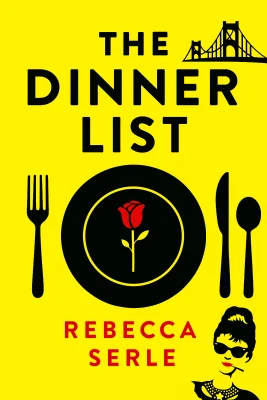
The Dinner List
Categories
Fiction, Audiobook, Romance, Fantasy, Adult, Book Club, Contemporary, Magical Realism, Adult Fiction, Chick Lit
Content Type
Book
Binding
ebook
Year
2018
Publisher
Flatiron Books
Language
English
ASIN
B0DWVSBQGY
File Download
PDF | EPUB
The Dinner List Plot Summary
Introduction
Sabrina's thirtieth birthday arrives like a reckoning wrapped in candlelight and fine china. She sits in an intimate New York restaurant, waiting for guests who shouldn't exist—her dead father Robert, vanished when she was five; Audrey Hepburn, the movie star who died decades ago; Professor Conrad, her college mentor; Jessica, her drifting best friend; and Tobias, the love of her life who died in a car accident just over a year before. This is her dinner list, five people living or dead she'd most want to share a meal with, a college exercise that has somehow manifested into impossible reality. As wine pours and conversations unfold, ten years of love and loss spill across the table like blood from an open wound. The dinner becomes a final reckoning with the ghosts that haunt us, the choices that define us, and the terrible weight of saying goodbye to those we cannot live without. Tonight, in this space between worlds, Sabrina must confront the truth about her father's abandonment, her fractured friendship, and the accident that stole her future. Some dinners change everything. Others simply reveal what was always true.
Chapter 1: The Dinner List: Five Souls at Midnight
The restaurant hums with evening energy when Sabrina pushes through the glass doors at seven-thirty, thirty minutes late to her own birthday dinner. Her heart stops. They're all there, seated around a circular table as if summoned by some cosmic force she doesn't understand. Audrey Hepburn adjusts her black cardigan, irritation flickering across her delicate features. "We've been waiting for an hour." Her voice carries that familiar breathless quality, but sharper now, edged with impatience. Professor Conrad raises his wine glass, red liquid catching the light, while Jessica shifts in her chair, milk stains darkening her blouse from recent motherhood. Robert, her father, sits with the careful posture of a man who knows he doesn't belong here. Salt-and-pepper hair, nervous hands, eyes that mirror her own. Beside him, Tobias lounges with beer in hand, brown curls catching restaurant light, those green eyes that once stopped her breath now watching her with quiet intensity. The impossibility crashes over her like cold water. Jessica she expected—they have a birthday tradition, after all. But the others? Her father died six years ago, Audrey decades before that, and Tobias... Tobias died thirteen months ago on a Saturday morning, crushed under a car on the corner of her street while she folded laundry upstairs. "Are you going to sit?" Tobias asks, his voice cracking slightly at the edges. The same voice that once whispered her name in darkness, that called her back from California, that went silent forever in an ambulance racing through Manhattan traffic. She sits because there's nowhere else to go. Because Conrad is pouring Merlot and because the alternative is admitting she's lost her mind entirely. The restaurant continues around them, other diners absorbed in their own dramas, oblivious to the supernatural dinner party unfolding in their midst. "It's your birthday," Audrey states simply, as if that explains everything. As if birthdays routinely resurrect the dead and gather impossible guests around white tablecloths.
Chapter 2: Fateful Encounters: From Santa Monica to New York
The story begins where all great love stories do—with a moment of recognition that feels like destiny. Sabrina first sees Tobias at an art exhibit called Ashes and Snow, erected in giant tents on Santa Monica Beach. She's nineteen, a USC sophomore dragging her philosophy class to see Gregory Colbert's ethereal photographs of humans living in harmony with wildlife. She finds him standing before a photograph of a boy with eagle wings spread behind him, eyes closed as if in flight. Tobias is twenty-three, a UCLA photography student with shaggy brown hair and layered shirts like sediment. He's been there four times already, he tells her, unable to tear himself away from this particular image. They stand together for minutes, maybe more, feeling electricity arc between them like charged sand. "I've been four times already," he says, eyes still forward. "I never want to leave this spot." The conversation flows easily—school, photography, the magic of the exhibit itself. When teenage girls hover nearby, giggling at his magnetism, Sabrina understands she's witnessing something rare. Then the wind picks up, sending her long hair flying, and he says the words that will echo through a decade: "You look like a lion. I wish I had my camera." He leaves without asking for her number, without any promise of more. Just a little salute and he's gone, disappearing into the crowd like a mirage. But Sabrina has seen enough. She's found him once; she can find him again. Back in her dorm, she tells Jessica about the encounter. Her roommate, still wearing flowing dresses and big glasses, still believing in fate and destiny and the power of positive thinking, immediately begins plotting. They drive Jessica's boyfriend's Toyota Corolla to UCLA, searching bulletin boards until they find it—a yellow flyer advertising the Photography Club's open house. Sabrina buys one of his photographs that night, a grainy image of a smoking man that she keeps wrapped under her bed for two years. She never tells Tobias about her purchase, never admits to the obsession that began on that beach. Some secrets are too fragile to share, too precious to risk with the harsh light of confession.
Chapter 3: Love and Distance: The Separation Years
Four years pass before their paths cross again. Sabrina has moved to New York, working as an assistant for a fashion designer, sharing a Chelsea apartment with Jessica who's now dating the steady, reliable Sumir. The relationship with Anthony, her college boyfriend, has crashed and burned predictably. She's dating Paul, a nice guy from Random House who makes spreadsheets for their weekend activities and keeps wine ready when she visits. Then comes that December morning when the subway stops underground between stations. Sabrina's claustrophobia kicks in, panic rising like flood water, when a familiar voice asks, "Are you okay?" It's him. Older now, more solid, but unmistakably the boy from the beach. He doesn't recognize her immediately, this stranger offering comfort in a stopped train. He lives in Williamsburg, works in Manhattan, and when she admits she hates Red Roof Gallery where he's just interviewed, he lights up with recognition. "That's awesome. Me too." The train lurches back to life, but not before he writes her number on his palm, not before asking her to coffee. The next day he calls, and suddenly Sabrina's carefully constructed life with Paul feels like a black and white movie waiting for color and sound to rush in. Their first real date spans the entire city—walking across the Brooklyn Bridge at sunset, sharing a cigarette on her fire escape, watching North by Northwest at a tiny Williamsburg theater where he kisses her during Cary Grant's best line. By morning, she's falling. By the end of the week, she's lost. Paul gets dismissed with brutal honesty over Starbucks: "He came back." Two words that explain everything and nothing. Jessica helps her search for this mystery man who's upended her stable relationship, but some forces are too powerful to resist. When you're meant to find someone, Sabrina believes, the universe conspires to make it happen. Within months, they're living together. Within a year, they're talking about forever. Tobias has a magnetism that draws everyone—baristas, strangers on the street, Jessica herself who quickly adopts him into their small family. He cooks elaborate meals, plays endless games of Risk with their roommate, and makes love to Sabrina like every time might be the last.
Chapter 4: Return and Promises: The Engagement That Almost Was
But the universe has other plans. Just as their relationship solidifies, opportunity calls from three thousand miles away. Andrew Wolfe, a rising photography star in Los Angeles, needs an assistant. For Tobias, it's the chance of a lifetime—real creative work, meaningful projects, the career he's dreamed of since college. For Sabrina, it's devastation wrapped in inevitability. She has her own career now, her own dreams in New York publishing. She can't follow him to California, can't abandon everything she's built for his ambitions. More than that, she won't put herself in the position of being left behind again. Her father taught her that lesson young and well. "Come with me," Tobias pleads, over and over, even as they pack his car with three labeled boxes: Clothes, Odds and Ends, Art. "We'll do this together. You'll get a great job there too." But Sabrina has already made her choice. If it's meant to be, it will be later. She watches him drive away on a summer morning, her heart breaking with each mile of distance between them. Jessica thinks she's crazy, begs her to reconsider, but Sabrina knows herself too well. She'd rather end it on her terms than wait for him to realize Los Angeles suits him better than love. Two years pass. Sabrina dates Paul, a pleasant relationship that feels like wearing comfortable shoes—practical, safe, utterly without passion. She hears from Tobias occasionally, brief emails with article links, careful messages that maintain connection without promising return. She has dinner with Matty, their old roommate, who shows her Tobias's work in Rolling Stone—a cover story with President Obama that makes her heart swell with pride and break with loss. Then December arrives like an answer to a prayer she didn't know she was saying. The doorbell rings at seven in the morning, his voice crackling through the intercom: "Hey, it's Tobias. Can I come up?" He climbs the stairs two at a time, carrying a bag, fresh off the plane. "I just got off the plane," he says, as if two years apart means nothing, as if love operates outside the normal rules of time and distance. "It's where you are," he tells her when she asks why he's returned. Simple as that. As if there was never any other choice, never any other destination that would suffice.
Chapter 5: Breaking Points: When Love Isn't Enough
They try to build something sustainable this time. A new apartment in the Village, tiny but theirs, six flights up with blue sheets and bookshelves covering every wall. Tobias quits his commercial photography job to go freelance, chasing the artistic vision that drove him to Los Angeles and back. Sabrina covers the rent, dipping into her savings, believing in his talent even as bills pile up like accusations. But love without foundation crumbles under pressure. Tobias meditates each morning while Sabrina rushes to prepare for work, their schedules clashing like tectonic plates. He misses her book launch, caught up photographing sunsets while she celebrates with friends who ask pointed questions about his absence. The engagement ring he buys—an antique beauty with yellow gold and tiny diamonds—sits on her finger like a promise they're not sure they can keep. The fights grow more frequent, more bitter. About money, about priorities, about the future they can't seem to align. Jessica, now married and suburban, watches from her Connecticut perch with increasing disapproval. She's outgrown their romantic chaos, embraced the stability that Sabrina and Tobias keep rejecting in favor of drama and passion and the intoxicating belief that love should conquer all. At Great Barrington, in a cozy pizza place during what should be a romantic getaway, the truth finally emerges. They're standing outside in the cold, Sabrina shivering without her coat, when Tobias says the words that will haunt them both: "I'm not sure it's supposed to be this hard." The engagement ring comes off her finger like a circle of accusations. "Pawn it," she tells him. "You need the money." Cruel words born from devastation, the cruelest truths reserved for those we love most. They drive back to the city in silence, the future they'd planned dissolving like sugar in rain. This isn't a breakup, Tobias insists. Just time apart, space to figure out what they really want. But Sabrina knows better. Some distances can't be crossed twice.
Chapter 6: The Accident: What Was Lost in the Moment
The call comes on a Saturday morning in December. Sabrina is folding laundry, wearing one of his old UCLA shirts, when she hears the screech of tires and crunch of metal through her bedroom window. She runs downstairs in a down vest, joining the crowd gathering around the accident scene, and sees a leg extending from under a car. His leg. His worn Dr. Martens boots that she'd recognize anywhere. She kneels beside him on the asphalt, his body mangled and warm, the smell of cigarettes and honey still clinging to his broken form. "It's okay, it's okay," she whispers, holding his head, checking for breath she cannot find. The paramedics work frantically to extract him from beneath the car, but damage has been done that cannot be undone. At the hospital, she waits with Jessica, who appears as if summoned by grief itself. When the doctor emerges with news that shatters worlds—too much damage, nothing to be done—Jessica cries while Sabrina feels only emptiness. A white room with no doors, no way in or out of the devastation. The funeral arrangements fall to her despite not being family. His parents arrive from Ohio, strangers united only by shared loss and the crushing weight of what-if. They give her his personal effects in a zip-locked plastic bag she cannot bear to open for a week. Inside, along with his phone and wallet, she finds a ring box. Not the simple band she'd returned to him in anger, but the expensive one from the antique shop, the one they'd fought over, the one he couldn't afford. He'd bought it anyway, carried it with him that Saturday morning when he ran into traffic on her street corner. The truth hits like a second accident: he was coming back to her. Running across the street with their future in his pocket, ready to make the promises they'd been too afraid to keep. The timing is so cruel it steals her breath, so perfect in its imperfection that she knows it will define the rest of her life. She slips the ring onto her finger—it fits perfectly, catches the light like captured stars—then hides it under her bed with all the other artifacts of their love. Some treasures are too painful to display, too precious to abandon.
Chapter 7: Letting Go: Finding Peace at the Final Hour
Now, in this impossible restaurant with its impossible guests, Sabrina finally understands what this dinner means. It's not resurrection or second chances. It's resolution. The opportunity to say goodbye properly, to untangle the threads of love and loss that have bound her to the past. Her father Robert sits across from her, no longer the monster of her childhood memories but a broken man carrying regrets too heavy for any one person to bear. He tells her about the miscarriage that shattered his marriage, the drinking that followed, the accident that claimed his unborn daughter and his sobriety. He admits to causing the car crash while drunk, to leaving not just Sabrina but her mother to grieve alone. "The one thing you can never rationalize," he says, "is the loss of a child." Audrey speaks of compromise and the terrible weight of fame, of dimming her light so far she nearly extinguished it entirely. Conrad shares the story of his wife, lost to early Alzheimer's, and the thirty-five years they managed to never want divorce at the same time. Jessica reveals her own struggles with motherhood and friendship, the exhaustion that comes from trying to maintain connections across the growing distances of adult life. And Tobias... Tobias exists in some in-between space, not fully gone but not able to stay. He remembers now what he couldn't before—how she looked that first day on the beach, swinging her arms, hair flying wild like a lion's mane. He carries the pocket watch she gave him, her father's compass that was meant to help him find his way back. "I was going to re-propose," he admits as midnight approaches. "Set a date. Call our parents. Have a big wedding. I wanted the right ring." But the right ring, he realizes now, was the simple one they chose together. Not the expensive symbol of what he thought she deserved, but the quiet promise they made in an antique shop on a sunny afternoon when forever seemed possible. As the clock strikes twelve and the dinner draws to its impossible close, Sabrina understands what Audrey has been trying to tell her all evening. You cannot reignite someone else's life. Love, no matter how pure or powerful, cannot reverse time or undo accidents or resurrect the dead. One by one, her dinner companions fade back to wherever impossible people go when the spell breaks. Conrad tips his hat and walks into the night. Audrey and Robert leave together, arm in arm like old friends. Jessica hurries home to her baby, to the life that keeps spinning forward regardless of grief. Finally, only Tobias remains. They walk toward her apartment though there isn't time to reach it, six minutes left in this borrowed evening. He gives her the pocket watch, tells her she was the great love of his life but shouldn't be the only one. Some loves are meant to end so others can begin. "I didn't tell you," he says, his eyes drifting over her face like a lazy Sunday afternoon. "I remember now. You were wearing a red tank top and denim shorts. Your hair was down and you kept swinging your arms by your sides." That's how he sees her—not the broken woman grieving his death, but the girl on the beach with her whole life ahead of her, wild and free and open to whatever the universe might offer.
Summary
Sabrina returns to her empty apartment carrying more than just memories. In the shoebox under her bed, among the photographs and ticket stubs and artifacts of love, she finds an old letter from Alex, her half-sister, dated years ago. An invitation to connection she was too afraid to accept when first received, too loyal to her mother's pain to risk the betrayal of loving her father's other children. But tonight has changed something fundamental. The dinner has shown her that forgiveness doesn't require forgetting, that love can exist alongside loss, that the people who leave us continue to shape us long after they're gone. Her father's abandonment taught her to guard her heart, but it also gave her the strength to love fiercely when she finally opened it. Tobias's death nearly destroyed her, but their time together—all ten years of it, the joy and the struggle and the magnificent disaster of two people trying to build forever out of moments—gave her something no accident can take away. She takes out a pen and flips the letter over. "Dear Alex," she writes, and for the first time in a long time, she knows exactly what comes next. The story doesn't end with loss. It transforms, evolves, continues in ways we cannot predict or control. Some dinners change everything by revealing what was always true: that we are larger than our grief, stronger than our heartbreak, and capable of love beyond the boundaries of time and death and the cruel mathematics of what we think we deserve. The list was never about the past. It was about learning to write the future.
Best Quote
“People in relationships are either flowers or gardeners. Two flowers shouldn't partner; they need someone to support them, to help them grow. ..... There are flowers and gardeners. Flowers bloom; gardeners tend. Two flowers, no tending everything dies.” ― Rebecca Serle, The Dinner List
Review Summary
Strengths: The review highlights the book's emotional depth and poignant storytelling, noting its ability to evoke tears. It praises the unique premise of a dinner with significant figures from the protagonist's life, offering opportunities for resolution and understanding. The narrative's structure, alternating between the dinner and the protagonist's relationship with Tobias, is also commended. Weaknesses: The review suggests a need for suspension of disbelief due to the fantastical nature of the dinner scenario. It hints at predictability in plot development, although it expresses hope for unexpected twists. Overall: The reader's sentiment is highly positive, recommending the book for its emotional impact and exploration of unresolved relationships. It is particularly suited for those who wish they had expressed important sentiments to loved ones.
About Author

Rebecca Serle
Serle explores the intricate dynamics of love and fate in her novels, crafting narratives that intertwine emotional depth with contemporary settings. Her storytelling often bridges the gap between young adult and adult fiction, employing themes of personal discovery and magical realism to engage readers. This blend is notably evident in her book "In Five Years", which has not only garnered critical acclaim but also became a New York Times bestseller. Rebecca Serle's early work, including "When You Were Mine", marked her entry into the literary world with a fresh take on classic tales, reimagining Shakespeare's Romeo and Juliet through a modern lens.\n\nReaders of Serle's works benefit from her nuanced narrative structures and engaging prose, which invite exploration of life's possibilities and the complex web of human relationships. While her "Famous in Love" series transitioned into a successful television adaptation, showcasing her versatility beyond the written page, her novels like "The Dinner List" and the forthcoming "Expiration Dates" continue to reflect her thematic focus on destiny and connection. Her educational background, with degrees from USC and The New School, underpins her literary achievements, equipping her with a strong foundation in storytelling techniques.\n\nIn the wider context of contemporary fiction, Serle's impact is evident not only through her commercial success but also through the recognition of her work in literary circles. Her ability to weave heartfelt storytelling with an optimistic view on life resonates with a diverse audience, making her an influential voice in both adult and young adult genres. As an author who deftly combines commercial appeal with literary quality, Serle's books offer a rich exploration of themes that resonate deeply with her readers, ensuring her place as a significant figure in modern literature.
Read moreDownload PDF & EPUB
To save this Black List summary for later, download the free PDF and EPUB. You can print it out, or read offline at your convenience.
The Dinner List
by Rebecca Serle
