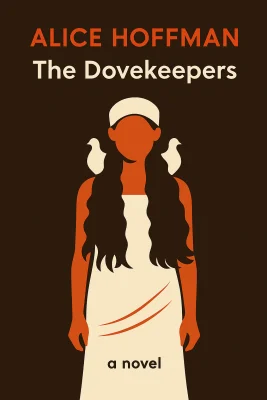
The Dovekeepers
Categories
Fiction, Audiobook, Historical Fiction, Adult, Book Club, Historical, Magical Realism, Adult Fiction, Jewish, Israel
Content Type
Book
Binding
Hardcover
Year
2011
Publisher
Simon and Schuster
Language
English
ASIN
B0068EO6HK
ISBN
145161747X
ISBN13
9781451617474
File Download
PDF | EPUB
The Dovekeepers Plot Summary
Introduction
# The Dovekeepers: Women of Masada's Last Stand The fortress of Masada rises from the Judean desert like a stone fist against the sky, its walls carved from living rock by King Herod's slaves decades before. Now, in 73 CE, it shelters the last free Jews in a world conquered by Rome. Among them, four women tend the dovecotes—stone towers where thousands of birds nest, their droppings the only thing keeping the mountain's gardens alive. Yael, marked by flame-red hair and her mother's death in childbirth, carries secrets that could destroy her family. Revka, once a baker's wife, now cares for grandsons struck mute by witnessing their mother's murder. Shirah, called the Witch of Moab, practices forbidden magic while raising daughters who blur the lines between human and divine. And Aziza, raised as a boy warrior, struggles between the blade and the heart. Below them, the Tenth Roman Legion builds a siege ramp—a mountain of earth and timber that climbs toward their walls like a slow-moving avalanche. General Flavius Silva has sworn to crush this final rebellion, to show the world what happens to those who defy Rome. But within the dovecotes, these women forge bonds stronger than stone, secrets darker than the desert night, and a love that will outlast the coming fire. Their story unfolds in the shadow of history's most defiant last stand, where nearly a thousand souls will choose death over slavery, and only the dovekeepers will live to tell the tale.
Chapter 1: Exiles of a Fallen Jerusalem
The Temple burns behind them as Yael climbs the serpent's path, her father's shadow falling across her like a curse. Yosef bar Elhanan moves with the fluid grace of a killer, his assassin's blade hidden beneath robes stained with Jerusalem's ashes. She follows three paces behind, as she has since childhood—close enough to serve, far enough to avoid his rage. Her red hair catches the desert wind, and she pulls her scarf tighter. The mark on her cheek—a flame-shaped birthmark—throbs in the heat. Her father calls it the sign of her sin, the brand that marked her as her mother's killer from the moment she drew breath. Seventeen years of his hatred have taught her to move like smoke, to speak in whispers, to exist without taking space in the world. The fortress walls loom ahead, white stone blazing in the sun. Guards challenge them at the gate, but her father's reputation opens doors. The Sicarii are known here—zealot assassins who carried curved daggers and God's wrath in equal measure. Inside Masada's walls, Yael marvels at Herod's legacy: palaces carved into cliffsides, cisterns that could hold a year's rain, storehouses packed with grain and oil. They are assigned quarters near the dovecotes, where women tend birds that carry messages across the wasteland. The next morning, Yael is sent to work there under Shirah, a woman whose dark skin bears tattoos in patterns that hurt to look at directly. The other women whisper that she practices keshaphim—women's magic—and keeps demons in clay jars. "You have your mother's mark," Shirah says, touching Yael's birthmark with fingers that smell of myrrh and secrets. Something in her voice suggests knowledge Yael has never possessed—the truth of her mother's death, perhaps, or the reason her father's eyes hold such pain when they fall upon her. In the largest dovecote, thousands of birds coo and flutter in niches carved into the walls. Their droppings fertilize the gardens that keep Masada alive. Without the doves, they would all starve within a season. Yael learns to move among them with practiced silence, her hands gentle as she collects eggs and cleans nests. For the first time in her life, living creatures seek her touch rather than flee from it.
Chapter 2: The Dovekeepers' Refuge
The work transforms her. Within the stone towers, surrounded by the soft murmur of wings, Yael discovers muscles she never knew she possessed. Her hands grow strong from hauling water and grain, her back straight from carrying baskets of droppings to the gardens. The doves seem to recognize something in her silence, settling on her shoulders without fear. Revka works beside her—an older woman whose grandsons follow like shadows, their mouths sealed by trauma. The boys, Noah and Levi, have not spoken since witnessing their mother's murder by Roman deserters. Their father, once a gentle scholar, now calls himself the Man from the Valley and seeks death in every battle, his hair turned white overnight by grief. "We are all broken here," Revka tells Yael as they sort through dove eggs, separating the fertile from the empty. "But broken things can still be useful." A slave arrives to help repair the dovecotes—a tall man with pale hair and eyes the color of winter sky. The warriors captured him during a raid on a Roman supply train. He speaks little Hebrew, but his hands are skilled with wood and stone. The women call him Wynn, though none know if this is truly his name. Yael finds herself watching him work, drawn by his foreignness. Unlike Jewish men who avert their eyes from women, his gaze is direct, curious. When he carves a small wooden dove and leaves it where she will find it, her heart performs strange acrobatics in her chest. Shirah observes everything with knowing eyes. She has two daughters—Nahara, recently married to an Essene mystic, and Aziza, who moves with a warrior's grace despite her woman's robes. Rumors whisper that Aziza was raised as a boy in the land of Moab, that she can split an arrow with another arrow, that she has killed men with her bare hands. "The doves trust you," Shirah tells Yael one evening as they lock the towers for the night. "They recognize silence in another creature." That night, Yael dreams of flying—not as a dove, but as something fiercer. She soars above the desert on wings of flame, hunting prey that flees before her shadow. When she wakes, the wooden dove rests in her palm, smooth as silk from her unconscious caressing.
Chapter 3: Bonds Forged in Desert Dust
Summer scorches the mountain. Water becomes precious, rationed from the great cisterns Herod built to catch the winter rains. The warriors return from raids with Roman supplies, but never enough. Hunger sharpens tempers and deepens the divisions between the fortress's inhabitants—Pharisees arguing with Sadducees, Essenes withdrawing to their caves, Sicarii sharpening their blades for battles that may never come. In the dovecotes, different bonds form. Aziza begins teaching Yael to use a bow, their lessons hidden in the smallest tower where no men venture. Yael's first arrows fly wild, but Aziza's patience is infinite. "My father taught me to hunt before I could properly walk," Aziza explains, adjusting Yael's stance. "He thought I was his son until my body betrayed the truth." Their friendship grows through shared secrets. Aziza speaks of riding across Moab's grasslands, of the freedom she knew before her mother brought her to Judea. She still dresses as a man sometimes, joining the warriors on raids while her younger brother Adir recovers from wounds in their chamber. Wynn continues his repairs, fashioning clever mechanisms to protect the birds from hawks and snakes. He teaches Yael words in his northern tongue—"snow" and "forest" and "free." When their hands touch passing tools, neither pulls away quickly. One evening, she finds him alone in the smallest dovecote, carving another figure—this one a stag with magnificent antlers. "From my home," he says in broken Hebrew, placing it in her palm. His fingers linger against hers, callused and warm. Before she can respond, footsteps echo in the corridor. Shirah appears, her expression unreadable. "The council has ordered the slave confined," she announces. "They believe he was planning escape." Later, Shirah explains that Ben Ya'ir's wife Channa demanded Wynn's imprisonment after seeing him speaking with Yael. "She is barren and bitter," Shirah warns. "She sees threats in every shadow." That night, Yael climbs to the wall overlooking the desert. Stars wheel overhead like scattered diamonds. Somewhere beyond the horizon lies Wynn's homeland of ice and forests. Somewhere closer, Roman campfires begin to dot the darkness as scouts probe their defenses. She touches the wooden stag in her pocket and makes a decision that will change everything.
Chapter 4: The Shadow of Rome's Eagle
The first Roman scouts appear like mirages in the valley below, their white tunics blazing against the red stone. From Masada's walls, the defenders watch soldiers measure distances and study the serpent's path that winds up the mountain. Eleazar ben Ya'ir calls the people to gather in the plaza, his voice carrying across the crowd like a blade. "They test our defenses," he announces, his scarred face grim. "But they will find us ready. God has given us this mountain as our refuge." The warriors increase their raids, striking Roman supply lines and disappearing into the wilderness like ghosts. Yael's father joins these expeditions, returning with blood on his hands and a fierce light in his eyes that reminds her of his days hunting Romans in Jerusalem's streets. In the dovecotes, the women work with greater urgency. Shirah teaches them to mix special feed that will strengthen the birds for longer flights, to train them to carry messages to distant allies. The doves sense the tension, their cooing more agitated, their flights shorter and more nervous. Aziza spends less time among the birds, instead joining the warriors disguised as her wounded brother. Only Yael and Shirah know the truth—that it is Aziza who wears Adir's armor and carries his weapons into battle, her woman's body hidden beneath leather and steel. One night, Yael makes her choice. Using keys stolen from a sleeping guard, she unlocks Wynn's chains and leads him through corridors she has memorized in darkness. At the postern gate, she presses the wooden stag into his palm. "Go north," she whispers. "Find your forests." He grips her hands, his eyes reflecting starlight. "Come with me." She shakes her head, though her heart screams otherwise. "I cannot abandon them." Their kiss tastes of salt and sorrow, a promise that can never be kept. She watches him disappear into the night, knowing she will never see him again but carrying his touch like a brand on her lips. Days later, the Roman legion arrives in full force—thousands of soldiers marching in perfect formation, their standards bearing the eagle of Rome. They bring siege engines and a caged lion, chaining the beast where all in Masada can see it. The message is clear: like the lion, the Jews will be subjugated. The Romans establish camps in a ring around the mountain and begin constructing something unprecedented—a massive earthen ramp on the western slope. Jewish slaves labor under centurions' whips, carrying stones and timber as the ramp grows steadily higher toward the fortress walls. Inside Masada, fear spreads like plague. Food stores dwindle. Water becomes scarcer. Children grow hollow-eyed. Some speak of surrender, but Ben Ya'ir silences such talk with the edge in his voice that has commanded men in a dozen battles.
Chapter 5: The Night of Seven Knives
The siege ramp climbs toward heaven like a blasphemy made of earth and timber. Each day it grows higher, Roman slaves and Jewish prisoners laboring under the whip to build their own people's doom. From the walls, the defenders can see their kinsmen among the workers—men captured in raids, women taken from burned villages, children who will never see their homes again. Inside the fortress, desperation takes root like a poisonous plant. The cisterns run low despite careful rationing. The storerooms echo with emptiness. Children cry from hunger, their voices thin as bird song. The council meets daily, their debates growing more heated as options dwindle like water in a cracked jar. Shirah spends hours in her chamber, casting bones and burning herbs that fill the air with smoke that moves in patterns too deliberate to be natural. When Yael visits, she finds scrolls covered in symbols that hurt to look at directly. "What do you seek?" Yael asks. "A way out," Shirah replies, her eyes reflecting flames that burn without consuming. "For the children. For the future." The ramp nears completion. Roman engineers wheel massive battering rams up its slope, their bronze heads shaped like the heads of mythical beasts. Catapults hurl stones against the walls, testing their strength. Arrows rain down on anyone foolish enough to show themselves at the battlements. Ben Ya'ir calls the people to gather in the synagogue, his face carved from stone and shadow. The torchlight flickers across scars earned in a dozen battles, across eyes that have seen Jerusalem burn and the Temple fall. "We have fought for freedom," he tells them, his voice carrying to every corner of the chamber. "We have lived as free Jews. Now we must choose how we die—as slaves under Roman whips, or as free people who bow to no earthly master." The meaning of his words settles over the crowd like a burial shroud. Some weep. Others nod grimly. A few protest, but their voices are drowned by the weight of inevitability. That night, lots are drawn. Ten men are chosen to ensure that all die quickly and mercifully, for Jewish law forbids suicide. These ten will then draw lots among themselves until only one remains to take his own life, carrying the sin of all upon his shoulders. Yael finds her father sharpening his blade in their chamber, his movements precise as a ritual. For the first time in years, he looks at her directly. "Your mother would be proud," he says, his voice rough with emotions too long buried. "You have her courage, her fire." He presses something into her hand—a knife with a bone handle, worn smooth by years of use. "This was hers. She carried it when she fled Egypt as a child. Now it belongs to you." Before she can speak, he is gone, disappearing into the night like the assassin he has always been. The next morning, his body is found among the warriors who fell defending the wall against a Roman probe attack, his blade buried in a centurion's heart.
Chapter 6: Witnesses Among Ruins
Dawn breaks over Masada like a wound in the sky, revealing a fortress transformed into a necropolis. Roman soldiers, having breached the walls at first light, find only silence and the dead—men, women, and children who chose freedom in death over slavery in life. The legionnaires move through the streets in stunned quiet, their victory hollow as an empty cup. In the deepest cistern, Yael and the other survivors cling to stone ledges in water that reflects torchlight like scattered stars. They have spent the night in darkness, listening to Roman boots echo overhead, to the shouts of soldiers discovering what Ben Ya'ir's people have chosen. Shirah holds her infant daughter Yonah against her chest, the child miraculously silent as if understanding the need for stealth. Revka's grandsons press against their grandmother, their eyes wide but their mouths still sealed by trauma. Aziza's brother Adir floats nearby, his wounded leg making him more burden than help. "What happens now?" Yael whispers, her voice barely audible above the water's gentle lapping. "Now we survive," Shirah replies. "We become the witnesses." When Roman soldiers finally discover them, they are dragged before Flavius Silva himself—a man whose face bears the marks of a dozen campaigns, whose eyes hold the cold calculation of empire. He studies the bedraggled group with the interest of a scholar examining specimens. "Who are you?" he demands in accented Hebrew. Yael steps forward, water still dripping from her flame-red hair. The birthmark on her cheek stands out starkly against her pale skin. "I am Yael, daughter of Yosef bar Elhanan," she says, her voice steady despite the trembling in her hands. "We hid in the cistern when the others chose death." Silva's eyes narrow with interest. Here is his prize—survivors who can tell Rome's story, who can spread the tale of Jewish desperation and Roman inevitability. He questions them carefully, recording their words with scribes who scratch on wax tablets. Yael recounts the final night—how Ben Ya'ir convinced the people to choose death over slavery, how they drew lots to select ten men who would carry out the deed, how those ten then killed each other until only one remained to fall on his own sword. She speaks of courage and despair in equal measure, of a people who preferred oblivion to subjugation. The Romans listen with fascination and horror. This is not the victory they expected—not conquest but something stranger, more troubling. How do you celebrate defeating an enemy who destroys itself rather than submit? Silva grants them freedom, not from mercy but from calculation. Their story serves Rome's purpose, spreading fear throughout the empire's territories. Who would rebel knowing that even victory leads to such desperate ends? As they prepare to leave Masada, Yael stands on the wall one final time. The siege ramp stretches below like a scar on the earth. Roman soldiers move through the fortress, cataloging weapons and supplies, dismantling what took decades to build. In the distance, she glimpses movement among the rocks—a flash of tawny fur, a lion's mane catching sunlight. The beast that Rome brought in chains has somehow escaped, finding freedom in the wilderness where empires cannot follow.
Chapter 7: Rebirth in Alexandria's Waters
Seven years have passed since Masada fell, and the house in Alexandria stands like a sanctuary beside the harbor. Its white walls enclose a garden where jasmine blooms and a fountain bubbles with water that never runs dry. Here, in Egypt's ancient city of learning, the survivors have built new lives from the ashes of the old. Yael tends the garden with hands that once collected dove droppings, now mixing herbs for women who come seeking remedies for barrenness, for difficult births, for hearts broken by loss. The red mark on her cheek has faded to a whisper, but her flame-colored hair still draws stares in the marketplace. Some call her the Witch of Alexandria, inheriting Shirah's title along with her knowledge. Revka's grandsons have found their voices at last, though they speak mainly to each other in the private language that twins sometimes share. Noah and Levi work in the bakery they have established behind the house, their bread drawing customers from across the city. Some weep when they taste it, reminded of Jerusalem before the fall. Little Yonah, now seven years old, plays in the fountain with an affinity for water that seems supernatural. Fish gather around her fingers as if summoned. Birds perch on her shoulders without fear. Shirah's daughter carries her mother's gifts, though she remembers nothing of the fortress or the desert or the night when everything ended. In the evenings, when the children sleep and the city grows quiet, Yael and Revka sit in the garden speaking softly of those they have lost. They never mention these things before the young ones—the past is too heavy a burden for small shoulders to bear. But between themselves, they keep the memories alive like flames in a temple that never closes. "Do you think any others survived?" Revka asks one night, her eyes reflecting stars that wheel overhead like scattered diamonds. Yael thinks of Wynn, wondering if he found his way back to forests and snow. She thinks of the lion she glimpsed in the desert, free from Roman chains. She thinks of Aziza, who died as she lived—with a weapon in her hand and defiance in her heart. "Perhaps," she says. "The world is vast, and freedom finds a way." Each year on the anniversary of Masada's fall, they perform a ritual of remembrance. They light candles for the dead and speak their names into the darkness—Shirah, Aziza, Eleazar ben Ya'ir, the Man from the Valley, and hundreds more whose stories ended on that mountain. They pour water into the garden soil, an offering to spirits that may still wander the desert. On this night, Yael takes Yonah to the Nile's edge. Together they wade into the current, feeling the river's ancient power flow around their legs. The child laughs as silver fish dart between her fingers, as if greeting an old friend. "Your mother loved water," Yael tells her. "It was her element, as it is yours." They set a candle on a lotus leaf and watch it float downstream, a point of light carried toward the sea. Yael thinks of all they have endured—the fortress on the mountain, the siege ramp climbing toward heaven, the choice between slavery and death that tore a people apart. In Alexandria, surrounded by water and learning, they have found rebirth. But their hearts remain in the desert, where doves still fly above the ruins and the lion roams free beneath stars that remember everything.
Summary
The dovekeepers of Masada witnessed the end of one world and the birth of another. Through their eyes, we saw how ordinary women became extraordinary—how a baker's wife learned to kill, how a witch's daughter chose love over magic, how an outcast girl discovered her own strength in tending creatures that others considered mere tools. When faced with Rome's inexorable advance, most chose death over slavery, but a handful chose something harder—to live, to remember, to carry forward the stories that would otherwise be lost. In Alexandria's harbor, where East meets West and ancient wisdom flows like the Nile itself, their legacy continues. Yonah's laughter echoes across water that has witnessed empires rise and fall. The grandsons' bread feeds bodies and souls hungry for connection to something larger than themselves. And Yael, no longer the silent girl who killed her mother by being born, has become the keeper of memories—the one who ensures that what happened on that mountain will never be forgotten. Like the doves they once tended, their spirits have found a way to fly free, carrying messages across time itself. The fortress fell, but the story endures, passed from hand to hand like sacred fire that no empire can extinguish.
Best Quote
“Here is the riddle of love: Everything it gives to you, it takes away.” ― Alice Hoffman, The Dovekeepers
Review Summary
Strengths: The book is described as "elegant," which is highlighted as the highest praise the reviewer can offer. This suggests the writing style or narrative may possess a certain sophistication or grace. Weaknesses: The reviewer lists several reasons for disliking the book, including feeling unintelligent due to unfamiliar historical context, lack of knowledge about Ancient Israel, and spoilers that ruined surprises. The book's association with hype and certain cultural references also contributed to the negative perception. Overall: The reviewer expresses a generally negative sentiment towards the book, citing personal discomfort with the historical setting and external influences. Despite acknowledging its elegance, the book does not seem to be recommended by the reviewer.
About Author

Alice Hoffman
Hoffman synthesizes magical realism and everyday experiences to create narratives that explore the search for identity and the interplay between the ordinary and the extraordinary. Her literary work often weaves together themes of personal discovery, especially among women, while incorporating supernatural elements that enhance the depth and relatability of her characters. For instance, her celebrated novel "Practical Magic," which gained further popularity through a film adaptation, exemplifies this blend of the mundane with the mystical, drawing readers into a world where enchantment is just a heartbeat away from reality.\n\nBeyond her thematic focus, Hoffman's unique narrative style appeals to a wide audience by combining emotional depth with fantastical elements, offering readers a chance to reflect on their personal journeys. Her works like "The Marriage of Opposites" and "The World That We Knew" not only captivate with their rich storytelling but also provide insights into historical and personal struggles, enriching readers' understanding of diverse experiences. Those interested in narratives that challenge conventional boundaries will find value in her books, which consistently engage the imagination while grounding readers in relatable emotions.\n\nFurthermore, Hoffman's impact extends beyond literature into personal and philanthropic efforts. She has received recognition for her contributions, including a Hammett Prize for "Turtle Moon." Additionally, she actively supports breast cancer awareness and research, having established the Hoffman Breast Center after her own battle with the illness. Her engagement with broader intellectual questions is further demonstrated by her fellowship at Harvard Divinity School, indicating her commitment to exploring profound human experiences both in her writing and personal endeavors.
Read moreDownload PDF & EPUB
To save this Black List summary for later, download the free PDF and EPUB. You can print it out, or read offline at your convenience.

The Dovekeepers
by Alice Hoffman
