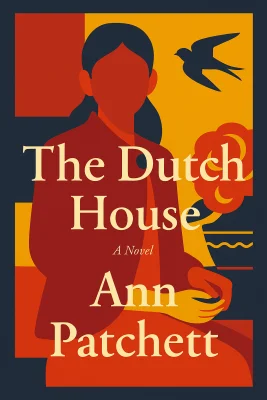
The Dutch House
Categories
Fiction, Audiobook, Historical Fiction, Adult, Family, Book Club, Historical, Contemporary, Adult Fiction, Literary Fiction
Content Type
Book
Binding
Hardcover
Year
2019
Publisher
Harper
Language
English
ASIN
0062963678
ISBN
0062963678
ISBN13
9780062963673
File Download
PDF | EPUB
The Dutch House Plot Summary
Introduction
# The Dutch House: A Legacy of Loss and Redemption The first time Danny Conroy saw his stepmother Andrea, she stood beneath the portraits of the VanHoebeeks in the drawing room of the Dutch House, studying the painted faces as if they held secrets. The house itself was a monument to excess—three stories of towering windows and marble floors, built by Dutch cigarette magnates in the 1920s and left complete with all their possessions when the family died out. Danny's father had bought it as a surprise for his wife, but she had fled to India when Danny was three, leaving behind two children and a husband who never spoke her name again. Now Andrea was here, small and neat in her belted dress, tilting her head back to examine the gilt ceiling while Danny and his sister Maeve watched from the archway. At fifteen, Maeve already stood like a soldier, her black hair falling in a heavy curtain down her back. She had learned early to be the mother Danny never knew, managing his diabetes shots and homework with equal precision. They had grown up in the shadow of their absent mother and distant father, raised by housekeepers Sandy and Jocelyn in rooms that still held the ghosts of their previous owners. The Dutch House was their kingdom and their prison, and they had no idea that Andrea's arrival would cost them everything.
Chapter 1: The Foundation of Loss: Abandonment in a Golden Cage
The morning after their mother disappeared, Danny found Maeve standing in the foyer in her red winter coat, staring up at the chandelier as if it held answers. At eleven, she had become the keeper of their small kingdom while four-year-old Danny became her devoted subject. Their father Cyril threw himself deeper into work, leaving before dawn and returning after dark, his war-wounded limp more pronounced with each passing year. The house belonged to the children now, and to the women who raised them. Fluffy the Irish nanny ruled the third floor with iron discipline wrapped in Celtic charm, teaching Danny his letters while monitoring Maeve's diabetes with battlefield precision. Sandy maintained the endless rooms with quiet efficiency, while Jocelyn filled the kitchen with bread smells and laughter. They lived like royalty in exile, surrounded by luxury but starved of the love that had walked out into the night. The VanHoebeek portraits watched from their gilded frames as the children grew wild and strange. Danny learned to slide down the marble banister while Maeve discovered every secret passage and hidden room. They played hide-and-seek in a ballroom designed for elegant parties, their footsteps echoing through chambers that had once hosted Philadelphia society. The house was too large for two children and three servants, but it was theirs completely. Then Cyril married his secretary Andrea, a tiny blonde woman with calculating eyes who arrived with her own daughters like an invading army. Norma, twelve and serious, and Bright, ten with flushed cheeks and a Christmas card smile, followed their mother through room after room while Andrea catalogued everything she saw. The Dutch House, which had once felt infinite, suddenly seemed crowded with strangers who spoke of crown molding and ceiling heights as if they were planning renovations. The wedding happened six weeks after Maeve left for Barnard, performed by a judge in the drawing room beneath the watchful eyes of the VanHoebeeks. Rose petals scattered across the Spanish rug while champagne flowed in the kitchen, but Sandy and Jocelyn served in matching black uniforms that made them look like prisoners. When it was over, Andrea held up her glass to catch the light, remarking how perfectly the champagne matched her dress. Danny watched from the stairs and felt the house itself hold its breath.
Chapter 2: The Stepmother's Conquest: Gradual Dispossession
Marriage transformed Andrea from visitor to owner with the efficiency of a military occupation. She made weekly menus for Jocelyn and found extra work for Sandy, dusting shelves that were already clean. The easy warmth between the housekeepers vanished as they learned to make themselves invisible, working wherever the family was not. Danny came home from school to find his world reorganized according to Andrea's vision of domestic order. The first real blow came when Andrea announced that Norma would take Maeve's bedroom. "She's the oldest girl now," Andrea declared, as if Maeve had ceased to exist the moment she left for college. Their father sat silent while Andrea explained how Maeve would have a beautiful room on the third floor when she came to visit—the room with sloped ceilings where servants once slept. Sandy and Jocelyn moved Maeve's things without complaint, their faces set in masks of professional neutrality. They packed away the remnants of her childhood into boxes that would disappear behind the tiny door in the third-floor closet. When Maeve came home for Thanksgiving, she found her exile complete. Norma had claimed not just the room but the window seat where Maeve had spent countless hours reading, the view of the garden that had been hers alone. Danny watched his sister absorb the blow with characteristic grace, making jokes about The Little Princess while their father carried her bags up the narrow stairs. But something had shifted in the house's balance of power. Andrea was no longer asking permission. She was taking what she wanted, room by room, memory by memory. The final insult came when Andrea discovered Fluffy's old affair with Cyril—a lonely transgression from the years after Elna's departure. She used it like a blade, and one winter morning Fluffy was gone, banished to the end of the driveway with her suitcase. Danny and Maeve stood at the window watching their last ally disappear into the snow, leaving them to face their stepmother's reign alone.
Chapter 3: Exile from Paradise: The Father's Death and Its Aftermath
Their father's death came without warning on a September morning hot enough to kill. Cyril climbed five flights of stairs in an unfinished office building, checking window flashing in hundred-degree heat. Six steps from the top, he sat down, vomited, and fell forward, his head striking concrete. The heart attack had been massive and instant. By the time the ambulance reached the hospital, he was gone. Danny learned of his father's death in geometry class, called to the principal's office where Maeve waited with tears streaming down her face. They drove to the hospital in silence, the weight of their new orphanhood settling between them like a third passenger. At fifteen and twenty-two, they were alone in the world except for each other. The funeral filled the Dutch House with flowers and strangers. Andrea played the grieving widow in black while Sandy and Jocelyn worked in the kitchen, excluded from the service they had earned the right to attend. Business associates and tenants, construction workers and bankers, all came to pay their respects to a man who had built half of suburban Philadelphia from nothing. But the flowers wilted and the visitors left, and then came the reckoning. Andrea had been busy during her marriage, adding her name to deeds and bank accounts with the methodical precision of a general planning a campaign. Joint ownership with right of survivorship meant everything passed to her by operation of law. The house, the business, the buildings their father had spent his life accumulating—all of it belonged to Andrea now. Lawyer Gooch explained it to them in his small conference room, his voice gentle with regret. Their father had trusted his young wife completely, believing she would care for his children as she cared for her own. The educational trust would pay for Danny's schooling, but there was nothing for Maeve. At twenty-two, she was deemed old enough to fend for herself. Three months after the funeral, Andrea delivered her ultimatum: Maeve had to go.
Chapter 4: Survivors in the Wasteland: Building Lives from Ashes
The exile was swift and brutal—a single afternoon to pack belongings while Andrea supervised, making sure nothing valuable left with her. Danny found his sister in the kitchen that last day, standing at the blue table where they had eaten breakfast every morning of their lives. Her face was stone, but her hands shook as she folded her few remaining possessions. "This isn't over," she whispered, and he believed her with the faith of someone who had never known his sister to be wrong. Boarding school became Danny's prison and salvation. Choate was full of boys who took their privilege for granted, who complained about houses that were merely large instead of magnificent. Danny learned to keep his mouth shut about the Dutch House, about the sister who wrote him letters every week from her tiny apartment above a flower shop in Jenkintown. Maeve found work at Otterson's frozen vegetable company, where her sharp mind and Barnard mathematics degree made her indispensable. She lived simply, almost monastically, saving every penny and managing Danny's emotional education through their weekly phone calls. She had become his anchor in a world that seemed determined to pull him away from everything he truly cared about. The trust fund that paid for Danny's education came with strings attached—strings that Andrea pulled with increasing frequency. The money would continue through college and medical school, but only if he followed the path she had chosen. Danny would become a doctor, a respectable profession that would reflect well on the family name. But Danny had inherited his father's eye for real estate, not his stepmother's vision of respectability. At Columbia, walking through Harlem, he saw opportunity in every abandoned building, potential in every foreclosure notice. The trust fund felt like a chain around his neck, forcing him toward a future he never wanted while his real passion withered in the shadows. But Maeve saw it differently—every semester was a small victory, every tuition payment a reminder that Andrea's greed had limits.
Chapter 5: The Ritual of Memory: Watching Life Through Glass
The visits home became elaborate theater. Danny would take the train to Philadelphia, and Maeve would pick him up in her battered Volkswagen. They would drive past the Dutch House, parking across the street like pilgrims at a shrine. Through the linden trees, they could see Andrea's life unfolding in the golden windows—dinner parties, holiday decorations, the ordinary rhythms of a family that had erased them from its story. The car became their confessional, their war room, their only remaining piece of home. Sitting in that Volkswagen across from the Dutch House, Danny and Maeve reconstructed their childhood piece by piece, as if memory could somehow restore what had been stolen. They smoked cigarettes and watched the seasons change in windows they had once looked out from. Maeve had theories about everything—why their mother had really left, what their father had been thinking when he married Andrea, how long it would take for karma to catch up with their stepmother. She spoke with the authority of someone who had been forced to grow up too fast, her voice carrying the weight of all the mothering she had done and all the childhood she had sacrificed. Danny struggled through medical school like a man walking through quicksand. Every class, every exam, every clinical rotation felt like a betrayal of his true nature. He was good at it—his hands were steady, his mind sharp—but his heart belonged to the abandoned buildings he explored in his spare time, the foreclosure auctions he attended like other students attended parties. The trust fund had become their weapon against Andrea, a way to drain her resources while Danny pursued an education he didn't want. Maeve took fierce satisfaction in every expensive textbook, every dollar that flowed away from their stepmother's control. It was a long, expensive form of revenge, but it was the only one available to them. Yet revenge came with its own price—the longer they spent parked outside the Dutch House, the more their lives seemed frozen in amber, preserved in a childhood that had ended decades ago.
Chapter 6: The Prodigal Mother: Confronting Forty Years of Absence
The phone call came on a Tuesday morning in spring, forty-two years after Elna Conroy had walked out of the Dutch House and into the night. Maeve was in the hospital, her heart struggling against the accumulated damage of a lifetime of diabetes, when a thin woman with short gray hair appeared in the cardiac care unit waiting room. She looked like a refugee from some distant war, all sharp angles and hollow eyes, but her voice was unmistakable. Danny stared at his mother across the sterile hospital room and felt nothing but rage. She had missed everything—graduations, weddings, the birth of his children, his father's funeral. She had missed the night Andrea threw them out, missed the years of exile and struggle and slow rebuilding. But she was here now, drawn by the scent of crisis like a vulture circling carrion. Elna had spent four decades serving the poor in India, California, Mexico—anywhere but the place where her own children had needed her. She spoke of her work with the quiet pride of a missionary, as if abandoning her family had been a form of holy calling rather than the deepest selfishness imaginable. She had come back, she said, to make amends, to ask forgiveness, to finally be the mother she should have been. Maeve, weak from her heart attack but radiant with joy, welcomed their mother like the prodigal son returning home. She forgave everything instantly, completely, with the generosity of someone who had been waiting her entire adult life for this moment. The reunion was everything Danny had feared it would be—an erasure of all the years when Maeve had been mother and sister and anchor all at once. But forgiveness, Danny discovered, was not a choice he could make through willpower alone. Watching his mother care for Andrea in her final years, seeing the tenderness with which she ministered to the woman who had destroyed their childhood, he finally understood that some wounds heal not through justice but through time, and that love sometimes looks nothing like what we expect it to be.
Chapter 7: Return to the Scene: Final Reckonings at the Dutch House
The day they finally returned to the Dutch House, Danny was fifty-one and his mother was seventy-three. They had not planned it—Elna was driving them back from an art museum when she simply turned down the familiar street, drawn by some impulse neither of her children could understand or prevent. The house rose before them like a mirage, exactly as beautiful and terrible as it had always been. Andrea met them at the glass doors like a fury from Greek tragedy, pounding on the windows and screaming until her caregiver pulled her away. But when she saw Danny, something shifted in her damaged mind. She threw herself into his arms with desperate hunger, clinging to him as if he were her husband returned from the dead. The tiny woman who had once wielded such power was now lost in the labyrinth of her own failing memory. Inside, the Dutch House was a museum of their stolen childhood. Every room was exactly as they remembered it, preserved like insects in amber. The grandfather clock still ticked in the foyer, the VanHoebeek portraits still gazed down from the drawing room walls, and there, hanging in its place of honor, was the painting of ten-year-old Maeve in her red coat, her dark eyes bright with promise. Norma, Andrea's daughter, had grown into a pediatric oncologist, her life shaped by the guilt of inheriting what should have belonged to others. She apologized with the weight of someone who had carried shame for thirty years, who had slept in Maeve's bedroom and eaten at Maeve's table while knowing she had no right to either. The reunion was awkward, painful, but somehow necessary—a final accounting of all the damage that had rippled out from that first moment when Andrea had chosen power over mercy. Maeve took the painting when they left, lifting it from the wall with the calm authority of someone reclaiming stolen property. It was a small victory, but it felt enormous—the first thing they had ever taken back from the house that had taken everything from them.
Chapter 8: The True Inheritance: Love That Transcends Loss
The call came before dawn, as the worst calls always do. Maeve was dead, their mother said, her voice hollow with shock and grief. A heart attack in the night, quick and final, the end that diabetics always fear and rarely see coming. Danny drove through the darkness toward Jenkintown, toward the little house where his sister had built her modest, careful life, and felt the world reorganize itself around the absence of the one person who had always been its center. The funeral revealed how many lives Maeve had touched without fanfare or recognition. Mr. Otterson, her boss at the vegetable company, wept like a broken-hearted lover. Former students, church friends, neighbors—all came to pay their respects to a woman who had lived quietly but left deep marks on everyone she encountered. Danny sat in the front pew and realized he had never truly understood the scope of his sister's life beyond their shared obsession with the past. In the years that followed, the Dutch House finally began to release its hold on the surviving members of the Conroy family. Andrea died in her sleep, cared for to the end by the mother who had once abandoned her own children. Norma sold the house to Danny's daughter May, who had inherited the family gift for real estate along with her aunt's fierce dark beauty. The wheel had turned full circle, bringing the house back into Conroy hands through the next generation. Danny learned to live without his sister's voice on the phone every week, without her sharp commentary on his choices and her unwavering faith in his potential. He learned to forgive his mother, not because she deserved it but because carrying anger was too heavy a burden for the time he had left. Some stories end not with justice or resolution but with the simple passage of time, which heals some wounds and leaves others as permanent scars.
Summary
The Dutch House stands today much as it always has, its windows still catching the light, its rooms still holding the echoes of all the lives that have passed through them. May throws parties in the ballroom now, filling the space with laughter and music, bringing the house back to life in ways the VanHoebeeks would have recognized and approved. But for Danny, the real house will always be that Volkswagen parked across the street, where he and Maeve sat for so many years trying to make sense of their story. They were bound together by loss and loyalty, by the peculiar intimacy of shared exile, by the understanding that some wounds can only be healed by the people who helped create them. In the end, home was not a place but a person—the one who remembered your childhood, who forgave your failures, who loved you not despite your damage but because of it. The Dutch House was magnificent, but it was never really theirs. What they had built together in that car, in those conversations, in that fierce and complicated love—that was the only inheritance that truly mattered, and the only one that could never be taken away.
Best Quote
“I see the past as it actually was," Maeve said. She was looking at the trees."But we overlay the present onto the past. We look back through the lens of what we know now, so we're not seeing it as the people we were, we're seeing it as the people we are, and that means the past has been radically altered.” ― Ann Patchett, The Dutch House
Review Summary
Strengths: The review highlights the compelling narration by Tom Hanks, which elevates the audiobook experience to a five-star rating. The vivid character portrayal, particularly of the siblings Danny and Maeve, is praised. The storytelling is described as masterful, with a strong emotional impact and a blend of past and future narratives. Weaknesses: The review notes a slow pace and frequent timeline jumps as detracting elements. The character of the mother is not well-received, and the evil stepmother Andrea is criticized for her actions, which are seen as overly villainous. Overall: The reviewer expresses a strong appreciation for the audiobook version, recommending it highly due to Tom Hanks' narration. The story is engaging, with memorable characters and a rich narrative, despite some pacing issues. The overall sentiment is positive, rounding up the rating to five stars for its storytelling quality.
About Author

Ann Patchett
Patchett delves into the intricacies of human relationships and family dynamics, often through the lens of her personal experiences. Her work is characterized by a narrative depth that melds autobiographical elements with imaginative storytelling. Themes of identity and the intersecting lives of diverse characters are central to her writing, as evidenced in novels such as "Commonwealth," which she describes as an "autobiographical first novel," and "The Dutch House," a story of sibling relationships and family legacy that became a finalist for the Pulitzer Prize.\n\nIn addition to her fiction, Patchett's impact extends into the literary community through her commitment to fostering a vibrant independent book culture. This dedication is exemplified by her co-founding of Parnassus Books, an independent bookstore in Nashville, which serves as a hub for literary enthusiasts. Her contributions to literature and culture have been recognized with numerous awards, including the PEN/Faulkner Award and the Orange Prize for Fiction for "Bel Canto," a novel exploring a hostage crisis in South America. This blend of storytelling, cultural advocacy, and literary excellence makes her work resonate deeply with readers who seek emotionally rich narratives.\n\nPatchett's books offer readers insight into the moral complexities of life while maintaining a clear and engaging prose style. Her ability to connect with audiences through both fiction and essays, such as "This Is the Story of a Happy Marriage," which reflects on her own life experiences, underscores her status as a prominent American author. This bio captures her literary achievements and ongoing influence within the book industry, particularly through her efforts to support independent bookstores.
Read moreDownload PDF & EPUB
To save this Black List summary for later, download the free PDF and EPUB. You can print it out, or read offline at your convenience.
The Dutch House
by Ann Patchett
