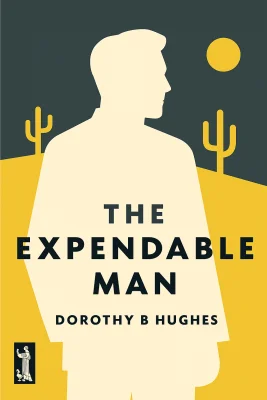
The Expendable Man
Categories
Fiction, Classics, Mystery, Thriller, American, 20th Century, Novels, Crime, Mystery Thriller, Noir
Content Type
Book
Binding
Paperback
Year
2005
Publisher
Persephone Books
Language
English
ISBN13
9781903155585
File Download
PDF | EPUB
The Expendable Man Plot Summary
Introduction
Across the desert highway, Hugh Densmore drove his mother's white Cadillac toward Phoenix, unaware that his life was about to unravel. The young Black medical intern from UCLA had only wanted to attend his niece's wedding when he spotted a teenage girl hitchhiking alone in the desert twilight. A moment of compassion led him to stop - against his better judgment. The thin, petulant girl with bleached hair and cheap clothes called herself Iris Croom. She climbed into his car with her small traveling case clutched tight, her lies already forming on her lips. By the time he dropped her at the Phoenix bus station and continued to his family celebration, Hugh believed he was free of her. But two days later, when a young white girl's body was found floating in a Phoenix canal, Hugh's act of kindness would transform into a nightmare of suspicion. In a world where a Black doctor with a white Cadillac already drew too much attention, Hugh discovered how swiftly innocence could become expendable when race, sex and fear collided on the unforgiving Arizona highways.
Chapter 1: The Fateful Highway: A Doctor's Misplaced Kindness
The sun was setting over the desert when Hugh Densmore first spotted the girl. She was a shadow beneath a roadside tree, just standing there on the empty highway fifteen miles outside of Indio, California. Hugh slowed his white Cadillac instinctively, though every bit of urban caution told him not to stop. The desert stretched empty in all directions - no houses, no cars, not even a gas station. Just the girl, waiting as twilight descended. He couldn't leave her there alone. What might happen to her, he wondered, thinking of his own younger sisters? What kind of man might pick her up next? Against his better judgment, Hugh stopped and backed up. "Do you want a ride?" he asked through the open window. She stood silently, assessing him. She wasn't pretty - just a teen with too much lipstick, self-bleached hair jutting from beneath a gaudy orange-green scarf. Her tight green slacks and oversized blue-striped boy's shirt hung almost to her knees. In one hand she clutched a white plastic handbag, in the other a small canvas traveling bag. "I guess so," she finally answered, climbing in. As they drove toward Blythe, Hugh learned she called herself Iris Croom. She claimed to be eighteen, though she looked younger. She said she was going to Phoenix to visit her aunt, but her story was riddled with inconsistencies. When he asked about school, she mentioned a holiday. When he asked about family, she grew defensive. "My family doesn't care what I do," she snapped. "My mother ditched us six years ago. She was a tramp." Hugh bristled at her disrespect. "Don't say that! You don't know her side of it." In Blythe, Hugh bought her a bus ticket to Phoenix. She seemed surprised at his kindness but accepted it with minimal gratitude. He watched her walk into the bus station restaurant before driving away, relieved to be rid of her and her lies. Ten dollars was a small price for peace of mind. The next morning, Hugh crossed the California-Arizona border, only to find Iris waiting at the inspection station. She'd sold the ticket and now claimed to have missed her ride. With the station officers watching, Hugh had no choice but to let her into his car again. "I knew why you wouldn't take me to Phoenix last night," she said with teenage smugness. "You didn't want to cross the state line with me. So the kids took me out here this morning and I walked across. You got nothing to worry about." But Hugh knew he had everything to worry about - especially when they reached Phoenix and she disappeared at the bus station. His wedding weekend awaited. He pushed thoughts of Iris from his mind, never suspecting that their paths would cross again in the most devastating way.
Chapter 2: Accusation in the Desert: A Body in the Canal
Two days later, Hugh sat in his motel room flipping through a newspaper when the headline hit him like a physical blow: "GIRL'S BODY FOUND IN CANAL." His heart hammered as he read the details. A teenage girl had been discovered floating in a Phoenix irrigation canal, wearing green slacks, a blue-striped shirt, and a colorful scarf. Though the article said she remained unidentified, Hugh knew immediately it was Iris. That night, as he returned from his niece's wedding reception, two plainclothes detectives were waiting outside his motel room. The larger one, Detective Ringle, had a permanent scowl etched into his face. The smaller, Detective Venner, had a perpetual sneer. Without explanation, they took Hugh to the county mortuary to identify the body. "Do you know this girl?" Ringle asked as the attendant rolled out the drawer. Hugh studied the pale face. "Yes, this is the girl who called herself Iris Croom." Later, at police headquarters, Hugh learned they had received an anonymous phone tip that he had brought the girl to Phoenix. The detectives seemed unconvinced by his story of giving a hitchhiker a ride. Their questions carried hostile undertones. "How surprised were you to find out she'd had an abortion?" Venner asked with an ugly smile. Hugh stared at him in shock. "I didn't know anything about that." "Did you commit that abortion?" Ringle demanded. "No, I did not!" Hugh's denial rang with genuine outrage. "I'm a doctor. I've sworn the Hippocratic oath." Back at his motel room that night, Hugh found a pink envelope that had been slipped under his door. Inside was a crude note: "NIGGER GET OUT OF TOWN." His fear gave way to a strange exhilaration - this proved someone else was involved, someone who saw him as a threat. The next morning, Hugh awoke to find more disturbing news in the paper. The dead girl had been identified as Bonnie Lee Crumb, a sixteen-year-old from Indio. Her father, a mechanic named Albert Crumb, had identified her body. The article mentioned she had been estranged from her mother for years. That night, there was a knock on Hugh's door. When he opened it, he was stunned to see Iris - or Bonnie Lee - standing there, very much alive. But no - this was impossible. He blinked in confusion until he realized the girl before him was a different young woman entirely, though similar in appearance. "I'm in trouble," she whispered, her eyes darting nervously. "Real trouble." "What kind of trouble?" Hugh asked. "I'm pregnant," she said, then looked at him meaningfully. "You're a doctor..." With sudden clarity, Hugh understood the trap closing around him. He slammed the door in her face, trembling with anger and fear. Someone was trying to frame him - but why?
Chapter 3: The Weight of Prejudice: Becoming the Perfect Suspect
The next morning, Hugh was summoned to the Scottsdale police station to meet with Marshal Hackaberry. Unlike the Phoenix detectives, the marshal seemed determined to be fair, though his eyes betrayed the same underlying suspicion. "I don't want you getting any ideas that you're going to get a bad beef because you're a Negro," Hackaberry stated flatly. "This isn't going to be any race affair. Get that straight. We're after a killer and we're going to get him. If you killed that girl, you'll pay for it. If you didn't, I don't want you." But before Hugh could finish explaining his side of the story, the marshal had another visitor: Albert Crumb, Bonnie Lee's father. The man was led in - undersized, weathered, with thinning hair plastered down with water. His eyes were dull until he saw Hugh. "You murdered my little girl!" Crumb lunged forward, only to be restrained by a deputy. "I didn't kill her," Hugh said. "I only tried to help her. She needed help." After Crumb was escorted out, the questioning continued. The autopsy had revealed that Bonnie Lee had undergone an abortion shortly before her death, but she had actually died from a blow to the head. The marshal didn't say it directly, but Hugh understood: a Black doctor giving a ride to a white teenage girl who later died after an abortion made him the perfect suspect. Later that day, Hugh met with Skye Houston, a prominent white attorney recommended by Ellen Hamilton, a beautiful young woman staying at his motel who had become his unlikely ally. Houston was dispassionate, almost cold, but he agreed to take the case. "I intend to be governor of this state," Houston told Hugh bluntly. "My target is four years from now. I'm going there on your shoulders." That night, as Hugh and Ellen were leaving the motel for dinner, the phone rang. When Hugh answered, a male voice hissed: "Don't want to spoil your fun, but you better get out of town before something bad happens to you. We don't like niggers mucking our—" Hugh slammed down the phone and rushed to the door, determined to confront the caller, but Ellen caught his arm. "You mustn't go out there! He isn't out there - he's on the telephone!" Hugh reluctantly agreed, but his resolve hardened. The caller must be the real killer, and he was afraid Hugh might somehow identify him. The question was: who was this mystery man, and how was he connected to Bonnie Lee? The next day brought more trouble. Detective Venner appeared at Hugh's grandparents' house with a warrant to search his medical bag. The implication was clear: they believed Hugh had performed the abortion himself. "I wouldn't want you deciding to remove maybe a knife or a forceps," Venner said with a smirk as he followed Hugh upstairs. With each passing hour, the noose tightened. Hugh was not just a suspect - he was becoming the only suspect.
Chapter 4: Allies in the Storm: Finding Voice Against Injustice
Ellen Hamilton was nothing like any woman Hugh had encountered before. Tall and slender with smooth dark skin and enormous black eyes, she carried herself with the natural confidence of someone born to privilege. The daughter of a prominent Washington, D.C. judge, Ellen was spending time in Phoenix before continuing to Los Angeles for a visit. When she discovered Hugh's predicament, she didn't hesitate to help. "If a reputable white doctor had given Iris a ride, there wouldn't be this undercurrent to it," she observed candidly. "At least a white doctor would be given the benefit of the doubt." Through her father's connections, Ellen had secured Skye Houston as Hugh's attorney - the best in Phoenix. But she did more than that. She became his confidante, his investigative partner, and gradually, something deeper. Hugh's brother-in-law, Dr. Edward Willis, provided another crucial lifeline. A respected Phoenix physician, Edward knew the city's medical underworld. Over coffee at St. Hilary's Hospital, where Edward was delivering babies, he reluctantly shared what he knew. "I'll give you two names," Edward said, pushing a folded prescription blank across the table. "The first is a telephone number - no name. The second is old Doc Jopher. He lost his medical license years ago for criminal negligence. He's been in and out of jail for abortion, but as soon as he gets out, he goes back to work." Armed with this information, Hugh made a call from a shopping center phone booth. A recording instructed him to leave his number. When a man returned his call, Hugh disguised his voice and explained his "girlfriend" was in trouble. "The price is five hundred," the anonymous voice stated coldly before hanging up. Hugh knew Bonnie Lee couldn't have afforded that. His next lead was Doc Jopher, who lived in a rundown farmhouse north of Scottsdale. Meanwhile, Houston's secretary, Meg, had flown to Indio to investigate Bonnie Lee's past. She returned with Lora, a plain, awkward teenager who had been Bonnie Lee's confidante. "She told me about all her boy friends," Lora explained eagerly. "She was terribly popular. Probably the most popular girl at school." According to Lora, Bonnie Lee had been secretly dating a man named Fred O. - a blond man from Phoenix who visited Indio several times a week. The romance had begun during Christmas when Bonnie Lee was working at a dime store. "It was terribly romantic," Lora sighed. "It happened just like that! They took one look at each other and fell madly in love." With this new information, Houston tracked down a man named Fred Othy who had worked as a bus driver on the Phoenix-Indio route until March. He now worked at a garage near his mother's beauty parlor. When Houston and Hugh confronted him, Othy denied knowing Bonnie Lee, but his hatred for Hugh was palpable. That night, the phone at Ellen's motel room rang again. The same threatening voice warned Hugh to leave town. Hugh was now convinced that Fred Othy was both the caller and the killer - but proving it would be dangerous. As the police investigation intensified, Hugh felt increasingly desperate. Someone had even planted what appeared to be the murder weapon - a small wrench - under the fender of his car. The evidence was mounting against him, and time was running out.
Chapter 5: The Hunt for Truth: Uncovering Othy's Betrayal
Against doctor's orders, Hugh slipped out of Skye Houston's home where he'd been recuperating from his injuries. He stole through the night in borrowed clothes, determined to visit Doc Jopher before the police arrested him. The old, rundown farmhouse stood isolated in the desert countryside, a single light glowing from its window. Hugh knocked on the screen door, adopting a servile posture and accent when the old man appeared. "Are you Doc Jopher?" "Yes, I'm the doctor," the man replied, peering through the doorway. The sour smell of wine wafted from his breath. "What you want with me? Speak up, boy." "I got a little trouble," Hugh began softly. "My girl friend—" "You get your own kind of doctor," the old man interrupted angrily. "I don't do no work for the colored." Hugh quickly mentioned money. "I got plenty of money. I can get hold of most a hundred dollars." Cupidity flickered across Jopher's face. Despite his initial refusal, he invited Hugh inside. The small, shabby living room contained an old collie dog snoring in a shapeless chair. Jopher shuffled to a table, poured himself wine, and squinted at Hugh suspiciously. "Where'd you get that much money?" he asked. "I worked for it. And some I borrowed from a loan company," Hugh lied. The doctor seemed satisfied. "Well, I just might take care of you," he said, sipping his wine. "If you got the money on hand, cash on the barrel." As they talked, Jopher became increasingly forthcoming. He invited Hugh to bring his "girl" that same night, along with the hundred dollars. Hugh pretended to leave to fetch her, but instead raced back to Houston's house to recruit Ellen. "I need you to play my girlfriend," Hugh explained urgently. "Doc Jopher is willing to talk, but I need to convince him first." Ellen insisted on accompanying him despite the danger. "I'm not milk and sugar," she said firmly. "I'm not afraid." When they returned to Jopher's house, the old doctor ushered them in. Hugh cleverly brought a bottle of bourbon as a gift, knowing the wine-drinking doctor would crave stronger liquor. As Jopher examined the money, Hugh cautiously steered the conversation toward Bonnie Lee. "I wouldn't want nothing to happen to her," Hugh said hesitantly. "Like what happened to that little white girl who got drowned in the canal." "It wasn't my fault what happened to that girl," Jopher replied amiably. "She was all right when she left here." Hugh pressed further. "Fred O. says it's your fault. He says you killed Bonnie Lee." Ellen gasped softly in the background. "Then he's lying to you, boy," Jopher retorted. "He knows that girl walked out of here on her own two feet." To prove his medical legitimacy, Jopher led Hugh to an old couch with a rubber sheet hidden beneath it. From under the couch, he produced a basin and his doctor's bag, laying out instruments on the table. "Doctor's tools," he said proudly. "The finest you can buy." Just as Hugh was about to extract a full confession, the kitchen door burst open. Detectives Ringle and Venner stormed in, guns drawn. "I'll take that money, Doc," Ringle announced. Hugh shouted for Ellen to run, but Venner caught her at the door while Ringle knocked Hugh to the floor with a powerful blow. The last thing Hugh saw before pain overwhelmed him was Doc Jopher's defeated face as he fumbled for his empty wine bottle.
Chapter 6: Brutal Reckonings: Violence on a Darkened Street
Hugh left Ellen's motel room just before midnight, relieved that the anonymous caller hadn't phoned again. The wedding was over, and his family remained blissfully unaware of his troubles. He'd told them he was staying with an old friend, while in reality he'd been recuperating at Houston's home after his confrontation with Jopher. He carefully navigated his car through the side streets, planning to return to his grandparents' house. The street was dark and empty, with vacant lots on one side and closed businesses on the other. The only sign of life was a dilapidated nightclub called THE CANCAN at the far end of the block, its windows painted black. Without warning, a car without headlights shot out of nowhere, forcing Hugh to swerve and stop half on the dirt sidewalk. Before he could understand what was happening, Fred Othy was getting out of the other car, an ugly smirk on his face. Behind the wheel sat a silhouette with a high-pitched, jeering laugh. Hugh stepped out of his car, instinctively backing away to find open space. His medical training hadn't prepared him for street fighting. "You goddamn dirty nigger," Othy spat. "You won't tell the cops no more about me when I get through with you." Othy's first blow knocked Hugh against the car. Though Hugh fought back, landing a punch on Othy's face, he was no match for the younger man's vicious fighting style. From the car, a female voice shrieked encouragement: "Give it to him, Fred! Give it to him good!" Hugh was stunned to realize Othy's accomplice was a woman. That moment of distraction cost him as Othy's knee slammed into his groin. Hugh crumpled to his knees, covering his head with his arms as Othy's boot crunched into his side. "Go on, give it to him," the girl squealed excitedly, then suddenly screamed, "Jesus, Fred. The cops!" Othy delivered one final, less powerful kick before fleeing. Hugh passed out briefly, coming to as a police spotlight illuminated his battered face. Through swollen eyes, he glimpsed Detective Venner watching with sly amusement. "If you were looking for trouble, you found it," Venner said. Despite his pain, Hugh managed to identify his attacker. "It was Fred Othy." "That figures," Venner replied disinterestedly. The young uniformed officer was more compassionate, calling an ambulance despite Venner's obvious displeasure. Hugh refused medical assistance, insisting he could care for himself. After filing a report, he drove carefully to Ellen's motel room, his entire body throbbing with pain. She opened the door in shock. "What happened to you?" Hugh collapsed into a chair. "I've been to see Doc Jopher." Before he could explain further, he passed out. He awoke in a strange bed with voices arguing nearby. Through blurred vision, he recognized Dr. Edward checking his pulse, while in the doorway stood Marshal Hackaberry and Detective Ringle. "—he turned himself in as soon as he found out we were looking for him," the marshal was saying. "Does that sound like he's lying?" "He knew he'd been spotted when he tried to kill Hugh," Skye Houston replied. As Hugh drifted in and out of consciousness, he caught fragments of their conversation. Othy had surrendered to police, admitting he'd known Bonnie Lee but denying any role in her murder. He claimed Hugh was the abortionist. Later, when Hugh was more lucid, Edward explained his injuries. "You have a couple of cracked ribs. I've bound them. You're badly bruised but no bones broken." Despite his condition, Hugh insisted on confronting Doc Jopher again. "I need some medicine," he told Edward. "I want you to shoot me full of B-12. And I want some biphetamine. Strong." "You can't—" Edward began. "I have to," Hugh interrupted. "I'm going to do it. With or without help." That night, fortified by stimulants and painkillers, Hugh stole out of Houston's house with Ellen. They returned to Doc Jopher's farmhouse, where the old doctor, desperate for money and liquor, finally admitted the truth after Hugh cleverly prompted him. "Fred O. says it's your fault," Hugh said. "He says you killed Bonnie Lee." "Then he's lying to you, boy," Jopher replied indignantly. "He knows that girl walked out of here on her own two feet." The confession had barely left Jopher's lips when Ringle and Venner burst in. But instead of recognizing the significance of what they'd witnessed, they arrested Hugh and Ellen for conspiracy to commit an illegal operation.
Chapter 7: The Final Gambit: A Confession and a Trap
At the Scottsdale police station, Hugh sat bloodied and exhausted as Ringle detailed their "evidence." According to the detective, they had watched through the window as Hugh passed money to Doc Jopher, retrieved the doctor's bag, and prepared the couch with a rubber sheet. "We entered by the kitchen door," Ringle explained to Marshal Hackaberry. "Took them red-handed. I had it figured by then why we couldn't get nothing on Densmore. He didn't use the motel room or his own stuff. He was working in partners with Doc." Hugh protested weakly. "I never saw Doc Jopher until tonight. Doc Jopher was the one who aborted Bonnie Lee." Before Hackaberry could respond, Skye Houston burst into the station. He'd found Hugh's note and rushed to intervene. Shortly after, Fred Othy was brought in by another officer. "Whose idea is it dragging me down here in the middle of the night?" Othy shouted. "I've told you what happened." The air crackled with tension as all the key players converged: Hugh and Ellen, Doc Jopher, Fred Othy, Hackaberry, Ringle, Venner, and Houston. The moment of truth had arrived. "Othy brought the girl to me," Doc Jopher suddenly announced, his watery eyes hardening. "He waited while I took care of her." "Shut your mouth, you fat slob!" Othy lunged toward the old doctor. "She walked out of there with him," Jopher continued, undeterred. "She was just as live as him or me when she walked out with him." Marshal Hackaberry revealed the evidence they'd been gathering. "The lab's found some dog hairs in your mother's car. You folks don't have a dog. Doc does. Might be they'll match up." Othy's façade crumbled. "I didn't kill her. It was the doc!" The marshal's voice remained steady. "She was killed by a blow on the head. It was inflicted while she was alive. There was no debris in the canal." Doc Jopher whined, "You know I didn't kill that poor little girl, Marshal. I wouldn't do a thing like that. Maybe I tried to help her in a way I oughtn't. Like I've tried to help other poor little girls that come crying to me. It's not my fault I got a soft heart." As the officers led Othy and Jopher away, the truth emerged clearly: Bonnie Lee had come to Phoenix to meet Fred Othy, her secret older boyfriend from Indio. When she revealed her pregnancy, he took her to Doc Jopher for an abortion. Afterward, when she threatened him - perhaps demanding marriage or money - he panicked and killed her, dumping her body in the canal. Hugh was free, but the ordeal had left its mark. The marshal's words echoed in the quiet station: "With any luck, we'll send Doc Jopher up for a longer spell than usual. But there'll be another Jopher. And another telephone number. And another old woman. Another and another and another. There'll always be abortionists just as there'll always be prostitutes and pimps and pushers. When man wants an evil, he'll always find someone evil to supply him." Exhausted beyond endurance, Hugh took one step toward the door and collapsed.
Summary
Days later, Hugh Densmore drove back toward Los Angeles with Ellen Hamilton beside him. His face still showed the marks of his beating, but his name had been cleared. The newspapers had mentioned him only briefly as having assisted in the investigation. Fred Othy and Doc Jopher faced charges for their roles in Bonnie Lee's death, while Hugh was free to return to his medical career. "If things had been different, it might have been you and Skye, mightn't it?" Hugh asked Ellen as they crossed the desert that had nearly claimed his freedom. "They would have had to be very different," she replied. "If he hadn't been white." "That would matter to you?" "Yes," she said simply. "It's too soon. I'm not that strong." They drove in silence for a while before Hugh asked, "How long will you be in Los Angeles?" "It depends upon how interesting I find your campus," Ellen answered. "I won't have much time," Hugh worried. "I've two weeks' vacation to make up." Ellen smiled, not at him but at the future stretching before them. "I'm in no hurry." As the white Cadillac carried them west, Hugh understood that while justice had prevailed, the shadow of what might have happened would never fully disappear. A moment's kindness on a desert highway had nearly cost him everything, exposing the fragile nature of innocence in a world where some lives remained more expendable than others. Yet in Ellen he had found not just an ally but a promise - that perhaps the road ahead, despite its dangers, might still lead to something like grace.
Best Quote
“He'd always had a quickening of the heart when he crossed into Arizona and beheld the cactus country. This was as the desert should be, this was the desert of the picture books, with the land unrolled to the farthest distant horizon hills, with saguaro standing sentinel in their strange chessboard pattern, towering supinely above the fans of ocotillo and brushy mesquite.” ― Dorothy B. Hughes, The Expendable Man
Review Summary
Strengths: The review highlights the book's ability to engage readers with its suspenseful narrative and unexpected twists. The novel's exploration of racial tension and societal issues is praised for its depth and relevance, even decades after its publication. The writing style is commended for its ability to evoke strong emotions and immerse the reader in the story's atmosphere. Overall: The reviewer expresses a strong positive sentiment towards "The Expendable Man," recommending it highly to fans of noir mysteries. The book is described as a must-read, with a narrative that benefits from being approached without prior knowledge. The novel's impact and thematic richness are emphasized, suggesting it is a powerful and thought-provoking read.
About Author

Dorothy B. Hughes
Hughes investigates the human psyche through the lens of mystery, exploring themes of identity and morality in her writing. Her work reflects a deep understanding of hardboiled prose, a style she honed with editorial guidance on her debut novel, "The So Blue Marble". This methodical reduction of 25,000 words enhanced the book’s taut narrative structure. Meanwhile, her novels like "In a Lonely Place" and "Ride the Pink Horse" extend these themes, delving into psychological tension and existential queries. These works did not merely entertain; they also questioned societal norms and human behavior.\n\nBy transitioning from writing fiction to literary criticism in the early fifties, Hughes found a platform to articulate her insights on narrative technique and character development, ultimately earning her an Edgar Award. Her analytical prowess benefitted readers seeking a deeper appreciation of the mystery genre, providing tools for understanding the intricacies of plot and character motivation. This dual role of author and critic enriched her contributions to the field, culminating in the recognition of her lifetime achievements with the Grand Master Award from the Mystery Writers of America in 1978.\n\nThis short bio highlights Hughes’s influence in redefining mystery literature. Her work appeals to readers intrigued by the intersection of crime and psychology, offering narratives that are as intellectually engaging as they are suspenseful. Through her books, Hughes not only entertained but also encouraged readers to question and analyze the world around them, cementing her legacy as a pivotal figure in 20th-century mystery writing.
Read moreDownload PDF & EPUB
To save this Black List summary for later, download the free PDF and EPUB. You can print it out, or read offline at your convenience.
The Expendable Man
by Dorothy B. Hughes
