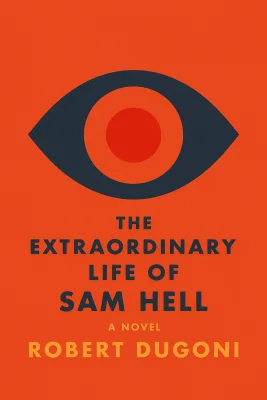
The Extraordinary Life of Sam Hell
Categories
Fiction, Audiobook, Historical Fiction, Adult, Family, Book Club, Contemporary, Coming Of Age, Adult Fiction, Literary Fiction
Content Type
Book
Binding
Hardcover
Year
2018
Publisher
Lake Union Publishing
Language
English
ISBN13
9781503949003
File Download
PDF | EPUB
The Extraordinary Life of Sam Hell Plot Summary
Introduction
# Red Eyes, Extraordinary Soul: A Journey Through Difference The sterile examination room at Dr. Fukomara's office held the scent of antiseptic and impending finality. Samuel Hill sat on the paper-covered table, moments away from a vasectomy that would end his bloodline forever. Through the silence, he could almost hear the bells of Our Lady of Mercy Catholic Church, though they were miles away. Those phantom chimes carried him back to a March evening in 1957, when his mother Madeline knelt on their living room sofa, working her rosary beads while his father Maxwell read the newspaper with a Manhattan in hand. The baby wasn't due for five weeks, but when Madeline's water broke that night, staining their carpet with an amoeba-shaped mark that would never come clean, their lives changed forever. After thirty-two hours of labor at Mercy Medical Center, the delivery room fell silent when the newborn opened his eyes. Two crimson orbs stared back at them, glowing like embers in the harsh hospital lighting. The attending nurse let out a startled yip. The doctor froze, slack-jawed. But Madeline Hill saw something different in those impossible red eyes—she saw a child destined for an extraordinary life, marked by God for greatness in a world that would test every ounce of faith she possessed.
Chapter 1: The Devil Boy: Birth and the Burden of Difference
Dr. Charles Pridemore called it ocular albinism, a rare genetic condition that left Samuel's irises without pigment, allowing blood vessels to show through and create the startling crimson appearance. The hospital administration wanted specialists to examine the child, eager doctors hoping to publish their findings in medical journals. But Madeline would have none of it. She named him Samuel after his father's stunned exclamation and took him home to begin a childhood that would be anything but ordinary. By age six, Samuel had learned that the world stared, whispered, and recoiled from his appearance. At Our Lady of Mercy Catholic School, the children called him "Devil Boy" while Sister Beatrice, reeking of whiskey from her hidden flask, deemed his eyes too disruptive for the classroom. The cruelest tormentor was David Bateman, three years older and held back a grade, who towered over the other children like a malevolent giant. The confrontation came during lunch recess when Samuel sat alone on the bleachers, methodically eating his Twinkie by peeling away the golden cake to save the cream filling for last. A red rubber ball smacked him in the face with such force it knocked him backward, his head striking the concrete bench. Vanilla cream exploded across his face and hair as Bateman sneered from below. The beating that followed was swift and brutal. Bateman's fists found their mark with practiced precision while his cronies held Samuel's arms. When it was over, Samuel lay broken and bloodied behind the school, his shirt torn and his spirit crushed. His mother arrived to find her son destroyed, and that night, as she tended to his wounds, she made a promise that would echo through his childhood. She would be his shield against a world that feared what it didn't understand, reminding him daily that his extraordinary eyes were a gift from God, not a curse from the devil.
Chapter 2: Finding Allies: The Power of True Friendship
At his new school, Samuel discovered that miracles sometimes came in unexpected packages. Ernie Cantwell was the only black child at the predominantly white institution, a mountain of a boy already showing the athletic prowess that would make him legendary. When he saw the smaller kid with the strange eyes being picked on, something stirred in his chest—a recognition of otherness, perhaps, for Ernie knew what it meant to be different in a town where faces like his were rare. The friendship began with a simple act of protection. During another lunch period assault, Ernie stepped between Samuel and his tormentors, his massive frame casting a shadow that spoke louder than words. When the bullies demanded their ball back, calling Ernie unspeakable names, the new boy from Detroit showed why he'd been recruited for every sports team despite his skin color. Ernie moved like liquid mercury, dodging and weaving as three boys chased him across the playground. The retaliation was inevitable. Bateman caught Ernie from behind, driving his fist into the smaller boy's kidneys with vicious intent. But as Bateman raised his fist for a second blow, something snapped inside Samuel. He leaped from the bleachers onto Bateman's back, wrapping his arms around the bully's thick neck in a desperate chokehold. It wasn't courage that drove him—it was the recognition that he'd found his first real friend, and he wouldn't let anyone destroy that. The aftermath changed everything at the school. Father Brogan, the Irish pastor with silver-black eyebrows and a thick brogue, called all parties to the rectory that evening. When the truth emerged through signed confessions from Bateman's accomplices, the priest's fury was biblical in its intensity. Bateman was expelled that very night, dragged from the building by his father's massive hand. Samuel had learned his first lesson about standing up to monsters, but he sensed this wouldn't be the last time their paths would cross.
Chapter 3: False Reflections: Learning to See Through Deception
High school brought new challenges and unexpected opportunities. At Saint Joseph's, an all-boys Catholic school, Samuel found his niche behind a typewriter rather than on athletic fields. His friendship with Ernie, now a star athlete being courted by college recruiters, opened doors that his red eyes might have kept closed. Samuel became the school's sports reporter, crafting articles that made Ernie a local legend while earning scholarship money for his own college dreams. But it was at his father's pharmacy that Samuel encountered his most dangerous lesson about human nature. Donna Ashby was eighteen, blonde, and blessed with curves that made teenage boys forget their own names. When she started working the front register, Samuel felt the intoxicating rush of being noticed by someone beautiful—someone who seemed to look past his unusual eyes to see the person beneath. Their relationship began in secret, hidden encounters in the front seat of Samuel's red Falcon convertible, parked behind the baseball backstop where no one could see them. Donna was an eager teacher, introducing Samuel to pleasures he'd only imagined. But as weeks turned to months, a pattern emerged that cut deeper than any physical wound. She would never be seen with him in public, never go to a movie or dinner, never introduce him to her friends or family. When Samuel finally confronted her about their hidden relationship, her response stripped away his illusions about love and acceptance. "Why else would I be with you?" she asked, the words hitting him like a physical blow. He was nothing more than a convenience to her, a secret she kept hidden like a shameful addiction. The lesson was completed when Samuel discovered Leo Tomaro's red Camaro parked in Donna's driveway that Saturday night. Some people would use his difference as a weapon against him, exploiting his gratitude for any attention at all.
Chapter 4: Facing Demons: When the Past Returns
Thirty-two years later, Dr. Samuel Hill had built a successful ophthalmology practice, worn brown contact lenses to hide his red eyes, and convinced himself that the past was truly buried. Then Trina Crouch walked into his office with her seven-year-old daughter Daniela, and the carefully constructed walls of his adult life began to crumble. The little girl was losing vision in her left eye, supposedly from a bicycle accident. But the emergency room report didn't match the story—the injuries were too minor for the kind of head trauma that would cause such damage. And when Samuel saw the child's last name on the chart, his blood turned to ice. Daniela Bateman. David Bateman's daughter. Trina Crouch was a tall, sturdy woman with frightened eyes and the defensive posture of someone who'd learned to expect the worst from every encounter. When Samuel gently probed about the accident, she shut down completely. "She fell off her bike," she insisted, but her voice cracked with the strain of maintaining the lie. Samuel recognized the signs—the same protective dishonesty he'd employed as a six-year-old, claiming his brutal beating was a bicycle accident. That night, driving home from Moon's Bar after watching the 49ers game with Ernie, Samuel saw the flashing lights in his rearview mirror. The traffic stop was no coincidence—Bateman had been waiting, watching, stalking his prey like a predator who'd caught a familiar scent. The reunion was everything Samuel had feared and worse. David Bateman had transformed from a schoolyard bully into something far more dangerous—a uniformed officer with legal authority and decades of suppressed rage.
Chapter 5: Breaking Cycles: Standing Against Abuse
The humiliation was swift and professional. Handcuffs bit into Samuel's wrists as Bateman pressed his head against the car roof, delivering his message with the casual brutality of someone who'd perfected the art of inflicting pain without leaving obvious evidence. "You fix my daughter's eyes, and you leave it at that," Bateman hissed. "I find you talking to my ex-wife or anyone else about what you think may or may not have happened, and I'm going to come looking for you." The billy club across the backs of Samuel's thighs was the punctuation mark—a reminder that some bullies never change, they just find new ways to exercise their cruelty. As Bateman drove away, leaving Samuel collapsed beside his car, the past and present merged into a single moment of recognition. The six-year-old boy who'd been beaten behind the park bathroom had grown up to become a successful doctor, but he was still powerless against the same monster who'd tormented him decades ago. But this time, Samuel wasn't the only victim. Somewhere in Burlingame, a little girl with damaged eyes was learning the same lessons about helplessness and fear that had shaped his own childhood. Samuel performed the surgery on Daniela's retina, his hands steady despite the trembling in his soul. He helped Trina build a case against her abusive ex-husband, convinced her to fight back, promised her that this time would be different. The custody hearing was scheduled for a Tuesday morning. On Monday night, David Bateman cornered Trina in her hotel room and put a bullet through her head before turning the gun on himself. The guilt consumed Samuel like acid. He had pushed her to fight back, convinced her that the system would protect her, signed her death warrant with his good intentions. Even death couldn't stop David Bateman from destroying lives, and Samuel realized he was still that frightened boy on the playground, still powerless against the darkness that some people carried in their hearts.
Chapter 6: Vision Beyond Sight: The Path to Self-Acceptance
The confrontation with Bateman shattered more than just Samuel's sense of security—it exposed the fundamental lie he'd been living. His relationship with Eva, the pilot he'd nearly sterilized himself for, crumbled when he discovered her infidelity. His best friend Mickie forced him to confront the pattern of settling for less than he deserved, of using his red eyes as an excuse for accepting mistreatment from people who should have cherished him. "You pick women who aren't good enough," Mickie told him with characteristic bluntness, "and then you rationalize how they treat you rather than just telling them they aren't good enough for you." The truth was devastating in its simplicity. Samuel had spent his entire adult life hiding behind brown contact lenses, pretending to be someone he wasn't, accepting scraps of affection from people who saw him as convenient rather than lovable. His mother's faith that his red eyes marked him for an extraordinary life had been twisted into a belief that he should be grateful for any acceptance at all. But as he sat in his empty house, nursing the welts on his legs and the deeper wounds to his spirit, Samuel began to understand what his mother had really meant. Extraordinary didn't mean perfect or universally accepted. It meant having the courage to be different, to stand up for those who couldn't stand up for themselves. The path forward crystallized in a moment of painful clarity. He would close his practice and join Orbis, the flying eye hospital that brought sight to the world's forgotten corners. He would stop hiding behind contact lenses and false relationships. He would use his gift for healing to help those who had no other hope, and perhaps, in saving them, he would finally save the frightened six-year-old boy who still lived inside him, still waiting for someone to tell him that being different wasn't a curse but a calling.
Chapter 7: Coming Home: Faith, Love, and Family
In a makeshift clinic in Costa Rica, Samuel encountered the miracle that changed everything. Six-year-old Fernando sat hunched on a medical stool, his mop of curly hair hiding eyes the color of fresh blood. The other children called him "el hijo del Diablo"—the son of the devil. Samuel saw himself in that frightened boy and knew why his journey had led him here. With trembling hands, Samuel removed his contact lenses for the first time in front of a patient. Fernando's eyes widened in wonder as he realized he wasn't alone in the world. "God gave me extraordinary eyes so that I would live an extraordinary life," Samuel told the boy in Spanish. "And I have. If God had not given me these eyes, I would never have met you." The moment crystallized everything his mother had tried to teach him—his difference wasn't a curse, it was a calling. But even as Samuel planned to adopt Fernando, his mother was dying back home. Cancer had invaded Madeline's body with ruthless efficiency, and when Mickie called to summon him home, Samuel knew his wandering years were over. He took his mother to Lourdes, the French pilgrimage site where the Virgin Mary had appeared to Saint Bernadette. In the healing waters of that sacred place, something shifted in Samuel's wounded soul—a reconnection to the faith his mother had tried so hard to nurture. Madeline died as she had lived—with absolute faith and unshakeable love. Her final gift was permission to stop carrying the weight of her expectations and start living for himself. When his father followed her six weeks later, Samuel understood that some loves are too deep to survive separation. Mickie had been waiting for him all along, keeping his house and practice in careful preservation. When he finally asked her to marry him—not out of loneliness but out of deep recognition—she said yes. They would adopt Fernando together, creating the family that had always been meant to be.
Summary
On Fernando's first day at Our Lady of Mercy Catholic School, Samuel stood at the foot of the red tile steps where his own journey had begun. The same statue of the Virgin Mary looked down from her alcove, the same bells rang from the steeple, but everything had changed. The principal who greeted them spoke of blessing rather than burden, of teaching compassion through example. Samuel knelt with Fernando before the statue, teaching him the prayers his own mother had whispered in his ear, watching his son's red eyes reflect the candlelight without shame. The extraordinary life had arrived not with fanfare but with quiet recognition. Samuel's practice served the poor, his marriage was built on friendship deepened into love, and his son would grow up knowing he was chosen rather than cursed. The boy who had been called the devil's child was raising a son who would know himself to be God's beloved. In the evening, as the bells of Our Lady of Mercy rang out across the neighborhood, Samuel would hold his mother's worn rosary and remember her words—everything happens for a reason. The bullying, the isolation, the years of wandering had all led him here, to this moment, to this understanding of what it meant to be blessed with difference in a world that desperately needed healing.
Best Quote
“There comes a day in every man’s life when he stops looking forward and starts looking back.” ― Robert Dugoni, The Extraordinary Life of Sam Hell
Review Summary
Strengths: The review highlights the compelling character development of Sam Hill and his supportive family and friends, emphasizing themes of strength, unconditional love, and friendship. The narrative's alternating time frames effectively engage the reader, and the story's inspiration from real-life events adds depth and authenticity. Weaknesses: The reviewer notes that the ending felt overly conclusive, suggesting the author may have tried too hard to resolve every plot point, which detracted slightly from the overall impact. Overall: The reviewer expresses a strong positive sentiment, recommending the book for its moving and well-written narrative. The story's exploration of fate, faith, and personal growth resonates deeply, making it a worthwhile read.
About Author

Robert Dugoni
Dugoni reframes the traditional boundaries of crime and legal fiction by infusing his narratives with elements from his rich professional background in law and journalism. His work intricately weaves realistic, thought-provoking scenarios with a strong focus on character development. This approach allows readers to engage deeply with the narratives, finding both intellectual stimulation and emotional resonance. Robert Dugoni's novels, like "The Jury Master" and "The Extraordinary Life of Sam Hell", showcase his ability to blend suspense with profound character insights, earning him a place among top contemporary authors.\n\nDugoni's diverse series, including the Tracy Crosswhite police procedurals and the David Sloane legal thrillers, demonstrate his versatility and command over various narrative styles. His books, sold in over 40 countries and translated into more than 30 languages, have not only gained a significant following but have also been adapted for screen, extending their impact beyond the written word. Meanwhile, Dugoni's exploration of espionage in the Charles Jenkins series and the introspective journey in "The World Played Chess" exemplify his range as a storyteller, ensuring that his audience remains captivated across different genres.\n\nBeyond his compelling narratives, Dugoni's commitment to the craft of writing extends to teaching and mentoring aspiring writers. His recognition through prestigious awards such as the Nancy Pearl Award for Fiction and multiple Friends of Mystery Spotted Owl Awards highlights his contribution to the literary community. Readers benefit from Dugoni's ability to combine engaging plots with insightful social commentary, making his books not just a source of entertainment but also a lens through which to examine contemporary issues. This short bio captures the essence of an author whose work continues to leave a lasting impact on the literary landscape.
Read moreDownload PDF & EPUB
To save this Black List summary for later, download the free PDF and EPUB. You can print it out, or read offline at your convenience.
The Extraordinary Life of Sam Hell
by Robert Dugoni
