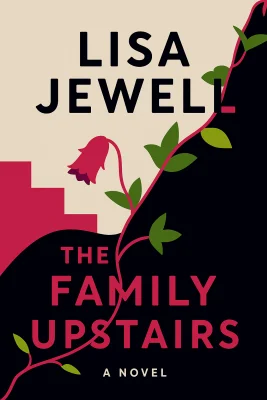
The Family Upstairs
Categories
Fiction, Audiobook, Mystery, Thriller, Adult, Book Club, Contemporary, Suspense, Crime, Mystery Thriller
Content Type
Book
Binding
Hardcover
Year
2019
Publisher
Atria Books
Language
English
ISBN13
9781501190100
File Download
PDF | EPUB
The Family Upstairs Plot Summary
Introduction
The letter arrived on cream paper with tissue lining, bearing the seal of a centuries-old law firm. Twenty-five-year-old Libby Jones had been expecting it, in the way one expects distant thunder after seeing lightning. She was adopted, and adoption meant mysteries—mysteries that now crystallized into keys to a mansion on London's most exclusive street. But inheritances from the dead carry more than money. As Libby stepped through the door of 16 Cheyne Walk, the musty air whispered of secrets buried for decades. The house had been sealed since 1994, when three bodies were discovered in what authorities called a suicide pact. A baby—ten months old—was found alive in an upstairs cot, gurgling happily while death settled in the rooms below. That baby was Libby. And somewhere in the shadows of this gothic mansion lurked the truth about a family that had vanished without trace, leaving only questions and a rabbit's foot tucked in with the infant's blankets.
Chapter 1: The Unexpected Inheritance: A House and a Hidden History
The padlock clicked open with surprising ease. Miller Roe, the investigative journalist walking beside her, had spent two years researching this house for a Guardian article that raised more questions than answers. Now he watched as Libby—the surviving child from his story—pushed back the wooden hoarding that had sealed the mansion for decades. The hallway swallowed their footsteps in dust and shadow. Dark wood paneling climbed the walls like fossilized skin, and empty doorways gaped where oil paintings once hung. This had been the home of Henry and Martina Lamb, a wealthy couple whose fortune came from slot machines and whose lifestyle once graced society pages. The cannon in the front garden, the medieval banqueting table for sixteen, the hunting swords crossed above doorways—all sold off years before the final tragedy. Libby's inheritance papers spoke of twelve rooms, not counting the basement. But the house felt hollow, carved out from the inside like a rotting tree. In the kitchen, she found evidence of their last meal still staining the walls—patches of yellow where curry had been flung in rage or desperation. The solicitor, Mr. Royle, explained that the family had been living spartanly in their final years, sleeping on mattresses, making their own clothes from black cotton, following rules that grew stranger by the month. The most disturbing discovery waited upstairs. Hidden behind wood paneling, a narrow staircase led to the attic where four small bedrooms held nothing but bare mattresses and torn curtains. Each door bore a lock—on the outside. These were not bedrooms but cells, and in one, Miller found something that made his blood freeze: a man's sock, bright with the Gap logo. New enough to have been manufactured within the past two years. Someone had been living in this house of the dead, and they might still be here.
Chapter 2: Haunted Halls: Exploring a Family's Dark Past
The revelation that someone had been secretly inhabiting the sealed mansion sent Libby and Miller fleeing to a nearby pub, but questions multiplied faster than answers. Miller's original investigation had identified the third body as David Thomsen, a charismatic man who had arrived at the Lamb household in 1988 with his wife Sally and two teenage children, Phineas and Clemency. They were meant to stay temporarily while David provided physiotherapy for Henry Lamb's stroke recovery and Sally homeschooled the children. But the Thomsens never left. Within months, they had transformed from guests to rulers of a household that grew darker with each passing season. David convinced the family to abandon modern medicine, processed food, and material possessions. He imposed a rigid schedule of exercises and lessons, controlled who could speak to whom, and gradually isolated them from the outside world. The phone was disconnected, visitors turned away, even shoes confiscated as symbols of worldly corruption. Most disturbing was David's relationship with Martina Lamb. As Henry grew weaker from his strokes, David's influence over Martina strengthened into something that resembled worship. She began sleeping on the floor, wearing homemade robes, and surrendering her jewelry to David's version of charity. The beautiful socialite who had once graced fashion magazines became a hollow-eyed woman who spoke only of David's wisdom and the spiritual journey he was guiding them on. The children suffered most under this regime. Phineas, David's own son, grew gaunt and sickly as his father subjected him to increasingly harsh disciplines. Henry Lamb the younger, barely thirteen, watched his privileged world collapse into something resembling a medieval monastery—if monasteries had locked their novices in cells and beaten them for questioning authority. The house that had once hosted glamorous dinner parties became a prison where four adults controlled every breath their children took, and where the outside world ceased to exist.
Chapter 3: The Infiltration: How Strangers Became Captors
The transformation began innocently enough when Birdie Dunlop-Evers arrived to film a music video. The former member of the band Original Version needed a grand location, and the Lamb mansion provided the perfect backdrop of old-world luxury. Her boyfriend Justin tagged along, carrying bags of herbal remedies and speaking knowledgeably about plants. What seemed like a weekend visit stretched into weeks, then months, as Birdie and Justin made themselves indispensable to their hosts. David Thomsen's arrival completed the takeover. Unlike the bohemian musicians, David projected authority—tall, broad-shouldered, with penetrating blue eyes and the confidence of a man accustomed to being obeyed. He positioned himself as Henry Lamb's savior, offering alternative therapies and spiritual guidance to a family adrift in medical bills and diminishing fortunes. Martina, starved for purpose after her fashion business failed, fell completely under his influence. The rules began small—no television, no processed food, no visitors without permission. But David's vision of spiritual purification required ever-greater sacrifices. Money flowed to mysterious charities that might or might not have existed. Antique furniture disappeared overnight, supposedly donated to the poor. The children's passports vanished into David's locked room, along with increasing piles of cash that funded his growing sense of messianic importance. By 1992, the household had become a cult in all but name. David controlled every aspect of daily life through a posted list of commandments: no haircuts without permission, one shower per person per day, no meat or animal products, all residents to spend two hours daily in David's exercise room. The front door remained locked at all times. The children, once destined for prestigious schools, now received lessons from Sally Thomsen around the kitchen table while their former lives became distant memories. They were being systematically erased, transformed into devotees of David's twisted vision of spiritual enlightenment.
Chapter 4: Blood Ties Revealed: The Truth About Baby Serenity
The true horror emerged when fourteen-year-old Lucy Lamb became pregnant. At David's announcement during a formal dinner, the room erupted in shock and revulsion—except from Birdie, who smiled with terrible satisfaction. She could not bear children herself, she explained, so Lucy was providing this service for the family. David spoke of the pregnancy as a sacred gift, a blessing that would unite their two families forever. Lucy sat silent, her face glowing with what others interpreted as pride but might have been trauma-induced dissociation. Henry Lamb the younger understood immediately what his younger sister could not: this baby represented David's final claim on the family fortune. Legal documents hidden in David and Birdie's room revealed David's plans to inherit the mansion through his offspring. The child was not conceived from love but from calculation, a biological signature on an inheritance worth millions. At forty-one, David had impregnated a barely pubescent girl and convinced her it was an honor. The pregnancy proceeded under David's watchful control while the other children—Phineas, Clemency, and young Henry—watched in horror as Lucy's body swelled and her mind retreated further into David's constructed reality. She was fed extra portions while the others grew thinner, pampered and praised while her brother and sister were locked in their rooms for infractions as minor as asking questions or showing insufficient enthusiasm for their captivity. When Serenity was born in June 1993, her piercing blue eyes and blond hair told a different story than anyone realized. While David claimed paternity and Birdie fussed over the infant as though she were its grandmother, the child's features suggested a more complex truth. In a house where teenagers had been isolated with only each other for comfort, where normal development had been warped by captivity and abuse, boundaries had blurred in ways that would only become clear years later. The baby gurgling in her Harrods cot carried secrets in her DNA that would eventually unravel everything David had built.
Chapter 5: The Fatal Night: Accidental Deaths and Desperate Escapes
By Birdie's thirtieth birthday in 1994, fifteen-year-old Henry Lamb had reached his breaking point. For months he had been teaching himself herbalism from Justin's abandoned books, learning to brew sleeping draughts from deadly nightshade grown secretly in the garden. His plan was elegant in its simplicity: drug the adults during the birthday celebration, steal money and shoes from their locked room, take baby Serenity, and lead the younger children to freedom. They would flag down police, reveal their captivity, and return to normal life. But the dosage went catastrophically wrong. What should have been a mild sedative became a lethal cocktail. Henry found the three adults—David, Birdie, and both his parents—dead on the kitchen floor. Years of malnutrition and isolation had weakened their systems beyond his adolescent calculations. In trying to save his family, he had accidentally murdered them all. Panic set in as the surviving teenagers realized their situation. Four corpses suggested not rescue but arrest for mass murder. Who would believe their story of captivity when they had no proof, no witnesses, no documentation of abuse? Henry and Clemency arranged the bodies to suggest a suicide pact, planted evidence of religious fanaticism, and prepared to flee. But as they gathered supplies and prepared to take baby Serenity, Birdie—weakened but not dead—stumbled upstairs to reclaim the child. In the struggle that followed, Birdie struck her head and died instantly. Now the teenagers had five bodies to explain, and even their staged suicide scene could not account for the woman who died separately upstairs. Seventeen-year-old Phineas, David's son, lay dying of the same malnutrition that had claimed his tormentors, too weak to move or make decisions. As sirens wailed in the distance—someone had called police about screaming from the house—the children made desperate choices that would haunt them for the rest of their lives.
Chapter 6: Scattered Survivors: Twenty-Five Years of Separation
In the chaos of that final night, the children scattered like windblown seeds. Clemency fled first, her bare feet carrying her through dark London streets to a hospital where she collapsed, babbling about sick siblings who needed help. Unable to explain the horrors she had witnessed, she eventually made her way to Cornwall and her mother Sally, spinning lies about the others' safety to protect herself and them from questions she could not answer. Lucy—just fifteen and still recovering from childbirth—had taken the dying Phineas to Dr. Broughton, the family's former physician. By the time his clandestine medical treatment stabilized Phineas, police had sealed the house and baby Serenity had vanished into social services. Lucy's desperate return found only yellow tape and empty rooms. The child she had borne in agony and loved with fierce protectiveness was gone, swallowed by a system that would give her new parents and a new name: Libby Jones. Henry remained behind with Serenity until the last possible moment, feeding her and changing her nappies while preparing the crime scene to deflect suspicion. Before leaving, he tucked a rabbit's foot—Justin's old lucky charm—into the baby's blankets, a talisman against the darkness he was abandoning her to. Then he walked away from his childhood home and into a new identity, eventually becoming a successful tech entrepreneur named Phineas Thomson, honoring the boy who had been both his obsession and his salvation. Lucy and the real Phineas made it to France, where sympathetic contacts helped them disappear into agricultural communes and temporary identities. But Phineas, traumatized and still physically fragile, vanished one morning after leaving only a note: "Off to Nice." Lucy spent weeks searching before giving up, eventually settling into a life of busking and survival relationships that produced two more children—Marco and Stella—while Serenity grew up in suburban comfort, unaware that she had siblings who thought of her daily and a mother who had never stopped loving her.
Chapter 7: Reunion and Resolution: Finding Home Beyond the House
Twenty-five years later, Miller Roe's investigative journalism and Libby's inherited keys brought the scattered family back together. The reunion was not gentle. Lucy, now weathered by years of poverty and an abusive relationship, had killed her ex-husband to escape France with her children. Henry had spent decades building walls around his emotions, becoming successful but hollow. And the house itself remained haunted by memories too traumatic for easy resolution. The truth emerged in pieces: Serenity was not David's child but Phineas's, conceived during brief moments of teenage comfort in a house where affection was scarce and boundaries blurred by trauma. Miller's detective work eventually located Phineas himself—now calling himself Finn—working as a safari guide in Botswana, his radiant smile in promotional photos suggesting a man who had found peace in wide skies and wild animals, far from the claustrophobic horrors of his youth. The mansion itself became their first gift to each other. None of them wanted to live in those rooms where so much pain had occurred, so they sold it and divided the proceeds. Lucy bought a house near Libby's in St. Albans, creating stability for Marco and Stella while pursuing her dream of becoming a professional violinist. Henry, uncomfortable with sudden family responsibilities, nevertheless found joy in being Uncle Henry to children who saw him as quirky rather than damaged. The money mattered less than the connections. Libby discovered that her careful, controlled life had been a response to abandonment she couldn't remember. With family around her, she loosened her grip on rigid planning and let herself fall in love with Miller, the journalist whose beard she had initially found off-putting but whose loyalty had proved unshakeable. They planned a trip to Botswana to find Phineas, completing the circle that had been broken on that terrible night in 1994.
Summary
The house on Cheyne Walk was eventually sold to new owners who would never know its secrets. But for the survivors, the true inheritance was not bricks and mortar but each other—a mother who had never stopped loving the baby she left behind, siblings who had grown up separately but shared the same determination to protect what mattered most, and an uncle whose damaged heart still held room for the family he thought he had lost forever. Their story became a testament to resilience, to the possibility of healing even the deepest wounds when love persists across decades of separation. The gothic mansion with its locked rooms and hidden staircases was just a building in the end. The real home they built together—messy, complicated, but genuine—proved stronger than the trauma that had scattered them. In finding each other again, they discovered that survival was not enough; they deserved joy, connection, and the chance to write new chapters that honored their past without being imprisoned by it.
Best Quote
“They weren’t bad books,” Phin countered patiently. “They were books that you didn’t enjoy. It’s not the same thing at all. The only bad books are books that are so badly written that no one will publish them. Any book that has been published is going to be a ‘good book’ for someone.” ― Lisa Jewell, The Family Upstairs
Review Summary
Strengths: The reviewer appreciates the author's ability to create thrilling narratives set in eerie environments, with well-rounded characters and an intriguing plot. The prologue effectively captures the reader's attention, and the ending is noted as a positive aspect that adds to the overall rating. Weaknesses: The review highlights confusion with the three-point-of-view storytelling, which detracts from the main narrative. The detailed character backstories are seen as excessive, potentially leading to a predictable plot. The pacing slows in the middle, diminishing the initial excitement. Overall: The reader expresses mixed feelings, acknowledging the author's skill but feeling let down by the execution. While the book is well-written, the narrative structure and pacing issues prevent it from fully meeting expectations.
About Author

Lisa Jewell
Jewell interrogates the evolving landscape of contemporary fiction through her seamless transition from romantic comedies to psychological thrillers. Her early works, such as "Ralph's Party" and "Thirtynothing," reflect a focus on youthful romance and interpersonal dynamics. However, her writing matured as she experienced marriage and motherhood, leading her to explore darker themes of psychological trauma, memory, and family secrets. This evolution not only allowed Jewell to delve into complex emotional territories but also broadened her appeal to a wider audience interested in suspense and mystery.\n\nLisa Jewell's method involves blending elements of thriller and suspense with popular fiction, creating narratives that are both accessible and emotionally profound. This approach is evident in notable titles like "Then She Was Gone" and "The Family Upstairs," where she adeptly combines engaging storytelling with an exploration of psychological depth and domestic suspense. Her ability to capture the intricacies of mother-daughter relationships and the impact of loss adds layers of emotional resonance to her books, which appeals to readers seeking both entertainment and reflection.\n\nAs an acclaimed author, Jewell's body of work benefits a diverse readership by offering engaging stories that provoke thought about human relationships and psychological complexities. Her international success, marked by over 15 million copies sold and translations into more than 30 languages, underscores the universal relatability and appeal of her narratives. This short bio captures the essence of an author whose literary journey has made a significant impact on contemporary fiction, cementing her status as a New York Times bestselling author with a distinctive voice.
Read moreDownload PDF & EPUB
To save this Black List summary for later, download the free PDF and EPUB. You can print it out, or read offline at your convenience.
The Family Upstairs
by Lisa Jewell
