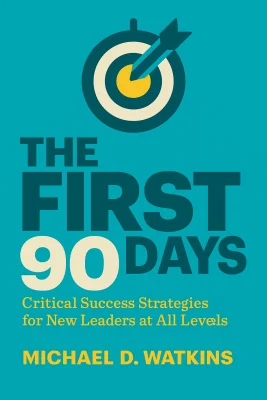
The First 90 Days
Critical Success Strategies for New Leaders at All Levels
Categories
Business, Nonfiction, Self Help, Leadership, Productivity, Audiobook, Management, Entrepreneurship, Personal Development, Buisness
Content Type
Book
Binding
Hardcover
Year
2013
Publisher
Harvard Business Review Press
Language
English
ISBN13
9781422188613
File Download
PDF | EPUB
The First 90 Days Plot Summary
Introduction
Leadership transitions are among the most critical moments in any professional journey, yet they remain surprisingly perilous terrain for even the most capable executives. Research reveals that over 40 percent of senior outside hires fail to achieve their expected results, while countless others survive but never reach their full potential. The stakes couldn't be higher: your actions in those first 90 days will largely determine whether you succeed or struggle, whether you build momentum or find yourself constantly fighting uphill battles. The challenge isn't just about avoiding failure; it's about transition acceleration. Every day you spend getting up to speed is a day you're not creating value for your organization. The goal is to reach what experts call the "breakeven point" as quickly as possible—that crucial moment when you contribute more value than you consume.本书 provides a systematic framework for dramatically shortening this timeline, whether you're a first-time manager or a seasoned CEO stepping into a new role.
Chapter 1: Promote Yourself: Making the Mental Shift
The first and perhaps most crucial step in any leadership transition isn't about impressing others—it's about fundamentally changing how you think about yourself and your role. This mental shift, what we call "promoting yourself," requires letting go of what made you successful in the past and embracing the new imperatives of your position. Douglas Ivester's story at Coca-Cola serves as a powerful cautionary tale. After rising through the ranks as a brilliant CFO and COO, Ivester was perfectly positioned to succeed the legendary Roberto Goizueta as CEO. His analytical mind and operational excellence had earned him widespread respect. Fortune magazine even dubbed him the "prototype boss for the 21st century." Yet within two years, Ivester's promising tenure came to an abrupt and disappointing end. The root of Ivester's failure wasn't incompetence—it was his inability to promote himself mentally into the CEO role. Instead of embracing the strategic, visionary, and statesmanlike responsibilities of a chief executive, he continued operating as a "super-COO." He refused to name a successor, maintained daily contact with sixteen direct reports, and remained mired in operational details. His extraordinary attention to detail, once a virtue in finance and operations, became a liability in a role that demanded a broader perspective and different skills. To avoid Ivester's fate, you must consciously break from your old job and prepare for the new one. Start by establishing a clear breakpoint—perhaps a weekend—to mentally transition from your previous role. Use this time to reflect deeply on how your new position differs from your old one and what new behaviors and mindsets you'll need to develop. Assess your problem preferences honestly, identifying areas where you naturally gravitate and potential blind spots that could derail you. The key is recognizing that your strengths can become weaknesses if not properly channeled. Create a plan for compensating through self-discipline, team building, and trusted advisors. Remember that promoting yourself is an ongoing journey, not a one-time event. You must constantly ensure you're engaging with the real challenges of your new position rather than retreating to the comfort of familiar tasks and problems.
Chapter 2: Accelerate Your Learning Curve
Effective learning during transition isn't about absorbing everything—it's about efficiently extracting actionable insights that enable better decisions. The most dangerous approach is arriving with "the answer" or falling prey to the action imperative, where the compulsion to act quickly prevents systematic understanding of your new environment. Chris Bagley experienced this firsthand when he became general manager of White Goods' largest plant. Coming from Sigma Corporation's state-of-the-art manufacturing environment, Chris was determined to transform what he saw as an outdated facility. He immediately brought in consultants who delivered a scathing report about the plant's "antiquated" technology and "marginal" workforce skills. Without taking time to understand the context, Chris launched a team-based reorganization that caused productivity to plummet and morale to crash. The turning point came when Chris's boss confronted him with pointed questions: "How much time did you spend learning about this plant? Did you know they had already experimented unsuccessfully with team production?" Chris discovered that the workforce had actually achieved remarkable results given their resource constraints, and they were justifiably proud of their accomplishments. He had nearly destroyed something valuable through his failure to learn before acting. The key to accelerating learning lies in approaching it as an investment process. Define your learning agenda by generating questions about the past, present, and future of your organization. Identify the best sources of insight, both internal and external, and use structured methods to extract maximum value from your limited time and energy. Meet one-on-one with direct reports using consistent questions, then bring them together to share your observations and test your hypotheses. Pay particular attention to cultural learning, which often takes the longest but proves most crucial. Understanding the symbols, norms, and underlying assumptions that drive behavior in your organization will help you avoid costly missteps and identify opportunities for positive change. Remember that effective learning requires managing it as a cyclical process—collecting information, analyzing it, developing hypotheses, and testing them repeatedly as your understanding deepens.
Chapter 3: Match Strategy to Your Situation
One of the most critical mistakes new leaders make is applying a one-size-fits-all approach to their transitions. The reality is that different business situations demand fundamentally different strategies, and misreading your situation can lead to spectacular failure despite good intentions and hard work. Claire Weeks learned this lesson the hard way when she took over an industrial products division that appeared to be thriving. Based on her initial assessment, she committed to ambitious growth targets that seemed achievable given the division's recent performance. However, she soon discovered that her predecessor had been mortgaging the future to make short-term numbers look good. Structural problems with pricing, inventory management, and distributor relationships made her goals unrealistic. Rather than confronting the need for realignment and resetting expectations, Claire doubled down on her original commitments. She pushed through price increases that alienated distributors, rushed product launches that backfired, and pursued unsuccessful acquisitions to fill the growth gap. Each misstep eroded her credibility further, ultimately leading to her resignation when the CEO lost confidence in her leadership. Claire's fundamental error was misdiagnosing her situation. She believed she was sustaining success when she actually faced a realignment challenge. The STARS framework—Start-up, Turnaround, Realignment, and Sustaining Success—provides a powerful diagnostic tool for understanding your business situation and its implications. Start-ups and turnarounds are "hunter" situations requiring rapid, decisive action based on incomplete information. The problems teach the people about the need for change, and there's typically acceptance that dramatic action is necessary. Realignments and sustaining-success situations are "farmer" situations requiring more subtle influence skills, cultural understanding, and coalition building. You must teach people about problems they may not yet recognize. Match your learning priorities, action orientation, and leadership style to your situation. In start-ups and turnarounds, focus on technical learning and bias toward action. In realignments and sustaining success, invest heavily in cultural and political learning while moving more deliberately. Understanding your situation enables you to set appropriate expectations, allocate your energy effectively, and avoid the traps that derail leaders who mistake their circumstances.
Chapter 4: Secure Early Wins That Matter
Early wins are essential for building credibility and creating momentum, but they must be secured in the right way and targeted at the right objectives. The goal isn't just to achieve visible successes—it's to lay the foundation for longer-term transformation while demonstrating the behaviors you want to see throughout the organization. Elena Lee exemplified this approach when she took over a troubled telephone customer service unit plagued by punitive management and poor performance. Rather than making sweeping changes immediately, Elena carefully planned a series of interconnected wins that would both improve results and model new cultural norms. She began by communicating her vision for a more participative culture, but backed it up with concrete actions that demonstrated her commitment to change. Elena's breakthrough came when she created a process improvement team staffed with her best supervisor and promising frontline employees. She tutored them personally, reviewed their progress regularly, and quickly implemented their recommendations in a pilot program. When the pilot succeeded, she promoted the most promising team member to oversee the expanded rollout. This single initiative achieved multiple objectives: improving customer service processes, developing talent, demonstrating meritocracy, and creating a model for how the organization should function. Within a year, Elena had transformed the unit's performance and culture. Quality metrics improved substantially, employee satisfaction scores rose dramatically, and the organization had learned new ways of solving problems collaboratively. Her early wins had created a virtuous cycle that made subsequent changes both easier and more effective. The key to Elena's success was thinking systematically about how early wins could serve double duty—creating short-term value while introducing new behavioral patterns. Focus on no more than two or three areas where you can achieve tangible improvements within 90 days. Design pilot projects that serve as laboratories for new ways of working, identify and elevate change agents who can help drive your agenda, and use these initiatives to build broader coalitions for transformation. Remember that process matters as much as results. How you achieve early wins sends powerful signals about your values and expectations. Leverage teachable moments that clearly display what you stand for, and ensure your actions model the behaviors you want to encourage throughout the organization.
Chapter 5: Build Your Team and Align Priorities
No leader succeeds alone, and your most important early decisions will likely involve the people on your team. Building the right team requires systematic assessment, strategic restructuring, and careful alignment of goals, incentives, and processes to drive collective performance toward your key objectives. Liam Geffen faced this challenge when he inherited a troubled unit with a team whose performance evaluations seemed suspiciously polarized—everyone was either outstanding or marginal, with nothing in between. His predecessor had clearly played favorites, creating tension between marketing and sales that was undermining results. Rather than accepting the status quo, Liam developed a rigorous process for evaluating and restructuring his team. He began by establishing clear criteria for assessment: competence, judgment, energy, focus, relationships, and trust. Through structured one-on-one meetings, Liam tested each person against these standards while observing team dynamics and gathering input from multiple sources. The marketing head, despite glowing reviews, proved overconfident and resistant to feedback. The sales head, though rated poorly by his predecessor, demonstrated sound judgment and responded well to coaching. Liam's approach was both systematic and respectful. He created detailed development plans for team members, quietly developed succession options, and gave people clear opportunities to succeed or fail. When the marketing head couldn't meet the challenge, he left voluntarily. Meanwhile, the sales head exceeded expectations and eventually earned responsibility for both functions. The key to Liam's success was treating team building as an architectural challenge. You can't optimize people decisions without first understanding the strategy, structure, and systems they need to support. Avoid the trap of trying to build the team before you've clarified what you need them to accomplish and how they'll need to work together. Establish performance metrics that align individual contributions with collective goals, design incentive systems that reward both individual excellence and team collaboration, and create processes for decision-making that match your situation and team capabilities. Remember that team building isn't complete until you've established new patterns of working together that will sustain high performance over time.
Chapter 6: Create Supportive Networks and Coalitions
Success in leadership roles increasingly depends on your ability to influence people outside your direct line of authority. Building coalitions requires mapping the influence landscape, understanding what motivates key stakeholders, and employing sophisticated persuasion strategies to create support for your initiatives. Jack Daley discovered this when he transitioned from country manager to global marketing director at a medical devices company. As a country manager, he had wielded direct P&L authority and was accustomed to making decisions unilaterally. Suddenly, he found himself on the other side of the table, needing to persuade his former peers—notoriously independent country managers who jealously guarded their autonomy and were quick to dismiss outsiders who presumed to understand their local markets. Jack's initial hard-sell approach backfired spectacularly. Country managers rejected his proposals and questioned his understanding of their unique challenges. Recognizing that his directive style was counterproductive, Jack shifted to a coalition-building approach. He identified several countries that represented the most promising markets for his products and met with those managers individually to understand their concerns and constraints. Rather than pushing his agenda, Jack listened carefully and offered value in return for support. He highlighted the benefits his products could provide, offered to offset training costs, and worked to align his objectives with their interests. Several country managers signed on to pilot programs. As these early adopters achieved success, other countries naturally wanted to participate, creating momentum that eventually led to broad acceptance of Jack's products. The foundation of effective coalition building is mapping the influence landscape to identify key players, opinion leaders, and power coalitions. Understand the sources of power in your organization—expertise, access to information, status, resource control, and personal loyalty—and how they flow through formal and informal networks. Categorize stakeholders as supporters, opponents, or convincibles, then develop targeted strategies for each group. Use choice-shaping techniques to alter how people perceive their alternatives, frame compelling arguments that address both logical interests and emotional values, and create action-forcing events that prevent indefinite delay. Most importantly, sequence your coalition-building efforts strategically, approaching early supporters first to create momentum that makes later recruits more likely to join your cause.
Chapter 7: Maintain Balance During Transition Pressure
The demands of leadership transition can easily overwhelm even capable executives, creating vicious cycles that undermine performance and well-being. Maintaining your equilibrium requires recognizing the warning signs of imbalance and building systematic supports to sustain your effectiveness during this challenging period. Kipp Erikson's experience illustrates how quickly things can spiral out of control. His promotion to a senior position in Toronto seemed straightforward—after all, how different could Canada be from New York? But cultural differences proved more challenging than expected, his hard-charging style clashed with local norms, and the complexity of relocating his family created additional stress that compounded his professional struggles. As Kipp fought to gain traction at work, he became increasingly irritable at home. His wife Irene struggled to find suitable schools for their children and opportunities for her interior design career. The family's unhappiness created pressure on Kipp just when he most needed support. Weekend visits became stressful rather than restorative, leaving him tired and unfocused on Monday mornings. The deteriorating situation at home amplified his difficulties connecting with colleagues, creating a downward spiral that ultimately forced him to quit and return to New York. The key to avoiding Kipp's fate lies in building what we call self-efficacy—a sustainable equilibrium supported by three pillars. The first pillar is adopting systematic success strategies rather than hoping intuition and hard work will carry you through. The second pillar involves enforcing personal disciplines that keep you focused on priorities rather than getting pulled in all directions. The third pillar requires building robust support systems both at work and at home. This means asserting control over your immediate environment to create stability, managing family transitions with the same care you bring to professional challenges, and cultivating an advice-and-counsel network that provides technical expertise, cultural interpretation, and political guidance. Develop structured routines for planning, reflection, and renewal. Learn to recognize when you're approaching the point of diminishing returns and have the discipline to step back and recharge. Remember that maintaining balance isn't selfish—it's essential for sustained effectiveness and your ability to serve others who depend on your leadership.
Summary
Mastering leadership transitions requires systematic preparation, disciplined execution, and the wisdom to match your approach to your unique situation. The difference between success and failure often lies not in dramatic gestures but in the accumulation of daily choices that either build momentum or create destructive cycles. As this framework demonstrates, "Leadership is about leverage. The new leader is, after all, just one person. To be successful, she will have to mobilize the energy of many others in her organization." The transition acceleration model provides a proven blueprint for reaching the breakeven point faster, but success ultimately depends on your commitment to continuous learning and adaptation. Start immediately by diagnosing your situation using the STARS framework, then develop your 90-day plan focusing on the challenges most critical to your success. Remember that every transition is an opportunity not just for personal growth but for organizational transformation—the question is whether you'll seize it or let it slip away.
Best Quote
“To be successful, you need to mobilize the energy of many others in your organization. If you do the right things, then your vision, your expertise, and your drive can propel you forward and serve as seed crystals.” ― Michael D. Watkins, The First 90 Days: Proven Strategies for Getting Up to Speed Faster and Smarter
Review Summary
Strengths: The book offers useful techniques and a detailed framework for leaders transitioning into new roles, emphasizing critical steps such as promoting oneself, accelerating learning, matching strategy to situations, and securing early wins. It provides practical advice for understanding organizational dynamics and achieving early successes. Weaknesses: The content is perceived as dull and not tailored to the reviewer’s industry, suggesting it is more suited for traditional company leaders rather than those in casual software environments. The book's applicability may be limited for readers outside its target audience. Overall: The reviewer finds the book useful but not engaging, indicating it may benefit leaders in traditional settings more than those in modern, casual industries. The recommendation is moderate, with a desire for a version tailored to the software industry.
About Author

Michael D. Watkins
Watkins probes the intricacies of leadership and strategic thinking, emphasizing their significance in achieving business success. His work revolves around providing leaders with actionable frameworks to manage the challenges of transitioning into new roles and developing strategic acumen. This approach is vividly encapsulated in his book "The First 90 Days: Proven Strategies for Getting Up to Speed Faster and Smarter," where he offers a structured roadmap for leaders navigating the initial critical months in a new position. Meanwhile, his other prominent book, "The Six Disciplines of Strategic Thinking: Leading Your Organization into the Future," extends his expertise into strategic planning, equipping leaders with the skills needed for long-term organizational success.\n\nThe methods Watkins employs are characterized by their clarity and practicality, steering clear of abstract theory in favor of evidence-based strategies. These qualities make his works essential resources for executives and educators who aim to deepen their understanding of leadership dynamics. His practical insights are rooted in a comprehensive grasp of the psychological and operational facets of effective leadership, allowing readers to translate theory into practice effectively. As a result, leaders across various industries benefit from his guidance, using his frameworks to establish credibility and foster sustainable futures within their organizations.\n\nThrough his contributions, Watkins has solidified his reputation as a thought leader in business strategy and leadership. His writing not only aids individual leaders but also significantly influences broader organizational development practices. The impact of his books and ideas extends beyond the individual reader, fostering a culture of strategic awareness and leadership excellence within the business community. This short bio reflects the enduring relevance of his work in shaping contemporary leadership practices.
Read moreDownload PDF & EPUB
To save this Black List summary for later, download the free PDF and EPUB. You can print it out, or read offline at your convenience.
The First 90 Days
by Michael D. Watkins
