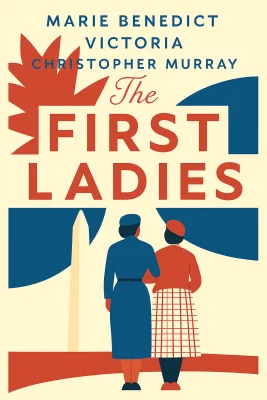
The First Ladies
Categories
Fiction, Politics, Audiobook, Feminism, Historical Fiction, Adult, Book Club, Historical, African American, Adult Fiction
Content Type
Book
Binding
Hardcover
Year
2023
Publisher
Berkley
Language
English
ASIN
0593440285
ISBN
0593440285
ISBN13
9780593440285
File Download
PDF | EPUB
The First Ladies Plot Summary
Introduction
# Crossing Boundaries: An Extraordinary Friendship That Changed America The autumn air crackled with tension as Mary McLeod Bethune stepped from her cab onto East 65th Street in Manhattan. October 1927. Inside the limestone townhouse, New York's most powerful club leaders gathered for lunch, their silk stockings gleaming, their drop-waist dresses shimmering. Mary was the only colored woman among them. Steel-cold glances met her acknowledgments. These same women who spoke with her about women's advancement in formal meetings now pretended not to see her. When lunch was announced, the confrontation came swift and brutal. Mrs. Moreau of the Daughters of the American Revolution's voice cut through the air like a blade: "How can we sit down to lunch with her?" The circle tightened around a tall, gangly woman with prominent teeth—Eleanor Roosevelt. Words flew like weapons. Eleanor's voice rose, defending her guest, but Mary heard it all. Every poisonous syllable. In the dining room, Mary sat alone at the central table, dipping her silver spoon into soup as if nothing had happened. Then Eleanor appeared, flustered and apologetic, taking the seat beside her. Two women, worlds apart, finding common ground in the wreckage of others' hatred. Neither could imagine that this hostile encounter would forge one of the most powerful and forbidden friendships in American history—a partnership that would reshape the very foundations of justice and equality in a nation built on division.
Chapter 1: Unlikely Encounters: The Meeting That Defied Convention
The drawing room fell silent when Mary entered. Mahogany panels gleamed in the afternoon light as conversations dipped to whispers. Mary's ankle-length navy dress, trimmed in velvet, marked her as different among these Manhattan socialites. She had built Bethune-Cookman College from nothing, starting with less than two dollars, selling sweet potato pies to raise funds. Now she stood in this hostile space, impervious to their slights with her walking stick, having never been hindered by others' views—not even the Ku Klux Klan. Eleanor Roosevelt, the governor's wife, watched from across the room. Her own marriage had shattered years before when she discovered Franklin's affair with Lucy Mercer. Now she navigated Albany's political circles like a caged bird, teaching at Todhunter School when she could, holding press conferences for women reporters, forging her own path while maintaining the facade of devoted wife. When Mary found refuge among the bookshelves, running her fingers along leather-bound volumes, Mrs. Sara Delano Roosevelt approached. Franklin's mother was surprisingly spry for her seventy-something years. They spoke of Europe, of gardens, of the Vatican. But the other guests formed clusters, whispering, staring. The tension built like pressure in a kettle. The explosion came at lunch. Mrs. Moreau's declaration hung in the air like a curse. The women hesitated, trapped between social convention and raw prejudice. Eleanor stood at the center, her cheeks flushed with shame as the circle tightened around her. She could abandon her guest to save face, or stand with her and face the consequences. Eleanor chose her side. She took the seat beside Mary, and something shifted in that dining room. The other women watched in stunned silence as the governor's wife broke the unspoken rules of their world. Mary continued eating her soup, steady as stone, while Eleanor's hands trembled slightly as she reached for her spoon. They said little during that meal, but volumes passed between them in glances and gestures. By the time dessert arrived, both women understood they had crossed a line from which there would be no return.
Chapter 2: Breaking Barriers: Building Trust Across Racial Lines
Letters began flowing between them like a secret river. Eleanor Roosevelt, First Lady of New York, and Mary McLeod Bethune, president of a colored college in Florida. Their correspondence revealed shared passions—education, women's rights, the welfare of children. But beneath the polite exchanges lay deeper currents, unspoken truths about the chasm between their worlds. Mary traveled the segregated South, registering voters despite threats. Her college stood on what had once been the town garbage dump, its brick buildings rising like a testament to her will. White benefactors like James Gamble supported her work, but always from a distance, always with conditions. She had learned to navigate their charity while maintaining her dignity, correcting those who called her "auntie" instead of "Mrs. Bethune." Respect was not negotiable. Eleanor fought her own battles in Albany's governor's mansion. The building felt like a gilded cage, beautiful but confining. Franklin's political ambitions cast long shadows over everything she did. His staff watched her activities with growing alarm—a governor's wife who spoke her mind was dangerous enough. One who befriended colored leaders was unthinkable. When they met again at Marino's restaurant in East Harlem, the conversation flowed like wine. Mary's laughter filled the small space as she spoke of her childhood, of making something from nothing. Eleanor listened, fascinated by this woman who had transformed scraps into sustenance, who had built an empire from refuse. They were learning each other's languages, crossing boundaries that had seemed insurmountable. The friendship deepened through shared meals, through letters that grew more intimate with each exchange. Eleanor wrote of her loneliness, her struggles with Franklin's staff, her desire to do meaningful work. Mary responded with stories of her students, her grandson Albert Jr., the daily battles against Jim Crow. They found common ground in their isolation—Eleanor trapped by privilege, Mary constrained by prejudice, both seeking something authentic in a world of artificial barriers. But the real test approached like a storm on the horizon. Politics would soon enter their sanctuary, and friendship would face its first true trial when personal loyalty collided with public expectation.
Chapter 3: Seats at Power: From Friendship to Federal Influence
The 1932 presidential campaign shattered their careful equilibrium. Eleanor's request came like a thunderbolt during lunch at Marino's—would Mary consider supporting Franklin's bid for the presidency? The presumption stung like a slap. Eleanor had assumed Mary would abandon her Republican loyalties simply because she asked, taking for granted that she knew what was best for colored people. Mary's voice remained steady as she explained the insult. "You assumed what I feel about the parties. You took for granted that I would follow your command." Eleanor's face crumpled with recognition. She had done exactly what well-meaning white people always did—appointed herself savior without asking if salvation was wanted. The conversation that followed was brutal in its honesty. Mary explained her history with Southern Democrats, the Klan marches across her campus, the white-hooded figures who had tried to terrorize her into silence. Eleanor listened, learning, her privileged assumptions cracking like ice in spring. They talked through the night, building bridges across the wreckage of misunderstanding. Franklin won the presidency. Eleanor became First Lady, approaching the role with revolutionary fervor. She held press conferences, wrote columns, traveled the country as Franklin's eyes and ears. The White House staff, led by Southern Democrat Steve Woodburn, watched her activities with growing alarm. Her friendship with Mary Bethune represented everything they feared about the new administration's direction. Mary continued her work from a new base of power. The National Council of Negro Women took shape under her leadership, uniting disparate organizations under one umbrella. Thousands of colored women's voices, previously scattered, now spoke in unison. Politicians began to listen when Mary McLeod Bethune called, not as one woman but as the representative of an army. When Mary received her appointment to the National Youth Administration's advisory council, it felt like vindication. A colored woman, sitting at the federal table, advising the president on policy. The porter at Union Station couldn't believe his eyes when Mary boarded the special train to meet Roosevelt. "This train isn't for you," he said, unable to imagine a Negro among the president's advisers. But Mary belonged there. She had always belonged there. Now the rest of America was finally catching up.
Chapter 4: The Lynching Crisis: A Moral Stand That Tested Everything
The photographs lay spread across Eleanor's desk like accusations. George Armwood's charred remains. The smiling white crowd, dressed in their Sunday best, posing beneath a swaying body. Children on their fathers' shoulders, witnessing their first lynching as if it were a county fair. Mary's voice was steady as she explained what Eleanor was seeing, but her friend's face had gone ashen. "This is her first lynching," Mary read from the caption beneath one sketch. The words transformed the scene from pastoral gathering to ritualized murder. Eleanor reached for Mary's hand, their fingers intertwining—white and black, breaking the unspoken taboo against touch between the races. Ninety people lynched each year. One every four days. The statistics were staggering, but the reality was worse. Eleanor carried the photographs to Franklin, confronting him over breakfast on the South Portico. His reaction was predictable—political calculation disguised as pragmatism. Supporting anti-lynching legislation would cost him Southern Democratic votes. He couldn't risk his New Deal programs for "a few persecuted Negroes." Eleanor's voice rose to a shriek. A few? Ninety human beings murdered each year was a few? The meeting with Walter White required subterfuge. Franklin refused to see the NAACP leader, so Eleanor and her mother-in-law arranged an "accidental" encounter. White's pale skin and blue eyes shocked Eleanor—she had expected someone who looked like Mary. But his passion was unmistakable as he laid out the case for federal intervention. Franklin listened, trapped by his mother's presence, unable to be rude. But his final answer remained unchanged. He sympathized, he claimed, but wouldn't support the Costigan-Wagner anti-lynching bill. Too much at stake. Too many other priorities. The millions who needed New Deal programs outweighed the dozens who faced lynch mobs. Eleanor felt something die inside her that day. The young man she had married, full of idealism and righteous anger, was gone. In his place sat a politician who could rationalize away murder for the sake of votes. She would have to find another way to fight this evil. Mary would help her. Together, they would force America to confront its sins, even if the president himself refused to lead.
Chapter 5: Building Coalitions: Creating Black Political Power
Mary's vision crystallized in a Washington townhouse that would serve as headquarters for something unprecedented—the National Council of Negro Women. Not just another club or organization, but an umbrella that would unite every major group of colored women in America. Sororities, church groups, professional associations, all speaking with one voice. The strategy was brilliant in its simplicity. Individual voices could be dismissed, but thousands could not. Eleanor understood immediately. This wasn't just about organizing women—it was about creating power where none had existed before. Federal agencies would have to listen when Mary called. Politicians would have to court her favor. Even Franklin would have to take notice of what she represented. The transformation was already visible in Mary's expanding federal role with the National Youth Administration. The breakthrough came when Mary presented her case directly to Franklin at Hyde Park. No advisers, no intermediaries, just Mary and the president in his study overlooking the Hudson River. She spoke of children living in conditions unchanged since slavery, of college graduates denied opportunities because of their skin color, of a nation failing to live up to its promises. Franklin listened, really listened, perhaps for the first time. When Mary finished, his eyes were glistening. He promised to do whatever he could to help her people. The words sounded hollow—politicians made promises daily. But something in his voice suggested this time might be different. Eleanor waited in the wings, knowing that Mary's presentation would either open doors or slam them shut forever. The stakes couldn't be higher. If Franklin rejected Mary's vision, their entire strategy would collapse. If he embraced it, they might actually change the country. The answer came that evening, delivered with Eleanor's characteristic excitement. Franklin wanted to create a new division within the NYA, specifically for Negro affairs. More importantly, he wanted Mary to run it. Not advise it, not consult on it, but lead it. A colored woman in charge of a federal program, with real authority and real resources. Mary sat in stunned silence as Eleanor delivered the news. Then she bowed her head and whispered, "Thank you, Lord." The girl born in a sharecropper's cabin was about to become one of the most powerful women in America.
Chapter 6: Taking Flight: The Tuskegee Triumph and Public Victory
The appointment made headlines across the colored press. Mrs. Mary McLeod Bethune, Director of Negro Affairs for the National Youth Administration. The first colored woman to hold such a position in the federal government. Her office in Washington became a pilgrimage site for colored Americans seeking federal recognition. She assembled what would become known as the "Black Cabinet"—informal advisers coordinating strategy across all New Deal agencies. The resistance was immediate and vicious. Steve Woodburn led the charge, writing memos about Mary's "inappropriate" influence. Southern Democrats grumbled about the "uppity" woman who dared speak as an equal to white officials. Death threats arrived by mail, but Mary had faced worse. The Klan had marched across her campus and failed to intimidate her. The war changed everything. Pearl Harbor thrust America into conflict, creating unexpected opportunities for advancing civil rights. Mary saw the irony immediately—America would fight fascism abroad while maintaining racial segregation at home. The Tuskegee Airmen represented everything she had fought for: highly trained Black pilots ready to serve but denied the chance because of their race. Eleanor's solution was audacious. She would visit Tuskegee Army Air Field, tour the facilities, and meet with the pilots. But she wouldn't stop there. Against all protocol and over military objections, Eleanor climbed into a small aircraft with Charles Anderson, the chief flight instructor. As the plane lifted off, photographers captured the moment: the First Lady of the United States flying with a Black pilot, demonstrating complete confidence in his abilities. The image appeared in newspapers across the country, impossible to ignore or dismiss. The flight lasted only thirty minutes, but its impact was immeasurable. Mary watched from the ground as Eleanor's plane circled overhead, tears streaming down her face. This was what their friendship had been building toward—a moment when the impossible became inevitable, when the power of their partnership could no longer be denied or suppressed. Within weeks, the Tuskegee Airmen received their orders for combat duty, their success a testament to what was possible when barriers were removed and talent allowed to flourish.
Chapter 7: Legacy in Motion: How Friendship Transformed a Nation
Franklin's death in April 1945 devastated Eleanor, but it was Mary who provided the comfort she needed most. At the funeral, as thousands of mourners filed past the casket, Eleanor slipped away to a private room where Mary waited. "I don't know who I am without him," Eleanor whispered, collapsing into her friend's arms. "You're Eleanor Roosevelt," Mary replied firmly. "You're the woman who flew with Black pilots, who stood up to segregation, who changed this country one conversation at a time. Franklin may be gone, but your work isn't finished." The post-war period brought new challenges and opportunities. Eleanor's appointment as a delegate to the United Nations gave her a global platform to advocate for human rights. Her work culminated in the Universal Declaration of Human Rights, a document bearing the influence of countless conversations with Mary about dignity, equality, and the fundamental worth of every human being. Mary's health began to fail in the early 1950s, but her spirit remained undiminished. From her home in Daytona Beach, she continued mentoring young activists, writing letters advocating for civil rights, maintaining correspondence with Eleanor. Their letters from this period revealed two women reflecting on a lifetime of shared struggle and mutual support. When Mary died in 1955, Eleanor delivered a eulogy that captured the essence of their friendship: "She taught me that courage is not the absence of fear, but the willingness to act in spite of it. She showed me that friendship can transcend any barrier that society erects, and that love is stronger than hate." Eleanor lived another seven years, long enough to see the civil rights movement gain momentum and witness the first stirrings of changes she and Mary had worked so hard to achieve. She never forgot the lessons her friend had taught her, or the example Mary had set of how to live with dignity, purpose, and unwavering commitment to justice. The Supreme Court's Brown v. Board decision vindicated everything Mary had fought for in education. The Montgomery Bus Boycott signaled the emergence of leaders inspired by the groundwork they had laid together.
Summary
The friendship that began in hostility had become a force that reshaped American politics. Eleanor and Mary, the unlikely allies, proved that boundaries could be crossed, that understanding could bridge the deepest divides. Their partnership opened doors sealed for generations, creating opportunities that rippled through history. Mary's federal programs served thousands of young colored Americans, while her "Black Cabinet" became a permanent fixture ensuring Negro voices would be heard in every major policy debate. Eleanor's evolution from shy politician's wife to champion of justice carried Mary's message to audiences that would never have heard it otherwise. Their legacy lives on in every civil rights victory that followed, in every barrier broken, in every friendship that dares to cross the lines society draws between us. They showed America what was possible when people chose to see each other as individuals rather than representatives of their race or class. The girl from the sharecropper's cabin and the woman from the mansion had rewritten the rules of power, creating space for others to follow. Their revolution, disguised as friendship, proved that the most extraordinary transformations often begin with two people simply choosing to stand together against injustice. In a nation still struggling with equality, their example remains as vital today as it was nearly a century ago—a testament to the enduring power of authentic human connection to change the world.
Best Quote
“I was invited. And even though I anticipated their reaction, their racism isn’t my problem. Racism belongs to the people who are racists.” ― Marie Benedict, The First Ladies
Review Summary
Strengths: The review highlights the successful collaboration between Marie Benedict and Victoria Christopher Murray, noting their ability to merge writing styles seamlessly. The book effectively balances historical facts with narrative flow, providing educational insights into Eleanor Roosevelt and Mary McLeod Bethune's contributions to civil rights. The authors' notes are praised for fostering deep conversations about race. Weaknesses: The review mentions confusion due to the absence of historical notes in the advance copy, particularly regarding the character Steve Woodburn, whose historical accuracy is unclear. Overall: The reviewer expresses a positive sentiment, recommending the book for its educational value and engaging storytelling, despite minor confusion about historical details.
About Author

Marie Benedict
Benedict investigates the hidden narratives of women who have shaped history, channeling her legal background into meticulously researched stories. Her books often spotlight influential yet overlooked female figures, blending historical fact with narrative flair to create engaging reads. This approach is evident in works like "The Other Einstein," which illuminates the life of Mileva Marić, and "The Only Woman in the Room," about Hedy Lamarr. Benedict’s commitment to women's empowerment and historical advocacy comes through in her narratives, challenging readers to reconsider familiar historical accounts.\n\nWhile focusing on complex female characters, Benedict employs a method that intertwines detailed research with creative storytelling, crafting stories that are both educational and suspenseful. Readers find themselves immersed in reimagined pasts where women's voices are amplified, offering a fresh perspective on historical events. This technique benefits audiences interested in exploring the often-unseen contributions of women throughout history, making her books a staple for those who value both literary quality and historical insight.\n\nBenedict's recognition extends beyond book sales, with translations into numerous languages and selections by prestigious book clubs, attesting to her global impact. Her bio reflects not just the titles she's penned but a broader mission to champion women’s roles in history. By elevating stories like that of Belle da Costa Greene in "The Personal Librarian," co-authored with Victoria Christopher Murray, she enriches our understanding of the past while inspiring future narratives. Through these efforts, Benedict cements her place as a significant contemporary author, offering readers compelling insights into the fabric of history.
Read moreDownload PDF & EPUB
To save this Black List summary for later, download the free PDF and EPUB. You can print it out, or read offline at your convenience.
The First Ladies
by Marie Benedict
