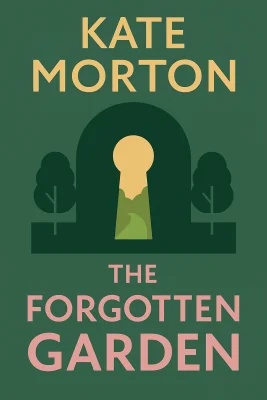
The Forgotten Garden
Categories
Fiction, Audiobook, Mystery, Historical Fiction, Romance, Adult, Book Club, Historical, Adult Fiction, Australia
Content Type
Book
Binding
Paperback
Year
2008
Publisher
Pan Books
Language
English
ASIN
0330449605
ISBN
0330449605
ISBN13
9780330449601
File Download
PDF | EPUB
The Forgotten Garden Plot Summary
Introduction
# The Forgotten Garden: Echoes of Lost Mothers and Found Daughters The ship's horn bellowed across Maryborough harbor as four-year-old Nell crouched behind wooden crates, clutching a white suitcase to her chest. The Authoress had told her to hide, that it was just a game they were playing. But as the great vessel pulled away from the dock in 1913, the red-haired woman never returned. Nell would spend the next century searching for answers to that moment of abandonment, carrying nothing but a book of fairy tales and a name that wasn't her own. What began as a child's game of hide-and-seek became a haunting legacy that would span three generations and stretch from the grimy streets of Victorian London to the windswept cliffs of Cornwall. The white suitcase contained more than just a child's belongings—it held the key to unraveling a web of deception, love, and tragedy that connected the lives of three remarkable women across time. Some stories end with happily ever after, but the most powerful ones begin with a mystery that refuses to stay buried.
Chapter 1: The Abandoned Child: A Mystery Begins on the Maryborough Wharf
Hugh the portmaster found her at dawn, a small figure silhouetted against the harbor's gray waters. The child sat perfectly still on her white suitcase, red curls catching the morning light like flames. When he approached, she looked up with eyes too old for her face and whispered a single word: "Nell." Inside the suitcase lay the fragments of a vanished life. A child's white dress, salt-stained and carefully folded. A book of fairy tales by someone called Eliza Makepeace, its pages worn soft from countless readings. And tucked between the stories, a ship's passenger manifest bearing the name Ivory Walker—a name the child didn't recognize as her own. Hugh and his wife Lil raised Nell as their daughter in the dusty streets of Brisbane, but the mystery of her origins festered like an untended wound. The fairy tales spoke to something deep within her memory, their dark enchantments stirring half-formed images of gardens and cliffs and a woman whose face remained frustratingly out of reach. On her twenty-first birthday, Hugh finally told her the truth about that morning on the wharf, pressing the suitcase into her trembling hands. The revelation shattered Nell's world. She wasn't Nell Andrews, the antique dealer from Brisbane. She was someone else entirely, a lost child whose real family might still be searching for her. The book's frontispiece showed a young woman in flowing robes, her face turned toward some distant horizon, and beneath it an inscription that made Nell's heart race: "For my darling Rose, may you always find your way home." Decades passed before Nell found the courage to search for her origins. In 1975, she traveled to England with nothing but the fairy tale book and a burning need to know who she really was. The trail led to Cornwall, to a crumbling estate called Blackhurst Manor where the Mountrachet family had once ruled like feudal lords. There had been a daughter named Rose who married an artist, and their child Ivory who supposedly died in 1913. But Nell knew better now. She was Ivory Walker, and someone had stolen her childhood for reasons she was only beginning to understand.
Chapter 2: The Inheritance: Cassandra's Journey to the Cornish Cottage
Thirty years after Nell's death, her granddaughter Cassandra stood before the gates of a cottage she'd never known existed. The inheritance had arrived like a ghost from the past—a crumbling stone house perched on a Cornish cliff, its windows dark as dead eyes. Nell had bought it in 1975 but never returned, leaving behind only cryptic notes about searching for truth in a place where secrets grew wild as weeds. The cottage breathed with decades of abandonment. Ivy strangled its walls, and inside, dust motes danced in shafts of filtered sunlight like the spirits of long-dead conversations. A spinning wheel sat silent in the corner, its thread snapped and forgotten. The air tasted of salt and sorrow, of stories that had been waiting to be told. Cassandra had come to Cornwall carrying her own ghosts. Ten years had passed since the accident that claimed her husband Nick and son Leo, ten years of existing rather than living. The cottage felt like a sanctuary for the broken-hearted, a place where grief could echo off stone walls without judgment or pity. Through a broken window pane, she glimpsed something that made her breath catch. Beyond the cottage lay a wall of green so dense it seemed impenetrable, brambles and ivy twisted together like a living barrier. Hidden behind that thorny embrace lay secrets that had been buried for nearly a century, waiting for someone brave enough to dig them up. The locals spoke of the cottage in whispers. William Martin, an elderly fisherman with clouded eyes, remembered the woman who had once lived there. Eliza Makepeace, he called her, the strange girl who wrote fairy tales and disappeared in 1913. His weathered hands shook as he spoke of her wild red hair and the way she could make children believe in magic. But his memories came with warnings. Bad things happened to those who lived in the cottage. Some places, he insisted, were better left alone.
Chapter 3: The Authoress Revealed: Eliza Makepeace and Her Dark Fairy Tales
Christian Blake arrived like an answer to an unspoken prayer. The younger brother of the local gardener, he had once been a doctor in Oxford before his own grief drove him home to Cornwall. When he offered to help clear the cottage, Cassandra sensed he was running from ghosts as persistent as her own. Together they peeled back layers of neglect, and the cottage revealed itself slowly. Stone floors worn smooth by centuries of footsteps. A range that still held phantom warmth. Walls that seemed to pulse with memory. In the evenings, they sat by candlelight while Christian read from Eliza's fairy tales, his voice bringing the dark stories to life. The tales were unlike anything Cassandra had encountered. These weren't sanitized children's stories but raw explorations of abandonment and transformation. Eliza wrote of changeling children and stolen identities, of brave girls who sacrificed everything for love. Her protagonists faced impossible choices in worlds where magic came with a terrible price. In the cottage's upper room, they found evidence of hasty departure. Clothes still folded in drawers, a half-finished manuscript scattered across a writing desk, as if the occupant had fled in the middle of the night. The pages told of a woman who stole a child to save it from a fate worse than death, autobiography disguised as fairy tale. The breakthrough came when they discovered the hidden entrance. Behind a curtain of brambles, a gap in the wall led to something extraordinary: a walled garden that time had forgotten. Apple trees heavy with fruit, roses climbing toward the sky, paths that wound between flower beds like sentences in a lost language. The garden felt alive in a way that made Cassandra's skin prickle. This was where Eliza had poured her heart, where she had written the stories that would outlive her.
Chapter 4: Blackhurst Secrets: The Mountrachet Family's Hidden Tragedy
The truth began to emerge through Rose Mountrachet's scrapbooks, discovered in the hotel that had once been the family estate. Rose had been Eliza's cousin, a delicate beauty who married the American portrait artist Nathaniel Walker in 1907. Her journals painted a picture of desperate longing: month after month of failed attempts to conceive, the slow erosion of hope, the growing certainty that she would never be a mother. Julia Bennett, the hotel owner, spread the scrapbooks across her sitting room like tarot cards revealing fate. The entries told a story of medical intervention gone wrong. At age eight, Rose had been subjected to experimental X-ray treatment by a country physician eager to make his mark with new technology. The hour-long exposure had rendered her sterile, though she would never understand why her body failed her. Christian's medical knowledge filled in the terrible blanks. The radiation had destroyed Rose's reproductive system, left her with burn scars across her abdomen that she mentioned only in euphemisms. Her marriage to Nathaniel became a prison of unfulfilled desire, her body a betrayer she could not comprehend. But then, in December 1909, a miracle: Rose announced the birth of her daughter Ivory. The journal entries sang with joy, describing the child's perfect skin, her blue eyes, her resemblance to the Mountrachet line. Yet something felt forced in the telling, a desperate quality to Rose's happiness that suggested secrets lurking beneath the celebration. The Mountrachet family carried darkness in their bloodline like a hereditary disease. Lord Linus had never recovered from his sister Georgiana's scandalous flight from Blackhurst, her elopement with a common sailor that shattered his world. When Georgiana died in London's slums, leaving behind a daughter with flame-red hair and defiant blue eyes, Linus saw his chance for redemption. He would raise Eliza as his own, molding her into the perfect replacement for the sister he had lost.
Chapter 5: The Walled Garden: Where Truth Lies Buried Among the Roses
The clay pot emerged from the earth like a secret finally ready to be told. Christian had been digging where the garden's southern gate once stood when his shovel struck something hard. Inside the ancient vessel lay Eliza's most precious possessions: coins from her childhood, a lock of her mother's hair, and a mourning brooch engraved with the words "Past. Future. Family." Clara, an elderly woman from the village, provided the missing piece that shattered everything Cassandra thought she knew. Nell was not some distant relation to the Mountrachet family. She was Eliza's daughter, born in secret in the cottage on the cliff. The story unfolded like one of Eliza's fairy tales, dark and strange. Rose, desperate for a child, had convinced her cousin to bear one for her. Eliza, who had always lived in Rose's shadow, who craved nothing more than to be needed, agreed. For a week, Nathaniel came to the cottage each night, and in that strange intimacy, something unexpected bloomed between them. For months, Eliza lived hidden behind the cottage's stone wall, her body swelling with Rose's future. She sang to the child growing inside her, told it stories, felt more complete than she ever had. When the baby was born, a perfect girl with ivory skin, Eliza held her for three precious days before keeping her promise. She handed her daughter to Rose and tried to convince herself that love meant sacrifice. But the fairy tale had a poisoned heart. Rose, faced with the reality of raising another woman's child, grew cold toward Eliza. The cousins who had once been inseparable became strangers. Eliza watched from afar as her daughter grew, calling another woman mother, while she withered in the cottage like a flower cut from its roots. The garden bloomed around them as Christian took Cassandra's hand. Here, in this place where secrets had been buried and truth had finally taken root, she felt something she had thought lost forever: the possibility of home. The cottage would not be sold. The garden would not be abandoned again.
Chapter 6: The Golden Egg: A Mother's Ultimate Sacrifice Unveiled
Harriet Swindell's letter, delivered thirty years too late, revealed the final chapter of Eliza's story. In 1913, she had returned to London to retrieve her mother's mourning brooch from the house where she had lived as a child. But someone had been waiting for her—a man with pince-nez spectacles and a chloroform-soaked rag. He had dragged her back to Cornwall, back to the family that wanted her silenced forever. The realization hit Cassandra like a physical blow. Eliza had never abandoned Nell on that ship. She had died trying to return to her daughter, murdered by those who feared the truth she carried. For ninety years, she had lain buried in her own garden, her bones feeding the roses she had planted, her secrets growing wild in the earth. Adeline Mountrachet, Rose's mother, had orchestrated it all. Terrified that Eliza would expose the deception surrounding Ivory's parentage, she had hired the same man who had once murdered Eliza's father. The cottage wall had been built not just to hide a pregnancy, but to contain a crime. The garden had become both sanctuary and tomb, beautiful and terrible in equal measure. The truth about that night in 1913 emerged piece by piece. Eliza had taken Ivy not from malice but from desperate love. She had seen Rose's growing instability, the way motherhood was destroying rather than fulfilling her. When Rose's madness finally consumed her, when she tried to harm the child she could never truly accept as her own, Eliza made the terrible choice to steal her daughter back. The ship to Australia was meant to be their escape, a chance to start fresh in a land where no one knew their story. But Adeline's hired killer had found them before they could sail. Eliza had hidden Ivy in the ship's cargo hold, trusting that someone would find her and give her the life she deserved. It was the last act of a mother's love, sacrifice disguised as abandonment. The white suitcase had been Eliza's final gift—a collection of memories and stories to sustain the child through whatever came next. The fairy tale book, the silver brush, the sketch of the Authoress herself, all carefully chosen to preserve some connection to the truth. Eliza had made herself into a character from one of her own stories, the mysterious guardian who appears in a child's darkest hour and then vanishes, leaving only questions behind.
Chapter 7: Coming Home: Three Generations Finally Reunited in Memory
Standing in the garden where Eliza's bones lay scattered among the roots, Cassandra felt the weight of three generations settling on her shoulders. Nell had spent her life searching for the mother who had loved her enough to die for her. Eliza had sacrificed everything for a child she could hold for only three days. And Cassandra, who had lost her own child, understood the fierce mathematics of maternal love. The cottage revealed its final secrets as they worked to restore it. Hidden beneath floorboards, they found Eliza's last manuscript—the true story of Ivory Walker's disappearance, written in her own hand. The pages told of a young woman trapped between loyalty and love, who chose to save a child rather than preserve her own life. It was confession and fairy tale combined, truth wrapped in the language of magic. Christian's presence brought healing to the wounded place. His gentle hands coaxed life back into the neglected rooms, while his quiet understanding helped Cassandra navigate the labyrinth of her own grief. They worked side by side in comfortable silence, two broken people finding wholeness in the act of restoration. The garden bloomed around them as autumn deepened into winter. Apple trees heavy with fruit, roses climbing toward the sky, paths that wound between flower beds like sentences in a recovered language. The iron bench where Eliza had once sat to write her stories became a place of pilgrimage, where Cassandra could feel the presence of the women who had come before her. As evening fell over the Cornish coast, Cassandra opened Eliza's book of fairy tales to the final story, "The Cuckoo's Flight." It told of a young woman trapped in the body of a bird, finally breaking free to soar across the ocean toward her other half. The cage door had opened at last, and three generations of women could finally fly home to each other, their long exile ended in the place where all their stories began.
Summary
In the end, the forgotten garden had kept its secrets for nearly a century, but gardens, like stories, have their own seasons of revelation. What began as a child's mysterious disappearance became a testament to the lengths people will go to protect those they love, even when that protection requires the ultimate sacrifice of separation. Eliza Makepeace had written herself out of history to give her daughter a chance at a different story, her fairy tales becoming prophecy and confession combined. The cottage on the cliff stood as a bridge across time, connecting four generations of women who had each, in their own way, fought against the forces that sought to define and confine them. Rose had found her voice through marriage and motherhood, only to have it silenced by madness. Eliza had chosen art and independence, paying the ultimate price for her defiance. Nell had built a new identity from the fragments of her stolen childhood, while Cassandra discovered that sometimes the greatest inheritance is not property or money, but the courage to write one's own story. The fairy tales that had begun with Eliza's pen would continue through her descendants, each woman adding her own chapter to a narrative that refused to end with death, their voices joining in a chorus that would echo through the forgotten garden for generations yet to come.
Best Quote
“You make a life out of what you have, not what you're missing.” ― Kate Morton, The Forgotten Garden
Review Summary
Strengths: The writing quality is acknowledged as not terrible, and the reviewer managed to complete the book, which suggests some level of engagement. The book receives an extra star for this reason. Weaknesses: The reviewer criticizes the book for being boring, with a plot centered around an unlikable protagonist. The story is described as jumpy and lacking in compelling drama, with a disappointing reveal after 549 pages. The narrative is perceived as fake drama and misery porn, failing to deliver a meaningful or interesting mystery. Overall: The reviewer's sentiment is largely negative, expressing frustration with the book's execution and character development. The book is not recommended, as it is considered overblown and underwhelming, lacking the depth and intrigue found in similar works.
About Author

Kate Morton
Morton crafts compelling narratives that delve into the intricate layers of human experience, reflecting her belief in fiction as a dialogue across time and space. Her passion for storytelling emerges from her deep-rooted love of books, a love that she describes as a form of freedom and a means to live countless lives. This philosophy is evident in her novels, such as "The Forgotten Garden" and "Homecoming," which transport readers into vividly imagined worlds where history and mystery intertwine. With her background in dramatic art and English literature, Morton constructs her stories with an almost theatrical flair, engaging the reader's imagination through her rich, atmospheric prose.\n\nThe author's exploration of themes such as memory, family secrets, and the passage of time is enhanced by her distinctive method of weaving past and present narratives. In "The Clockmaker's Daughter," for instance, Morton intricately layers timelines, inviting readers to piece together the story from different perspectives. Her ability to evoke emotion and curiosity ensures that readers remain invested in her tales until the very last page. Morton's books, published in over 45 countries and translated into 38 languages, resonate with a global audience, providing a testament to their universal appeal.\n\nReaders who seek to be enveloped by a story will find Morton's work particularly satisfying. Her narratives offer not only escape but also introspection, prompting readers to reflect on their own lives and histories. For those interested in exploring the human condition through richly detailed and immersive storytelling, Morton's novels serve as a perfect gateway. Her ability to bring characters and settings to life with such vivid detail has made her a New York Times and Sunday Times bestselling author, cementing her place as a cherished storyteller in contemporary literature.
Read moreDownload PDF & EPUB
To save this Black List summary for later, download the free PDF and EPUB. You can print it out, or read offline at your convenience.
The Forgotten Garden
by Kate Morton
