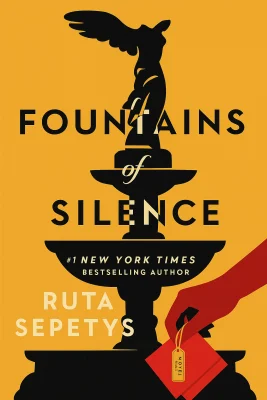
The Fountains of Silence
Categories
Fiction, Audiobook, Historical Fiction, Romance, Young Adult, Adult, Book Club, Historical, War, Spain
Content Type
Book
Binding
Hardcover
Year
2019
Publisher
Philomel Books
Language
English
ASIN
0399160310
ISBN
0399160310
ISBN13
9780399160318
File Download
PDF | EPUB
The Fountains of Silence Plot Summary
Introduction
# Whispers Through Silence: Love and Truth in Franco's Spain Madrid, 1957. The Castellana Hilton rises like a gleaming fortress in Franco's iron grip, where silence has become the currency of survival and truth a luxury few can afford. Through its marble corridors walks Daniel Matheson, an eighteen-year-old Texan with oil money in his veins and a camera that sees too much. In the hotel's shadowed basement, Ana Torres moves like a ghost between worlds, serving ice to American tourists while swallowing threatening notes that could destroy what remains of her family. When Daniel's lens captures a nun carrying a dead infant through Madrid's narrow streets, their worlds collide with the force of forbidden love meeting impossible circumstances. Ana's parents died as Republican sympathizers, leaving her marked by a regime that punishes the children for their fathers' dreams of democracy. Daniel exists in a bubble of American privilege, free to photograph whatever catches his eye, unaware that every frame could be someone's death sentence. Their love story unfolds against the backdrop of Franco's Spain, where stolen children disappear into Catholic homes, where empty coffins hide the regime's darkest secrets, and where speaking the wrong name at the wrong moment can mean a bullet in a moonlit field.
Chapter 1: American Eyes: Daniel's Awakening in Franco's Madrid
The Guardia Civil materialize from the Madrid heat like vultures in patent leather, their tricorn hats casting shadows that seem to swallow light itself. Daniel Matheson lowers his camera, heart hammering against his ribs as rough hands tear the press badge from his neck. One moment he'd been photographing a nun hurrying through the cobblestone streets, her black robes billowing around what looked like a bundle. The next, Spanish voices bark orders he doesn't understand while fingers pry film from his camera with practiced efficiency. The nun had vanished the instant she spotted his lens, but not before her eyes met his across the narrow street. Wide with terror, as if he'd witnessed something that could kill them both. The bundle in her arms had shifted, revealing the gray face of a dead infant staring at nothing. Eighteen shots disappear into a guard's pocket, including that image burned into Daniel's retinas like a brand. Back at the Castellana Hilton, Daniel tries to shake off the encounter. The lobby sparkles with American excess, crystal chandeliers throwing rainbows across marble floors while oil executives' wives laugh over cocktails that cost more than most Spaniards earn in a month. This is Franco's new Spain, sanitized for foreign consumption, where dollars flow like water and uncomfortable truths stay buried in unmarked graves. But the elevator operator keeps his eyes fixed straight ahead, even here in this American sanctuary. The bellhops move with careful precision, their smiles never quite reaching their eyes. Daniel begins to notice the silence that surrounds certain conversations, the way Spanish staff members seem to fade into wallpaper when Americans discuss business deals with government officials. His father talks casually about the regime's stability, about how Franco has brought order to a country that was tearing itself apart. The oil contracts are lucrative, the investment climate favorable. What more could American businessmen want? Daniel stares out his suite's window at the city below, where shadows move between buildings like secrets given human form, and wonders what stories his confiscated photographs might have told.
Chapter 2: Forbidden Connections: Love Across the Divide
Ana Torres Moreno moves through the hotel's underground maze carrying more than towels and room service. The threatening note crinkles in her apron pocket, its message already memorized before she tore it apart and swallowed the pieces like communion wafers. The words taste of fear and old blood: "We know what your family did. We know where you work." When the tall American appears in the corridor, camera slung across his shoulder like a weapon, Ana feels the familiar tug of curiosity and terror. Daniel Matheson moves through the world with the easy confidence of someone who's never had to swallow his words, never had to smile while his heart screamed. His Spanish carries his mother's Galician accent, but his eyes hold that particular American blindness to the cages that hold everyone else. She's been assigned to his family for the summer, a stroke of luck that could change everything if she doesn't get them all killed first. Americans tip well, and Ana needs every peseta for her family's survival. Her sister Julia works her fingers bloody sewing suits for matadors while her brother Rafael splits his time between the slaughterhouse and the cemetery, surrounded by death in all its forms. The collision happens on Serrano Street, where Daniel nearly tramples a sleeping tourist sprawled beneath café umbrellas. Ana watches him raise his camera, then speaks before thinking: "Perhaps you should ask permission first." The words hang in the air between them like a bridge neither expected to cross. Their first conversation becomes an afternoon, then an evening, then something that feels dangerously like hope. Ana leads him through Madrid's real streets, past the tourist facades to places where Spain's wounds still bleed in daylight. Daniel's camera captures dignity where others see only poverty, finds beauty in the spaces between shadows. When Ana writes captions beneath his photographs, her words transform mere documentation into storytelling that cuts deeper than any newspaper article. But every shared glance is a potential betrayal, every moment of connection a risk that could destroy what remains of her family. Ana walks a tightrope between worlds, and the fall would kill them all.
Chapter 3: Empty Coffins: Discovering Spain's Stolen Children
The cemetery holds secrets that rot in Spanish soil like unconfessed sins. Rafael Torres leads Daniel and his wild-eyed friend Fuga between the graves, past headstones that mark lives cut short by war, disease, and the casual cruelty of Franco's peace. Fuga moves among the tombs with the fluid grace of someone who's made friends with death, his scarred hands gentle as he tends to graves that no one else remembers. The infant coffins arrive regularly from Madrid's clinics, tiny wooden boxes bearing hand-drawn crosses in blue and pink. They're buried with ceremony, priests muttering Latin over grieving parents who clutch photographs of children they'll never hold again. But when Fuga pries open the lids in the moonlight, the boxes reveal their horrible truth. Empty. Or worse, filled with adult body parts, medical waste, anything but the children they're supposed to contain. "Where are the babies?" Daniel asks, his camera capturing evidence even as his mind rejects its implications. Fuga's answer comes in broken Spanish and burning eyes: "Stolen. Sold. Given to families who deserve them more than their Red parents." The system operates with bureaucratic efficiency that would make a Swiss banker weep with envy. Mothers are told their children died during birth, shown frozen corpses that bear no resemblance to their own flesh and blood. Meanwhile, their living infants are processed through the Inclusa orphanage, their identities scrubbed clean, their birth dates altered to serve the needs of wealthy Catholic families willing to pay adoption fees that fund this grotesque machinery of separation. Ana's family knows this truth intimately. Her sister Julia gave birth to twins but was told only one survived. The other had died, they claimed, but no body was ever produced, no grave ever shown. Julia's surviving daughter Lali grows up in the shantytown of Vallecas while her twin sister vanishes into the labyrinth of Franco's Spain, her fate as unknown as the location of her supposed grave. Daniel's photographs document the empty coffins, the falsified records, the tears of parents who suspect but cannot prove their children were stolen. Each frame becomes evidence of a crime so vast it defies comprehension, a systematic theft of Spain's future disguised as Catholic charity.
Chapter 4: The Price of Truth: Tragedy in the Shadows
The bullfight comes on a Sunday that burns like judgment day. Daniel drives Rafael and Fuga to the village capea in his father's rented Buick, the black car cutting through Spanish countryside like a hearse carrying dreams to their execution. In the back seat, Fuga transforms from gravedigger to matador, Julia's expert tailoring wrapping him in a suit of lights that catches the sun like captured stars. El Huérfano steps into the ring with the grace of someone who's made peace with death. The crowd falls silent as he moves, his cape work so precise it seems choreographed by angels. Daniel captures it all through his lens, the moment when man and beast achieve perfect understanding, when courage and terror dance together in the Spanish dust. A promoter in the crowd sees profit in the orphan's pain and hands Rafael a business card that represents everything they've dreamed of. But dreams in Franco's Spain have a way of curdling into nightmares. The betrayal comes from Lorenza, the hotel cigarette girl with fire-engine lips and a father in the Guardia Civil. Her jealousy of Ana combines with her father's authority to create a perfect storm of vengeance. The photographs Daniel took at the cemetery somehow find their way into the wrong hands, evidence transformed into ammunition. The Guardia Civil wait in the moonlit pasture where Fuga and Rafael practice with stolen bulls. The animals graze peacefully under the stars as Fuga prepares for what will be his final performance. He faces the bull with the same grace he showed in the ring, but this time there's no crowd to witness his artistry. Only the crack of a rifle, the bullet that enters his back and sends him to his knees in the Spanish earth. Rafael cradles his dying friend, feeling life drain from the only person who ever understood him. Fuga's last words whisper comfort: "Do not be afraid." Then the gun barrel touches Rafael's skull, and darkness swallows them both. The bulls continue grazing, indifferent to the human tragedy bleeding into their pasture, while Spain's silence claims two more victims of its insatiable hunger for submission.
Chapter 5: Eighteen Years of Silence: Living with Buried Secrets
The years pass like a slow hemorrhage, each one taking something vital until only scar tissue remains. Daniel returns to Texas carrying Ana's rejection like shrapnel in his chest, her final words echoing through every assignment: "You can't love me. You don't understand me." He throws himself into photojournalism with the fury of the heartbroken, his camera becoming both weapon and shield as he documents wars and disasters across the globe. Ana survives in Madrid through careful invisibility. After losing her job at the hotel, she finds work with Paco Lobo, learning languages and earning a business degree while building a life from the wreckage of her dreams. But she never stops reading National Geographic, searching Daniel's photographs for signs of the boy she loved and lost to the impossible mathematics of their different worlds. Rafael emerges from Franco's prisons three months later, aged beyond his years but unbroken. The guards had beaten him unconscious and left him for dead beside Fuga's body, but somehow his heart kept beating, his lungs kept drawing breath. He finds work at Las Ventas bullring, marries the sister of a matador, fathers three children who grow up never knowing their father once had a friend who died for asking too many questions. The silence spreads like infection through Spain. Families torn apart by war and dictatorship learn to swallow their grief, to accept official stories, to stop asking where their children went. The stolen babies grow up in Catholic homes, their origins erased by bureaucratic sleight of hand. They become doctors and lawyers, teachers and businessmen, never knowing they were once someone else's treasure. In Texas, Daniel's adopted sister Cristina grows up speaking Spanish with their mother, never suspecting that somewhere in Madrid lives her twin sister Lali, her mirror image in poverty. The adoption papers list her as "sin datos" without information, a bureaucratic lie that hides a deeper truth. She is not an orphan at all, but a stolen child, a casualty of Franco's war against memory itself. Franco's death in 1975 changes everything and nothing. Spain begins its transition to democracy, but the past remains buried beneath layers of silence and shame. The stolen children remain lost, their families still searching, still hoping, still grieving in the shadows of the new Spain.
Chapter 6: Return to a Changed Spain: Democracy and Ghosts
November 1975 brings news that crackles through international phone lines like electricity through a corpse. Franco's death reaches Daniel in his Dallas office where he now works in oil, his photography career sacrificed to family duty after his mother's passing. The call comes from Nick Van Dorn, drunk on Spanish wine and possibility: "Franco ha muerto, Danny boy. The bastard's finally dead." Cristina has been begging for this trip since childhood, eighteen years old and radiant with youth, desperate to see her birthplace and fill the void where her origins should be. Daniel's father gives his blessing with the weary resignation of a man who's learned that the past never stays buried, no matter how much Spanish soil you pile on top of it. The Madrid they find in 1976 pulses with change. Women wear pants in public, foreign magazines appear on newsstands, the air itself seems lighter without the dictator's weight pressing down. The Castellana Hilton has become the InterContinental, its marble floors polished to the same gleam but somehow different, like a stage set between acts of the same tragic play. Nick meets them at the airport, older and harder but still carrying that mischievous spark that once got him beaten in Madrid alleys. He takes one look at Cristina and freezes, his face draining of color as if he's seen a ghost walk out of his guilty conscience. The resemblance is impossible to ignore, a face that haunts his memories of summer nights and broken promises. "We need to talk," Nick whispers to Daniel as they drive through the transformed city. "There's something you need to know about your sister." The words hang in the air like smoke from a gun that's already been fired, the bullet traveling toward a target that doesn't know it's been aimed at. The hotel suite is the same one Daniel occupied as a teenager, room 760 with its terrace overlooking the city. He stands on the balcony where Ana once kissed him, memories flooding back like a dam burst. Her laughter echoing from these walls, her hand in his as they planned a future that never came, the taste of her lips and the weight of her head on his shoulder when she made him feel like he could conquer the world with nothing but love and a camera.
Chapter 7: Twin Revelations: The Face of Injustice Revealed
The Sorolla Museum garden whispers with the same secrets it held eighteen years ago. Daniel arrives early, hands shaking as he adjusts camera settings for a moment that will either heal him or destroy what's left of his heart. When Ana appears in the archway, time collapses like a house of cards built on eighteen years of careful forgetting. She runs to him without hesitation, her flowered dress catching the Madrid breeze, her face radiant with joy and tears that taste of salt and sunlight when they kiss. They collide in an embrace that erases decades, their bodies remembering what their minds tried to forget. "Hola, Daniel," she whispers against his lips, and the words carry the weight of every unsent letter, every sleepless night, every photograph that couldn't capture what he'd lost. But their reunion comes with complications that would make a telenovela writer weep. Ana carries a photograph in her purse, a recent picture of Lali, Julia's surviving daughter. When she shows it to Daniel, his world tilts on its axis like a planet knocked from orbit. The face staring back at him is Cristina's, identical in every detail except for the poverty that shadows one and the privilege that illuminates the other. "They're twins," Ana explains, her voice breaking with eighteen years of accumulated secrets. "Julia always suspected, but she was too frightened to speak. When Nick saw Cristina at the airport, he knew immediately. The resemblance is impossible to deny." The truth unfolds like a crime scene investigation. Julia gave birth to premature twins in 1957, both girls small but alive. The doctors claimed one had died, showing grieving parents a frozen corpse that bore no resemblance to their child. Meanwhile, the living infant was processed through the Inclusa, her identity scrubbed clean, her birth date altered, her existence rewritten to serve the needs of wealthy American adoptive parents. Daniel's father had paid handsomely for his daughter, believing he was saving an orphan from poverty. Instead, he had unknowingly participated in a system that tore families apart for profit and ideology. Cristina was never sin datos, never without information. She was stolen, her twin sister left behind to grow up in Vallecas shantytown while she enjoyed Texas luxury, two halves of the same soul separated by an ocean of lies. The revelation should destroy them, should make their love impossible. How can Daniel be with Ana when she's his sister's aunt? But as they sit in El Retiro Park, hands intertwined, watching Madrid's new freedom bloom around them, they choose love over fear, truth over silence, hope over the crushing weight of history.
Chapter 8: Breaking the Silence: Love Triumphant Over History
The meeting happens in the hotel lobby, neutral ground for a reunion that defies every law of probability and justice. Julia and Antonio arrive nervous as conspirators, their faces bearing the accumulated weight of eighteen years of wondering what happened to their other daughter. When Daniel shows them Cristina's photograph, Julia's composure crumbles like ancient stone. "¡Ay, Dios Mío!" she whispers, tracing her daughter's face with trembling fingers that remember holding a baby who was supposed to be dead. "She's beautiful." The proof lies in details only a mother would remember. Cristina's left foot bears the mark Julia kissed at birth, a tiny fifth toe that resembles a four-leaf clover. It's a genetic signature that cannot be faked, truth written in flesh and bone. Nick orchestrates a careful reunion, a reception where Cristina can meet her birth parents without knowing their true relationship. She charms them with her Spanish, her warmth, her unconscious echoes of the daughter they lost. Julia watches with the intensity of a woman memorizing a miracle, storing up every gesture, every laugh, every moment of connection with the child who was stolen from her arms. The genetic tests confirm what hearts already knew. Cristina Matheson and Lali Torres are identical twins, separated at birth by a system that treated children like commodities and families like obstacles to overcome. The scientific proof arrives in sterile medical language, but the human truth requires no translation. Two girls who should have grown up together, sharing secrets and dreams and the ordinary magic of sisterhood, were instead raised on different continents by the cruel mathematics of ideology and greed. Daniel calls his father in Dallas, explaining the impossible situation with the careful precision of a man defusing a bomb. His father's reaction is everything Daniel expected: shock, denial, then a businessman's pragmatic acceptance of facts that cannot be changed. "We'll need genetic testing," his father says, his voice heavy with implications. "And lawyers. And probably therapists. This is going to change everything, son." Ana and Daniel face their own impossible choice. Their love story, interrupted by dictatorship and fear, can finally continue. But it will be complicated by family connections that make every holiday a navigation between two worlds. They are not just lovers reunited, they are bridges between families torn apart by history, symbols of what Spain might become if it can learn to face its past with courage instead of silence.
Summary
Spain in 1976 stands at the threshold of democracy, but the past clings like shadows to every street corner, every family dinner where certain names still cannot be spoken. The Pact of Forgetting will soon become official policy, amnesty granted to all who participated in Franco's machinery of oppression. The stolen children will remain officially invisible, their stories buried beneath Spain's desperate desire to move forward without looking back. But some truths are too powerful for silence. Daniel's photographs from 1957 find their way into archives and exhibitions, becoming part of the historical record that Spain will spend decades learning to confront. Ana and Daniel's love story becomes something larger than romance, a testament to the possibility of healing across time and trauma. They marry in a ceremony that brings together oil executives from Texas and seamstresses from Vallecas, survivors and witnesses to the truth that silence cannot kill. The fountains of Madrid continue to whisper their secrets, but now there are voices willing to listen, to remember, to speak the names that were forbidden for so long. In the end, love proves stronger than fear, truth more enduring than lies, and the human heart more resilient than any dictator's attempt to break it.
Best Quote
“I clung to books and words because, unlike people, they’d never abandon me.” ― Ruta Sepetys, The Fountains of Silence
About Author

Ruta Sepetys
Sepetys delves into the overlooked and untold stories of history, aiming to illuminate narratives of strength through struggle. Her work is characterized by a dedication to uncovering underrepresented stories, offering a voice to those silenced by time and circumstance. Through meticulously researched historical fiction, she builds intimate narratives that bridge the gap between young adult and adult audiences. Her books, such as "Salt to the Sea" and "The Fountains of Silence," engage readers with vivid storytelling that is grounded in real historical events and survivor testimonies, making the past accessible and poignant.\n\nIn her novels, Sepetys employs a narrative style that combines extensive research with accessible storytelling, often conducting interviews with survivors and historians to ensure authenticity. This method not only enriches her plots but also provides readers with a deeper understanding of historical contexts and the human resilience within them. Her debut book, "Between Shades of Gray," showcases her commitment to bringing light to forgotten corners of history, while her later works continue to explore similar themes across different periods and geographies.\n\nReaders benefit from Sepetys's unique ability to humanize historical events, fostering empathy and a greater appreciation for the complexities of history. Her books have received international acclaim, being published in over sixty countries and translated into forty languages. As a recipient of numerous literary awards, including the Carnegie Medal, Sepetys's impact extends beyond the literary world, as she has also presented at international forums such as the European Parliament and NATO. This short bio highlights her role as a literary powerhouse committed to bridging the gaps in historical narratives through compelling storytelling.
Read moreDownload PDF & EPUB
To save this Black List summary for later, download the free PDF and EPUB. You can print it out, or read offline at your convenience.
The Fountains of Silence
by Ruta Sepetys
