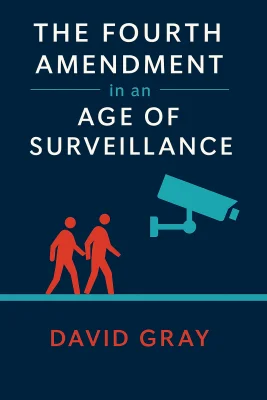
The Fourth Amendment in an Age of Surveillance
Categories
Nonfiction, Law
Content Type
Book
Binding
Kindle Edition
Year
2017
Publisher
Cambridge University Press
Language
English
ASIN
B06XTTR9M6
ISBN13
9781108220200
File Download
PDF | EPUB
The Fourth Amendment in an Age of Surveillance Plot Summary
Introduction
# The Fourth Amendment in the Digital Age: Collective Security vs. Individual Privacy The digital revolution has fundamentally transformed the relationship between citizens and government surveillance, creating unprecedented constitutional challenges that expose critical weaknesses in Fourth Amendment doctrine. Modern technologies enable law enforcement to monitor, track, and analyze personal data with a scope and precision that renders traditional privacy protections largely obsolete, yet courts continue to apply eighteenth-century constitutional frameworks to twenty-first-century realities with increasingly inadequate results. The central argument emerges that current Fourth Amendment interpretation, focused primarily on individual privacy expectations, fails to address the systemic threats posed by mass surveillance technologies. Through careful analysis of constitutional text, historical context, and contemporary surveillance capabilities, a compelling case develops for reconceptualizing Fourth Amendment protections around collective security rights rather than individual privacy interests. This framework offers a path toward meaningful constitutional constraints on government surveillance power while preserving legitimate law enforcement capabilities, demonstrating how originalist constitutional interpretation can provide robust protections for contemporary democratic governance.
Chapter 1: Modern Surveillance Technologies: A Constitutional Crisis Unveiled
Contemporary surveillance operates with unprecedented scope and efficiency that fundamentally alters the nature of government monitoring. GPS tracking systems monitor millions of devices simultaneously, storing location data indefinitely and analyzing movement patterns across vast databases. Cell site simulators intercept communications from every device within their operational range, gathering location information and potentially accessing call content, texts, and internet activity without any individualized suspicion of wrongdoing. The transformation from targeted to mass surveillance represents a qualitative change in citizen-state relationships. Traditional surveillance required substantial human resources and could only monitor specific individuals for limited periods, creating natural constraints that served as informal constitutional protections. Modern technologies eliminate these limitations, making comprehensive population monitoring economically feasible without particularized suspicion. Data aggregation capabilities compound these concerns by enabling detailed personal profiles from seemingly innocuous information fragments. Big Data programs correlate location data, financial transactions, communication patterns, and internet activity to reveal intimate details about relationships, political affiliations, health conditions, and private behaviors. Telephone metadata, once considered merely technical routing information, now enables precise mapping of social networks and behavioral prediction. The proliferation of Internet of Things devices extends surveillance into previously private spaces through smart televisions, home assistants, fitness trackers, and household appliances that collect and transmit data about intimate activities. Combined with facial recognition systems and automated license plate readers, this creates comprehensive surveillance infrastructure operating largely without public awareness or legal constraint. The psychological and social effects of pervasive surveillance extend beyond individual privacy violations to undermine democratic participation itself. Citizens who know or suspect they are being monitored modify their behavior, avoid certain associations, and refrain from exploring controversial ideas. This chilling effect discourages the intellectual freedom and political engagement that constitutional democracy requires, creating societies where conformity is encouraged and dissent discouraged through the subtle pressure of constant observation.
Chapter 2: Fourth Amendment Doctrine: Why Individual Privacy Rights Fail
Current Fourth Amendment doctrine has been systematically weakened by judicial interpretations that fail to address modern surveillance realities. The public observation doctrine permits unlimited electronic surveillance of public activities using cameras, sensors, and tracking devices, despite being developed when observation required human presence and visual line of sight. This principle now authorizes comprehensive monitoring that would have been impossible and unimaginable when the doctrine was established. The third-party doctrine eliminates constitutional protection for information shared with service providers, financial institutions, or other intermediaries, treating such sharing as voluntary disclosure that destroys reasonable privacy expectations. In an era when digital participation is essential for full social and economic engagement, this doctrine effectively removes constitutional protection from most modern communications and transactions, creating a massive exception that swallows the constitutional rule. Standing requirements further restrict constitutional challenges by requiring plaintiffs to prove personal privacy violations, preventing challenges to surveillance programs affecting entire populations. Most people cannot demonstrate they were specifically targeted by secret surveillance programs, since such programs operate in classified environments where affected individuals cannot access evidence needed to establish standing. This creates a constitutional catch-22 where the most threatening surveillance programs are immune from judicial review. The reasonable expectation of privacy test, established in Katz v. United States, proves inadequate for addressing technological surveillance that operates without physical intrusion. Courts struggle to apply this standard to digital monitoring, often concluding that sophisticated surveillance techniques do not violate reasonable expectations because they avoid traditional trespass. This analysis ignores that modern surveillance can be far more invasive than physical searches while leaving no trace of government intrusion. Terry v. Ohio's reasonableness balancing has been interpreted to permit increasingly intrusive techniques based on minimal suspicion, with case-by-case analysis preventing courts from considering cumulative impacts of surveillance programs on entire communities. This approach allows law enforcement to implement broad surveillance initiatives while avoiding constitutional scrutiny by focusing judicial attention on individual incidents rather than systemic practices that threaten collective security.
Chapter 3: Competing Reform Approaches: Mosaic, Duration, and Technology-Centered Theories
Legal scholars have proposed various solutions to address Fourth Amendment inadequacies in confronting modern surveillance. The mosaic theory, featured prominently in United States v. Jones, suggests that aggregated surveillance data can violate reasonable privacy expectations even when individual data points do not. This approach recognizes that comprehensive surveillance creates detailed personal pictures exceeding the sum of their parts, but faces significant conceptual challenges including the mathematical impossibility of adding zero-value privacy interests to create meaningful constitutional protection. Durational approaches, exemplified by Justice Alito's concurrence in Jones, focus on surveillance length rather than methods employed. Short-term monitoring would remain constitutionally permissible while extended surveillance would require judicial approval. This framework offers clearer law enforcement guidance but fails to address mass surveillance that can affect millions simultaneously even when individual monitoring periods are brief. Content-based approaches calibrate constitutional protection based on information sensitivity or activity nature, providing stronger protection for political activities, intellectual pursuits, or intimate relationships while allowing broader government access to routine commercial activities. However, content-based distinctions conflict with Fourth Amendment traditional neutrality regarding activity value and would require subjective judicial judgments about which life aspects deserve constitutional protection. Technology-centered approaches focus on information gathering means and methods rather than content or quantity collected. This framework examines whether particular surveillance technologies enable broad, indiscriminate monitoring threatening collective security, regardless of specific case usage. Unlike other approaches, this directly addresses the fundamental threat posed by surveillance capabilities rather than attempting to measure their outputs or applications. Market-based solutions rely on technological countermeasures and consumer choice to protect privacy, assuming competitive pressures will drive privacy-protecting technology development. However, these approaches prove inadequate when government agencies can compel service provider cooperation or develop countermeasures defeating privacy technologies, as demonstrated in cases like FBI demands that Apple unlock encrypted devices. Each approach addresses real surveillance concerns while introducing new complications. Mosaic and durational theories struggle with line-drawing problems and risk disrupting established law enforcement practices, while content-based approaches threaten constitutional neutrality by creating protection hierarchies based on judicial social value assessments.
Chapter 4: Collective Rights Framework: Reclaiming the People's Security
The Fourth Amendment's textual reference to "the right of the people" suggests collective dimensions to constitutional rights that current doctrine largely ignores. Individual privacy rights, while important, cannot fully capture constitutional interests at stake when government surveillance threatens democratic society as a whole. Mass surveillance programs create collective harms affecting entire communities and democratic institutions, requiring collective constitutional protections that transcend individual privacy frameworks. Historical analysis reveals the Fourth Amendment was designed to address collective security concerns rather than merely individual privacy interests. General warrants and writs of assistance that motivated the amendment's adoption threatened entire communities with arbitrary government intrusion. The founders understood that unconstrained surveillance power posed systemic threats to free society that could not be addressed through individual legal remedies alone. The amendment's use of "the people" parallels similar language in First Amendment assembly and petition protections, suggesting focus on collective political rights rather than purely personal privacy interests. This collective interpretation explains why courts have authority to craft constitutional remedies like the exclusionary rule and warrant requirements that focus on systemic deterrence rather than individual compensation. Collective constitutional rights require enforcement mechanisms addressing systemic problems rather than merely individual violations. Class action litigation, public interest lawsuits, and legislative oversight can vindicate collective interests in ways individual criminal cases cannot, challenging surveillance programs as institutional practices rather than focusing on particular applications to specific individuals. The concept of collective security against unreasonable searches encompasses both direct surveillance harms and indirect effects on democratic participation. When surveillance programs chill political association, discourage dissent, or create atmospheres of suspicion and fear, they harm democratic society even when no individual can prove specific injury. Constitutional doctrine must account for these collective harms to provide meaningful protection against surveillance state development. Community-based approaches to surveillance oversight can complement legal remedies by providing local accountability for surveillance programs through oversight boards, public hearings on surveillance technology adoption, and local privacy ordinances ensuring surveillance programs reflect community values and priorities rather than being imposed without democratic input.
Chapter 5: Constitutional Remedies: Prospective Solutions for Systemic Surveillance Threats
The Fourth Amendment's command that protected rights "shall not be violated" requires prospective remedies preventing constitutional violations rather than merely providing after-the-fact compensation. This remedial approach, exemplified by the warrant clause's procedural requirements, provides a model for addressing modern surveillance technologies that pose systemic threats to constitutional rights through ongoing institutional arrangements rather than case-by-case adjudication. Effective constitutional remedies must meet three essential criteria: effectiveness in preventing targeted constitutional harm, enforceability by courts and administrative agencies, and parsimoniousness in balancing competing interests without unnecessarily hampering legitimate governmental functions. The Supreme Court's experience developing Miranda warnings, warrant requirements, and the exclusionary rule demonstrates successful constitutional innovation addressing twentieth-century law enforcement challenges. Modern surveillance technologies require similar remedial approaches tailored to their specific characteristics and collective threats. GPS tracking and location monitoring technologies might be regulated through warrant requirements similar to wiretapping provisions, with probable cause determinations, temporal limitations, and minimization procedures preventing excessive data collection about innocent citizens. Cell site simulators pose particular challenges because they operate indiscriminately, gathering data from all devices within operational range regardless of individualized suspicion. Constitutional remedies must address their inherently broad scope through strict deployment limitations, enhanced oversight mechanisms, and robust data destruction requirements preventing accumulation of information about law-abiding citizens. Big data surveillance programs require complex remedial frameworks addressing multiple stages of data collection, aggregation, storage, and analysis. Constitutional protections might include pre-deployment review processes, data siloing requirements, access controls, audit mechanisms, and regular destruction schedules ensuring such programs serve legitimate governmental purposes without creating comprehensive monitoring apparatus threatening democratic governance. The collective rights framework provides principled foundations for crafting these remedies by focusing on systemic threats to democratic institutions rather than attempting to weigh individual privacy interests against security benefits. Surveillance programs threatening collective security of "the people" against unreasonable searches violate constitutional requirements regardless of potential effectiveness in addressing particular security threats.
Chapter 6: Technology-Centered Regulation: Constraining Mass Surveillance Capabilities
Rather than focusing on what information government surveillance collects, constitutional analysis should examine how that information is gathered and what capabilities particular technologies create for systematic population monitoring. The fundamental threat posed by modern surveillance lies not in any particular data point but in deployment of technologies enabling broad, indiscriminate monitoring that would be impossible using traditional investigative methods constrained by human resources and physical limitations. A technology-centered approach would regulate government access to surveillance technologies based on their capacity to enable programs of broad and indiscriminate search and seizure. Technologies that can monitor large numbers of people simultaneously, operate continuously without human supervision, or aggregate data from multiple sources would be subject to heightened constitutional scrutiny proportionate to their threat to collective security. This framework aligns with Fourth Amendment text protecting "the people" collectively rather than focusing exclusively on individual privacy rights. Historical evidence demonstrates the amendment was designed to prevent the kind of general surveillance that modern technologies make economically and technically feasible. General warrants and writs of assistance shared the essential characteristic of authorizing broad, indiscriminate searches without particularized suspicion. Constitutional regulation of surveillance technologies would not prohibit their use but would require appropriate procedural safeguards preventing abuse and ensuring accountability. Technologies capable of mass surveillance might require judicial approval based on probable cause, while less intrusive technologies could be subject to administrative oversight or reasonable suspicion standards, with the key principle ensuring surveillance capabilities are deployed with appropriate justification. The technology-centered approach offers several advantages over alternative frameworks by providing clear guidance to law enforcement agencies about which surveillance methods require judicial approval, avoiding line-drawing problems that plague quantity-based or duration-based approaches. It maintains constitutional neutrality by focusing on investigative methods rather than content or value of information collected. Implementation would require courts to develop new doctrinal frameworks moving beyond individual privacy focus toward the amendment's original purpose of constraining government power rather than merely protecting individual secrecy. This evolution would represent a return to constitutional first principles while addressing twenty-first-century surveillance threats through frameworks capable of preserving fundamental balance between security and liberty.
Chapter 7: Balancing Democracy and Security: Institutional Safeguards for Surveillance Power
Constitutional regulation of surveillance technologies must account for legitimate law enforcement needs while preventing emergence of a surveillance state that undermines democratic governance. Modern criminal investigations often involve complex networks, sophisticated technologies, and international connections requiring advanced investigative tools that would have been unnecessary in earlier eras, but the challenge lies in preserving legitimate capabilities while preventing their abuse for broad social control. Effective surveillance regulation requires frameworks distinguishing between targeted investigation and mass surveillance based on their different constitutional implications. Targeted surveillance directed at specific individuals based on particularized suspicion serves traditional law enforcement functions and poses limited threats to general liberty. Mass surveillance monitoring entire populations without individualized justification represents qualitatively different threats to constitutional government requiring strict regulation. The warrant requirement provides time-tested mechanisms for balancing investigative needs against constitutional protections by requiring judicial approval for surveillance technologies capable of mass monitoring. This ensures government surveillance power remains subject to independent oversight while preserving law enforcement ability to investigate specific crimes when evidence suggests criminal activity, preventing fishing expeditions and general monitoring programs. Administrative and legislative oversight can supplement judicial review by establishing policies governing surveillance technology deployment and use through congressional oversight, inspector general reviews, and public reporting requirements providing transparency and accountability that judicial review alone cannot achieve. These mechanisms can address systemic issues and policy concerns that individual warrant applications cannot capture. International cooperation and information sharing complicate surveillance regulation by creating opportunities for governments to circumvent domestic constitutional protections through foreign partnerships. Effective regulation must address cross-border information flows while preserving legitimate intelligence cooperation, ensuring constitutional protections do not depend on geographic location of surveillance equipment or nationality of agencies conducting monitoring. The rapid pace of technological change requires regulatory frameworks that can adapt to new surveillance capabilities without constant legislative or judicial intervention. Broad principles governing surveillance power, rather than technology-specific rules, can provide enduring protection while allowing for technological evolution, focusing on constitutional principles at stake rather than particular technical means employed while maintaining clear guidance for law enforcement agencies and meaningful protection for democratic institutions.
Summary
The Fourth Amendment's original design as a collective right to security against unreasonable searches and seizures provides constitutional resources adequate to address twenty-first-century surveillance challenges without abandoning founding principles or undermining legitimate law enforcement capabilities. By focusing on surveillance technologies' capacity to enable broad and indiscriminate monitoring rather than individual privacy expectations, courts can craft constitutional protections preserving democratic freedoms while accommodating genuine security needs. This technology-centered approach to constitutional interpretation offers a path forward that honors the amendment's historical purpose while addressing contemporary realities, demonstrating how originalist constitutional analysis can provide robust protection for modern democratic governance. The framework developed here should prove valuable for legal practitioners, policymakers, and citizens seeking to preserve constitutional government in an era of unprecedented surveillance capabilities that threaten the very foundations of free society.
Best Quote
Review Summary
Strengths: The book presents a well-structured and relatively easy-to-follow argument. It effectively discusses the impact of legal issues, such as stop and frisk, on minority and low-income populations, highlighting its relevance and depth in addressing social justice concerns. Weaknesses: Chapter four is noted as challenging, particularly in its detailed examination of the language of the Fourth Amendment, which may hinder comprehension for some readers. Overall: The review conveys a generally positive sentiment towards the book, appreciating its insightful analysis of legal impacts on marginalized groups, despite some complexity in certain sections. The book is recommended for those interested in legal and social justice topics.
About Author

David Gray
Gray interrogates the intersections between rural life and literature, using his background as a criminal defense attorney and journalist to enrich his narrative landscapes. His transition from law to literature reflects a broader examination of societal roles and personal passions. As an author attached to The Century Company, he delved into themes of rural and sporting life, particularly through stories involving horses and fox hunts. His interest in these themes is most evident in his short story collections like "Gallops," later retitled "Gallops I," and "Mr. Carteret and Others." By exploring these narratives, Gray provides readers with an immersive look into the world of rural America, making the pastoral experience accessible and engaging.\n\nMoreover, Gray's literary endeavors extend beyond short stories to include successful theatrical works. His plays, such as "Gallops" and "The Best People," the latter co-authored with Avery Hopwood, reflect his ability to translate written narratives into compelling stage productions. His method of adapting stories for different formats not only broadens his audience but also enriches the theatrical landscape with nuanced characters and vibrant settings. Readers and theatergoers alike benefit from his ability to convey the complexity of human experiences through varied mediums, showcasing his versatility as a writer and playwright.\n\nIn this concise bio, Gray's unique combination of legal and literary expertise emerges as a defining characteristic of his work. His novels like "Smith" and "The Boomerang" further highlight his talent in adapting and transforming narratives. This cross-disciplinary approach ensures that his contributions to literature and theater continue to resonate with audiences, offering insights into both the human condition and the cultural significance of rural life.
Read moreDownload PDF & EPUB
To save this Black List summary for later, download the free PDF and EPUB. You can print it out, or read offline at your convenience.
The Fourth Amendment in an Age of Surveillance
by David Gray
