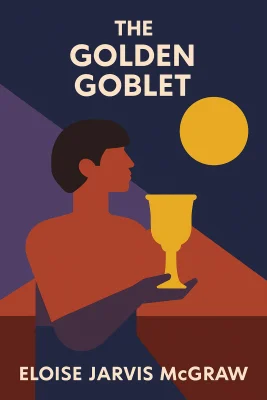
The Golden Goblet
Categories
Fiction, Classics, Mystery, Historical Fiction, Young Adult, School, Historical, Childrens, Middle Grade, Egypt
Content Type
Book
Binding
Paperback
Year
1985
Publisher
Penguin Puffin
Language
English
File Download
PDF | EPUB
The Golden Goblet Plot Summary
Introduction
In the shadow of Thebes' great pyramids, where the western cliffs guard the Valley of the Tombs of Kings, molten gold flows like liquid fire from a crucible. Twelve-year-old Ranofer watches the metal cool from scarlet to cherry red, dreaming of the golden masterpieces he might someday create. But dreams shatter like pottery when his half-brother Gebu tears him from the goldsmith's workshop and forces him into the brutal world of stonecutting. What begins as a boy's struggle for survival becomes something far more dangerous when Ranofer discovers a golden goblet hidden in Gebu's chest—a goblet bearing the cartouche of a long-dead pharaoh. The discovery plunges him into a web of tomb robbery that threatens not only his life but the sacred rest of Egypt's most revered dead. In ancient Thebes, where the living serve the gods and the dead demand justice, one boy must choose between safety and honor, between silence and truth.
Chapter 1: Chains of Servitude: Ranofer's Life Under Gebu's Control
The last drops of gold settled in the mold as Ranofer carefully set down the crucible, sweat gleaming on his thin shoulders. In the courtyard of Rekh the goldsmith's workshop, the familiar sounds of the craft filled the air—the ping of hammers on precious metal, the hiss of quenching flames, the gentle scrape of files shaping delicate ornaments. This was his world, the only world he had ever wanted. But even as he worked, shadows gathered. Ibni the Babylonian porter sidled up with his sickly grin and cheese-white hands, pressing a wineskin into Ranofer's reluctant grasp. "A gift for your honored brother," Ibni wheezed, his accent thick as honey. "Made by my wife from our own dates." The routine had become familiar—every few weeks, another wineskin to carry home to Gebu, who would accept it with a grunt and then mysteriously dispose of its contents in the dead of night. The walk home through Thebes' western quarter took Ranofer past the workshops of embalmers and coffin builders, the very heart of the City of the Dead. Here, skilled craftsmen labored to furnish tombs with everything the deceased might need for their Three Thousand Years in the afterlife. The irony wasn't lost on him—he who dreamed of creating treasures for the living was trapped in a city devoted to serving the dead. Gebu waited in the courtyard of their cramped house on the Street of the Crooked Dog, his massive frame silhouetted against the dying light. The stonecutter's face was hewn from the same granite he worked, all hard planes and cold angles, marred only by the nervous tic that made his left eye wink spasmodically. He snatched the wineskin without a word of thanks, then held out his other hand for Ranofer's daily wages—five copper deben that should have been the boy's own but which Gebu claimed as payment for food and shelter. That night, as Ranofer lay on his reed mat beneath the scraggly acacia tree, he heard the familiar sound of liquid splashing onto stone. Through the darkness came the reek of fermentation as Gebu emptied the wineskin into the courtyard drain, just as he had done with all the others. The mystery gnawed at Ranofer like hunger—why accept wine only to waste it? But questions were dangerous things in Gebu's house, and silence was the price of survival. The stars wheeled overhead as Ranofer drifted toward uneasy sleep, unaware that each wineskin carried more than wine, and that his innocent hands were already stained with a crime that would soon consume them all.
Chapter 2: Whispers of Thievery: Discovering the Gold Smuggling Plot
The morning brought troubling news to Rekh's workshop. Gold was missing—not great quantities, but enough to notice when the weekly accounts were tallied. The kindly goldsmith gathered his workers around the weighing scales, his weathered face creased with worry. "Someone among us is a thief," he announced quietly. "We must weigh every scrap, every filing, until we catch him." Ranofer's blood turned to ice water. Fragments of memory suddenly cohered into a horrifying picture—Ibni's sly questions about whether Gebu had received his "gifts," the Babylonian's access to the raw gold washing vats, and those mysterious wineskins that were accepted but never consumed. The realization struck him like a physical blow: he had been carrying stolen gold home in those wineskins, grain by precious grain, completely unknowing. His hands shook as he helped weigh out the daily portions of gold for each craftsman. Every movement felt observed, every glance seemed suspicious. When Ibni appeared that evening with another wineskin, Ranofer wanted to refuse it, to denounce the theft then and there. But the words died in his throat as he met the Babylonian's eyes—no longer vacant, but sharp with warning. The trap was perfect: Gebu would simply deny everything and let Ranofer take the blame. That night in Gebu's courtyard, Ranofer gathered his courage for confrontation. "I know about the wineskins," he said, his voice barely above a whisper. "I know what's in them." For a moment, genuine concern flickered across Gebu's granite features, but it vanished as quickly as it had come. The stonecutter's massive fist caught Ranofer across the face, spinning him to the ground. "You know nothing," Gebu growled, his voice deadly calm. "And if you babble to anyone, remember this—who will they believe? A respected craftsman, or a lying gutter waif?" The logic was inescapable and terrifying. Gebu held all the power, all the credibility. Ranofer was nothing more than a tool in his hands, as expendable as a broken chisel. As welts rose on his face and back, Ranofer understood the true depth of his trap. He was not merely Gebu's victim—he was his unwitting accomplice, bound to him by a crime he had committed in ignorance but could never prove he hadn't known about. In the courts of Egypt, ignorance was no defense, and the penalty for theft was death.
Chapter 3: Dreams Deferred: From Goldsmith's Helper to Stonecutter's Apprentice
The blow fell without warning, swift as a crocodile's strike. Rekh's gentle voice delivered the news that shattered Ranofer's world: "Your brother came this morning, lad. You're no longer needed here." The goldsmith's eyes held genuine sorrow, but also something else—suspicion. Ibni had vanished from the workshop days before, his thievery finally discovered, and whispers followed in his wake. Ranofer found himself standing outside the familiar gate for the last time, his dreams of golden mastery crumbling to dust. Behind those walls lay everything he had ever wanted—the singing hammers, the glow of the furnaces, the magic of transformation as base metal became objects of beauty. Now it was forbidden to him forever, as distant as the stars. The stonecutting shop squatted like a beast at the edge of the craftsmen's quarter, its open sides echoing with the harsh clatter of chisel against stone. Here was no delicate artistry, only brute force and grinding endurance. Pai, the foreman, looked Ranofer up and down with undisguised contempt. "This scarecrow is to be a stonecutter?" he sneered. "He's more fit to catch rats." The work was punishment disguised as craft. All day Ranofer knelt on the gritty floor, scrubbing blocks of granite with sandstone until his hands bled and his back screamed with agony. The other apprentice, Nebre, worked beside him in sullen silence, his face as expressionless as the stone they shaped. Around them, the older workers bore the scars of their trade—missing fingertips, crushed hands, the chalky pallor that came from breathing stone dust for years. Old Zahotep, the drill operator, showed Ranofer his mangled hands with grim pride. "Twenty years I've been at this trade," he said, holding up his thumb, severed at the first joint. "The wedge slipped when we were splitting granite. And here"—he displayed the other hand, equally damaged—"a chisel went astray. These are a stonecutter's hands, boy. Not pretty, but useful enough." The horror of it washed over Ranofer like a cold wave. These ruined hands could never hold the delicate tools of goldsmithing, never shape precious metal with the precision his craft demanded. Every day in this place was another step away from his dreams, another scar on hands that had once shaped beauty from raw gold. If he stayed here long enough, he would become like Nebre—dead-eyed, silent, resigned to a life of mindless labor. But he had no choice. Gebu's threats hung over him like storm clouds, and his own guilt in the theft made rebellion impossible. He was trapped, bound as surely as any slave, watching his dreams die one painful day at a time.
Chapter 4: The Pharaoh's Goblet: Evidence of Tomb Robbery
Curiosity and hunger drove Ranofer up the forbidden stairs one evening when Gebu was absent. The upper room reeked of expensive ointments and wine, its shadows hiding the secrets of the stonecutter's newfound wealth. Ranofer rifled through the wooden chest with trembling fingers, seeking food but finding instead evidence of a crime beyond his darkest imaginings. The goblet emerged from its wrapping like captured sunlight, pure gold fashioned into the shape of a lotus blossom, its rim and stem gleaming silver. No goldsmith in Thebes could have created such perfection—this was the work of masters from a bygone age, when gods still walked among men. But it was the hieroglyphs etched into the golden petals that stopped Ranofer's heart: Thutmose-Nefer-Kheperu, enclosed in the royal cartouche that marked the names of pharaohs. Thutmose the Conqueror had been dead for over a century, his mummy long since sealed in its tomb in the Valley of the Kings. This goblet had been placed beside his sarcophagus to serve him in the afterlife, protected by curses and guardian spells that would destroy any who dared disturb the pharaoh's eternal rest. Gebu hadn't merely stolen gold—he had robbed the dead, committed the most heinous crime in all of Egypt's long history. Ranofer's hands shook as he rewrapped the goblet and thrust it back into the chest. The magnitude of Gebu's evil overwhelmed him like a crushing weight. Tomb robbery was not just theft but murder—murder of the soul itself. By stealing the pharaoh's treasures, Gebu had condemned the ancient king's ba to starvation and torment in the afterlife, perhaps even destroyed it entirely. The boy crept back down the stairs on legs weak as water, his mind reeling with the implications. This was proof enough to hang Gebu from the palace walls, but it was also a death sentence for anyone caught with it. The goblet burned in his memory like a brand, beautiful and terrible, a witness to crimes that cried out for justice. But how could he, a powerless apprentice, bring a master craftsman to account? Who would believe the word of a boy against a respected citizen? The goblet might as well have been on the moon for all the good it could do him. Yet its image haunted him—that perfect golden lotus, torn from its sacred resting place and hidden in a common criminal's chest like any piece of stolen jewelry.
Chapter 5: Shadows and Secrets: Spying with Allies in the City of the Dead
In the papyrus marsh where the old reed-cutter made his daily harvest, three conspirators gathered in secret. The Ancient listened to Ranofer's tale with his one bright eye growing ever more troubled, while Heqet fairly vibrated with excitement at the prospect of real adventure. The boy apprentice had always possessed more courage than sense, and the revelation of Gebu's crimes only inflamed his reckless nature. "We must spy on them," Heqet declared, his snub nose quivering with determination. "Follow their every move, discover their methods. I know the perfect place to watch Wenamon's house—there's a palm tree that overlooks his courtyard from the alley behind the Apprentices' Quarters." The Ancient shook his grizzled head at such youthful enthusiasm, but agreed to keep watch over Setma the river captain, who surely helped smuggle the stolen treasures downriver to distant markets. Night after night they maintained their surveillance, creeping through darkened streets and hiding in shadows like common thieves themselves. Ranofer followed Gebu to wine shops and gambling dens, crouching under overturned boats on the docks while his half-brother drank himself into stupors that would have felled a lesser man. Heqet perched in his palm tree like some exotic bird, observing Wenamon's domestic routine with the intensity of a priest reading omens. But their quarry proved frustratingly ordinary in daylight hours. The criminals went about their legitimate business with the dull predictability of honest men, visiting their workshops, haggling in the markets, tending to the mundane details of daily life. If they were planning further thefts, they showed no sign of it. Heqet began to invent elaborate theories to explain their inactivity, while the Ancient grew increasingly skeptical of the entire enterprise. The breakthrough came from an unexpected source. The Ancient overheard a fierce argument between Gebu and Setma in the papyrus marsh, their voices carrying clearly across the water despite their efforts at secrecy. The partnership had ended in mutual recrimination and threats, leaving Gebu without his smuggling route and Setma without his profitable sideline. "They've parted," the Ancient reported with grim satisfaction. "No doubt Setma raised his price and Gebu would have none of it." This explained the recent lull in criminal activity, but it also meant Gebu would be seeking new allies for his next venture. The golden goblet remained hidden in his house like a coiled serpent, waiting for the moment when greed overcame caution and the stonecutter made his next move.
Chapter 6: Into the Valley: Following Thieves to the Royal Tomb
Dawn had barely touched the eastern horizon when Ranofer glimpsed Gebu's bulky form slipping through the empty streets, a bundle of cloth tucked beneath his arm. The goblet—it had to be the goblet, wrapped in old linen and bound for some new hiding place or a meeting with fresh conspirators. This time there would be no wine shops or innocent explanations. This time Gebu's destination was the forbidden Valley of the Tombs of the Kings. The path through the western cliffs wound like a serpent between walls of red stone, climbing ever higher toward the desolate wasteland where Egypt's greatest pharaohs lay in their eternal rest. Ranofer followed at a distance that made his heart pound with terror, knowing that discovery meant certain death but unable to turn back. At the place of the broken tree, Wenamon emerged from the shadows like the carrion-eater he was, and the two conspirators continued their journey together. The Valley spread before them like a vision of the underworld—a burning maze of red rock and sand where nothing lived save the vultures that wheeled endlessly overhead. Here the very air shimmered with heat and ancient curses, where the bas of the dead were said to flutter through the blazing silence, guarding their treasures against violation. No sane man entered this place without prayers and protective amulets, yet Gebu and Wenamon strode through it as casually as strolling through a market square. They led Ranofer deep into the maze of boulders and hidden tomb entrances, past the sealed doorways of kings whose names were legend. Finally they stopped beside a seemingly ordinary pile of rocks, and began rolling away a massive stone that revealed a narrow crevice beneath. This was no official entrance marked with royal seals—it was a thief's tunnel, hacked out during the tomb's construction and hidden from the priests and guards who maintained the Valley's sacred security. A great vulture rose from behind the rocks just as Ranofer approached, its wings beating the air with sounds like funeral drums. In his terror he tumbled into the crevice and found himself sliding down rough-hewn steps into the bowels of the earth, following his quarry into the very heart of violation and sacrilege. Behind him the desert blazed in merciless silence, while ahead lay darkness, death, and the fury of the desecrated dead. The tunnel led downward through solid rock, its walls bearing the tool marks of the men who had carved it in secret during the tomb's construction. Somewhere ahead, torchlight flickered as the thieves approached their destination—a royal tomb whose occupants had slept undisturbed for decades, never knowing that their eternal rest had been purchased with the labor of their own betrayers.
Chapter 7: Before the Queen: Courage Rewarded and Dreams Reborn
In the depths of the tomb, surrounded by the treasures of Huaa and Tuaa, parents of Queen Tiy herself, Ranofer had fought his desperate battle against the desecrators. The crash of the alabaster vase, the shower of gems as his thrown jewelry box struck Gebu's face, the hiss of the torch extinguished by wine—these sounds would echo in his memory forever. He had escaped by wit and desperate courage, trapping the thieves beneath the stone that blocked their tunnel entrance. Now he stood trembling in the blazing heat of the palace gardens, his ragged appearance shocking the perfumed courtiers who surrounded Queen Tiy. The golden cobra on her brow seemed alive with divine fire as she fixed him with eyes that could read souls. "You told my dwarf there are thieves in the tomb of my parents," she said in her strange, boyish voice. "Why do you say this thing?" The test she set him was cunning beyond his frightened expectations. How could a lying boy know what object leaned against the north wall of the burial chamber? But Ranofer's memory served him true—he recalled the careful positioning of the twin coffins, oriented toward the western Land of the Gods, and from that deduced the answer that proved his honesty. "Your Majesty," he whispered, "it was your father's oaken staff." The queen's hands flew to her face as if struck by a physical blow. Orders rang out like trumpet calls as soldiers raced toward the Valley, while palace servants scurried to execute the royal will. The tomb would be secured, the thieves captured, the sacred relics restored to their proper places. Justice would fall on Gebu and Wenamon with the weight of divine retribution. But it was the goblet's recovery that sealed Ranofer's vindication. Count Zobek's men found it exactly where the boy had predicted, hidden behind a false back in the workshop cupboard, its golden beauty undiminished by its ordeal in criminal hands. When Queen Tiy asked what reward he desired most in all the world, Ranofer's answer astonished the glittering court: "Your Majesty, could I have a donkey?" His simple explanation reduced hardened nobles to wondering smiles. With a donkey to carry papyrus reeds to market, he could earn honest coppers to pay for his apprenticeship to Zau the Master. From such humble beginnings might grow the skills to fashion treasures worthy of royalty itself. The queen's tears fell like blessing as she commanded that he receive not merely a donkey, but the finest in all Egypt, along with the promise that Zau would accept him as a pupil under royal patronage.
Summary
As the sun set over Thebes on that Festival day that had begun in terror and ended in triumph, Ranofer walked through the City of the Dead with his magnificent donkey at his side and the queen's golden rings in his sash. The boy who had awakened that morning as a powerless apprentice crushed under his half-brother's tyranny now carried royal favor and the promise of a golden future. Gebu and Wenamon would hang from the palace walls as befitted tomb robbers, their evil partnership dissolved in death and disgrace. The ancient rhythms of Egypt continued undisturbed—the Nile rose in its annual flood, the dead rested secure in their eternal homes, and justice prevailed over greed and corruption. In the workshops of Zau the Master, a new apprentice would soon begin learning the sacred mysteries of transforming base metal into objects of beauty and power. The golden goblet had returned to its rightful place, but its brief journey through the world of the living had transformed not only the fate of criminals and victims, but the destiny of one brave boy who chose honor over safety, truth over silence, and found that courage, like gold itself, only grows more precious when tested in the fire.
Best Quote
Review Summary
Strengths: The book is praised for its relatable protagonist, Ranofer, and its authentic depiction of ancient Egyptian life, particularly in goldsmithing and stonemasonry. The writing is described as advanced and well-researched, with a deliberate pacing that some find engaging. The novel is also commended for its immersive storytelling and strong character development, appealing to both children and adults. Weaknesses: Criticisms include the book's slow pacing and lack of engagement, with one reader describing it as boring and unappealing. The plot is considered straightforward and simple by some, with the setting being its most distinctive feature. Overall: The book receives mixed reviews, with some readers finding it a compelling and intelligent historical fiction, while others consider it dull and unengaging. It is recommended for middle-grade readers and those interested in ancient Egypt, though opinions on its appeal vary significantly.
About Author

Eloise Jarvis McGraw
McGraw charts a compelling landscape of history and fantasy through her children's literature, emphasizing themes of identity, belonging, and adventure. Her work frequently delves into the internal struggles of her characters, such as in "Moorchild," which explores the isolation of a half-fairy changeling. With a strong historical inclination, she crafts immersive settings, as evidenced in "The Golden Goblet," set in ancient Egypt, and "Moccasin Trail," capturing the American Northwest. These thematic explorations are complemented by her vivid character development and intricate storytelling.\n\nMcGraw's method blends historical and fantastical elements, allowing readers to engage deeply with the settings and narratives she constructs. Her books, like "A Really Weird Summer," which earned an Edgar Award, highlight her versatility in intertwining mystery with historical contexts. Her contributions to the Oz series further demonstrate her ability to expand upon existing worlds while infusing them with new life. This blend of adventure and introspection creates a multidimensional reading experience that resonates with both children and young adults.\n\nReaders of McGraw's work benefit from her detailed portrayal of both the external and internal journeys her characters undertake. This approach not only entertains but also encourages introspection and empathy among her audience. Her legacy is enriched by accolades such as the Newbery Honors for her notable books across different decades, cementing her influence in children's literature. McGraw's body of work stands as a testament to her ability to connect readers with the universal themes of belonging and self-discovery, making her an enduring figure in literary history.
Read moreDownload PDF & EPUB
To save this Black List summary for later, download the free PDF and EPUB. You can print it out, or read offline at your convenience.
The Golden Goblet
by Eloise Jarvis McGraw
