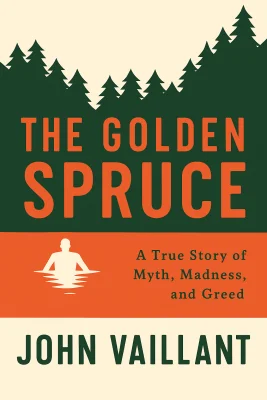
The Golden Spruce
A True Story of Myth, Madness, and Greed
Categories
Nonfiction, Science, Biography, History, Nature, True Crime, Book Club, Historical, Environment, Canada
Content Type
Book
Binding
Paperback
Year
2006
Publisher
W. W. Norton Company
Language
English
ASIN
0393328643
ISBN
0393328643
ISBN13
9780393328646
File Download
PDF | EPUB
The Golden Spruce Plot Summary
Introduction
In the misty depths of an ancient rainforest, where cathedral-like trees had stood for centuries, a single moment of destruction would forever change a community's understanding of what truly matters. On a winter night in 1997, the sound of a chainsaw echoed through the darkness of Canada's Queen Charlotte Islands, severing not just wood and bark, but the threads that connected a people to their sacred heritage. The perpetrator was not a faceless corporation or distant government, but one man whose love for the forest had transformed into something far more dangerous. This extraordinary true story reveals how environmental passion can cross the line into extremism, and how a single act of protest can illuminate the complex web of relationships between indigenous peoples, industrial interests, and the natural world they both depend upon. Through the lens of one man's tragic journey from forest protector to forest destroyer, we discover profound truths about the price of speaking out, the weight of desperation, and the delicate balance between preservation and progress that defines our modern relationship with nature.
Chapter 1: The Mythical Tree: Symbol of Nature's Fragility
For three centuries, a magnificent Sitka spruce stood like a golden beacon in the temperate rainforests of Haida Gwaii, its unusual luminescent needles catching and reflecting light in ways that seemed almost supernatural. The Haida people, whose ancestors had paddled these waters in massive cedar canoes, knew the tree as K'iid K'iyaas—the Elder Spruce Tree. According to their ancient stories, it had once been a young man who disobeyed his grandfather's warning never to look back at their dying village, transforming him into this unique guardian of the forest. Scientists marveled at this botanical impossibility. The tree suffered from a rare genetic mutation that should have killed it within years, yet somehow it thrived, growing to over fifty meters tall and six meters around. Its golden needles, unable to photosynthesize properly in direct sunlight, created a living paradox that challenged everything botanists understood about plant survival. Visitors from around the world made pilgrimages to witness this natural wonder, standing in reverent silence before its glowing presence. But the golden spruce existed within an increasingly precarious environment. The surrounding valleys bore the scars of industrial logging, creating a stark contrast between this single magnificent survivor and the clear-cut landscapes that stretched toward the horizon. The tree had become both a symbol of nature's resilience and a painful reminder of what was being lost. In its solitary beauty lay a deeper truth about the fragility of irreplaceable things—how quickly centuries of growth can disappear, and how some losses can never be undone.
Chapter 2: Grant Hadwin: Profile of an Environmental Radical
Grant Hadwin began his career as the very embodiment of a successful forest industry professional. Raised in an upper-middle-class Vancouver family, he possessed an almost supernatural ability to navigate the wilderness, moving through dense forests with the grace of someone born to the land. His colleagues watched in amazement as he could lay out logging roads across seemingly impossible terrain, engineering pathways through mountains that others deemed inaccessible. He was the kind of man who could survive alone in the wilderness for weeks, living off the land with nothing but basic supplies and his intimate knowledge of the forest. Yet this same intimate knowledge became the source of his growing torment. As Hadwin spent his days mapping out areas for clear-cutting, he began to see the full scope of industrial forestry's impact on the landscapes he loved. He watched ancient valleys reduced to moonscapes, streams fouled with runoff, and mountainsides left bare and bleeding into the rivers below. The cognitive dissonance between his role as an enabler of destruction and his deep love for the wilderness created a psychological pressure that few could understand or withstand. The breaking point came during what Hadwin later described as a spiritual experience on a remote mountain, where he felt called to become a messenger for the natural world. His transformation from respected professional to environmental radical was swift and dramatic. Friends and colleagues watched in alarm as the composed, competent forest engineer became consumed by an almost messianic conviction that he alone understood the true cost of humanity's war against nature. In Hadwin's journey from protector to destroyer, we see how the weight of witnessing environmental devastation can push even the most grounded individuals beyond the boundaries of rational action.
Chapter 3: The Logging Industry: Exploitation and Conflict
The history of North America's forests reads like an epic tale of human ambition colliding with natural limits. For centuries, the continent's vast woodlands seemed infinite, supporting an industry that grew from small-scale operations using axes and oxen to massive mechanized enterprises capable of felling thousand-year-old trees in minutes. The early loggers were tough, often desperate men who faced death daily, working in conditions so dangerous that entire communities would mourn multiple casualties each season. In the Pacific Northwest, logging evolved into something resembling terrestrial whaling—small crews using increasingly powerful tools to take down giants that could weigh hundreds of tons. The transition from hand tools to chainsaws revolutionized the industry's capacity for destruction, allowing a few men to accomplish in hours what had once taken weeks. Steam-powered equipment could haul massive logs out of previously inaccessible valleys, while new transportation methods moved entire forests to distant mills at unprecedented speed. But the industry's greatest achievement—its efficiency—also became its greatest curse. The very forests that had seemed inexhaustible began showing signs of depletion, forcing companies to venture into increasingly remote areas for their timber. The easy-to-reach, high-quality old-growth forests were disappearing, leaving behind a complex legacy of boom-and-bust communities, scarred landscapes, and workers whose specialized skills were becoming obsolete. The logging industry's story reveals a fundamental tension in human nature: our remarkable ability to exploit resources is matched only by our recurring failure to recognize limits until it's too late.
Chapter 4: Cultural Perspectives: The Haida's Sacred Connection
The Haida Nation's relationship with the golden spruce transcended mere appreciation for a unique tree—it represented a living connection to their ancestors and their understanding of the world's spiritual dimensions. For thousands of years, the Haida had lived in harmony with these forests, taking what they needed while maintaining the delicate balance that allowed both human and natural communities to thrive. Their massive cedar canoes could carry entire war parties across treacherous waters, while their sophisticated understanding of forest ecology enabled them to manage resources sustainably across generations. The arrival of European traders and the subsequent collapse of traditional ways of life had devastating consequences that extended far beyond economic disruption. Waves of epidemic diseases reduced the Haida population by over ninety percent, while government policies systematically destroyed their cultural institutions, languages, and spiritual practices. Children were forcibly removed from their families and sent to residential schools designed to eliminate every trace of their indigenous identity. The golden spruce became one of the few tangible links to their pre-contact world, a reminder of the stories and beliefs that had somehow survived the cultural holocaust. When Grant Hadwin's chainsaw finally fell silent that winter night, it severed more than bark and wood—it cut through the carefully maintained threads that connected the Haida people to their ancestral knowledge. The community's response revealed the depth of this loss, as hundreds gathered to mourn not just a tree, but what they described as the death of one of their relatives. In their grief, we glimpse the profound difference between seeing nature as a commodity to be harvested and understanding it as a community of beings to which we belong.
Chapter 5: Environmental Activism: Methods and Madness
The environmental movement that emerged in the Pacific Northwest during the late twentieth century represented a collision of worldviews as fundamental as any in human history. On one side stood industrial interests backed by centuries of Western thought that viewed nature as a resource to be managed and exploited. On the other stood a growing coalition of activists, scientists, and indigenous peoples who argued for the intrinsic value of ecosystems and the rights of non-human beings to exist without human interference. Grant Hadwin's evolution from forest industry professional to radical activist followed a pattern seen in many who become deeply involved in environmental causes. Initial exposure to environmental destruction often produces a sense of urgency that can quickly transform into desperation when conventional methods of protest prove ineffective. The gap between the scale of environmental problems and the pace of institutional response creates a psychological pressure that can drive well-meaning individuals toward increasingly extreme actions. Hadwin's decision to destroy the golden spruce represented the tragic endpoint of this process—a moment when symbolic violence seemed the only way to break through public indifference to ongoing environmental destruction. His act succeeded in capturing international attention in ways that decades of conventional protest had failed to achieve, yet it also alienated potential allies and provided ammunition to those who sought to discredit environmental activism as inherently destructive. The golden spruce's death became a cautionary tale about how the urgency of environmental crises can corrupt the very movements trying to address them.
Chapter 6: The Aftermath: Community Response and Rebirth
The immediate response to the golden spruce's destruction revealed the deep emotional and spiritual connections that bound the entire community—both indigenous and non-indigenous—to this remarkable tree. Hundreds of people gathered on the banks of the Yakoun River for memorial services that combined Haida traditions with expressions of grief that transcended cultural boundaries. The loss was felt as a kind of collective trauma, described by many as similar to losing a beloved community member or witnessing the destruction of a sacred site. Yet from this tragedy emerged unexpected opportunities for healing and renewal. Scientists worked with Haida leaders to salvage cuttings from the fallen tree, beginning a delicate process of propagation that might one day restore the golden spruce to its ancestral home. The effort required unprecedented collaboration between Western scientific knowledge and indigenous stewardship traditions, creating new models for how environmental restoration might proceed in an era of cultural reconciliation. Perhaps most significantly, the golden spruce's death catalyzed broader conversations about the relationship between indigenous communities and the land that had sustained them for thousands of years. The Haida's response to the tragedy demonstrated their growing political power and their commitment to regaining control over their traditional territories. Their grief for the tree became part of a larger struggle for recognition of indigenous rights and environmental protection that continues to shape resource management policies throughout the Pacific Northwest.
Chapter 7: Modern Forestry: Balancing Preservation and Profit
The world that Grant Hadwin left behind continues to grapple with the fundamental tensions between economic development and environmental protection that drove him to his desperate act. Modern forestry practices have evolved significantly since the clear-cutting era that scarred so much of the Pacific Northwest, incorporating new technologies and management philosophies that attempt to balance productivity with sustainability. Yet these changes have come slowly, often in response to legal challenges and public pressure rather than industry initiative. The Queen Charlotte Islands have become a testing ground for new approaches to resource management that recognize both indigenous rights and ecological values. Collaborative agreements between the Haida Nation and government agencies have reduced logging rates and increased protection for sensitive areas, while new economic models seek to provide sustainable employment for communities that have long depended on resource extraction. These initiatives offer hope that it might be possible to maintain both human communities and healthy ecosystems, though success remains far from guaranteed. The technical challenge of propagating new golden spruces from the original tree serves as a metaphor for the broader work of environmental restoration in an era of climate change and habitat destruction. Like the delicate process of nurturing new growth from damaged tissues, rebuilding damaged ecosystems requires patience, expertise, and a willingness to accept that some things may be lost forever. The golden spruce's legacy reminds us that while individual acts of destruction can happen in moments, the work of restoration stretches across generations.
Summary
The story of the golden spruce and Grant Hadwin reveals how environmental destruction can transform love into obsession, and how the urgency of ecological crisis can drive even the most thoughtful individuals beyond the boundaries of rational action. Through one man's journey from forest protector to forest destroyer, we see reflected our own complicated relationship with the natural world—simultaneously dependent upon it and alienated from it, capable of profound appreciation and devastating exploitation. Yet within this tragedy lies profound hope for transformation. The collaborative efforts to restore the golden spruce demonstrate that healing is possible when communities come together across cultural and ideological boundaries. The Haida Nation's response to loss—channeling grief into political action and cultural renewal—offers a model for how we might face our own environmental challenges with both realism and resilience. In the end, the golden spruce's death reminds us that while we cannot undo the damage we have caused, we can choose to be better stewards of what remains, honoring both the irreplaceable gifts of the natural world and the communities that depend upon them.
Best Quote
“Fancy cutting down all those beautiful trees...to make pulp for those bloody newspapers, and calling it civilisation. - Winston Churchill, remarking to his son during a visit to Canada in 1929” ― John Vaillant, The Golden Spruce: A True Story of Myth, Madness, and Greed
Review Summary
Strengths: The review highlights the book's engaging narrative, rich with fascinating details about Haida Gwaii's unique environment and culture. It praises the author's ability to weave a compelling story around Grant Hadwin's controversial act, providing historical and environmental context. The book is noted for its informative content on West Coast woods, trade history, and native cultures. Overall: The reader expresses a highly positive sentiment, finding the book both educational and captivating. It is recommended for those interested in environmental issues, indigenous cultures, and the complexities of human impact on nature.
About Author

John Vaillant
Vaillant delves into the complex interplay between human civilization and the natural world, focusing on how environmental forces shape societies. His works, characterized by "masterly prose and a cinematic eye," often delve into themes of survival and environmental challenges. His nonfiction book "The Tiger" offers an insightful narrative on a man-eating tiger incident in Russia, illustrating the tension between human survival and natural threats. Meanwhile, his debut novel, "The Jaguar's Children," provides a poignant exploration of immigration and identity through the harrowing tale of an undocumented Mexican immigrant.\n\nThrough his books, Vaillant's readers gain a profound understanding of the environmental and social issues facing the modern world. His storytelling appeals to those interested in nature, culture, and the underlying connections that bind them. His nonfiction work, "Fire Weather," further extends his exploration of these themes by analyzing the devastating impact of the 2016 Fort McMurray wildfire, situating it within the broader context of climate change and human history. This approach has not only captivated audiences but also earned him numerous accolades, including the Windham-Campbell Literature Prize.\n\nVaillant's contributions to literature have been recognized with various awards, reflecting the impact and significance of his work. For instance, "The Golden Spruce," his early book, was celebrated for its exploration of myth and environmental destruction, winning prestigious Canadian literary awards. His bio reflects a commitment to revealing the intricacies of the human-environment relationship, making his works essential reading for those seeking to understand the profound effects of natural phenomena on human lives.
Read moreDownload PDF & EPUB
To save this Black List summary for later, download the free PDF and EPUB. You can print it out, or read offline at your convenience.
The Golden Spruce
by John Vaillant
