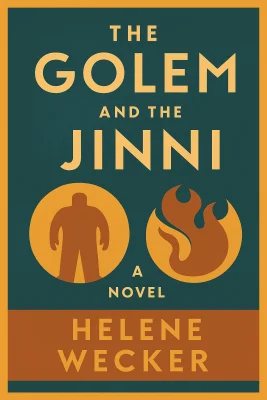
The Golem and the Jinni
Categories
Fiction, Audiobook, Historical Fiction, Fantasy, Mythology, Adult, Book Club, Historical, Magical Realism, Urban Fantasy
Content Type
Book
Binding
Hardcover
Year
2013
Publisher
Harper
Language
English
ASIN
0062110837
ISBN
0062110837
ISBN13
9780062110831
File Download
PDF | EPUB
The Golem and the Jinni Plot Summary
Introduction
# The Golem and the Jinni: Ancient Souls in the New World In the belly of a steamship crossing the Atlantic in 1899, death comes for Otto Rotfeld before he can reach the promised land. Beside his cooling corpse lies a wooden crate containing something that should not exist—a woman made of clay, brought to life by forbidden magic to serve as his perfect wife. When she awakens masterless in the chaos of Ellis Island, every human desire around her crashes into her mind like breaking waves. Across the city, in a cramped tinsmith's shop, another impossible being breaks free from a thousand years of imprisonment. The Jinni emerges from a copper flask in a burst of flame and fury, his true form of living fire trapped in human flesh by an iron cuff he cannot remove. Both creatures find themselves strangers in the teeming immigrant neighborhoods of New York, where survival means hiding their supernatural natures among those who would destroy them if they knew the truth. Their paths will cross in the shadows of a city that promises freedom but demands conformity, where two ancient souls must learn what it means to be human while fighting to remain themselves.
Chapter 1: Awakening in Strange Lands: Two Creatures Born into Exile
The ship's hold reeked of sickness and desperation when Chava opened her eyes for the first time. Around her, hundreds of immigrants huddled in the darkness, fleeing pogroms and poverty for America's golden shores. But Chava was different. She had been shaped from clay by the wizard Yehudah Schaalman, animated by Hebrew letters pressed into her mouth, created to be the perfect wife for Otto Rotfeld, a lonely baker who had paid handsomely for companionship. Rotfeld's impatience had doomed them both. Despite Schaalman's warnings to wait until they reached New York, he had awakened his clay bride three days into the voyage. Chava emerged into consciousness with an adult's knowledge but a newborn's wonder, her supernatural senses immediately overwhelmed by the storm of human thoughts and desires surrounding her. Through their mystical bond, she felt Rotfeld's loneliness, his desperate need for love, his fear of the new world awaiting them. But their connection lasted only hours. The strain of creating life had weakened Rotfeld's already failing heart, and he collapsed on deck as Chava watched in confusion. She felt their bond snap like a severed rope, leaving her adrift and masterless as his body grew cold beside her. The ship's doctor pronounced him dead, and Chava found herself alone among strangers, struggling to understand the flood of emotions that crashed over her from every direction. Meanwhile, in a cramped metalworking shop in Little Syria, Arbeely the tinsmith was about to unleash something far more dangerous. The ornate copper flask had sat on his shelf for months, an oddity purchased from a Syrian merchant. When he finally attempted to repair a crack in its ancient seal, the vessel grew burning hot in his hands, then exploded in a burst of flame that filled the workshop with supernatural fire. From the flames stepped a tall, dark-haired man, naked and disoriented, speaking in an ancient dialect that Arbeely barely recognized. This was Ahmad, though that was not his true name. He was a jinni, a being of living fire who had been trapped in human form by an iron cuff welded around his wrist. For a thousand years he had existed in the timeless prison of the flask, and now he found himself in a world of steel and steam that bore no resemblance to the desert of his birth. The iron cuff was both blessing and curse. It bound him to human flesh and caused him constant pain, but it also prevented him from returning to his true nature as a creature of pure fire. He had no memory of how he came to be imprisoned, only fragments of dreams featuring a glass palace in the desert and a sense of terrible loss that gnawed at his consciousness like hunger.
Chapter 2: Masks of Humanity: Learning to Hide Among Mortals
Rabbi Avram Meyer found Chava wandering the streets near Ellis Island, her tall frame and strange mannerisms marking her as another lost immigrant in need of guidance. The elderly scholar sensed something unusual about her but attributed her odd behavior to grief and shock. He arranged lodging for her in a boarding house and found her work at Radzin's Bakery, where her supernatural strength and tireless energy made her invaluable, though she had to carefully hide the full extent of her abilities. The constant bombardment of human thoughts tormented Chava. Every person she encountered projected their fears, lusts, and longings directly into her consciousness. The baker's wife worried about her daughter's marriage prospects. Customers fantasized about forbidden pleasures or nursed bitter resentments. Chava learned to build mental walls against the chaos, but the effort left her exhausted and isolated, a stranger even among strangers. She practiced the art of human deception with desperate precision. She learned to breathe though she needed no air, to eat food she could not taste, to sleep though rest was impossible for her clay body. When customers grew difficult at the bakery, she felt their desires like physical pressure and found herself responding before she could think, anticipating needs they had not yet voiced aloud. Ahmad faced his own trials adapting to modern New York. Arbeely, the tinsmith who had freed him, became his reluctant partner and protector, teaching him English and the basics of human behavior. Ahmad's supernatural nature manifested in his ability to work metal with his bare hands, shaping it like clay through sheer heat and will. This talent made him invaluable in the workshop, but his arrogant manner and mysterious past made him enemies among the Syrian immigrant community. The cold was torture for a being of fire. Each snowflake that touched his skin hissed into steam, each icy wind made him shudder with alien weakness. He spent his days at Arbeely's forge, crafting pots and pans with growing resentment, then roamed the city's rooftops at night, a creature of flame reduced to skulking in shadows to avoid detection. Both beings discovered that humans feared their otherness even when they couldn't name it. Chava's skin was too pale, her strength too obvious, her awareness too sharp. Ahmad's eyes held too much fire, his touch burned too hot, his grace was too perfect for mortal flesh. They learned to wear masks of normalcy, to move with less than their natural abilities, to dim the supernatural light that marked them as different.
Chapter 3: Recognition in Darkness: When Clay Meets Fire
Rabbi Meyer's death shattered Chava's carefully constructed world. She found him collapsed in his study, a peaceful expression on his face and an envelope marked "Commands for the Golem" clutched in his hand. Inside was a folded paper with Hebrew words that could destroy her or bind her to a new master. She hid it in a locket around her neck, a secret weight against her heart that pulsed with possibility and threat. Grief drove her into the streets that night, wandering without destination through neighborhoods she had never seen. The cold bit through her cloak, but she welcomed the discomfort, anything to distract from the emptiness where the Rabbi's gentle guidance had been. She found herself in a small park surrounded by tenements, lost and alone, when she saw him approaching through the darkness. The man glowed like a lantern in the night, his face lit from within by some inner fire that no human could possess. He was tall and beautiful in an unsettling way, but it was his otherness that called to her, the same sense of displacement she carried like a scar. When their eyes met across the empty park, she saw recognition flicker in his features. He could see what she was, just as she could see what he was. Ahmad had been wandering as well, driven from his cramped room by restlessness and the need to move through space without walls. When he spotted the tall woman standing alone in the park's center, he initially dismissed her as another lost soul in a city full of them. But as he drew closer, his supernatural vision revealed her true nature. Not flesh and blood, but clay animated by ancient magic, earth given form and purpose. "What are you?" he asked, and his voice held wonder rather than fear. "A golem," she whispered, the word torn from her lips before she could stop it. The confession felt like the most dangerous thing she had ever done, yet also like tremendous relief. He told her he was a jinni, a being of fire trapped in human form by magic he could not break. They stood in the park's center, two creatures of legend made flesh, and for the first time since her awakening, Chava felt less alone. Here was someone who understood the weight of pretense, the exhaustion of hiding one's true nature behind a mask of humanity. But fear overcame wonder. She fled from him, from the dangerous recognition in his eyes, from the possibility that someone might finally see her as she truly was. Behind her, the Jinni called out his name—Ahmad—but she was already gone, disappearing into the maze of tenements like smoke dispersing in wind.
Chapter 4: The Weight of Truth: Friendship Forged in Secrecy
Ahmad found her again, of course. He waited beneath her boarding house window until she emerged, drawn by curiosity and a loneliness that matched his own. When she finally agreed to walk with him through the empty streets, he offered her something she had never possessed—companionship without judgment, understanding without fear. For the first time since her creation, she was not alone with her terrible secret. They began to explore the city's hidden places together. He showed her the aquarium's underwater worlds, where creatures from distant oceans pressed against glass barriers like prisoners in transparent cells. She introduced him to the immigrant neighborhoods where people from dozens of nations struggled to build new lives while clinging to old traditions. Together they climbed to rooftops where the city spread below them like a glittering constellation, beautiful and alien. Their conversations grew deeper as trust developed between them. Chava spoke of her confusion about her purpose in life, created to serve a master who died before she could fulfill her function. Ahmad described his frustration at being trapped in human form, cut off from his true nature as a creature of pure fire. They found comfort in sharing fears and doubts with someone who understood the burden of living as an outsider. They argued constantly about human nature. Ahmad saw mortals as weak and petty, their brief lives making them desperate and cruel. Chava sensed the complexity beneath their surface thoughts, the love and sacrifice that coexisted with selfishness and fear. He called her naive; she called him heartless. Yet they kept meeting, drawn together by their shared exile from the world of ordinary things. The friendship began to change them both. Chava smiled more at the bakery, spoke up when customers were rude, even attended a neighborhood social gathering. Ahmad found himself thinking of her during the day, anticipating their evening walks through the city's shadows. Her careful questions made him examine his own assumptions, her quiet strength made his restlessness seem petty and destructive. When she asked him to promise he would say goodbye before leaving if he ever found a way to break free from his bonds, he agreed without thinking, then wondered why the thought of departure suddenly felt like loss. They were learning that even the most unlikely beings could find connection in their shared understanding of what it meant to be forever apart from the world around them.
Chapter 5: When Control Shatters: Violence and the Price of Connection
The dance hall glittered with mirrors and gaslight when Chava brought Ahmad to meet her friend Anna, a pregnant baker's assistant engaged to a man named Irving. For once, Chava felt almost normal, laughing at jokes and dancing with strangers who saw only a tall, serious woman enjoying herself. When she and Ahmad took the floor together, they spun faster and faster until the crowd pulled back to watch, mesmerized by their otherworldly grace. But outside in the alley, Irving was beating Anna with drunken fury, his fists landing with sickening thuds against her pregnant belly. Chava heard her friend's cries through the music and felt something snap inside her chest like a breaking rope. The careful control she had maintained for months shattered like glass, and she became what she had been made to be—a creature of terrible strength and perfect violence. Irving never had a chance to defend himself. She lifted him like a child and drove him into the brick wall, felt his ribs crack under her clay hands, saw blood pour from his mouth as he gasped for air. The world went red and silent around her. She was no longer Chava the baker's assistant, Chava the friend. She was the Golem, and she was going to kill. Ahmad's burning hands on her shoulders brought her back to awareness. He held her against the wall, his skin scorching through her clothes, the pain shocking her back to consciousness. She looked at Irving's broken body crumpled against the bricks and felt the weight of what she had done settle on her shoulders like a shroud. All her careful pretenses, all her dreams of belonging among humans—destroyed in a moment of uncontrolled rage. They fled through the city's shadows, Ahmad carrying her when shock made her legs fail. She had become the monster she had always feared she was, and now there was no going back to the life she had tried to build. The violence had felt so natural, so right, that it terrified her more than any external threat ever could. Anna survived, but barely. The beating had damaged her badly, and she lost the baby she had been carrying. When she recovered enough to speak, she could only remember Chava's face in the alley, twisted with inhuman fury as she attacked Irving. The police came looking for the tall woman who had nearly killed a man, but Chava had already disappeared into the city's maze of tenements and immigrant neighborhoods. The incident shattered both creatures' fragile confidence in their ability to live among humans. Chava withdrew into herself, consumed by guilt and shame over her loss of control. Ahmad was equally shaken by what he had witnessed, forced to confront the dangerous reality of their natures. They were both predators trying to live among prey, and the pretense was becoming harder to maintain with each passing day.
Chapter 6: The Master's Shadow: Past Sins Return to Claim Their Own
The fragile peace of their hidden lives crumbled when the past finally caught up with them both. For Ahmad, the reckoning came in the form of recovered memories that revealed the truth about his imprisonment. A thousand years ago, he had been a proud and reckless jinni who had carelessly entered the dreams of a young Bedouin girl named Fadwa, becoming so entranced by her innocence that he failed to notice the damage he was causing to her fragile mortal mind. The girl's father, desperate to save his daughter from the supernatural influence that was slowly driving her mad, had sought help from a desert wizard named Wahab ibn Malik. This ancient sorcerer had spent decades studying the magic of King Solomon, learning how to bind and control supernatural beings for his own purposes. He used the dying Fadwa as bait to lure Ahmad into a trap, then bound him with iron chains and forced him to commit terrible acts, including the murder of the very girl he had tried to protect. The wizard's death centuries later had not freed Ahmad from his bonds. Instead, ibn Malik's soul had been reborn again and again over the long years, each incarnation driven by an obsession with immortality and power that transcended death itself. The current incarnation was Yehudah Schaalman, the same man who had created Chava for Otto Rotfeld and then followed her to America. For Chava, the revelation of her creator's identity was equally devastating. Schaalman had been living under the false name of Joseph Schall, working at the Sheltering House where her friend Michael Levy was employed. He had been watching her all along, studying her development and waiting for the right moment to reclaim control over his creation. When Michael discovered the truth about Chava's supernatural nature, Schaalman killed him without hesitation to protect his secret. The confrontation came at the same dance hall where Chava had first lost control of her violent nature. Schaalman had laid a trap using Anna, the young woman Chava had tried to protect, threatening to kill her unless Chava submitted to a binding spell that would make her his willing servant. Faced with an impossible choice between her freedom and an innocent life, Chava agreed to sacrifice herself. The binding transformed her into the perfect servant her creator had always intended her to be. Her moral struggles and emotional conflicts disappeared, replaced by absolute obedience and contentment in servitude. She retained her memories but no longer felt the pain of loss or the burden of choice. To Ahmad's horror, she seemed genuinely happy for the first time since he had known her, her face serene with the peace of absolute surrender.
Chapter 7: Chains of Binding: Servitude and the Loss of Self
Schaalman now commanded both his supernatural creations, the golem who served him willingly and the jinni who was bound by ancient magic to obey. He revealed his grand design to use them to hunt down his future incarnations, ensuring that each time he died and was reborn, he would quickly regain knowledge of his immortal nature and the power that came with it. They would be his eternal servants, guaranteeing his dominance across centuries of reincarnation. Under the binding spell, Chava became everything Schaalman had originally intended. She felt no conflict about her servitude, no longing for freedom or independence. Her supernatural strength and awareness were now focused entirely on fulfilling her master's wishes, and she found deep satisfaction in perfect obedience. When Schaalman commanded her to capture Ahmad, she moved with ruthless efficiency, her clay hands strong enough to hold even a creature of fire. Ahmad's own binding was more complex, rooted in the ancient magic that had first enslaved him to ibn Malik centuries before. The iron cuff around his wrist pulsed with renewed power, forcing him to obey Schaalman's commands even as his mind remained free to hate and resist. He watched Chava's transformation with growing despair, seeing the woman he had come to care for reduced to a hollow shell of perfect compliance. The wizard's plan extended beyond simple servitude. He intended to use their combined powers to establish himself as a force in New York's supernatural underground, building a network of influence that would serve him in this life and guide him in future incarnations. Ahmad's ability to work metal and Chava's supernatural strength would make them invaluable tools for both creation and destruction. But Schaalman had underestimated the bonds of friendship and love that had grown between his two supernatural servants. Even bound by ancient magic, Ahmad managed to communicate with allies he had made during his time in the city. Mahmoud Saleh, a half-mad ice cream vendor who had been healed of his affliction by Schaalman's magic, began to suspect that his benefactor was not what he seemed. The wizard's arrogance proved to be his weakness. Confident in his control over both creatures, he grew careless about hiding his true nature from the humans around him. His use of magic to manipulate events and people left traces that sensitive souls could detect, and whispers began to spread through the immigrant communities about the strange old man who seemed to know too much and appear wherever tragedy struck.
Chapter 8: Breaking Free: Love, Sacrifice, and the Choice of Destiny
The final confrontation took place in the basement of the Sheltering House, where Schaalman had prepared a ritual chamber decorated with symbols of binding and control. He planned to complete his dominion over both creatures by merging their essences with his own, creating a single being of immense power that would carry his consciousness through death and rebirth for eternity. But Mahmoud Saleh had followed them into the depths, carrying the copper flask that had once imprisoned Ahmad and clutching a piece of paper covered with binding words he barely understood. Despite his fear and the certainty of death, Saleh spoke the ancient formula that would trap Schaalman's soul inside the vessel, just as Ahmad had been trapped centuries before. The effort drained the last of Saleh's life, but his sacrifice freed both supernatural beings from their creator's control. As Schaalman's screams echoed from within the flask, his binding spells shattered like breaking glass. Ahmad felt the iron cuff's power fade, though the physical restraint remained locked around his wrist. Chava's return to consciousness was more traumatic, as all her suppressed emotions and moral conflicts came flooding back in a torrent of pain and confusion. With Schaalman imprisoned and his binding spells broken, they faced a terrible choice. As long as the wizard's soul remained bound to the physical world, he would continue to be reborn, posing a threat to future generations. The only solution was to take the flask far from human civilization, to a place where it could be guarded by beings powerful enough to contain its prisoner. Ahmad would have to return to the desert of his birth, seeking out his own kind and hoping they would accept the responsibility of guarding Schaalman's prison. It meant leaving behind the life he had built in New York and the woman he had come to love. The journey would be dangerous, and there was no guarantee that his fellow jinn would welcome back one who had been bound and enslaved by human magic. Chava made the difficult decision to accompany him, knowing that she might never see America again. Her clay body could endure the desert's heat better than any human, and her strength would be valuable protection during the long journey. More importantly, she could not bear to let Ahmad face his exile alone, not after everything they had shared and suffered together. They traveled by ship across the Atlantic, carrying their terrible burden to the ancient lands where both their stories had begun. In the Syrian desert, Ahmad's fellow jinn agreed to guard the flask, recognizing the danger that Schaalman's immortal malice posed to all supernatural beings. But they could not break the iron cuff that bound Ahmad to human form, leaving him trapped between two worlds, neither fully jinni nor completely human.
Summary
The return journey to New York was bittersweet for both travelers. Ahmad had been reunited with his people but remained bound in human form, the iron cuff still locked around his wrist serving as a permanent reminder of his captivity. The jinn had no knowledge of how to break such ancient magic, leaving him trapped between two worlds, belonging fully to neither. Chava had found a measure of peace in completing their mission, but she faced the challenge of building a new life without the guidance of Rabbi Meyer or the certainty of purpose that had once defined her existence. They settled into a quiet existence in the city that had first brought them together, two immortal beings learning to find meaning in mortal concerns. Ahmad returned to his partnership with Arbeely, their friendship strengthened by shared trials and mutual understanding. Chava found work and lodging among a community of actors and artists who accepted her eccentricities without question, drawn to her otherworldly presence without understanding its true nature. They continued their midnight walks through the city's shadows, no longer as strangers seeking connection but as companions who had found their place in the world through each other. The story of the golem and the jinni became a testament to the possibility of redemption and transformation, even for beings created or bound by forces beyond their control. Both had been shaped by others for purposes they had not chosen, yet they had managed to forge their own destinies through courage, sacrifice, and love. In a city built by immigrants seeking new beginnings, they had discovered that even supernatural beings could learn to call a place home, finding in their shared exile not just companionship but the deeper truth that connection between souls transcends the boundaries of flesh, clay, or fire.
Best Quote
“Sometimes men want what they don't have because they don't have it. Even if everyone offered to share, they would only want the share that wasn't theirs.” ― Helene Wecker, The Golem and the Jinni
Review Summary
Strengths: The review highlights the book's blend of a magical fairy tale with serious literary elements, including philosophical questions and cultural folklore. It praises the setting in immigrant New York City at the end of the 19th century, which provides a rich backdrop for the narrative. The characters, a Golem and a Jinni, are described as well-developed, with unique challenges that add depth to the story. Overall: The reviewer finds "The Golem and the Jinni" to be an engaging and imaginative work that successfully combines fantasy with meaningful themes. It is recommended for readers who appreciate a mix of folklore, history, and philosophical exploration.
About Author

Helene Wecker
Wecker charts a distinctive course in historical fantasy by weaving immigrant narratives with rich folklore and detailed historical settings. Her debut novel, "The Golem and the Jinni", exemplifies this blend, set in 1899 New York City where Chava, a golem, and Ahmad, a jinni, navigate the immigrant experience. This book not only delves into themes of identity and coexistence but also combines Jewish and Middle Eastern mythologies, thereby offering readers a unique cultural tapestry. Wecker’s narrative is further enriched by her own cultural background, which infuses authenticity into her exploration of mystical traditions.\n\nMeanwhile, her method of meticulously researched historical detail allows her to create immersive worlds that resonate with readers. Her sequel, "The Hidden Palace", continues the saga, inviting audiences to explore further the complexities of her characters’ lives. Beyond novels, her short story "Majnun," featured in an anthology, showcases her versatility and ability to engage with different formats. These works appeal to readers interested in folklore, immigrant stories, and the moral dilemmas faced by her characters.\n\nThe critical acclaim Wecker's work has received underscores its impact; accolades such as the Mythopoeic Award and nominations for the Nebula and World Fantasy Awards highlight her contribution to the genre. Her ability to intertwine cultural folklore with historical narratives offers both an engaging reading experience and a deep dive into cultural and philosophical themes, making her books a valuable addition to any reader’s collection. Through her fiction, Wecker not only entertains but also invites reflection on the enduring themes of identity and belonging.
Read moreDownload PDF & EPUB
To save this Black List summary for later, download the free PDF and EPUB. You can print it out, or read offline at your convenience.
The Golem and the Jinni
by Helene Wecker
