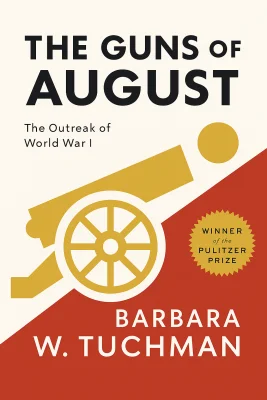
The Guns of August
Categories
Nonfiction, History, Politics, Audiobook, Military Fiction, Historical, Military History, War, World War I, European History
Content Type
Book
Binding
Kindle Edition
Year
2009
Publisher
Random House
Language
English
ASIN
B002TXZS8A
File Download
PDF | EPUB
The Guns of August Plot Summary
Introduction
# The Guns of August: Europe's Descent into the Great War In the sweltering heat of August 1914, Europe stood at the pinnacle of its civilization, yet within thirty-one days, the continent would plunge into a catastrophe that would consume an entire generation. The assassination of Archduke Franz Ferdinand in Sarajevo had triggered not merely a diplomatic crisis, but a mechanical process of mobilization that no statesman seemed able to stop. Across the continent, millions of men left their homes believing they would return by Christmas, while their leaders clung to military plans crafted in peacetime that bore no resemblance to the reality of modern warfare. The tragedy of August 1914 reveals how a handful of critical decisions, made under immense pressure by fallible human beings, could reshape the destiny of nations. Through the experiences of key figures like Germany's anguished General Moltke, who discovered that "the deployment of millions cannot be improvised," France's imperturbable Marshal Joffre, who maintained supernatural calm amid catastrophic defeats, and Britain's reluctant Foreign Secretary Sir Edward Grey, who watched "the lamps going out all over Europe," we witness the fatal gap between perfect plans and imperfect execution. Their choices in those sweltering weeks would determine not only the immediate outcome of battles, but the very nature of warfare itself, ushering in an era of unprecedented destruction that would forever alter humanity's relationship with organized violence and international order.
Chapter 1: Europe's Fatal Alliance System and the July Crisis
The Europe of 1914 appeared stable on the surface, but beneath lay a web of competing alliances and military commitments that had transformed the continent into a powder keg awaiting a spark. The balance of power that had maintained peace since 1871 rested on an increasingly precarious foundation of mutual deterrence, where each nation's attempt to achieve security through alliances had created the very conditions that made general war inevitable. Germany found itself caught in a strategic nightmare of its own making. Kaiser Wilhelm II's erratic diplomacy had managed to unite his potential enemies while alienating his natural allies. The dismissal of Bismarck in 1890 had severed the careful diplomatic threads that had kept the peace, replacing the Iron Chancellor's subtle statecraft with a foreign policy that oscillated between grandiose dreams of world power and paranoid fears of encirclement. By 1914, Germany faced the prospect of fighting a two-front war against France and Russia, with Britain likely to join the coalition. The assassination of Archduke Franz Ferdinand on June 28 provided Austria-Hungary with the pretext it had long sought to crush Serbian nationalism. Germany's famous "blank check" to Austria on July 5 essentially guaranteed that any Austro-Serbian conflict would escalate into a European war. As one German official observed, "We are ready, and the sooner the better for us." This fatalistic acceptance of war's inevitability reflected the dangerous mindset that had gripped Europe's leaders. The final crisis unfolded with mechanical precision as mobilization schedules clicked into motion. Russia's decision to support Serbia triggered Germany's war plan, which required attacking France through Belgium. Each step seemed logical to those taking it, yet collectively they created a cascade of declarations that transformed a Balkan dispute into global catastrophe. The alliance system designed to preserve peace through deterrence had become the mechanism by which a regional conflict would engulf the world, demonstrating how rigid commitments could override political wisdom when crisis demanded flexibility above all else.
Chapter 2: Military Plans and the Machinery of Mobilization
The military leaders of 1914 had spent decades crafting elaborate plans for the war they believed inevitable, yet their strategies were built upon assumptions that would prove catastrophically wrong. Germany's Schlieffen Plan represented the pinnacle of military planning, calling for a massive right-wing sweep through Belgium to encircle and destroy the French armies before Russia could fully mobilize. Count Alfred von Schlieffen had calculated that France could be defeated in six weeks, leaving Germany free to turn east against the Russian "steam roller." The plan's fatal flaw lay not in its military logic but in its political blindness. Schlieffen and his successor, General Helmuth von Moltke the Younger, had dismissed Belgian neutrality as merely "a scrap of paper," failing to grasp that violating Belgium would bring Britain into the war with moral certainty. When Kaiser Wilhelm, in a moment of panic on August 1, suggested redirecting German forces eastward against Russia alone, Moltke's anguished response revealed the rigidity that would doom German strategy: "Your Majesty, it cannot be done. The deployment of millions cannot be improvised." France's Plan XVII embodied the offensive doctrine that had swept through military thinking like a religious revival. General Joffre and his staff, intoxicated by theories of élan vital and the power of will to conquer, had convinced themselves that superior morale could overcome superior numbers. They fatally underestimated German strength, particularly the revolutionary decision to use reserve divisions in the front line, and left their northern frontier dangerously exposed to the very attack that would nearly destroy them. The mobilization process itself revealed both the awesome power of modern states and their terrifying vulnerability to the plans they had created. Millions of men abandoned their civilian lives to don uniforms and march toward frontiers they might never see again. The universal belief that any war would be brief, reflected in the Kaiser's promise that soldiers would be "home before the leaves fall," made the decision for war seem less momentous while ensuring that no one grasped the magnitude of what they were unleashing upon European civilization.
Chapter 3: Belgium's Resistance and Britain's Moral Catalyst
Belgium's decision to resist the German ultimatum transformed what might have been seen as another European power struggle into a moral crusade for the rights of small nations. King Albert I, a thoughtful monarch more interested in mountaineering than military glory, faced an impossible choice between honor and survival when Germany demanded passage for its armies. The Belgian response, crafted in a midnight session of the Council of State, rejected German demands with a dignity that would resonate around the world: Belgium would "sacrifice the honor of the nation and betray its duty to Europe" if it accepted the German proposals. The heroic defense of Liège became the first test of modern fortification against the new artillery. General Leman's garrison, though ultimately doomed, held out for nearly two weeks against overwhelming odds, disrupting German timetables and providing the first indication that this war would not unfold according to anyone's predetermined script. The fortress city's fall to massive siege guns, including the 420mm howitzers the Germans called "Big Bertha," announced to the world that the defensive advantage military theorists had counted upon was being shattered by technological progress. In London, Sir Edward Grey had been maneuvering for days to bring his divided Cabinet and reluctant country into the war he believed essential for British survival. The Liberal government, traditionally pacifist and suspicious of continental entanglements, could never have united behind a war fought merely to preserve the balance of power. But Belgium provided the moral cause that could transform strategic necessity into a crusade for international law and the protection of small nations against aggression. Grey's speech to Parliament on August 3 masterfully wove together threads of honor, interest, and obligation, but it was the German invasion of Belgium that provided the decisive argument. As German troops crossed the frontier at Gemmerich on the morning of August 4, they not only violated Belgian neutrality but handed Britain the moral authority to enter the war with national unity intact. The "scrap of paper" that German Chancellor Bethmann-Hollweg so contemptuously dismissed would prove to be the document that brought the British Empire into the conflict, fundamentally altering the war's scope and ensuring that Germany would face the very coalition it had most feared.
Chapter 4: The Battle of the Frontiers and Strategic Miscalculations
The opening battles of August 1914 shattered the carefully crafted assumptions upon which all the belligerents had based their strategies for victory. France's offensive into Alsace-Lorraine, launched with magnificent courage and absolute confidence in the power of élan, met the reality of entrenched machine guns and massed artillery with devastating results. The red trousers and blue coats that French traditionalists had insisted upon retaining made perfect targets for German marksmen, while the doctrine of offensive à outrance proved to be a recipe for massacre rather than victory. General Auguste Dubail's First Army and General Noël de Castelnau's Second Army, attacking with all the fervor that French military doctrine demanded, found their assaults shattered against German positions that were far stronger than intelligence had indicated. The German decision to use reserve corps in the front line, dismissed by French theorists as militarily unsound, meant that the enemy possessed nearly twice the strength that Plan XVII had assumed. French casualties mounted at an appalling rate as wave after wave of attackers fell before positions they could neither see nor reach. Simultaneously, the German right wing's advance through Belgium proceeded more slowly than Schlieffen's rigid timetable demanded. Belgian destruction of railways and bridges, the unexpected resistance of fortress garrisons, and the sheer logistical challenges of moving hundreds of thousands of men through a small, hostile country all contributed to delays that would prove crucial. General von Kluck's First Army, the hammer of the German offensive, found itself behind schedule and increasingly exhausted as it approached the French frontier. The Battle of the Frontiers revealed the deadly gap between offensive doctrine and defensive reality that would characterize the entire war. French attacks launched with supreme confidence in moral superiority were systematically destroyed by superior German firepower and tactical skill. Meanwhile, the German advance, though successful, was consuming time and energy at a rate that threatened the entire strategic concept. By late August, both sides had discovered that their prewar assumptions about modern warfare were tragically wrong, setting the stage for a conflict that would be far longer and more destructive than anyone had imagined possible.
Chapter 5: Russia's Sacrifice and the Disaster at Tannenberg
Russia's entry into the war represented both salvation and catastrophe for the Allied cause, demonstrating how strategic necessity could drive nations to attempt the impossible with tragic consequences. Responding to desperate French pleas for assistance, Russia launched a premature offensive into East Prussia with two armies commanded by Generals Paul von Rennenkampf and Alexander Samsonov, men whose personal animosity would prove as destructive as any German strategy. The Russian war machine embodied all the contradictions of the Tsarist empire. With the largest army in the world and seemingly inexhaustible reserves of manpower, Russia appeared formidable on paper. Yet beneath this impressive facade lay critical deficiencies that would prove fatal: inadequate railways, corrupt administration, incompetent leadership, and a military establishment more concerned with court intrigue than professional competence. The decision to attack before mobilization was complete reflected both Russia's loyalty to its French ally and its leaders' dangerous overconfidence in their ability to overcome material disadvantages through sheer numbers. The initial Russian advance struck terror into German hearts, as East Prussia, the historic heartland of Prussian militarism, seemed defenseless before the advancing Slavic hordes. General Maximilian von Prittwitz, commanding the German Eighth Army, panicked and proposed retreating behind the Vistula River, a decision that led to his immediate dismissal. The crisis brought forth the partnership that would dominate German strategy: Paul von Hindenburg, recalled from retirement, and Erich Ludendorff, the hero of Liège, whose tactical genius would soon be revealed. The Battle of Tannenberg became a masterpiece of tactical envelopment, as German forces used their superior communications and rail network to concentrate against Samsonov's isolated Second Army. The Russians, advancing through hostile territory with inadequate supplies and sending wireless messages in clear text, walked into a carefully prepared trap. The destruction of an entire Russian army, with nearly 100,000 prisoners taken, eliminated a major threat to Germany but came at a crucial cost: the two corps transferred from the Western Front to deal with the Russian offensive would be absent from the decisive Battle of the Marne. Russia's sacrifice, though ending in tactical disaster, may have saved France and altered the entire course of the war.
Chapter 6: The Miracle of the Marne and Germany's Lost Victory
By early September 1914, German forces stood within sight of Paris, and the Schlieffen Plan appeared on the verge of achieving its ambitious goals. Yet in the space of a few critical days, the tide of war turned dramatically, transforming German triumph into strategic failure and ensuring that the conflict would continue far longer than anyone had anticipated. The Battle of the Marne, fought from September 6-10, marked the end of German hopes for quick victory and the beginning of four years of grinding attrition. The German advance had been magnificent but exhausting. General von Kluck's First Army, the spearhead of the offensive, had marched over 300 miles in a month while fighting multiple battles and pursuing retreating enemies. The troops were at the limit of their endurance, their supply lines stretched to the breaking point, and their commanders increasingly out of touch with the rapidly changing situation. More critically, Kluck made the fatal decision to wheel inward toward the retreating French armies rather than continuing around Paris as the original plan demanded, exposing his right flank to counterattack. General Gallieni, the military governor of Paris, was the first to recognize the opportunity that German exhaustion and tactical errors had created. "They offer us their flank!" he exclaimed when aerial reconnaissance revealed Kluck's change of direction. Working in perfect harmony with General Joffre, Gallieni organized a counterattack using the Paris garrison, including troops famously transported to the front in requisitioned Parisian taxis. This attack on the German flank, combined with a general Allied offensive along the Marne, caught the Germans at their most vulnerable moment. The German response revealed the fundamental weakness of their strategic position. Overextended, exhausted, and facing attacks from unexpected directions, they could not maintain their advance while defending their exposed flank. General Moltke, already suffering from nervous strain and the weight of command, authorized a retreat to more defensible positions along the Aisne River. The withdrawal marked the definitive end of the Schlieffen Plan and Germany's best chance for decisive victory in the west. The "Miracle of the Marne" had saved France and the Allied cause, but it also ensured that the war would continue indefinitely. The failure of all the great plans, German, French, and Russian, had created a strategic deadlock that would prove far more costly than anyone could have imagined. As one German officer wrote in his diary, "The French soldier, just when he seemed to be beaten, showed again the fighting spirit that has made him famous throughout history."
Chapter 7: From Mobile War to Trench Deadlock
Following their defeat at the Marne, German forces retreated to defensive positions along the Aisne River, where they began digging the trenches that would define the Western Front for the next four years. This marked a fundamental transformation in the nature of warfare that none of the combatants had anticipated or prepared for. The weapons of 1914, particularly rapid-firing artillery and machine guns, had given defenders an enormous advantage over attackers, making the war of movement impossible to sustain. Both sides, seeking to outflank each other, initiated what became known as the "Race to the Sea," a series of attempts to turn the enemy's northern flank that ultimately extended the trench line from Switzerland to the English Channel. Each attempt at maneuver was met by corresponding enemy movements, until the entire Western Front had solidified into a continuous line of fortifications that would prove nearly impregnable to frontal assault. The final phase of mobile warfare culminated in the First Battle of Ypres, where the remnants of the original British Expeditionary Force made their heroic last stand. The battle was fought with desperate intensity, as both sides recognized that control of the Channel ports could determine the war's ultimate outcome. British regulars, vastly outnumbered but superbly trained, held their positions through sheer determination and superior marksmanship, preventing the German breakthrough that might have won the war. By November 1914, the Western Front had stabilized into a continuous line of trenches stretching 450 miles from the North Sea to the Swiss border. What had begun as temporary field fortifications evolved into elaborate defensive systems protected by barbed wire, machine gun nests, and artillery positions that could devastate any attacking force. The war of movement was over, replaced by a war of attrition that would consume the flower of European youth and leave the continent exhausted and forever changed. The transformation from mobile to static warfare represented more than just a tactical shift; it marked the end of an era in which wars could be won quickly through superior strategy and élan. The industrial capacity of modern nations, combined with the defensive power of new weapons, had created a form of warfare that could continue almost indefinitely, limited only by each side's willingness to accept casualties on an unprecedented scale. The thirty-one days of August had determined not just the failure of quick victory, but the shape of a conflict that would reshape civilization itself.
Summary
The catastrophe of August 1914 reveals the fundamental tension between human ambition and human fallibility that has shaped so much of modern history. The great powers had created military and diplomatic systems of unprecedented complexity and precision, yet these very systems became the instruments of their own destruction when operated by leaders who proved unable to control the forces they had unleashed. The gap between perfect plans and imperfect execution, between rational calculation and emotional decision-making, transformed what might have been a limited conflict into a global catastrophe that would reshape civilization itself. The lessons of August 1914 remain painfully relevant in our own age of complex international systems and hair-trigger responses to crisis. The importance of maintaining diplomatic flexibility in the face of military necessity, the danger of allowing alliance commitments to override national judgment, and the need for leaders who can think beyond the constraints of predetermined plans all speak directly to contemporary challenges. Perhaps most importantly, the events of that fateful month remind us that in moments of supreme crisis, the moral courage of individuals and small nations can sometimes prove more decisive than the calculated strategies of great powers, offering hope that human dignity and international law need not always yield to the logic of force and the demands of national interest.
Best Quote
“So gorgeous was the spectacle on the May morning of 1910 when nine kings rode in the funeral of Edward VII of England that the crowd, waiting in hushed and black-clad awe, could not keep back gasps of admiration. In scarlet and blue and green and purple, three by three the sovereigns rode through the palace gates, with plumed helmets, gold braid, crimson sashes, and jeweled orders flashing in the sun. After them came five heirs apparent, forty more imperial or royal highnesses, seven queens - four dowager and three regnant - and a scattering of special ambassadors from uncrowned countries. Together they represented seventy nations in the greatest assemblage of royalty and rank ever gathered in one place and, of its kind, the last. The muffled tongue of Big Ben tolled nine by the clock as the cortege left the palace, but on history's clock it was sunset, and the sun of the old world was setting in a dying blaze of splendor never to be seen again.” ― Barbara W. Tuchman, The Guns of August
Review Summary
Strengths: The review highlights the enduring popularity and significance of Barbara Tuchman's "The Guns of August," noting its Pulitzer Prize win and bestseller status. The book's detailed coverage of the first month of World War I and its memorable opening scene are praised. The reviewer appreciates the book's ability to remain relevant and engaging, even upon a second reading. Overall: The reader expresses a highly positive sentiment towards "The Guns of August," describing it as an "awesome book" and a standout work on World War I. The reviewer recommends it for its historical depth and narrative style, suggesting it remains a definitive read on the topic.
About Author

Barbara W. Tuchman
Tuchman reframes the approach to historical narrative by prioritizing vivid storytelling over academic rigidity. She emphasizes the human and diplomatic dimensions behind major conflicts, offering readers an engaging perspective on history that remains accessible yet meticulously researched. By consciously avoiding the constraints of academic jargon, Tuchman enhances her narrative impact, focusing on detailed accounts of political and military events in works like "The Guns of August" and "The Proud Tower." Her method of intertwining storytelling with thorough research allows her to chart complex historical events with clarity and drama.\n\nHer core themes revolve around war, diplomacy, and empire, explored through a lens that humanizes the grand narratives of history. Tuchman's bio illustrates her commitment to making history relatable, as seen in her exploration of General Joseph Stilwell's life in "Stilwell and the American Experience in China," which won her a Pulitzer Prize. This focus on narrative history helps readers connect with past events on a personal level, enriching their understanding of historical causality and consequence. Her work serves as a bridge between scholarly rigor and popular readership, thus broadening the audience for historical discourse.\n\nBy writing approximately one book every four years, Tuchman maintained a consistent production schedule, underscoring her dedication to both depth and quality. Her approach resonates particularly with those interested in the human aspects of history, providing an accessible yet profound reading experience. Her contributions to literature and history were recognized with multiple awards, including two Pulitzer Prizes, reinforcing her influence on the genre of narrative history. Tuchman's achievements, therefore, extend beyond her books, impacting the way history is perceived and appreciated by general audiences.
Read moreDownload PDF & EPUB
To save this Black List summary for later, download the free PDF and EPUB. You can print it out, or read offline at your convenience.
The Guns of August
by Barbara W. Tuchman
