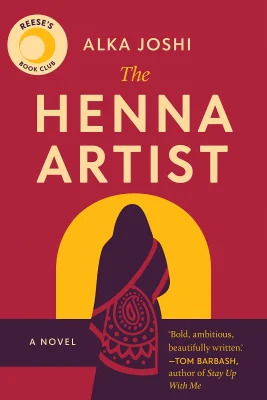
The Henna Artist
Categories
Fiction, Audiobook, Historical Fiction, India, Asia, Adult, Cultural, Book Club, Historical, Adult Fiction
Content Type
Book
Binding
Paperback
Year
2020
Publisher
Mira Books
Language
English
ASIN
0778310205
ISBN
0778310205
ISBN13
9780778310204
File Download
PDF | EPUB
The Henna Artist Plot Summary
Introduction
# The Henna Artist: Patterns of Freedom and Reinvention The knife trembled in Lakshmi's hand as footsteps echoed through her doorless house. After thirteen years of careful planning, her past had finally caught up with her. The terrazzo floor beneath her feet gleamed with intricate patterns—saffron flowers for sterility, Ashoka lions for ambition, symbols only she could read. Each design told the story of her escape from a brutal marriage, her rise as Jaipur's most sought-after henna artist, and the secrets that funded her independence. When Hari appeared in the doorway, dusty and desperate, he brought more than memories of violence. Behind him stood a girl with peacock-blue eyes identical to Lakshmi's own—Radha, the sister she never knew existed. The child born the year she fled, carrying nothing but her mother-in-law's herb pot and the knowledge of how to make women's bodies betray their husbands' expectations. Now, as Radha whispered "Jiji" with desperate hope, Lakshmi realized that freedom always came with a price, and the bill had finally arrived.
Chapter 1: Escape and Reinvention: Building a New Life in Jaipur
The train's whistle had pierced the dawn air seventeen years ago when Lakshmi first arrived in Jaipur, her body still aching from Hari's latest beating. At seventeen, she carried nothing but a small bundle and the bitter knowledge that her womb would never trap her in marriage. The cotton root bark tea her mother-in-law had taught her to brew ensured that, even as Hari's fists grew more violent with each failed pregnancy. Mrs. Iyengar's boarding house became her sanctuary, a cramped room where she could count her earnings without fear. The wealthy wives of Jaipur's elite paid handsomely for her henna artistry, never suspecting their delicate patterns were painted by hands that had known real violence. Each intricate design—peacocks for beauty, lotus flowers for purity, vines that spiraled like prayers—funded her dream of independence. By day, she painted symbols of fertility and devotion on other women's skin. By night, she prepared the same herbs that had freed her, selling them to courtesans and desperate wives who understood that the power to choose when to bear children was the most precious freedom of all. The contradiction made her wealthy, but it also made her dangerous. In a world where women's bodies belonged to their husbands, Lakshmi dealt in revolution disguised as beauty. The house she finally built stood as testament to her transformation. Every tile in the terrazzo floor carried meaning—her name hidden among herb patterns, the story of her survival written in symbols that would outlast memory. She had escaped the cage of marriage only to discover that freedom required constant vigilance, and the past had a way of finding even the most carefully hidden doors.
Chapter 2: Unexpected Reunions: When the Past Arrives at Your Door
Radha arrived like a ghost from Lakshmi's buried past, thirteen years old and hollow-cheeked, carrying everything she owned in an earthenware jug. The village gossips had called her the Bad Luck Girl, blaming her for every misfortune from failed crops to dead livestock. Their parents were gone—Pitaji drowned in shame and drink, Maa burned on a pauper's pyre. Only Radha remained, a living reminder of the family Lakshmi had abandoned to save herself. Hari stood behind the girl, his face gaunt with desperation. The man who had once beaten Lakshmi senseless now begged for money, claiming he had helped Radha find her sister out of kindness. But Lakshmi saw through his lies just as she saw through Radha's story about their parents' deaths. The girl was running from something, seeking the sister who had become legend in their village—the woman who dared to leave her husband and build her own life. In the cramped room above Mrs. Iyengar's courtyard, Lakshmi began the delicate work of transformation. She scrubbed village dust from Radha's skin, picked ticks from her hair, and dressed her in pale cottons that whispered respectability. The girl who had thrown stones at tormentors would have to learn different weapons now—silence, submission, the careful art of making herself invisible in the houses of the wealthy. But Radha's eyes held too much fire for easy taming. When she tried to hurl rocks at Sheela Sharma for dismissing their servant Malik, Lakshmi caught her arm just in time. The girl's rage was familiar, a mirror of her own younger self. Yet where Lakshmi had learned to channel fury into careful planning, Radha's emotions burned too close to the surface. As they lay together on the narrow cot, Radha's tears soaking Lakshmi's sari, the older sister sang their father's lullaby and wondered if she was saving Radha or destroying her.
Chapter 3: Royal Commissions: Healing Queens and Gaining Status
The palace gates opened like the entrance to another world, where peacocks strutted across manicured lawns and every surface gleamed with accumulated wealth. Maharani Indira, the dowager queen, received Lakshmi in a salon filled with Persian carpets and crystal chandeliers. Her salt-and-pepper hair framed a face that had learned to find power in the margins of male authority. The younger queen, Maharani Latika, lay broken in her chambers, dressed in widow's white despite her living husband. Her eight-year-old son had been torn from her arms and sent to England, sacrificed to an astrologer's prophecy that natural heirs would bring destruction. The maharaja's love had not been enough to protect their child from ancient fears that governed royal succession. Lakshmi approached the grieving mother with all the skill her mother-in-law had taught her, reading trauma written in tense muscles and shallow breathing. She began with touch—gentle pressure on pulse points, oils that carried healing herbs, the patient work of coaxing a shattered spirit back to wholeness. Day by day, she painted henna on the queen's hands and feet, each design building toward recognition and release. When she finally wrote the names "Latika" and "Madhup" on the queen's palms, the tears that fell were not of despair but acceptance. The maharani would never hold her son again, but she could carry his name against her heart. In gratitude, she offered Radha a scholarship to the most prestigious school in Rajasthan, a gift that would lift the girl from village origins into the ranks of the educated elite. The palace commission transformed Lakshmi's reputation overnight. Five hundred rupees a day flowed into her coffers, and suddenly every wealthy family in Jaipur wanted the henna artist who had healed a queen. But success brought its own dangers, and jealous eyes followed every move with increasing suspicion.
Chapter 4: Scandal and Betrayal: When Reputation Becomes Weapon
The whispers started as rumors always did in Jaipur—in servants' quarters, spreading like wildfire through bazaars until they reached the drawing rooms of Lakshmi's clients. Gold bangles had gone missing from Mrs. Prasad's house. An embroidered sari had vanished after Lakshmi's visit to Mrs. Chandralal. The accusations were as sharp as they were false, but in a society where reputation was everything, truth mattered less than perception. Behind the campaign of lies stood Parvati Singh, wife of Lakshmi's business partner Samir. Her fury had been building since discovering her husband's affair with the henna artist, but the deeper wound came from a more devastating revelation. Parvati's seventeen-year-old son Ravi had seduced thirteen-year-old Radha, leaving her pregnant and abandoned. The boy was already engaged to another family's daughter, his future mapped by parents who would never allow a village girl to disrupt their plans. One by one, Lakshmi's clients canceled appointments. Women who had once competed for her services now crossed streets to avoid her. Mrs. Sharma, who had been like a mother, delivered the final blow with painful kindness, explaining that family loyalty demanded she side with the Singhs. The marriage commission Lakshmi had arranged—her masterpiece of matchmaking—was paid with an envelope containing ten rupees in small coins, an insult designed to break her spirit completely. The scandal stripped away everything Lakshmi had built. Her reputation lay in ruins, her income vanished, her carefully constructed life crumbling like poorly mixed mortar. But in the wreckage, she discovered something unexpected—the fierce protectiveness of a woman who would sacrifice everything for family. Radha was pregnant and alone, and no amount of social destruction would stop Lakshmi from protecting her sister.
Chapter 5: Impossible Choices: Love, Loss, and Family Bonds
In the cool mountain air of Shimla, where Radha had gone to have her baby in secret, Lakshmi faced the most difficult decision of her life. The child was born healthy and beautiful, with the same blue eyes that marked him as family. But Radha, barely fourteen and still dreaming of fairy-tale endings, insisted she could raise him alone. She spoke of love as if it could fill empty stomachs and pay for shelter. Dr. Kumar, the physician overseeing the birth, had arranged for the Jaipur palace to adopt the baby. The contract promised thirty thousand rupees and a future as crown prince. But watching Radha hold her son, seeing desperate love in her eyes, Lakshmi understood that some bonds couldn't be severed by logic or necessity. The girl who had survived village cruelty and city scandal deserved more than another abandonment. The solution came through heartbreak and hope intertwined. Kanta, Lakshmi's dear friend, had lost her own baby in the final weeks of pregnancy. Her grief was absolute, her arms empty, her future childless. When Lakshmi suggested that Kanta and her husband adopt Radha's son, she saw light return to her friend's eyes. It meant forfeiting the palace contract and the fortune that came with it, but it also meant the baby would be truly loved. Radha's decision to give up her child tore something fundamental inside her, but it also revealed the woman she was becoming. No longer the desperate girl who had arrived at Lakshmi's door, she now understood that love sometimes meant letting go. The sisters held each other as the baby was placed in Kanta's arms, both of them learning that family could be chosen as well as born.
Chapter 6: Relinquishing Dreams: Letting Go of What Was Built
The house Lakshmi had worked thirteen years to build stood empty now, its mosaic floors reflecting lamplight one last time. She had traced her life story in those patterns—saffron flowers for her childlessness, the Ashoka lion for her ambitions, her name hidden among herbs as testament to survival. Tomorrow she would leave Jaipur forever, but tonight she danced alone in the space that had represented everything she had fought to achieve. The decision to sell had come after her final confrontation with Parvati, when the truth about their mutual betrayals had spilled out like poison. There was no recovering from the scandal that had destroyed her reputation, no rebuilding what had been so thoroughly torn down. But in the rubble of her old life, she had found something unexpected—an invitation from Dr. Kumar to join him in Shimla, to use her knowledge of healing herbs to help mountain people who had no access to modern medicine. Radha's choice to come with her had been the hardest gift of all. Leaving her baby with Kanta meant trusting that love would be enough, that bonds of the heart could be stronger than those of blood. As they prepared for their journey north, Lakshmi saw in her sister the same courage that had once driven her to leave everything behind. Some patterns, she realized, were meant to be broken so new ones could emerge. Malik, the street boy who had become Lakshmi's loyal assistant, would join them in the mountains. The three of them—two sisters and their chosen brother—would start again with nothing but their skills and determination. The wealth was gone, the status vanished, but something more valuable remained. They had each other, and they had learned that survival was an art form that could be practiced anywhere.
Chapter 7: New Beginnings: Finding Purpose Beyond Tradition
The train to Shimla wound through mountain passes where air grew thin and clean, carrying them away from Rajasthan's dust and heat toward something entirely new. Malik chattered excitedly about the school he would attend, his street-smart confidence already adapting to new possibilities. Radha sat quietly, her hands folded over the emptiness where her child had been, but her eyes held determination rather than despair. At Shimla station, Dr. Kumar waited with a crowd of mountain people who remembered Lakshmi's healing touch from her previous visit. They held flowers and wore bright wool clothing, their faces lit with genuine welcome. Among them stood the pregnant woman whose indigestion Lakshmi had cured with bitter melon, now holding her healthy baby. The shepherd whose goiter had been treated with dietary changes rather than surgery raised his hand in greeting. The clinic Dr. Kumar had established served villages scattered across the mountainsides, places where traditional healing met modern medicine. Here, Lakshmi's knowledge of herbs and women's bodies would save lives rather than merely serve vanity. The patterns she would create now would be written in health restored and suffering eased, not in temporary henna designs that faded with time. As the train pulled to a stop, Lakshmi felt something she hadn't experienced in years—the certainty that she was exactly where she belonged. Not as a henna artist serving the wealthy, but as a healer working alongside a doctor who valued her knowledge. The patterns of her old life had been beautiful but confining. Here in the mountains, with her chosen family beside her and meaningful work ahead, she could finally draw the design of a life lived entirely on her own terms.
Summary
The terrazzo floor still gleamed in the empty house, its intricate patterns telling the story of a woman who had traded everything for freedom and found it more expensive than she imagined. Lakshmi had escaped one trap only to create others, her success built on the same deceptions that had once imprisoned her. The henna artist who painted symbols of devotion on other women's skin had learned that the most binding contracts were written in invisible ink—the debts we owe to those we love, the prices we pay for our choices, the patterns that repeat across generations despite our best efforts to break them. But in the mountains of Shimla, surrounded by people who valued healing over status, Lakshmi discovered that reinvention was possible at any age. The skills that had once served vanity could serve compassion instead. The knowledge that had bought her independence could buy others their health. Radha's sacrifice had taught them both that love sometimes meant letting go, but it also meant having the courage to begin again. The gossip-eaters had been wrong about the Bad Luck Girl—there was no curse in their bloodline, only the fierce determination of women who refused to accept the limitations others imposed on them. Some patterns, once set in motion, could never be erased, only transformed into something new and strange and unexpectedly beautiful.
Best Quote
“Success was ephemeral—and fluid—as I’d found out the hard way. It came. It went. It changed you from the outside, but not from the inside. Inside, I was still the same girl who dreamed of a destiny greater than she was allowed. Did I really need the house to prove I had skill, talent, ambition, intelligence? What if—” ― Alka Joshi, The Henna Artist
Review Summary
Strengths: The prose is described as beautifully written and engrossing, with a unique setting in post-Independence India. The vivid descriptions of Jaipur and the life of the protagonist, Lakshmi, are highlighted positively. Weaknesses: The reviewer finds the narrative tailored to a Western audience, portraying India in a stereotypical manner. The protagonist, Lakshmi Shastri, is seen as an unbelievable character, and the storyline is criticized for lacking authenticity from an Indian perspective. Overall: The reader expresses dissatisfaction with the book, feeling it caters to Western stereotypes of India rather than reflecting its modern realities. Despite the engaging prose, the book did not resonate with the reviewer, who advises others to form their own opinions.
About Author

Alka Joshi
Joshi reframes Indian cultural narratives by intertwining themes of female empowerment and identity within her richly detailed historical fiction. Her books, such as "The Henna Artist", explore the tension between tradition and modernity in India, using vivid storytelling and complex characters to reveal the challenges women face in society. Joshi's writing purpose is deeply inspired by personal experiences, particularly her reimagining of her mother's life, which serves as a foundation for her creative exploration of cultural heritage and transformation.\n\nIn her later years, the author pursued her literary aspirations, bringing forth narratives that resonate with themes of resilience and personal growth. "The Secret Keeper of Jaipur" and "The Perfumist of Paris" further extend the exploration of these themes, solidifying her reputation in the literary world. Her method of embedding sensory-rich narratives within the cultural context of India not only captivates readers but also offers a window into the intricate dynamics of Indian society. This approach benefits readers who appreciate deeply woven stories that reflect on societal norms and personal identity.\n\nJoshi's bio highlights her unexpected journey into the literary world, emphasizing the significance of perseverance and passion. Her works have garnered significant recognition, including "The Henna Artist" being a New York Times bestseller and selected for Reese Witherspoon's Book Club. This acknowledgment underscores the impact of her narratives in celebrating and scrutinizing the cultural and personal struggles of Indian women. Her books resonate widely, providing both entertainment and insightful commentary, appealing to readers who seek enriching stories that challenge and inspire.
Read moreDownload PDF & EPUB
To save this Black List summary for later, download the free PDF and EPUB. You can print it out, or read offline at your convenience.

The Henna Artist
by Alka Joshi
