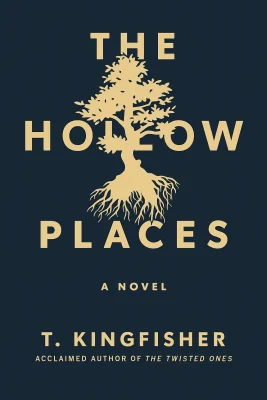
The Hollow Places
Categories
Fiction, Science Fiction, Audiobook, Horror, Mystery, Thriller, Fantasy, Adult, Paranormal, Horror Thriller
Content Type
Book
Binding
Paperback
Year
2020
Publisher
Gallery Books
Language
English
ISBN13
9781534451124
File Download
PDF | EPUB
The Hollow Places Plot Summary
Introduction
The hole appeared in the wall of the Wonder Museum like a wound, jagged and impossible, revealing not insulation and studs but six inches of concrete that shouldn't exist. Kara had been running Uncle Earl's bizarre collection of taxidermy and curiosities for only a few weeks when she discovered it—a tourist's elbow had supposedly punched through reality itself. But as she and Simon, the coffee shop owner next door, would soon learn, some holes don't lead to empty spaces between walls. Some lead to places where silver willows whisper in alien winds, where things that hear your thoughts hunt in the mist, and where the boundary between worlds grows dangerously thin. What began as a simple repair job would drag them through a portal into a nightmare realm of bunkers and rivers, where desperate survivors scratched warnings on concrete walls and monstrous entities played with human flesh like children dissecting insects. The Wonder Museum had always been a place where the strange felt at home, but now something from the other side wanted to come through—and it had been planning its return for much longer than anyone realized.
Chapter 1: Refuge in the Wonder Museum
The Glory to God Museum of Natural Wonders, Curiosities, and Taxidermy squatted between a coffee shop and a boutique in downtown Hog Chapel, North Carolina, like a fever dream made manifest. Uncle Earl's collection sprawled across two floors—stuffed deer heads stared down at visitors alongside a portrait of the Pope rendered entirely in sunflower seeds, while cases displayed everything from shrunken heads to armored mice riding cane toads. Kara had fled here after her divorce, seeking refuge in the familiar chaos of her childhood sanctuary. At thirty-four, she found herself cataloging the impossible alongside Prince, the massive elk head that had been her childhood confidant, his glass eyes reflecting the fluorescent lights with benevolent indifference. Uncle Earl was recovering from knee surgery, leaving her to manage the museum's daily operations while tourists wandered through, alternately delighted and horrified by the eclectic displays. The routine was comforting—opening at nine, serving coffee shop refugees who needed someone to sell them Wonder Museum t-shirts, closing at six while the stuffed grizzly bear presided over it all with moth-eaten dignity. Simon from the Black Hen next door would stop by with coffee and stories of his childhood in Florida, tales involving alligators and religious party clowns that seemed perfectly at home among Uncle Earl's curios. But beneath the surface normalcy, something was already stirring. A small wooden carving—catalog number 93, a corpse-otter effigy from the Danube, circa 1900—kept appearing in places where Kara was certain she hadn't left it. Rolling off shelves, turning up on floors, as if it were trying to go somewhere with a persistence that would have been amusing if she'd been paying attention. The Wonder Museum had always been a place where the impossible felt mundane, but some impossibilities were more dangerous than others.
Chapter 2: The Mysterious Hole Between Worlds
The discovery came during Kara's third week alone in the museum. A tourist had complained about broken glass upstairs, leading her to find the raccoon display case shattered and a jagged hole torn in the drywall behind it. What should have revealed wooden studs and pink insulation instead opened onto darkness—and when she pressed her phone's flashlight to the gap, it illuminated a concrete corridor that couldn't possibly exist. Simon arrived with his tools, expecting a simple repair job. He was an unlikely handyman—thin, dressed like a thrift-store Mad Hatter, with mismatched eyes that saw the world differently than most. One eye, he claimed, had belonged to a twin sister he'd absorbed in the womb, and sometimes it showed him things that shouldn't be there. But even without supernatural perception, the impossibility was obvious when he cut away more wallboard to reveal solid concrete on the other side. They tested the barrier with growing unease. When Simon sliced drywall from the museum side, chunks of stone fell away on the other side, defying every law of architecture and physics. The hole connected two different buildings, maybe two different worlds, through a space no thicker than wallboard that somehow bridged an impossible gap. Curiosity won over caution. They gathered flashlights and supplies, leaving the museum after hours to explore what lay beyond. The concrete corridor stretched further than the building's dimensions should allow, opening into rooms that felt abandoned, filled with the detritus of human habitation—cots, empty cans, a logbook written in a language that wasn't quite familiar. They found a skeleton in one room, ancient and alone, and scratched warnings on walls that spoke of things that could hear thoughts and urged visitors to pray that "They" were hungry.
Chapter 3: Venturing into the Willow World
The second door led to daylight that shouldn't exist in the middle of the night, revealing a landscape of mist-shrouded water and small islands crowned with silvery willows. This was the thin place, the boundary world where reality grew permeable, and their arrival hadn't gone unnoticed. They waded between bunker islands, each one containing rooms like the first, evidence of refugees from multiple worlds who had found their way here. Some doors stood open to flooded chambers; others were sealed with rust and desperation. The water was cold and tasted of algae, and the constant sound of a killdeer calling created an atmosphere of desolate beauty that felt like a trap waiting to spring. As they explored, they found signs of other visitors—military equipment from a place called the UNA, personal effects from people who had crossed over and never returned. A logbook detailed a reconnaissance mission gone wrong, soldiers from another world who had entered through something called a "vacuae" and encountered horrors that picked them off one by one. The entries grew increasingly desperate as the writer—who Kara mentally dubbed "Bible" for his habit of writing in the margins of a religious text—chronicled the loss of his squadmates to unseen hunters. Night brought terror. Silver light began to play through the willows, bringing shapes to life in the negative spaces between branches—not creatures, but the dreams of trees made manifest, alien spirits that rose and twisted in the luminescence before vanishing. These were not the danger. The danger came with the humming sound, a deep thrumming that seemed to emerge from everywhere and nowhere, accompanied by the sense of massive presences moving just behind the skin of reality.
Chapter 4: Entities Beyond Understanding
The things that hunted in the willow world were never fully seen, only glimpsed at the edges of perception or felt as absences that moved with purpose. Simon's inherited eye could perceive them better—shapes that existed in dimensions beyond normal sight, entities that moved through reality like swimmers beneath ice, visible only as distortions and pressures against the world's surface. They made holes. Perfect conical excavations appeared wherever they struck, cutting through sand, water, flesh, and bone with equal ease. The scattered remains of their victims told stories of surgical precision and alien curiosity—bodies taken apart layer by layer, bones arranged in neat progressions from small to large, living beings transformed into educational displays by intelligences that studied human anatomy with the detachment of scientists dissecting insects. The warnings scratched on bunker walls made terrible sense now. "They can hear you thinking" and "Pray They are hungry" weren't the ravings of madmen but survival advice from those who had learned the rules too late. When hungry, the entities simply killed and consumed. When sated, they became curious, conducting their explorations on living subjects who remained conscious throughout their transformation into experimental specimens. Martin Sturdivant embodied the worst fate—a park ranger who had entered through a kudzu portal and been caught by the entities when they weren't hungry. They had taken him apart from the waist down, leaving him conscious and aware, standing waist-deep in a flooded bunker surrounded by his own unraveled organs floating like kelp in the dark water. Death would have been mercy, but mercy wasn't in their nature.
Chapter 5: The Pull of the Other Side
Escape should have meant safety, but the willow world wouldn't let them go so easily. Back in the museum, Kara began sleepwalking, her unconscious mind drawn toward the sealed hole like iron filings to a magnet. She would wake to find her fingertips raw and bloody from clawing at the patch Simon had installed, her sleeping self trying to tear a way back to the nightmare realm. Simon suffered the same compulsion, both of them drawn by something in the water they had drunk or the air they had breathed. The willows wanted them back, calling to some trace of their essence that had been marked during their visit. Their dreams filled with silver light and the sound of water lapping against concrete steps, visions of the boatman who poled his craft through the channels between bunkers, waiting with infinite patience for the return of prey that had escaped him once. The boatman wasn't human anymore, if he ever had been. His legs were rooted to his vessel like willow trunks, white tendrils writhing beneath the water, and his face could split open to reveal impossible teeth and gums. When he caught them returning to the bunker entrance during one of their involuntary journeys, his shriek of rage and hunger echoed across the water as he tried to reach them with his pole, scratching desperately at the metal door when they fled beyond his grasp. They sealed the hole again, this time with steel and determination, but both knew it was temporary. The entities had found a way into their heads, and sooner or later, the barriers would fall.
Chapter 6: The Awakening of the Corpse-Otter
The real danger had been hiding in plain sight all along. The corpse-otter carving, catalog number 93, was no mere artifact but a key crafted from willow wood and alien purpose. It had been trying to return home since its arrival at the museum, using what little animation it possessed to roll itself toward the growing hole in reality, waiting for the right moment to make its escape. When sealing the portal failed to stop the sleepwalking compulsions, the carving took more direct action. It inhabited the museum's taxidermy, bringing dead flesh to a mockery of life in its desperate attempt to reach the other side. First the albino raccoon, scratching at Kara's door in the night before the museum cat tore it apart. Then the fisher, a dark weasel-like creature that attacked with teeth that couldn't open properly and claws that remembered their purpose. But the carving's true target was the giant Amazonian river otter, eight feet of preserved predator that had once ruled the rivers of South America. When silver willowlight flooded the museum, bringing every mounted head and stuffed creature to a semblance of life, the carving found its perfect host. The otter's massive form provided the strength needed to tear through Simon's steel patch and return to the world of mist and willows. The battle that followed was chaos—Prince the elk using his antlers to defend the museum, smaller creatures flinging themselves at the possessed otter as it fought its way to freedom, the cat adding his fury to the desperate defense of his territory. But the carving's will was implacable, and soon it was breaking through the wall, returning to the world where it belonged, dragging its stolen body toward the water that would carry it home.
Chapter 7: Sealing the Threshold
The final confrontation took place in the water between worlds, where death waited in multiple forms. Kara followed the possessed otter through the gap, driven by the knowledge that leaving it free would doom everyone she cared about. The otter was blind but deadly, a perfect predator guided by alien intelligence, and she was injured and desperate. In the flooded bunker where Martin Sturdivant waited in his pool of living decay, the two monsters met. The starving survivor, existing on fish and the hope of eventual death, wrapped himself around the giant otter like a kraken of human flesh and bone. His sacrifice bought Kara the seconds she needed to escape back through the portal, leaving the carving to its homecoming in the arms of a man who understood what it meant to be trapped between life and death. Simon had the answer they needed—not just patching the hole but filling it properly, replacing what should be there with what belonged there. They worked through the night with bags of quick-setting concrete, building a wall in the corridor before carefully patching the museum side with mesh and spackle, watching as the wallboard slowly knit itself back together. The repair was more than physical. As Simon explained, they weren't just covering a hole but closing a wound in reality itself, convincing the universe that there had never been a gap at all. Inch by inch, the portal shrank until only a pinhole remained, then nothing but smooth wall where the impossible had once intruded.
Summary
In the end, Kara remained at the Wonder Museum, finding in its bizarre collection something she had never expected—a home worth defending. The taxidermy that had briefly come to life retained subtle changes, Prince's head tilted as if still listening for danger, the cane toads scattered to impossible locations as if they remembered their moment of animation. The museum itself felt different, more protective, as if Uncle Earl's decades of gentle care had somehow infused the very walls with benevolent purpose. The willow world still existed somewhere beyond the sealed portal, and others like the corpse-otter carving might yet find their way into unsuspecting collections. But for now, the thin place where reality wore through had been mended, the boundary between worlds restored to its proper thickness. Kara had learned that some holes in the universe were not meant to be explored, and that the price of cosmic curiosity could be measured in more than just human lives—it could be measured in the slow corruption of everything that made a world worth preserving. The Wonder Museum stood guard now, its impossible collection a bulwark against impossibilities far more dangerous than any stuffed anomaly or dubious artifact, proof that sometimes the strangest places could offer the strongest sanctuary against the dark.
Best Quote
“Come on, let's go back to the coffee shop and I'll make us Irish coffees and we'll discuss this like people who don't die in the first five minutes of a horror movie.” ― T. Kingfisher, The Hollow Places
Review Summary
Strengths: The review highlights the book's "super WEIRD" and "extremely well-written" nature, emphasizing Kingfisher's unique, quirky style. The humor and heart infused into the horror genre are noted as refreshing. The narrative's ability to capture the "weird" effectively is praised, and the book is recommended as a starting point for new readers of Kingfisher's work. Overall: The review conveys a positive sentiment, expressing admiration for Kingfisher's writing style and storytelling. The book is recommended for its originality and engaging narrative, particularly for those new to the author's work. The exploration of a mysterious, chilling alternate world adds to its appeal.
About Author

T. Kingfisher
Vernon navigates the worlds of fantasy and horror through her alter ego, T. Kingfisher, creating narratives that combine whimsical absurdity with deeply human themes. Her writing explores identity and transformation, weaving dark humor with elements of the supernatural. This distinctive style is evident in works like "Nettle & Bone" and "What Moves the Dead," where character-driven plots meet atmospheric tension. Her background in anthropology and art informs her vivid storytelling, offering readers an experience that is both engaging and thought-provoking.\n\nWhereas T. Kingfisher captivates adult readers with her intricate tales, her children's books under the name Ursula Vernon showcase a different dimension of her talent. The duality of her career allows her to seamlessly transition between audiences, therefore enriching her creative output. Her early success with webcomics such as "Digger" laid the foundation for a diverse body of work, winning her multiple accolades, including the Hugo and Nebula awards. These honors underscore her impact in both children's literature and adult genres, contributing to a bio that reflects her versatile contributions to the literary field.\n\nReaders seeking immersive experiences will find that Kingfisher's works resonate with both their whimsical and reflective sides. Her ability to craft stories that appeal to a broad audience, from young adults to seasoned readers, is a testament to her skill as an author. For those who appreciate a blend of fantasy and reality, her books offer a rich tapestry of themes and characters that linger long after the last page is turned.
Read moreDownload PDF & EPUB
To save this Black List summary for later, download the free PDF and EPUB. You can print it out, or read offline at your convenience.
The Hollow Places
by T. Kingfisher
