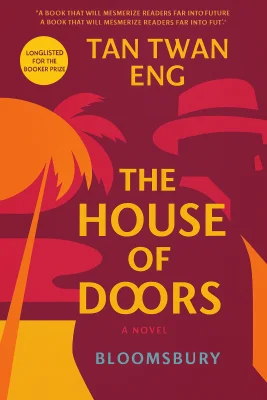
The House of Doors
Categories
Fiction, Audiobook, Historical Fiction, Asia, Book Club, Historical, LGBT, Asian Literature, Literary Fiction, Queer
Content Type
Book
Binding
Hardcover
Year
2023
Publisher
Bloomsbury Publishing
Language
English
ISBN13
9781639731930
File Download
PDF | EPUB
The House of Doors Plot Summary
Introduction
# The House of Doors: Love and Revolution in Colonial Malaya The package arrived wrapped in brown paper, bearing exotic stamps from a world that no longer existed. Lesley Hamlyn, now a widow on a South African farm, hadn't expected mail from her past. Inside lay Somerset Maugham's "The Casuarina Tree," and someone had drawn mysterious lines around the author's symbol—lines that formed a door. Twenty-six years had passed since that humid evening in 1921 when she sat with the famous writer in her Penang sitting room, telling him secrets that would reshape her story forever. The tale began in 1910, when revolution stirred across the seas and a Chinese nationalist named Sun Yat-sen arrived in colonial Malaya seeking funds for his cause. In the narrow shophouse on Armenian Street, surrounded by painted doors that turned slowly in the air like prayer wheels, Lesley would discover a love that defied every rule of her world. But first came the unraveling of everything she thought she knew about her marriage, her life, and herself.
Chapter 1: The Writer's Arrival: Secrets Beneath Colonial Veneer
Somerset Maugham stepped onto the verandah of Cassowary House like a man collecting debts. The tropical heat pressed against his linen jacket as he studied his hosts across the gin pahit glasses. Robert Hamlyn wheezed slightly when he spoke, his lungs damaged by the war. His wife Lesley moved with brittle precision, her beauty faded but her eyes sharp with secrets. Their young companion Gerald lounged with careless grace while evening air carried salt from the Straits of Malacca. The writer had come to Penang hunting stories, as writers do. He sensed untold histories in this house, buried beneath respectability like bodies in shallow graves. The way Lesley's fingers traced her glass rim. The careful silences between husband and wife. Robert fed cheese to his Doberman with more warmth than he showed Lesley. Maugham would stay two weeks. Long enough to excavate whatever lay hidden in their hearts. The colonial world was full of such stories, waiting for someone brave enough to dig them up. In the garden, the great casuarina tree whispered secrets to the night wind. Some secrets, Maugham knew, were worth their weight in literary gold. The fractures showed in small ways. How they communicated through servants. How Robert's eyes followed his young Chinese assistant Peter Ong with unusual intensity. How Lesley stared at the horizon as if searching for escape routes. Maugham had built his reputation on reading such signs. This house would yield its secrets before he left.
Chapter 2: Shattered Illusions: Marriage, Deception, and Liberation
The wine-red ink on crumpled paper spelled out words that shattered Lesley's world: "My darling Robert, I love the book. Thank you. Peter." She found the note in her husband's pocket while sorting laundry, handed to her by their Chinese amah with knowing eyes. Peter Ong was Robert's brilliant young assistant, the man her husband mentored with unusual devotion. The confrontation came that evening on the verandah. Words tumbled out before she could stop them. Robert's denial was smooth, practiced, but she saw truth in his eyes. He was homosexual, living a lie their marriage helped maintain. In colonial Malaya, such men needed wives as shields against suspicion and scandal. She had been his unwitting accomplice in this deception. The knowledge changed everything and nothing. They continued their routines, maintained social obligations, but now Lesley understood the rules of their game. All those years of self-doubt had been misplaced. Robert's indifference had nothing to do with her failings as a wife. The cage door had opened, though she didn't yet know she would step through it. Liberation came disguised as betrayal. She was free in ways she had never imagined, released from the prison of trying to win love that could never be hers. The tropical heat that once oppressed her now felt like possibility. In the garden, the casuarina tree whispered of changes coming with the monsoon winds.
Chapter 3: Revolutionary Hearts: Love in the Shadow of Empire
Dr. Sun Yat-sen arrived in Penang like a prophet carrying fire. The Chinese revolutionary spoke of overthrowing dynasties with the fervor of a man who had glimpsed paradise. Robert, intrigued by this dangerous visitor, invited him to Cassowary House. Sun Wen, as he preferred to be called, would arrive precisely at half past five, accept one whisky, and speak of transforming an ancient empire. Through the revolutionary circles, Lesley met Dr. Arthur Loh. A Straits Chinese physician educated in London, he was torn between Western upbringing and ancestral homeland's struggle for freedom. When she began editing revolutionary pamphlets, she found herself drawn to this thoughtful man who collected antique doors painted with birds and flowers. The House of Doors became their sanctuary. Hidden on Armenian Street, the old shophouse contained Arthur's collection of painted doors suspended from the ceiling, turning slowly like prayer wheels. Here, among portals to vanished worlds, Lesley discovered passion she never knew existed. Arthur's touch awakened something years of marriage had left dormant. Their affair unfolded in stolen Tuesday mornings when she would slip away from meetings to meet him in cool shadows. They made love surrounded by painted guardians, ancient warriors and mythical birds that seemed to bless their union. Arthur played the guzheng for her, strings singing melancholy songs from dynasties fallen to dust. When he decided to join Sun Yat-sen's revolution in China, she gave him a silver amulet and made him promise to return safely.
Chapter 4: Trial by Fire: Murder, Loyalty, and the Price of Truth
Ethel Proudlock's gunshots echoed through colonial Malaya like thunder announcing a storm. Lesley's closest friend had killed William Steward on a rainy Kuala Lumpur night, claiming attempted rape. Six bullets suggested a different story, one of adultery and jealous rage that threatened European respectability in the tropics. Lesley knew the truth. Ethel had confessed her affair months earlier, describing drives with Steward while her husband was away, nights spent in his bungalow. When Ethel ended the relationship, Steward couldn't accept rejection. The night he died, he came to plead with her, then attacked when she refused to reconsider. Standing in the witness box, Lesley faced a terrible choice. Tell the truth about Ethel's affair, which might explain the murder but brand her friend as an adulteress forever. Or lie, protecting Ethel's reputation while weakening her defense. Looking into Ethel's desperate eyes, she chose loyalty over truth. She swore under oath that Ethel had never confided any affair with the dead man. The lie wasn't enough. The judge found Ethel guilty of murder and sentenced her to hang. Only a last-minute pardon saved her life, but at a price. She was banished from Malaya forever, condemned to live as a convicted murderess. As her ship sailed from Penang, Ethel was already being erased from colonial memory, her name becoming something people preferred to forget.
Chapter 5: The Call of Revolution: When Love Yields to History
Revolution erupted across China in 1911 like wildfire consuming an ancient forest. Province after province rose against the Qing dynasty as the empire crumbled. Arthur sailed for Canton with thirty volunteers from Malaya, leaving behind his medical practice, his family, and Lesley. The cause demanded everything, he told her, and she understood even as her heart broke. She watched Chinese coolies in Penang cutting off their queues, the braids marking loyalty to the fallen emperor. Some wept as scissors severed these symbols of the old world, others laughed with joy. She envied them their visible transformation, their chance to shed past selves and begin anew. The reading club on Armenian Street emptied as revolutionaries departed for China. Lesley continued her work there briefly, but no longer belonged to that world of urgent whispers and clandestine meetings. Revolution had moved beyond her, carrying Arthur away like a tide that would not return. She was left with memories of painted doors and stolen afternoons, love letters never written and promises that couldn't be kept. Sun Yat-sen became first president of the Republic of China, achieving the dream that sustained him through decades of failure. But revolutions devour their children, and within months he was forced from power by rival warlords. The new China proved as chaotic and violent as the old. Lesley wondered if Arthur had found the paradise he sought or merely traded one form of suffering for another.
Chapter 6: Literary Transformation: Stories That Outlive Their Tellers
Years later, Somerset Maugham published "The Letter" in his collection The Casuarina Tree. Lesley recognized her friend's story transformed by the writer's imagination. Ethel Proudlock had become Leslie Crosbie, her tale reshaped into something both familiar and strange. The essential truth remained—a woman who killed her lover and lied about it—but Maugham had added layers that made the story universal. The film adaptation starring Bette Davis brought the story to screens worldwide. Sitting in a South African cinema, Lesley watched her friend's tragedy played out in black and white, tropical settings recreated on Hollywood sound stages. The woman on screen bore little resemblance to the Ethel she had known, yet somehow captured something essential about her desperation and pride. Maugham had kept his promise in a way. He hadn't betrayed Robert's secret or exposed Lesley's affair with Arthur. Instead, he took fragments she gave him and built something new, a story that would outlive them all. Ethel Proudlock, deliberately forgotten by colonial society, would now be remembered forever, even if only in fictional form. The price of immortality was transformation. Real people became characters, their messy human truths refined into narrative gold. Lesley understood she too had been changed by the telling, becoming part of a story larger than her own life. In giving Maugham her secrets, she had ensured some version of her would survive long after the last person who knew her was dead.
Chapter 7: Across Time and Desert: The Enduring Power of Memory
In 1947, widowed and alone on a Karoo farm, Lesley received The Casuarina Tree. Someone had drawn additional lines around Maugham's protective symbol on the title page, transforming it into double doors. The message was clear to her eyes alone. After thirty-six years of silence, Arthur was calling from across the world. She sat on her stoep as sun set behind mountains, pouring wine for herself and Robert's empty chair. The desert landscape that once seemed alien now felt like home, its vast silences teaching patience she never possessed in the humid urgency of the tropics. Robert had lived eight years longer than doctors predicted, long enough for them to find unexpected companionship in their twilight years. The painted door from Arthur's collection hung in her hallway, the hawk still drifting over its misty gorge, carrying the Japanese warrior's name beyond the clouds. She had kept it through all their moves, a talisman of love that shaped her more than marriage ever did. Now it seemed to point toward one last journey, back to the island where her real life had begun. That night she played L'heure exquise on her piano, the same song Arthur had sung to her in French all those years ago. Notes drifted into African darkness, carrying her message across continents and decades. Then she went to her desk and began writing the letter she had promised never to send, addressing it to the House of Doors on Armenian Street, Penang. Some promises were meant to be broken when the time was right.
Summary
The colonial world that Maugham captured was built on secrets, on careful maintenance of appearances that hid desperate human truths. Lesley's story reveals the cost of such deceptions, the way lies meant to protect became prisons that trapped their creators. Her marriage to Robert was both salvation and sacrifice, giving him the cover he needed while denying her the love she craved. Yet from this web of deception came unexpected gifts—Arthur's love taught her that passion was possible even in the most constrained circumstances, while Ethel's tragedy showed her both the price of breaking society's rules and the courage required to live authentically. The house of doors stands as a metaphor for memory itself, each painted panel opening onto different versions of the past. Some doors lead to joy, others to sorrow, but all are necessary parts of the human story. In the end, Lesley chose to open one last door, stepping through it toward an uncertain future but carrying the knowledge that love, however brief or complicated, was always worth the risk. The stories we tell ourselves and others become the architecture of meaning, the only immortality most of us will ever know.
Best Quote
“That night, side by side, we drifted among the galaxies of sea-stars, while far, far above us the asterisks of light marked out the footnotes on the page of eternity.” ― Tan Twan Eng, The House of Doors
Review Summary
Strengths: The novel is praised for its beautiful writing and effective depiction of time and place. The author skillfully intertwines real historical events with fictional elements, and demonstrates a mastery of shifting timelines, which adds depth to the narrative. Weaknesses: The main characters, Somerset Maugham and Lesley Hamlyn, are perceived as lacking depth, coming across as flat. The book, while well-written, ultimately leaves the reader unsatisfied, suggesting that it may not fully engage or resonate with all audiences. Overall: The reviewer appreciates the novel's craftsmanship and historical integration but finds it less compelling than the author's previous work, "The Garden of Evening Mists." The book is recommended with reservations, particularly for those interested in historical fiction and narrative structure.
About Author

Tan Twan Eng
Tan Twan Eng investigates the intricate layers of Malaysian and Southeast Asian history through his novels, merging legal precision with literary depth. His exploration often centers on themes of colonialism and war, cultural identity, and the power of memory. His debut book, "The Gift of Rain," set against the backdrop of World War II in Penang, reflects his ability to weave historical events into personal narratives, which was recognized by its longlisting for the Man Booker Prize. Meanwhile, his methodical approach in "The Garden of Evening Mists" not only earned him the Man Asian Literary Prize but also captivated readers with its exploration of post-war memory and loss, making it a compelling piece of historical fiction.\n\nReaders of Tan's works benefit from his meticulous research and evocative storytelling, which invites them to engage deeply with the history and culture of Southeast Asia. His background as a lawyer informs his narrative precision, while his interest in history and cross-cultural interactions provides a rich tapestry of themes that resonate with a global audience. The author’s third novel, "The House of Doors," continues this tradition, reflecting on the nuances of personal and political histories and earning a place on the Booker Prize longlist. Through these works, Tan Twan Eng offers a unique bio of Malaysian experiences, appealing to those interested in history, literature, and the interplay between personal and collective memories.\n\nTan's novels are not only celebrated for their thematic depth but also for the accolades they have garnered. His achievements include being the first Malaysian author to win the Walter Scott Prize, further solidifying his impact on the literary scene. His appointment as a judge for the International Booker Prize in 2023 underscores his influence and the esteem in which his literary insights are held.
Read moreDownload PDF & EPUB
To save this Black List summary for later, download the free PDF and EPUB. You can print it out, or read offline at your convenience.
The House of Doors
by Tan Twan Eng
