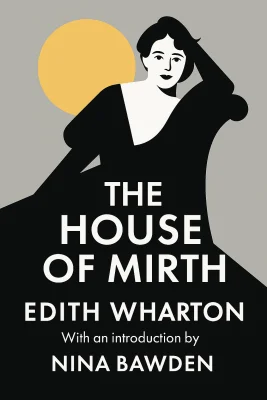
The House of Mirth
Categories
Fiction, Classics, Audiobook, Historical Fiction, Literature, American, Book Club, 20th Century, Novels, New York
Content Type
Book
Binding
Paperback
Year
2006
Publisher
Virago UK
Language
English
ISBN13
9781844082933
File Download
PDF | EPUB
The House of Mirth Plot Summary
Introduction
# The House of Mirth: A Portrait of Gilded Age Tragedy The afternoon light slants through Grand Central Station as Lily Bart stands motionless in the rushing crowd, her beauty cutting through the gray wool and tired faces like a blade through silk. At twenty-nine, she possesses the kind of luminous perfection that stops conversations and turns heads, yet beneath her composed exterior lies the desperate mathematics of a woman running out of time. She has no money of her own, only the precarious position of a permanent guest among New York's glittering elite, where a single misstep can mean social annihilation. When Lawrence Selden spots her in the crowd, their chance encounter sets in motion a chain of events that will test every carefully constructed defense Lily has built around her heart. He speaks of freedom from society's golden chains, of a republic of the spirit where money holds no power. But freedom is a luxury Lily cannot afford, not when her survival depends on charming wealthy men while maintaining her virtue, always believing the perfect marriage lies just around the corner. The game has already begun, and in this world of marble mansions and ruthless ambition, beauty alone may not be enough to save her.
Chapter 1: The Beautiful Trap: Lily Bart's Precarious Position in High Society
The Trenor estate at Bellomont hums with the calculated leisure of America's aristocracy. Lily Bart glides through the weekend house party with practiced grace, her every gesture calibrated for maximum effect. She has come here with a purpose that tastes bitter in her mouth: to secure Percy Gryce, a tedious but spectacularly wealthy bachelor whose railroad millions could solve all her problems. Gryce follows her around like a devoted spaniel, his pale eyes lighting up whenever she speaks of his precious Americana collection. The other guests watch this courtship with knowing smiles. Judy Trenor, her hostess and dearest friend, practically purrs with satisfaction at orchestrating what promises to be the social triumph of the season. Everything has been arranged: the bridge tables cleared to accommodate Gryce's moral sensibilities, cigarettes hidden from view, church attendance scheduled to showcase Lily's virtue. But the careful architecture of her campaign begins to crumble when she spots Lawrence Selden in the library, sitting beside the dangerous Bertha Dorset. A spike of jealousy pierces through her that she barely recognizes. Selden, with his modest lawyer's income and sharp intellect, represents everything she cannot afford to want. Yet when he suggests a walk in the countryside, she abandons her post like a soldier deserting her regiment. The autumn woods become a sanctuary where Lily allows herself to imagine a different life. Selden speaks again of his republic of the spirit, of lives lived beyond the reach of society's demands. For one intoxicating moment, she glimpses authentic freedom. But when the sound of returning motors echoes through the trees, reality crashes back with brutal force. Percy Gryce's wounded face shows the confusion of a man who has been abandoned for a rival. That evening, he flees Bellomont like a man escaping a trap, leaving Lily to face the consequences of her moment of genuine feeling.
Chapter 2: Fatal Choices: Love versus Security in the Marriage Market
Judy Trenor's sitting room becomes a courtroom where Lily faces judgment for her romantic folly. Surrounded by the debris of social correspondence, Judy delivers her verdict with the disappointed fury of a betrayed general. Lily has thrown away the chance of a lifetime for what? A walk in the woods with a man who offers nothing but pretty words about spiritual freedom. The practical mathematics of survival allow no room for such luxuries. The confrontation with Selden comes later, charged with the electricity of unspoken desires. In the golden light of the conservatory, they circle each other like dancers afraid to touch. He speaks of marriage as a risk he might be willing to take, and Lily feels her carefully constructed defenses begin to crumble. The moment stretches between them, pregnant with possibility, until the familiar patterns reassert themselves and the spell breaks. Desperate to repair her damaged prospects, Lily accepts Gus Trenor's offer to invest her modest savings in the stock market. His crude gallantry masks a predator's instincts, but she sees only salvation in his promises of easy money. The first check arrives with his scrawled signature, transforming her world overnight. Debts that have haunted her for months vanish with a stroke of the pen, and she tells herself she is simply a successful speculator. But salvation comes with invisible chains. Trenor's eyes linger on her figure with increasing familiarity, his expectations of gratitude growing more explicit with each payment. The money she thought she had earned through clever speculation reveals itself as something far more dangerous. In the small hours of sleepless nights, she sometimes wonders what price she is truly paying for her newfound freedom from financial worry.
Chapter 3: Mediterranean Betrayal: The Sabrina Scandal and Social Exile
The Mediterranean sun beats down mercilessly on the deck of the yacht Sabrina, where Lily awakens to find herself alone and vulnerable. For months, she has served as companion to Bertha Dorset, the sharp-tongued wife of a wealthy hypochondriac, believing herself safe in this floating sanctuary. The arrangement suits everyone: Bertha can pursue her affair with young Ned Silverton while Lily keeps George Dorset distracted with her beauty and charm. The yacht has become a stage for elaborate deceptions. George Dorset, pale and nervous, suffers from mysterious ailments that worsen whenever his wife's behavior becomes too flagrant. Lily walks a tightrope between the couple, soothing George's suspicions while enabling Bertha's infidelities. She tells herself this is merely another form of the social games she has always played, but the stakes feel different here, more dangerous. In Monte Carlo, the charade reaches its breaking point. Bertha and Silverton disappear for an entire night, leaving Lily to return alone with George on the train. She expects gratitude for her discretion, but instead finds herself facing Bertha's cold fury. The other woman's eyes glitter with a malice that makes Lily's blood run cold. The assassination comes without warning. At a public dinner before the assembled cream of international society, Bertha strikes with surgical precision. Her words fall like a blade: "Miss Bart is not going back to the yacht." The accusation hangs unspoken but clear—Lily is being cast as the adulteress, the woman who has compromised George Dorset. The assembled guests recoil as if from a plague victim. In that moment, Lily's reputation crumbles to dust, sacrificed on the altar of Bertha's self-preservation.
Chapter 4: The Long Fall: Descent Through Society's Rigid Hierarchy
The news travels faster than any steamship. By the time Lily returns to New York, the story of her dismissal from the Sabrina has been told and retold, each version more damaging than the last. She finds herself in a city that has turned its back on her. Former friends cross the street to avoid her gaze. Invitations that once flooded her mailbox have dried up completely. The final betrayal comes at her aunt's funeral, where the reading of Mrs. Peniston's will delivers a crushing blow. Instead of the substantial inheritance Lily had counted on, she receives a mere ten thousand dollars. The bulk of the estate goes to her cousin Grace Stepney, a colorless woman whose only virtue is her moral certainty. The legacy barely covers her debts to Gus Trenor, leaving her financially destitute as well as socially ruined. Desperate and increasingly isolated, Lily accepts refuge with the Gormers, a newly rich couple still climbing the social ladder. Here, in this gaudy imitation of the world she has lost, she serves as a kind of cultural guide, teaching them the subtle rules of proper society. But even this sanctuary proves temporary when Bertha Dorset, not content with her initial victory, continues her campaign of destruction. The descent continues relentlessly. From the Gormers, Lily falls into the orbit of Mrs. Norma Hatch, a divorced woman of questionable background who inhabits the shadowy borderland between respectability and scandal. When Selden finds her in this environment, his horror is palpable. He begs her to accept help from Gerty Farish, a social worker who has remained loyal despite everything. But Lily's pride rebels against charity, even from those who love her. She has fallen too far to accept the simple life that might save her.
Chapter 5: Working Hands and Broken Dreams: Life Beyond the Gilded Cage
The millinery workshop where Lily finds employment is a harsh awakening to reality. Her delicate hands, trained only for ornamental purposes, struggle with the rough work of sewing spangles onto hat frames. The other workers, aware of her history, watch her fumbling efforts with a mixture of pity and scorn. Miss Haines, the sharp-eyed forewoman, shows no mercy to the fallen society beauty. The work is not just physically demanding but spiritually crushing. Lily listens to the chatter of her fellow workers as they discuss the very world she has lost, speaking of Mrs. Trenor's new hat and sightings of society figures with the casual familiarity of those who serve but do not belong. To them, she is simply another failure, a cautionary tale of what happens when women reach too high. Her health begins to deteriorate under the strain. Sleepless nights blur into exhausting days, and she discovers a dangerous solace in chloral, a sleeping draught that offers temporary escape from her torment. The little bottle becomes her most precious possession, more valuable than any jewel she once wore. Even this meager employment proves temporary when her work proves too poor and her attendance too irregular. Walking the streets of New York after her dismissal, she encounters Simon Rosedale, a wealthy businessman who has long desired her. His success in penetrating society makes her earlier rejection of him seem foolish now. He offers marriage still, but on different terms. She is no longer the prize she once was, and they both know it. The proposal hangs between them like a lifeline she cannot bring herself to grasp.
Chapter 6: The Price of Honor: Lily's Final Moral Reckoning
In her shabby boarding house room, Lily confronts the arithmetic of desperation. Her aunt's legacy has finally arrived, but every penny is already spoken for. To keep even a shred of honor, she must repay her debt to Gus Trenor, leaving her with nothing. The moral weight that has crushed her spirit for months demands this final sacrifice. Hidden in her possessions lie letters from Bertha Dorset to Lawrence Selden, evidence of their affair that could destroy Bertha's marriage and social position. The temptation presents itself with crystalline clarity—with such weapons, she could force her way back into society. Bertha would have no choice but to rehabilitate her reputation to protect herself. Justice seems to demand it. But as Lily sits with the letters in her hands, she realizes that using them would complete her spiritual destruction. She would survive, but as what? A blackmailer, a creature as ruthless as those who cast her out. The chloral bottle gleams in the lamplight, offering a different kind of escape. She has been increasing the dose as her desperation grows, walking ever closer to a line she cannot uncross. As evening falls, she makes her pilgrimage to Selden's apartment one final time. When he opens the door, she sees in his eyes the same recognition that has always passed between them—the acknowledgment of what might have been. In the warmth of his study, she performs one final act of moral courage. The letters that could have been her salvation disappear into the flames, and she watches them burn with something approaching serenity. Back in her room, Lily completes the practical business of her life. She writes a check to Gus Trenor for the full amount of her debt, choosing dignity over survival, honor over revenge. The moral weight finally lifts, replaced by a strange lightness. As she measures out the chloral, she thinks of a child she once held briefly—warm and trusting against her breast—and imagines that comfort returning in the darkness that closes around her.
Summary
When Lawrence Selden finds Lily the next morning, she lies peaceful at last, her beauty unmarked by the struggles that consumed her final months. The sleeping draught has claimed her, whether by accident or design remaining forever unclear. In death, she achieves the dignity that eluded her in life, her face serene and untroubled by the compromises that society demanded of her. The tragedy of Lily Bart lies not in her death but in the waste of her magnificent spirit—a woman of intelligence, sensitivity, and moral courage crushed by a world that valued her only as an ornament. She possessed all the qualities that might have made her something extraordinary, but society offered her no path except through marriage to wealth. Her story becomes a mirror reflecting the gilded brutality of an age that created beautiful, accomplished women only to destroy them when they failed to fulfill their narrow purpose. In choosing honor over survival in her final act, Lily transcends her circumstances and achieves the spiritual freedom that life denied her, her death becoming not defeat but the ultimate assertion of her humanity against a world that would reduce her to mere commodity.
Best Quote
“Do you remember what you said to me once? That you could help me only by loving me? Well-you did love me for a moment; and it helped me. It has always helped me.” ― Edith Wharton, The House of Mirth
Review Summary
Strengths: The review highlights Edith Wharton's skill in creating captivating and tragic characters, particularly Lily Bart, who leaves a lasting impression. The portrayal of Gilded Age New York is described as a fine and vivid depiction. Wharton's ability to critique societal norms and women's roles is also noted as a strength. Weaknesses: The review suggests that the ending of "The House of Mirth" may feel out of place and melodramatic. Additionally, it implies that Wharton's work was overshadowed by contemporaries like Fitzgerald and Hemingway. Overall: The review conveys a strong appreciation for Edith Wharton's writing, recommending "The House of Mirth" as an excellent starting point for new readers. The novel is praised for its character depth and social critique, despite some reservations about its conclusion.
About Author

Edith Wharton
Wharton delves into the intricate dance between societal expectations and personal desires through her insightful portrayals of upper-class life. She drew upon her intimate knowledge of New York's aristocracy to craft stories that not only reveal the constraints of Gilded Age society but also reflect her broader critique of social norms. Her work, such as "The Age of Innocence," which earned her the distinction of being the first woman awarded the Pulitzer Prize for Fiction, delves into the rituals and regrets of 1870s New York. Meanwhile, novels like "The House of Mirth" and "Ethan Frome" juxtapose urban and rural settings to explore themes of social ambition and emotional repression.\n\nHer writing spans a diverse range of themes and methods, from the tragic exploration of societal pressure in "The House of Mirth" to the incisive rural introspection in "Ethan Frome." Wharton's novella collection "Old New York" revisits upper-class society with keen social commentary, whereas "The Glimpses of the Moon" and "Summer" explore themes of marriage, social mobility, and sexual awakening. Beyond fiction, her nonfiction work like "The Decoration of Houses" and her travel writing, including "Fighting France," demonstrate her diverse literary capabilities and interests.\n\nReaders gain a multifaceted understanding of both personal and societal struggles through Wharton's unflinching, elegant prose. Her ability to dissect the customs of her time and illuminate the emotional depths of her characters provides timeless cultural insights. Her influence is further recognized through multiple Nobel Prize nominations and her connections with prominent figures like Henry James and Sinclair Lewis. This broad legacy makes her work relevant to anyone interested in the intersections of societal norms and individual desires.
Read moreDownload PDF & EPUB
To save this Black List summary for later, download the free PDF and EPUB. You can print it out, or read offline at your convenience.
The House of Mirth
by Edith Wharton
