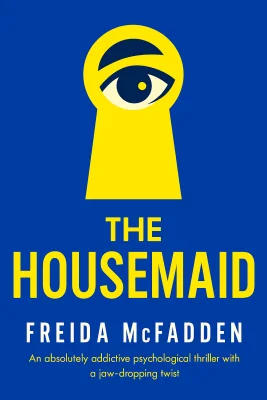
The Housemaid
Categories
Fiction, Audiobook, Mystery, Thriller, Adult, Book Club, Suspense, Crime, Mystery Thriller, Psychological Thriller
Content Type
Book
Binding
Kindle Edition
Year
2022
Publisher
Bookouture
Language
English
ASIN
B09TWSRMCB
ISBN13
9781803144375
File Download
PDF | EPUB
The Housemaid Plot Summary
Introduction
Ruby Dean arrived at Highwood Hall with more than just the desperate need for employment—she carried the weight of a mother's vanished past. Twenty-one years earlier, Emily Ferguson had worked as a maid in this grand Yorkshire estate before disappearing forever, leaving behind only cryptic letters and a six-month-old daughter. Now Ruby found herself walking the same corridors, serving the same family, drawn by questions that had haunted her entire life. The sprawling Tudor mansion loomed against the darkening sky, its turrets and ramparts emerging from twisted woodland like something from a Gothic nightmare. Lord Bertie Howard ruled this domain with casual cruelty disguised as noblesse oblige, hiring desperate young women from rehabilitation programs—girls with troubled pasts and nowhere else to turn. The staff turnover was legendarily high, but Ruby had her own reasons for staying. She needed answers about what had happened to her mother in these shadowed halls, even if those answers might destroy everything she thought she knew about love, trust, and survival.
Chapter 1: Beneath the Gilded Facade: Ruby's Arrival at Highwood Hall
The iron gates of Highwood Hall opened with mechanical precision, revealing a world Ruby had only glimpsed in nightmares. Mrs. Huxley, the stern housekeeper with razor-sharp cheekbones and eyes like black marbles, greeted her at the servants' entrance with barely concealed hostility. The woman's burgundy dress swept behind her as she glided through corridors lined with priceless antiques and centuries-old portraits, each step a calculated display of authority. Lord Bertie Howard received Ruby in his mahogany-paneled study, feet casually propped on his desk while his black Labrador stretched across the floor. His salt-and-pepper hair was perfectly groomed, his smile charming but somehow empty. He spoke of second chances and charitable endeavors, explaining his preference for hiring staff from the Providence rehabilitation program. Ruby recognized the performance—wealthy men always justified their generosity as moral superiority. The job came with living quarters, shared with Roisin, an eighteen-year-old Irish maid with strawberry blonde hair and infectious laughter. Roisin's warmth provided the only brightness in the oppressive atmosphere of servants' quarters, where dark green walls pressed close and the air carried a perpetual chill. Ruby unpacked her meager belongings in the narrow room, hiding her mother's letters beneath folded underwear like contraband. During her first dinner service, Ruby encountered the full spectrum of Howard family dysfunction. Margot Pemberton, Lord Bertie's mother-in-law, swept into the dining room draped in furs and attitude, her purple turban askew and cigarette dangling from painted lips. She examined Ruby with the intensity of an art appraiser, declaring her another "pretty one" before launching into profanity-laced complaints about the menu. Lottie Howard, the youngest daughter, played with her phone in studied boredom, while Alex Howard remained conspicuously absent from this first encounter. The dining room itself told stories through its magnificent murals—Renaissance women dancing across wood-paneled walls in an explosion of color and sensuality. One face caught Ruby's attention immediately: a dark-haired beauty with haunting brown eyes and gaunt features that seemed to mirror her own reflection. The resemblance was uncanny, almost supernatural, as if the painted woman was trying to communicate across centuries of silence.
Chapter 2: Ghosts in the Corridors: Mysterious Dioramas and Missing Maids
Ruby's first morning brought a delivery that shattered any illusion of safety. The white box, tied with a scarlet ribbon, arrived addressed to her specifically—though she had told no one outside Highwood of her employment. Inside, a meticulously crafted diorama depicted the servants' spiral staircase in miniature perfection, complete with painted floorboards and carved banisters. At the bottom lay a small doll with brown hair, dressed in a maid's uniform identical to Ruby's own, surrounded by a crimson pool of blood. The grotesque artistry was breathtaking in its attention to detail. Someone had spent hours measuring, cutting, and painting this scene of her violent death. Lottie Howard discovered the box first, her childlike excitement curdling into horror as the implications sank in. Mrs. Huxley's face revealed nothing, but her immediate instruction to inform Lord Bertie suggested this was not the first such message to arrive at the Hall. More disturbing revelations emerged through Roisin's whispered confidences. Ruby's predecessor, Chloe, had vanished without notice or explanation, leaving behind only questions and the impression of deep unhappiness. The girl had been involved in increasingly bitter conflicts with Mrs. Huxley, defying the housekeeper's authority at every turn. More shocking still was Roisin's revelation that Chloe had been conducting a secret affair with Alex Howard—a dangerous liaison that may have contributed to her abrupt disappearance. The investigation into Ruby's threatening gift proved frustratingly inadequate. Lord Bertie claimed his private investigator had identified the sender as a disgruntled former employee, some troubled girl with artistic talents and a grudge. But his reassurances felt hollow, especially when more dioramas began arriving for other family members. Lottie received a scene depicting her childhood destruction of a tutor's beloved book, while Margot's box contained the horrific image of a woman hanging from the dining room chandelier—a cruel reference to her daughter's attempted suicide years earlier. Each miniature tableau revealed intimate knowledge of family secrets that no outsider should possess. The sender understood not just the physical layout of Highwood Hall but the psychological landscape of its inhabitants' darkest moments. Ruby began to suspect that the threat came from within the house itself, from someone who had observed and remembered every shameful detail of the Howards' private lives.
Chapter 3: The Music Room Sessions: Dangerous Games and Hidden Truths
Alex Howard finally revealed himself through music, requesting Ruby's assistance as a page turner during his Friday evening piano practice. She found him in the chandelier-lit music room, his long fingers caressing ivory keys with the same precision he would later apply to her body. The Chopin étude that emerged from the grand piano was achingly beautiful, each note precisely controlled yet somehow desperately emotional. Their sessions began innocently enough—Ruby turning sheet music while Alex played increasingly complex pieces, his repertoire ranging from delicate Debussy to thunderous Liszt. But beneath the musical instruction lay darker currents. Alex tested her constantly, asking "Do you trust me?" with growing intensity, his pale blue eyes searching her face for signs of submission or rebellion. When she consistently answered "No," his interest only deepened. The games escalated gradually. Alex would grasp her hair while they kissed, pulling until tears came to her eyes, then watch her reaction with scientific fascination. He guided her into hidden spaces throughout the mansion—priest holes and secret cupboards where they pressed together in darkness, his breath hot against her neck as he whispered about power and control. Each encounter pushed boundaries further, mixing pleasure with carefully calibrated pain. Ruby recognized the manipulation but found herself drawn deeper into Alex's web anyway. The music room became their private universe, where class distinctions supposedly dissolved in shared artistry. He spoke of marriage, of the north wing renovations where his future wife might live, hinting at possibilities that seemed both thrilling and terrifying. The isolated young woman, desperate for connection and security, allowed herself to believe these fantasies might include her. But Alex's true nature emerged in moments of unguarded honesty. He spoke of voyeurism as a source of power, of watching people who didn't know they were observed. He demonstrated the mansion's secret peepholes and hidden corridors with the enthusiasm of a predator showing off his hunting grounds. Ruby began to understand that she was not his first such student, nor likely to be his last, in these lessons of dominance disguised as romantic education.
Chapter 4: Unraveling the Web: Mrs. Huxley's Confession and the Family's Dark Legacy
The truth about Highwood Hall's sinister history emerged through Mrs. Huxley's painful confession, extracted over whisky in her locked office while classical music masked their conversation. The housekeeper, dying of lung cancer and finally ready to unburden herself, revealed decades of complicity in unspeakable crimes. Lord Bertie and his father before him had been serial killers, preying on vulnerable young maids with systematic precision. Mrs. Huxley's own story was one of entrapment and gradual corruption. She had arrived as a young woman, become pregnant by Lord Bertie, and found herself bound to the family through financial necessity when her son Charlie was born with special needs requiring expensive care. The boy lived in a residential facility, dependent on the generous salary that came with keeping the Howards' darkest secrets. Mrs. Huxley had convinced herself that her silence protected not just her child but prevented worse atrocities. Ruby's mother Emily had been one of the early victims, lured into what she thought was a romantic relationship with the charming young heir. The letters Ruby treasured revealed Emily's growing fear and isolation, her desperate attempts to save money for a deposit so she could return to her daughter. But when Emily tried to escape, Mrs. Huxley—following Bertie's instructions—had led her straight back to her killer. The official story of a tragic fall down the servants' staircase concealed the brutal reality of murder. The dioramas themselves were Mrs. Huxley's desperate attempt at redemption, created by her son Charlie at the care facility and sent to terrorize the family she had served too faithfully for too long. Each miniature scene was a confession and a warning, crafted by an innocent young man who possessed extraordinary artistic talent but no understanding of the horrors he was depicting. Mrs. Huxley hoped to frighten Ruby away before she became another victim, but her methods only drew more attention to the family's crimes. Most chilling of all was the revelation about the north wing renovations. Behind a keypad-locked door lay a red room designed specifically for torture and murder, equipped with chains, cameras, and soundproofing. This was where the Howard men indulged their sadistic fantasies, keeping victims alive for days or weeks while they savored complete control over another human being's life and death. The high turnover of maids was not coincidental—it was the product of deliberate hunting.
Chapter 5: Into the Red Room: The Final Confrontation and Exposure
Ruby's final gambit required her to become bait in the most literal sense, allowing Alex to chain her in the red room while hidden cameras livestreamed their confrontation to thousands of online viewers. She had discovered the location through painstaking exploration of the mansion's secret corridors, mapping the hidden passages that connected Lord Bertie's office to Mrs. Huxley's quarters and beyond. The plan depended on perfect timing and Mrs. Huxley's willingness to finally testify against her employers. Alex led her through the north wing with predatory satisfaction, his charming mask finally dropping to reveal the monster beneath. The keypad door opened onto a nightmare of red walls, bright spotlights, and restraint equipment designed for prolonged suffering. He secured Ruby in the harness with practiced efficiency, clearly having performed these actions many times before. The room reeked of blood and terror, its very existence a testament to the Howard family's generational evil. Lord Bertie's arrival completed the picture of aristocratic depravity. Father and son worked as a team, their methods honed through decades of collaboration in murder. But their confidence proved their downfall—they spoke freely in front of what they assumed was their helpless victim, unaware that every word was being broadcast live to a growing audience of horrified viewers. The evidence of their crimes was being recorded in real time, beyond any possibility of denial or cover-up. Ade burst into the red room armed with a shotgun from Lord Bertie's own collection, having followed the secret tunnel system Ruby had mapped out for him. The confrontation that followed was brutal and desperate, two working-class young people fighting for their lives against monsters who believed their wealth and status made them untouchable. When Lord Bertie lunged for Ruby, Ade shot him in the knee, the explosion of blood and bone finally bringing consequences to a man who had never faced them. Alex escaped in the chaos, but not before Ruby delivered a diorama of her own—a perfect replica of the red room showing both Howard men in their true roles as sadistic killers. The miniature tableau, created with Charlie's innocent artistry, served as both evidence and psychological warfare. Alex's horrified recognition of his own crimes rendered in tiny, damning detail was perhaps the cruelest justice of all.
Chapter 6: Ashes and Revelations: The Fall of Highwood Hall
The arrest of Lord Bertie triggered a media frenzy that exposed the full scope of the Howard family's crimes. Mrs. Huxley's testimony, combined with the livestreamed evidence from the red room, painted a picture of systematic murder spanning generations. The dining room mural took on horrifying new significance—each beautiful painted face represented a victim, turned into artwork to commemorate their deaths. Ruby finally understood that the woman who resembled her was indeed her mother, Emily, forever trapped on the walls of her killer's home. Alex Howard remained at large despite an international manhunt, his Ferrari discovered abandoned in Edinburgh while false sightings led police on wild chases across Europe. The investigation revealed a network of complicity extending beyond the immediate family—corrupt officials, bribed investigators, and intimidated witnesses who had enabled decades of murder. The Howards' wealth and social connections had provided perfect cover for their predations on society's most vulnerable members. Pawel the cook emerged as an unexpected accomplice, his unrequited love for Roisin having been twisted into murderous obsession. He had killed her in a jealous rage, then helped Lord Bertie stage the scene as suicide to avoid detection. The revelation that Roisin's gentle spirit had been extinguished by someone she trusted added another layer of betrayal to the mounting horror. Even those who seemed innocent had been corrupted by proximity to evil. Margot Pemberton's complicity was perhaps most damning because it was most human—she had suspected the truth about her son-in-law but chosen willful blindness to protect her own comfort and security. Her daughter Laura's "accidental" fall down the stairs had been murder, preceded by years of abuse that Margot chose to ignore rather than confront. The old woman's grief was real, but so was her cowardice in the face of preventable tragedy. The excavation of Highwood Hall's grounds revealed the true scope of the horror—bodies buried throughout the estate, some dating back decades to Lord Bertie's father and grandfather. The Howard men had been serial killers for generations, each passing their techniques and victim preferences to the next. The house itself became a crime scene of almost archaeological complexity, each layer revealing new atrocities that had been hidden beneath veneer of respectability.
Chapter 7: New Beginnings: Ruby's Path to Healing and Purpose
Alex Howard's final gambit brought him back to Highwood Hall in a desperate attempt to destroy evidence and eliminate witnesses. He and Pawel set fire to the mansion while holding Ade hostage, forcing Ruby into one last confrontation with the monsters who had destroyed so many lives. The burning house became a metaphor for the end of the Howard legacy—centuries of accumulated wealth and power reduced to ashes and smoke. The final battle took place on the lawn outside the blazing mansion, Alex's mask of civility finally abandoned in favor of raw violence. He had spent his entire life learning to hurt people, first as an unwilling witness to his father's crimes, then as an eager participant. But when faced with someone who refused to be victimized, his training proved inadequate. Ruby and Ade's desperate fight for survival ended with Alex's death, his skull crushed by the wooden panel bearing her mother's painted image. Mrs. Huxley died in prison hospital before she could testify at trial, her lung cancer finally claiming a life already consumed by guilt and regret. But her final act of rebellion had ensured that the truth about Highwood Hall would never be buried again. Charlie continued creating his miniature worlds at the care facility, now funded by Margot's guilty conscience and public donations that poured in for the survivors of the Howard family's crimes. Ruby found her calling in caring for others who had been discarded by society, training as a nurse at the facility where Charlie lived. She visited him every Sunday as promised, watching his innocent artistry transform painful memories into something beautiful and healing. His dioramas became less about death and more about life—tiny perfect worlds where damaged people found safety and purpose. The twisted trees of Highwood's forest began to reclaim the burned ruins of the mansion, nature slowly erasing the evidence of human evil. Ruby sometimes walked among those gnarled branches, no longer afraid of their shadows. She had learned that monsters were not supernatural creatures lurking in dark woods—they were charming men in expensive suits who used wealth and privilege to satisfy their darkest appetites. The real horror was not in ghost stories but in the ordinary human capacity for cruelty when unchecked by consequence.
Summary
Ruby Dean's journey from desperate job-seeker to unlikely hero illuminated the stark reality that evil often wears a respectable face and speaks with an educated voice. The Howards represented the worst of aristocratic entitlement—men who believed their birth and wealth granted them the right to treat other human beings as disposable objects. Their crimes were enabled not just by their own psychopathy but by a system that protected the wealthy while ignoring the suffering of society's most vulnerable members. The tragedy of Highwood Hall was not just the murders themselves but the network of complicity that allowed them to continue for generations. Mrs. Huxley, Margot Pemberton, and countless others chose silence over justice, prioritizing their own comfort and security above the lives of young women who had no one to speak for them. Ruby's victory was not just personal but symbolic—proof that even the most powerless person could bring down giants if they refused to accept the role of victim. The painted faces on the dining room wall would never be forgotten again, their stories finally told by someone who understood that every ghost deserves to have her name remembered.
Best Quote
“What do you like to read?”“Books.”“What kind of books?”“The kind with words.” ― Freida McFadden, The Housemaid
Review Summary
Strengths: The review highlights the book's humor, noting that it contains great dark humor throughout. The ending is rated highly, receiving a 5/5, particularly appreciated during women's history month. Weaknesses: The plot is described as confusing and predictable, with the mystery being obvious and lacking suspense. Character development is criticized, particularly Millie's unrealistic portrayal given her background, and Nina's over-the-top personality. The writing style is likened to a "dear diary" format, which may not appeal to all readers. Overall: The reviewer expresses mixed feelings, describing the book as both engaging and frustrating. While it contains elements that kept the reader entertained, the lack of depth and predictability detracted from the overall experience. The book is recommended with reservations, particularly for those who enjoy dark humor and revenge themes.
About Author

Freida McFadden
McFadden synthesizes her expertise in medicine and storytelling to create novels that captivate readers with psychological suspense and intricate medical contexts. Her books frequently explore themes of brain injury and domestic thrillers, reflecting her professional background as a physician. This combination of gripping narratives and medical knowledge allows McFadden to provide an immersive reading experience, rich with suspense and humor. Her unique approach to writing bridges the gap between real-world medical scenarios and the dark, suspenseful plots that characterize her psychological thrillers.\n\nReaders who appreciate the intersection of medical drama and psychological tension will find McFadden's works particularly engaging. Her novels, such as "The Housemaid", have gained international acclaim, with translations in over 45 languages. This global reach underscores the universal appeal of her storytelling, which resonates with audiences worldwide. Furthermore, her achievements, including awards like the 2023 International Thriller Writers Award for "The Housemaid", highlight her impact on the literary world.\n\nHer debut through Amazon Kindle Direct Publishing marked the beginning of a prolific writing career. McFadden's "The Housemaid's Secret" and other notable titles like "The Locked Door" continue to captivate a diverse audience. As an author, her books not only entertain but also offer insights into the complexities of the human mind, making them a valuable addition to the genre of psychological thrillers.
Read moreDownload PDF & EPUB
To save this Black List summary for later, download the free PDF and EPUB. You can print it out, or read offline at your convenience.
The Housemaid
by Freida McFadden
