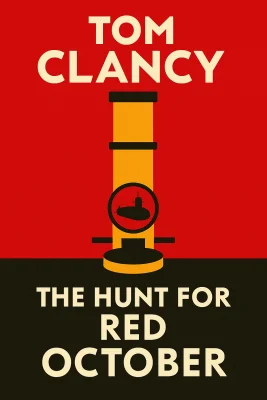
The Hunt for Red October
Categories
Fiction, Mystery, Historical Fiction, Military Fiction, Thriller, Adventure, War, Suspense, Espionage, Action
Content Type
Book
Binding
Mass Market Paperback
Year
1999
Publisher
Berkley Trade
Language
English
ASIN
0425172902
ISBN
0425172902
ISBN13
9780425172902
File Download
PDF | EPUB
The Hunt for Red October Plot Summary
Introduction
# Silent Depths: The Hunt for Red October In the frigid waters of the North Atlantic, Captain Marko Ramius stands on the bridge of Red October, the Soviet Union's most advanced nuclear submarine. The bitter Arctic wind cuts through his naval coat as he watches the last lights of the Polyarnyy naval base fade into darkness. Behind him lies everything he has ever known—his homeland, his career, his past. Ahead lies the vast Atlantic Ocean and a decision that will shake the foundations of the Cold War. Red October is no ordinary submarine. Armed with twenty-six nuclear missiles and powered by a revolutionary silent propulsion system, she represents the pinnacle of Soviet naval technology. But as the massive vessel slips beneath the black waves, Ramius carries with him a letter that will transform this routine patrol into the most dangerous defection attempt in history. The hunt for Red October is about to begin, and both superpowers will deploy everything in their arsenal to either capture or destroy the rogue submarine racing toward the American coast.
Chapter 1: The Captain's Gambit: Ramius Charts a Course to Freedom
The letter sits sealed on Admiral Padorin's desk in Moscow, its contents still unknown to the political officer who received it from a trusted courier. Captain Marko Ramius had insisted it be delivered only after Red October was well at sea, beyond the reach of recall orders. When Padorin finally breaks the wax seal twelve hours later, his face drains of color. The words are a masterpiece of calculated defiance—Ramius announces his intention to sail directly to the United States and present the submarine as a gift to the American President. Aboard Red October, Ramius moves through the corridors with practiced calm, his weathered face betraying nothing of the momentous decision he has made. He spent months planning this moment, carefully selecting officers who shared his disillusionment with the Soviet system. His executive officer Borodin, navigator Kamarov, and chief engineer Melekhin—each chosen not just for their skills, but for their quiet desperation with life under Communist rule. They had all lost something to the system: family members to political purges, careers stunted by Party interference, dreams crushed by bureaucratic incompetence. Political Officer Putin had been the first casualty of their conspiracy. An "accident" during a routine inspection left him with a broken neck, his body now resting in the submarine's cold storage. Ramius made it look convincing—a slip on wet steel, a tragic fall down a ladder. The crew accepted the explanation without question. Such accidents happened on submarines, where every surface was metal and the sea was always trying to kill you. The Red October slips through the dark waters of the Norwegian Sea, her revolutionary caterpillar drive system making her nearly invisible to sonar detection. The massive submarine moves like a ghost, her twin tunnel drives pulling water through internal channels rather than pushing it with external propellers. This technological marvel makes their escape possible, and Ramius knows they will need every advantage to reach American waters alive. The die is cast, and there can be no turning back from the course he has chosen.
Chapter 2: The Analyst's Discovery: Decoding Soviet Fleet Movements
Six thousand miles away in London, CIA analyst Jack Ryan sits in his cramped embassy office, staring at satellite photographs that make no sense. The images show the Soviet Northern Fleet mobilizing on an unprecedented scale—every available submarine and surface vessel putting to sea in what appears to be a massive naval exercise. But the deployment pattern is wrong. Instead of forming defensive positions, the ships spread out in a search formation, as if hunting for something lost in the vast Atlantic. Ryan built his reputation on seeing patterns others missed, connecting dots that seemed unrelated. A former Marine officer turned academic, he joined the CIA almost by accident, but his analytical mind quickly made him indispensable. Now, studying the fleet movements and cross-referencing intelligence reports, a disturbing picture emerges. This isn't an exercise—it's a manhunt. And the quarry can only be one of their own submarines. The breakthrough comes when Ryan correlates the fleet movements with the sailing schedule of Soviet ballistic missile submarines. One boat is unaccounted for—Red October, commanded by Captain Marko Ramius. Ryan knows Ramius by reputation: a legend in the Soviet Navy, a man who trained half their submarine commanders. If Ramius is missing, it can only mean one thing. He isn't lost—he's running. Ryan's hands tremble as he reaches for the secure telephone. Admiral James Greer, his mentor and the CIA's Deputy Director for Intelligence, needs to hear this immediately. If Ryan is right, if Ramius is attempting to defect with the Soviet Union's most advanced submarine, it would be the intelligence coup of the century. But it also means the largest naval force ever assembled is heading toward American waters, and they have perhaps days before the situation explodes into open conflict. The implications stagger him. Red October carries enough nuclear firepower to devastate the Eastern Seaboard. In the wrong hands, she could trigger World War III. But in American hands, she could provide invaluable intelligence about Soviet submarine technology. Ryan closes his eyes and imagines the pressure that drove a man like Ramius to such a desperate gamble. Whatever his reasons, the captain has set in motion events that will test both superpowers to their limits.
Chapter 3: The Great Deception: Staging a Submarine's Death
The plan emerges from the mind of Admiral James Greer, refined by the CIA's best operational minds. If they're going to help Ramius defect without starting a war, they need to convince the Soviets that Red October has been destroyed. The key is an aging American ballistic missile submarine, USS Ethan Allen, scheduled for decommission. Instead of scrapping her, they will use her as the ultimate decoy. Deep in the Pentagon's crisis management center, Admiral Dan Foster coordinates the most complex deception operation in naval history. Ethan Allen will be stripped of her missiles and loaded with powerful explosives, then positioned near where Red October is expected to transit. When the time comes, they will detonate the charges, creating debris and radiation signatures consistent with a catastrophic reactor accident. To the Soviets, it will appear their rogue submarine suffered the same fate as so many others lost to the unforgiving sea. Meanwhile, USS Dallas, one of America's most advanced attack submarines, has been tracking Red October since she left Soviet waters. Commander Bart Mancuso finds himself in an impossible position—shadowing a submarine that could start a war simply by existing. His orders are clear but contradictory: maintain contact while avoiding detection by the massive fleet hunting her. It's like following a ghost while staying invisible to an army of searchers. The deception requires perfect timing. Too early, and the Soviets might not believe Red October is destroyed. Too late, and their fleet might intercept the submarine before she reaches safety. CIA operative Jack Ryan finds himself aboard British aircraft carrier HMS Invincible, coordinating communications with Red October through coded light signals. The irony isn't lost on him—a desk analyst who had never been to sea now helps orchestrate the most dangerous naval operation since World War II. As the pieces fall into place, everyone understands the stakes. If the deception fails, if the Soviets discover their submarine is intact and in American hands, the consequences will be catastrophic. The Cold War, which remained cold for decades through careful diplomacy, could explode into nuclear conflict. The fate of millions hangs on their ability to convince the world that Red October died in the depths of the Atlantic Ocean.
Chapter 4: Converging Forces: The Atlantic Becomes a Battlefield
The rendezvous takes place in the pre-dawn darkness of the North Atlantic, where Red October lies submerged like a sleeping leviathan. USS Pigeon, a submarine rescue vessel, positions herself above the Soviet submarine, her crew preparing for the most unusual rescue operation in naval history. But this isn't a rescue in the traditional sense—it's an elaborate shell game designed to spirit away Red October's crew while leaving her officers behind to complete their defection. Captain Ramius plays his part perfectly, announcing to his crew that the submarine has suffered a catastrophic reactor accident and must be abandoned. The fear in their eyes is genuine as they file into the escape trunk, believing they're fleeing certain death from radiation poisoning. One by one, they transfer to the American rescue vessel, never knowing their captain and senior officers orchestrated the entire scenario. Jack Ryan finds himself descending into Red October aboard Mystic, a deep-submergence rescue vehicle. As he climbs through the submarine's escape hatch, he comes face to face with the man who started it all—Captain Marko Ramius. The Soviet commander is shorter than Ryan expected, but his presence fills the compartment. When Ramius formally requests political asylum for himself and his officers, Ryan feels the weight of history settling on his shoulders. The deception requires one final act. As the last group of Soviet sailors evacuates, USS Ethan Allen, positioned miles away, erupts in a massive explosion that lights up the ocean depths. The blast is visible on sonar screens across the Atlantic, a funeral pyre that convinces the world Red October has been destroyed. Soviet rescue ships rushing to the scene find only scattered debris and radiation readings consistent with a reactor explosion. But hidden beneath the waves, Red October continues her journey toward American waters, now crewed by a skeleton team of volunteers from Dallas and Pogy. The most dangerous part of their mission is just beginning. They've successfully convinced the Soviets their submarine is destroyed, but now they must navigate hundreds of miles of hostile waters while being hunted by the largest naval force ever assembled. One mistake, one moment of detection, and their elaborate deception will collapse into nuclear catastrophe.
Chapter 5: The Deep Hunt: Submarines Stalk Through Dark Waters
V.K. Konovalov cuts through the dark waters like a predator sensing wounded prey. Captain Viktor Tupolev, Ramius's former student, commands the Alfa-class attack submarine with ruthless efficiency. Unlike other Soviet vessels racing back to port after Red October's apparent destruction, Tupolev lingers, suspicious of the convenient explosion that supposedly ended the hunt. His instincts, honed by years of undersea warfare, tell him something is wrong. Konovalov is a hunter-killer, built for speed and stealth. Her titanium hull can dive deeper than any American submarine, and her nuclear reactor can push her through water at speeds that defy belief. Tupolev positions his boat along the most likely escape route, gambling that if Ramius is still alive, he will head for the American naval base at Norfolk. It's a calculated risk, but Tupolev knows his former mentor better than anyone. Aboard Red October, the atmosphere grows tense as they approach the Virginia Capes. Ryan finds himself at the helm, his hands gripping controls of a submarine he barely understands while two of the world's most experienced submarine commanders guide him through treacherous waters. The irony of a CIA analyst steering a Soviet ballistic missile submarine toward an American port isn't lost on anyone, but there's no time for humor. Every mile brings them closer to safety—and closer to potential disaster. The first sign of trouble comes from Jones, Dallas's sonar operator temporarily assigned to Red October. His trained ears pick up the distinctive sound signature of an Alfa-class submarine, moving fast and heading directly toward them. Konovalov has found them, and Tupolev is closing for the kill. The elaborate deception that fooled the entire Soviet fleet has failed to deceive the one man who matters most. As the two submarines maneuver for position in dark waters off the American coast, the stakes couldn't be higher. USS Dallas and USS Pogy, the American attack submarines assigned to escort Red October, find themselves in an impossible situation. Their rules of engagement prohibit firing first, even to protect the defecting submarine. They can only watch as their former enemy closes in for what could be the final confrontation of the Cold War's most dangerous game.
Chapter 6: Final Confrontation: Steel Leviathans Collide Beneath the Waves
The torpedo strikes Red October with the force of thunder, the explosion reverberating through her massive hull like the tolling of a funeral bell. Ryan is thrown from his chair as lights go out, emergency systems screaming warnings in Russian he can't understand. Water begins flooding the radio compartment, and for a terrifying moment, it seems their desperate gamble has ended in failure. But Red October's revolutionary design saves her—the layered hull construction absorbs much of the blast's energy, leaving her wounded but alive. In Konovalov's control room, Captain Tupolev smiles grimly as his sonar operator reports a solid hit. But his satisfaction is short-lived. Red October isn't sinking—she's turning toward them, her massive bulk accelerating through water like an enraged whale. Ramius has made a decision that violates every principle of submarine warfare: instead of running or diving, he's attacking, using his submarine as a weapon. The collision is inevitable and catastrophic. Red October's reinforced bow strikes Konovalov just aft of midships, her thirty thousand tons of steel crushing the smaller submarine's titanium hull like an eggshell. The impact throws both crews against bulkheads and equipment, but physics favors the larger vessel. Red October rides up and over her victim, her keel scraping across the Alfa's hull with a sound like the world's largest fingernail on chalkboard. For Tupolev, there's barely time to understand what happened. Konovalov's compartments flood instantly, the sea rushing in with unstoppable force. As his submarine rolls over and begins its final dive to the ocean floor, the young captain's last thought is of his mentor, the man who taught him everything about submarine warfare—everything except how to survive when the hunted becomes the hunter. Red October surfaces in the pre-dawn darkness, her bow crumpled but her hull intact. Steam rises from damaged forward sections as her crew works frantically to assess damage and keep her afloat. They've survived the confrontation, but at terrible cost. Somewhere beneath them, Konovalov and her crew begin their eternal patrol on the ocean floor, victims of a game where stakes are measured in nations rather than lives.
Chapter 7: Safe Harbor: The Price and Promise of Freedom
The lights of Norfolk Naval Base appear through morning mist like a constellation of hope, each beacon marking the end of the most perilous journey in submarine history. Red October limps toward the harbor entrance, her damaged bow creating an asymmetrical wake that tells the story of her final battle. Escorted by tugboats and surrounded by a security cordon stretching to the horizon, the Soviet submarine enters American waters as the most valuable prize of the Cold War. Jack Ryan stands atop the submarine's sail, watching the Virginia coastline grow larger with each passing minute. The man beside him, Captain Marko Ramius, remains silent as his homeland disappears forever behind them. For the Soviet commander, this moment represents both triumph and tragedy—successful completion of his desperate gamble, but also the final severing of ties to everything he had known. The price of freedom, Ryan realizes, is sometimes measured in the weight of what you leave behind. Pier Eight at Norfolk Naval Shipyard has been cleared of all personnel except those with the highest security clearances. As Red October is guided into the massive dry dock, a small crowd of admirals and intelligence officials watches from the observation deck, their faces reflecting the magnitude of what they're witnessing. The most advanced submarine in the Soviet fleet is now in American hands, along with her cipher books, missile guidance systems, and most importantly, her crew of defectors. Admiral Dan Foster, Chief of Naval Operations, is among the first to board the submarine, his weathered face breaking into a rare smile as he shakes hands with Ramius and his officers. For the American Navy, this is Christmas morning and the Fourth of July rolled into one—an intelligence windfall that will take years to fully exploit. But for the men who risked everything to make it possible, it's simply the end of a nightmare that lasted eighteen days. As Ryan prepares to leave the submarine for the final time, he reflects on the journey that brought them all to this moment. A routine intelligence analysis became a deadly game of international cat and mouse, transforming a desk-bound analyst into an unlikely participant in one of the Cold War's most dramatic episodes. Red October is safe, her crew is free, and the world has stepped back from the brink of nuclear war. In the dangerous chess game between superpowers, this time the good guys won.
Summary
The successful defection of Red October and her crew marked a turning point in the Cold War, though the world would never know the full story of their harrowing journey to freedom. Captain Ramius and his officers disappeared into new identities, protected by the CIA and given the chance to build new lives in a country that valued their courage over their past allegiances. The submarine herself would be studied in secret, her advanced technology providing invaluable insights that would influence American naval design for decades to come. For Jack Ryan, the experience transformed him from an academic observer of international affairs into someone who understood that history was made by individuals willing to risk everything for their beliefs. The quiet analyst who decoded the mystery of Soviet fleet movements would go on to greater challenges, but he would never forget the eighteen days when the fate of nations hung in the balance beneath the silent depths of the Atlantic Ocean. In the end, Red October's greatest victory wasn't technological or military—it was proof that even in the darkest depths of the Cold War, the human desire for freedom could still surface, bringing hope to a world balanced on the edge of destruction.
Best Quote
“It was one thing to use computers as a tool, quite another to let them do your thinking for you.” ― Tom Clancy, The Hunt for Red October
Review Summary
Strengths: The review highlights Tom Clancy's meticulous background research and the book's fast-paced, thrilling narrative. It is praised for its engaging characters, particularly Jack Ryan, and its realistic depiction of Cold War submarine warfare. The book is also noted for being a captivating read that appeals to both young readers and adults, with some readers developing a lasting interest in Clancy's works. Weaknesses: Some skepticism is expressed regarding Clancy's understanding of technical details, such as programming concepts. Additionally, there is a critique of Clancy's perceived propagandistic writing style, which may not appeal to all readers. Overall: The general sentiment is positive, with "The Hunt for Red October" being regarded as an exciting and enjoyable read, particularly for those interested in military and submarine themes. It is recommended as a great summer read, though some readers may find Clancy's political leanings less appealing.
About Author

Tom Clancy
Clancy interrogates the intersection of military precision and storytelling, producing a gripping narrative landscape filled with themes of patriotism, military expertise, and political intrigue. While initially aiming to serve in the military, his path shifted due to severe myopia, leading him to channel his fascination with military history into writing. His breakthrough novel, "The Hunt for Red October," catapulted him into the limelight, largely due to President Ronald Reagan's endorsement. This work not only sold millions but also established Clancy's reputation for technical accuracy and rich storytelling, which garnered him access to high-ranking U.S. military officials and further informed his novels.\n\nThe author's works, featuring heroic characters like Jack Ryan and John Clark, explore complex geopolitical tensions and the intricate workings of intelligence agencies. His method involves meticulous research and an ability to weave real-world military tactics into compelling narratives. Beyond his novels, Clancy's influence extended into video games such as Rainbow Six and Ghost Recon, showcasing his versatility in storytelling mediums. Readers benefit from Clancy's ability to provide a detailed, authentic experience of military and political dynamics, appealing particularly to those interested in thrillers grounded in reality.\n\nIn addition to his literary achievements, Clancy's financial success allowed him to engage in various business ventures, including part-ownership of the Baltimore Orioles. His staunch conservative views often permeated his writing, adding a layer of political discourse that resonated with like-minded readers. This brief bio highlights Clancy's impact on the literary and entertainment world, showing how his works continue to inspire adaptations and expand through the contributions of other writers, ensuring the legacy of his fictional universes endures.
Read moreDownload PDF & EPUB
To save this Black List summary for later, download the free PDF and EPUB. You can print it out, or read offline at your convenience.
The Hunt for Red October
by Tom Clancy
