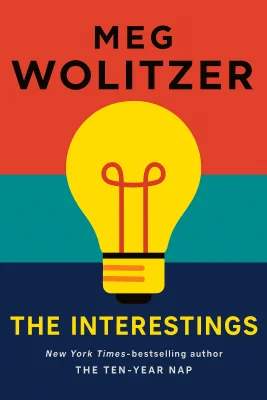
The Interestings
Categories
Fiction, Audiobook, Adult, Book Club, Contemporary, Novels, Coming Of Age, Adult Fiction, Friendship, Literary Fiction
Content Type
Book
Binding
Hardcover
Year
2013
Publisher
Riverhead Books
Language
English
ISBN13
9781594488399
File Download
PDF | EPUB
The Interestings Plot Summary
Introduction
# The Interestings: A Chronicle of Talent, Secrets, and Time The teepee reeked of marijuana and teenage ambition. Jules Jacobson sat cross-legged on the dusty floor, watching five Manhattan sophisticates pass around a joint like it was communion wine. She was fifteen, from suburban Long Island, and had never felt more out of place or more desperate to belong. When Ash Wolf suggested they needed a name for their group, her golden brother Goodman sneered through the smoke: "So the world can know just how unbelievably interesting we are?" The irony stuck. They became the Interestings, lifting their cups of vodka and Tang in mock ceremony. What began as a summer camp friendship in 1974 would stretch across four decades, binding these six teenagers through love affairs, career triumphs, devastating betrayals, and the slow recognition that talent alone wasn't enough to navigate the brutal mathematics of adult life. Some would ascend to extraordinary heights while others learned to find meaning in smaller victories. But all would carry the weight of one terrible night when an accusation of rape would shatter their golden circle, sending one of them fleeing into permanent exile and forcing the others to choose between loyalty and truth.
Chapter 1: Summer of Convergence: Six Souls Unite in Creative Magic
The invitation came like salvation. Jules was washing her face at the camp sinks when Ash Wolf materialized beside her, all pale hair and ethereal beauty. "Want to come hang out with some of the others tonight?" The question was casual, but Jules's heart hammered as she nodded. She had been at Spirit-in-the-Woods for two weeks, watching the other artistic teenagers from the margins, knowing she didn't quite belong among these urban sophisticates who spoke of Günter Grass like a personal friend. Boys' Teepee 3 was thick with smoke and pretension when she arrived. Ash sat like a fairy princess on a lower bunk while her brother Goodman lounged above, six feet of golden arrogance that made Jules's stomach flutter with unwanted desire. Ethan Figman, thick-bodied and startlingly homely, rolled joints with pharmaceutical precision while discussing European cinema. Jonah Bay, beautiful son of folk singer Susannah Bay, strummed his guitar with the casual mastery of inherited talent. Cathy Kiplinger, the dancer whose womanly body seemed to embarrass even her, moved with a sensuality that made the boys stare. They were all from New York City, all sophisticated in ways Jules couldn't fathom. When she made a nervous joke about a girl named Crema Seamans, the laughter that followed was like a drug. Ash began calling her Jules instead of Julie, and the name felt like a new skin. She was no longer the grieving girl from Underhill whose father had died of cancer. She was Jules, and she was funny, and she belonged here among these golden children who spoke of art and politics as if they owned the world. The summer unfolded like a fever dream of creative awakening. Jules discovered she could make audiences roar with laughter, her comic timing sharp enough to cut glass. In the animation shed, Ethan showed her his masterwork: Figland, a parallel universe where a lonely boy named Wally Figman could escape his miserable life. The cartoon was sophisticated beyond his years, full of sharp humor and surprising pathos. When he tried to kiss her afterward, she pulled away gently. She loved him, but not in the way he desperately wanted. The camp was their sanctuary, a place where talent mattered more than money or social status. But even in paradise, hierarchies emerged. Some, like Ethan, were clearly destined for greatness. Others, like Jules, showed promise but lacked the killer instinct. And some, like Goodman, seemed to coast on charisma alone, their actual abilities remaining mysteriously undefined. As the summer ended and buses prepared to take them back to their separate lives, they made solemn promises to stay in touch, to never let the magic fade. They were young enough to believe such promises could be kept.
Chapter 2: The Golden Years: Bonds Forged in Art and Adolescent Dreams
The Wolf family apartment became their second home, a sprawling Upper West Side sanctuary they called the Labyrinth. Gil and Betsy Wolf presided over their salon with benevolent sophistication, serving elaborate meals and tolerating teenage excess with remarkable grace. The apartment was everything Jules's suburban home was not: cultured, worldly, alive with possibility. By senior year, the group's romantic configurations had shifted like a kaleidoscope. Ash and Jonah became a couple, though their relationship had the tentative quality of two beautiful birds sharing a branch. Goodman and Cathy burned hot and volatile, her neediness clashing with his casual cruelty. Jules remained on the periphery of these couplings, watching and wanting but never quite connecting. The friends gathered regularly in Goodman's room, smoking hash and planning their artistic conquests. Ethan's animation skills had caught the attention of Old Mo Templeton, a Disney veteran who treated the boy's talent with reverence. Ash was writing and directing plays with the confidence of someone who had never doubted her place in the world. Even Jules felt her comedic abilities sharpening, her timing becoming more precise with each performance. But cracks were showing in their perfect circle. Goodman had grown increasingly volatile, drinking heavily and raging against his father's expectations. His relationship with Cathy had ended badly, leaving both of them wounded and angry. The pressure of approaching adulthood weighed on them all, but Goodman seemed least equipped to handle it. The camp summers continued to anchor their friendship, three golden seasons where they ruled like benevolent dictators over the younger campers. Jules threw herself into acting, discovering she could make audiences weep with laughter. In Edward Albee's "The Sandbox," she played an ancient grandmother with such comic brilliance that people talked about her performance for weeks. The laughter was intoxicating, a balm for all the ordinary pain of her suburban existence. As college applications loomed and their childhood officially ended, the six friends clung to each other with increasing desperation. They had found something rare and precious in their bond, a connection that transcended the usual categories of friendship and love. But the world beyond Spirit-in-the-Woods was waiting, and it would test their loyalty in ways they couldn't yet imagine.
Chapter 3: Shattered Circle: Accusations, Flight, and the End of Innocence
New Year's Eve 1975 arrived with the brittle promise of America's bicentennial year. The Wolfs threw their annual party, and the teenagers gathered in Goodman's room, smoking hash that Jonah had brought from his mother's loft. The drug was stronger than their usual marijuana, and it hit them hard. In the altered state that followed, Goodman and Cathy slipped away together, claiming they had a "secret adventure" planned. Hours later, the phone rang. Goodman was calling from jail. Cathy had accused him of rape, and the police had arrested him at Tavern on the Green, where they'd been caught in a storage room. The golden boy who had seemed untouchable was suddenly facing twenty-five years in prison. The New Year that was supposed to mark America's bicentennial instead marked the beginning of the end of their charmed circle. The legal machinery ground slowly forward. Dick Peddy, the family lawyer, warned them not to contact Cathy, but the prohibition felt like a betrayal of their friendship. Jules found herself caught between loyalties when Ash asked her to speak with Cathy anyway. The meeting at Lincoln Center was devastating. Cathy, her fingernails bitten to bloody stumps, described the assault with clinical precision. She spoke of being dry, of Goodman smiling as he hurt her, of the "labial abrasions" the doctor had documented. Jules wanted to believe her friend was lying, but Cathy's anguish seemed too raw to be fabricated. The confrontation split the group further. Ash was furious that Jules had entertained doubts about Goodman's innocence. Only Ethan maintained contact with Cathy, calling her regularly despite the lawyer's warnings. His compassion for both sides marked him as different from the others, more mature somehow, willing to hold contradictions that the rest of them couldn't bear. As the trial date approached, Goodman grew increasingly desperate. He drank heavily and saw a psychoanalyst three times a week, but nothing seemed to help. The golden boy who had never faced real consequences was crumbling under the weight of potential ruin. His room, usually a chaos of clothes and architectural models, became obsessively clean. It should have been a warning sign. On the morning he was supposed to appear in court, Goodman was gone. He had cleaned out his bank account, taken his passport, and vanished into the world. The boy who had once seemed larger than life had become a fugitive, leaving behind only questions and a family destroyed by grief. The bench warrant was issued within hours, but Goodman Wolf had disappeared as completely as if he had never existed.
Chapter 4: Guardians of Secrets: Loyalty, Deception, and Moral Compromise
The revelation came in Iceland, of all places, during what Jules had assumed would be a simple family vacation with the Wolfs in the summer of 1977. She was recovering from food poisoning when Ash summoned her to a café in Reykjavik with unusual urgency. Walking through the bright Nordic evening, Jules felt a strange premonition that her life was about to change in ways she couldn't imagine. At Café Benedikt, she spotted the Wolf family at a corner table with Gudrun Sigurdsdottir, their former camp counselor. Then she saw him. Goodman Wolf, two years older and weathered by exile, raised a glass of beer in greeting as if his disappearance had been nothing more than an extended vacation. The boy who had fled New York in panic had been transformed into something harder and more substantial, his hands callused from construction work, his face marked by Nordic winters. The story unfolded like a confession that had been waiting years to be told. Goodman had fled to Iceland on instinct, seeking out Gudrun because she represented a world beyond the reach of American law. He had been living under an assumed name, working construction jobs when his back problems allowed, surviving on money his parents secretly sent through elaborate banking channels. The Wolf family had been in contact with their fugitive son all along. Phone calls in the middle of the night, carefully orchestrated meetings in European cities, a network of lies and omissions that had allowed them to maintain the fiction of grief while actually managing an ongoing relationship with their exiled child. Gil and Betsy Wolf had become expert at money laundering and international wire transfers, skills they had never expected to need in their privileged Manhattan lives. Jules felt the weight of the secret settling on her shoulders like a lead blanket. She was being inducted into a conspiracy that had been years in the making, asked to carry knowledge that could destroy not just the Wolf family but potentially her other friends as well. Ash explained the impossible position she had been placed in, particularly regarding Ethan. Her boyfriend was a deeply moral person who believed in justice and truth above all else. If he knew that Goodman was alive and in contact with the family, he might feel obligated to report it to authorities. "You're the only one I can trust with this," Ash told Jules, her eyes bright with unshed tears. "You're the only one who understands what it means to love someone despite everything." The burden was enormous, but Jules found herself nodding agreement. She was being asked to lie to Ethan, to carry a secret that would grow heavier with each passing year, to become complicit in a family's elaborate deception. Yet she also understood the impossible love that drove the Wolf family's actions, the refusal to abandon a child no matter what he might have done.
Chapter 5: Divergent Destinies: Success, Struggle, and the Weight of Inequality
Twenty years later, the divergent paths of the Interestings had become fixed as geological formations. Ethan Figman was a multimedia empire, his Figland franchise generating hundreds of millions of dollars. He and Ash lived in a world of private jets and charitable foundations, their Christmas letters cataloging adventures that read like fantasy to their old friends. Jules had found her own path, quieter but no less meaningful. She became a therapist, helping others navigate the disappointments and small victories of ordinary life. Her marriage to Dennis Boyd, a gentle ultrasound technician she'd met at a dinner party, provided the stability that had eluded her in youth. Their daughter Rory was everything Jules had hoped to be: confident, talented, unafraid of the world. The restaurant was called Sand, and it lived up to its name. Actual sand covered the floor, crunching underfoot as the friends gathered to celebrate Ash's theatrical success in 1989. The dinner was meant to be a celebration, but Dennis's medical emergency revealed the fundamental imbalance that had developed in their friendship. His depression medication required strict dietary restrictions, and something in the elaborate tasting menu triggered a hypertensive crisis that nearly killed him. The ambulance ride to Beth Israel Hospital became a blur of sirens and medical jargon, but what Jules remembered most clearly was the moment when she realized how completely their lives had diverged. While she sat in the emergency room waiting area, terrified that her husband might die, Ethan was handling everything with the calm efficiency of someone accustomed to solving problems with money and connections. The gesture was kind and necessary, but it also highlighted the gulf between them. Jules and Dennis were people to whom things happened. Ethan and Ash were people who made things happen, who had the resources to solve problems that would have overwhelmed ordinary people. Dennis survived, but the incident forced him off the medication that had kept his depression manageable for years. The financial pressure became crushing. Jules built up her therapy practice as much as she could, but social work would never pay enough to support a family in New York City. Meanwhile, Ethan's success continued to compound exponentially. "Figland" had gone into syndication, generating the kind of wealth that transformed mere millionaires into cultural institutions. The disparity created an invisible but impermeable barrier between the two couples, every dinner out becoming an exercise in careful choreography, with Ethan quietly picking up checks while pretending it was no big deal.
Chapter 6: Truth Unveiled: When Lies Collapse and Love Must Choose
In 2009, Jules made an impulsive decision that would change everything. When the aging directors of Spirit-in-the-Woods offered her and Dennis the chance to run the camp, she leaped at the opportunity. It seemed like a chance to return to the source of her happiness, to recapture something essential that had been lost in the compromises of adult life. But the reality of running the camp proved different from her memories. The teenagers were talented and passionate, but Jules found herself on the outside looking in, no longer one of the chosen but merely an administrator managing their dreams. Dennis embraced the work, finding satisfaction in being needed and competent, but Jules felt the weight of time and change. The summer brought an unexpected visitor. Goodman appeared in the woods one evening, older and damaged, a shadow of his former golden self. His presence forced a confrontation with the past that none of them were prepared for. He had been living in Iceland for over thirty years, working construction when his back allowed, surviving on the money his family sent through secret channels. When Jules accidentally revealed his location to Ethan during a phone call, the carefully maintained lie that had sustained Ash's marriage for decades finally exploded. The revelation of Goodman's existence and Ash's decades of deception shattered the Figman marriage. Ethan felt betrayed not just by the lie itself but by what it represented: Ash's fundamental loyalty to her family over their partnership. They separated, each retreating to different corners of their vast life, while their friends watched helplessly as the golden couple fell apart. But fate had other plans. Ethan discovered a melanoma on his scalp, a small spot that would prove to be his death sentence. As the cancer spread through his body, he and Ash reconciled, drawn together by the reality of mortality. Jules became his companion through treatment, sitting with him during chemotherapy sessions, watching as the brilliant, successful man she'd loved since adolescence slowly faded. The end came suddenly. Ethan suffered a massive heart attack while eating breakfast in bed, dying in the ambulance before reaching the hospital. At fifty-two, the boy who had dreamed of creating worlds was gone, leaving behind an empire built on imagination and the friends who had shared his first visions of greatness.
Chapter 7: Final Reckonings: Death, Legacy, and What Remains of Dreams
The funeral was held at Riverside Chapel, the same place where they had once attended concerts and poetry readings as teenagers. The chapel was packed with mourners from every phase of Ethan's life: animation industry executives, camp friends, celebrities who had grown up watching Figland, and the countless people whose lives had been touched by his work and generosity. Jules sat in the front row with Ash, watching as speaker after speaker praised Ethan's genius, his kindness, his extraordinary success. But what struck her most was how few of them had known the awkward boy who had rolled joints in a summer camp teepee, who had kissed her clumsily in the animation shed, who had carried an unrequited love for her through decades of friendship. In the aftermath of Ethan's death, the survivors were forced to confront what remained of their shared dreams. Ash, wealthy beyond measure but emotionally devastated, struggled to imagine a future without her partner. She threw herself into managing Ethan's foundation, using his fortune to fight the very systems of exploitation that had once enriched them both. Jules returned to New York and found work with troubled teenagers, discovering that her real gift lay not in being interesting herself but in helping others navigate their own complicated paths to adulthood. The camp continued without them, run by new dreamers who brought their own vision to the eternal cycle of teenage transformation. Goodman remained in Iceland, a cautionary tale of potential squandered and consequences faced. The golden boy who had once seemed destined to conquer the world had instead become its casualty, living in exile with only his regrets for company. His occasional letters to his sister were filled with questions about the friends he had left behind, the life he might have lived if he had made different choices. Jonah, the beautiful boy who had never quite found his place, finally began playing music again after Ethan's death. He discovered that some gifts could be reclaimed even after decades of silence, that talent didn't have an expiration date if you were willing to do the work of recovery. Jules and Dennis rebuilt their marriage on more honest ground, accepting the ordinary magic of a love that had survived envy, disappointment, and the corrosive effects of comparison. They learned what Ethan had known all along: that the most profound transformations often happen not in the spotlight of success but in the quiet moments when we choose to keep loving despite everything that would pull us apart.
Summary
The story of the Interestings spans four decades, tracing the arc from youthful possibility to middle-aged reality. What began as a summer camp romance with art and friendship evolved into something more complex: a meditation on talent, ambition, and the price of dreams. Some of the six teenagers who called themselves the Interestings achieved the greatness they had imagined, while others learned to find meaning in smaller victories. The tragedy of Goodman Wolf cast a shadow over all their lives, his flight from justice serving as a reminder that privilege and charm were no protection against the consequences of one's actions. His absence forced the others to carry the weight of secrets and lies, testing their loyalty in ways they had never imagined as teenagers drunk on possibility and marijuana in a summer camp teepee. In the end, perhaps the most interesting thing about the Interestings was not their individual achievements, but their enduring capacity to love and forgive each other across the decades, even as their dreams transformed into something unrecognizable from what they had once imagined. The magic of that first summer lived on in memory, but the adults they had become carried the harder wisdom of time: that being interesting was less important than being present, and that the greatest talent of all might simply be the ability to endure.
Best Quote
“She recognized that that is how friendships begin: one person reveals a moment of strangeness, and the other person decides just to listen and not exploit it.” ― Meg Wolitzer, The Interestings
About Author

Meg Wolitzer
Wolitzer delves into the intricate web of personal relationships and societal expectations, situating her narratives in the complexities of modern life. Her books, such as "The Interestings" and "The Wife", delve into themes of ambition, gender roles, and the evolving nature of friendships and family dynamics. She adeptly uses wit and empathy to explore how individual lives intersect with broader social norms, particularly focusing on the experiences and identities of women. Therefore, her work often resonates with readers who seek both intellectual engagement and emotional insight.\n\nIn her literary career, Wolitzer has crafted novels for a range of audiences, from adult fiction to young adult books like "Belzhar". Her method involves sharp observations and nuanced character development, providing a mirror to readers' own experiences and societal roles. By teaching at prestigious institutions and co-directing BookEnds, a novel-writing program, she has also influenced aspiring writers, sharing her insights into crafting meaningful narratives. Moreover, her involvement in projects such as "Selected Shorts" underscores her commitment to the literary community, extending her impact beyond the page.\n\nThis brief bio captures Wolitzer's role as a celebrated figure in American literature, highlighting her significant contributions to exploring the human condition through fiction. Her work not only entertains but also provokes thought, making it relevant for anyone interested in the intersection of personal aspirations and societal pressures. For readers seeking stories that blend emotional depth with social commentary, Wolitzer's novels offer a rich tapestry of themes and insights.
Read moreDownload PDF & EPUB
To save this Black List summary for later, download the free PDF and EPUB. You can print it out, or read offline at your convenience.

The Interestings
by Meg Wolitzer
