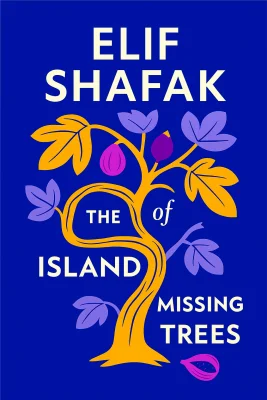
The Island of Missing Trees
Categories
Fiction, Audiobook, Historical Fiction, Romance, Fantasy, Book Club, Historical, Contemporary, Magical Realism, Literary Fiction
Content Type
Book
Binding
Hardcover
Year
2021
Publisher
VIKIN
Language
English
ASIN
0241434998
ISBN
0241434998
ISBN13
9780241434994
File Download
PDF | EPUB
The Island of Missing Trees Plot Summary
Introduction
# Roots Between Divided Shores: A Fig Tree's Testament The scream tore through a London classroom like shattered glass, fifty-two seconds of raw agony that seemed to come from somewhere deeper than Ada Kazantzakis's sixteen-year-old throat. Her classmates sat frozen as their quiet peer transformed into something primal, something broken. The sound would go viral within hours, spawning a global movement of screaming teenagers, but Ada knew nothing of hashtags or fame. She only knew that something ancient had clawed its way out of her chest, tasting of salt and sorrow and stories never told. That night, as Storm Hera battered London with unprecedented fury, Ada watched her father Kostas working in their freezing garden. He was burying their fig tree for winter, wrapping it in tarps and speaking to it in gentle murmurs as if consoling a frightened child. The tree had come from Cyprus, he'd once mentioned, but Ada had never seen that island she was named after. She wondered if trees could carry memories in their roots the way she seemed to carry her mother's sadness in her bones. Beneath the frozen earth, the ancient fig tree settled into its winter sleep, holding secrets that could explain why daughters scream without knowing why.
Chapter 1: The Scream That Echoed Across Generations
The history lesson had been ordinary enough. Mrs. Walcott droning about conflicts and displacement while twenty-nine students fought sleep in the afternoon heat. Ada sat by the window, watching clouds gather over North London, when something inside her snapped like a branch in a storm. The scream erupted without warning, a sound so raw and primal that her teacher's face drained of color. It lasted fifty-two seconds. An eternity of anguish that seemed to come not from Ada's throat but from some deeper well of inherited pain. When silence finally returned, she collapsed into her chair, breathless and hollow-eyed, while her classmates stared in horrified fascination. Someone had filmed it. By evening, the video would spawn a global movement of screaming teenagers using the hashtag #doyouhearmenow. Kostas arrived at the school with mud on his boots and leaves in his hair, rushing from his beloved garden where he'd been preparing their fig tree for winter. The headmaster spoke of stress, of grief counseling, of the challenges facing a girl who'd lost her mother barely a year ago. But Ada saw something else in her father's eyes when he looked at her, something that tasted of recognition and old fear. That night, as Storm Hera battered their house with unprecedented fury, Ada pressed her face to her bedroom window and watched Kostas working in the freezing garden. He was covering the buried fig tree with stones and tarps, speaking to it in gentle murmurs. The tree had come from Cyprus, he'd once mentioned, but that island remained as mysterious to Ada as her mother's silences had been. She wondered if trees could carry memories in their roots, if pain could be passed down through generations like eye color or the shape of hands.
Chapter 2: Forbidden Love in War-Torn Cyprus
Cyprus, 1974. The island burned with more than Mediterranean heat as ethnic tensions simmered between Greek and Turkish communities while British colonial rule crumbled. In this powder keg of nationalism and violence, seventeen-year-old Kostas Kazantzakis fell impossibly in love with eighteen-year-old Defne, a Turkish girl with artist's hands and a rebel's heart. They met in shadows and stolen moments at The Happy Fig, a tavern run by an unlikely partnership between Yiorgos, a gregarious Greek, and Yusuf, a gentle Turk with a stutter that vanished when he spoke to plants. The two men had created something miraculous in that divided world, a sanctuary where boundaries blurred and humanity transcended tribal hatred. Above them all stood a magnificent fig tree that grew through the tavern's roof like a living cathedral, its ancient branches sheltering impossible love stories. Defne sketched Kostas by moonlight while he taught her the names of birds in Greek. Their romance was a dangerous secret, Greek boys didn't date Turkish girls when communities were arming themselves for war. Discovery would mean exile, violence, or worse. But young love burns brightest in the face of prohibition, and they made desperate promises under full moons, pledging eternal devotion even as the island slid toward catastrophe. The fig tree watched them all with ancient patience, its roots deep in soil that had absorbed the blood of countless conflicts. It had survived Ottoman rule, British colonialism, and now this new madness of ethnic partition. Yet it continued to bear fruit, to offer shade, to shelter the desperate romance playing out beneath its branches. The tree understood what the humans could not, that some things endure not because they are strong, but because they refuse to let hatred have the final word.
Chapter 3: The Bombing and Forced Separation
The bomb arrived on a motorbike, hurled through The Happy Fig's garden like a messenger from hell. Kostas was fetching water for Defne when the explosion tore through the tavern's front wall, killing five people instantly, three American tourists, a Canadian peacekeeper, and a young Greek waiter who had just become a father. In the aftermath, as smoke and screams filled the air, the ancient fig tree caught fire. Yusuf saw her burning first, this gentle man who spoke to plants in perfect Turkish while stuttering with humans. He ran toward the flames, sobbing, beating at the fire with tablecloths until Yiorgos joined him. Together they saved what they could of their beloved tree, their hands blistered and blackened, their faces streaked with tears and ash. The attack had shattered more than wood and stone. It destroyed the illusion that love could exist apart from the hatred consuming Cyprus. That night, Kostas and Defne made love for the first time on a hill above the ruined tavern, their bodies pressed against earth that still trembled with violence. They pulled stinging nettles from the ground to make a bed, their tenderness a defiant act in a world gone mad. Under the indifferent moon, they promised each other forever, not knowing that forever had already ended the moment the bomb exploded. Within days, Kostas's mother Panagiota would force him onto a plane to London, using tears and guilt and the memory of his dead brother to pry him away from the girl who was destroying their family's safety. The coup against Archbishop Makarios was coming. Turkish troops would land at Kyrenia. The island would split like a broken heart, and lovers would find themselves on opposite sides of a line drawn in green ink on a British general's map.
Chapter 4: Twenty-Five Years of Silence and Loss
London, 1974. Kostas arrived at Heathrow Airport carrying nothing but confusion and rage, his heart still beating to Mediterranean rhythms while his body adjusted to gray English skies. His uncle put him to work in a grocery store, stacking shelves and counting inventory while Cyprus burned on television screens. He wrote letter after letter to Defne, pouring his love onto pages that disappeared into the postal void. Through desperate phone calls, he learned that she was alive but silent. When he finally reached her sister Meryem, the truth cut like a blade. "She doesn't want to hear from you anymore." A postcard arrived in Defne's handwriting, asking him to stop trying to contact her. The words were few but final, each letter a small death. Kostas didn't know that Defne was carrying his child, that she'd made an impossible choice to protect him from a truth that would destroy them both. In Cyprus, Defne faced the consequences alone. In a society where an unmarried Turkish girl carrying a Greek man's child was beyond redemption, she concocted a desperate lie. The father was Yusuf, they were engaged, but he had mysteriously disappeared. Her parents were devastated by the shame, her father refusing to speak to her, her mother raging at the dishonor brought upon their family. The baby was born in January 1975, two months premature. She named him Yusuf Yiorgos, honoring the two men who had risked everything to protect her. Unable to care for him herself, she arranged for adoption by a British couple who promised she could visit as the babysitter. For eighteen months, she watched her son grow, learning to crawl, to laugh, to reach for her face with tiny fingers that would never know their father. Then malaria returned to Cyprus, and Yusuf Yiorgos Robinson died in July 1976, buried in the military cemetery alongside hundreds of other British infants who had perished on the island.
Chapter 5: Return and Reunion: Unearthing Buried Truth
Twenty-five years later, Dr. Kostas Kazantzakis returned to Cyprus as a respected botanist, his hair silver at the temples, his hands steady from decades of handling delicate specimens. He came officially to study how trees survive in post-conflict environments, but his real mission was more personal, to find the woman who still haunted his dreams, to understand why she had chosen silence over love. He found Defne working with the Committee on Missing Persons, digging up mass graves from the 1974 violence. She sat in trees while writing reports, her colleagues joked, like a bird who'd forgotten how to land. When she dropped from her perch to greet him, her handshake was brief and guarded. The years had carved lines around her eyes, but she was still beautiful in a way that made his chest tight with memory. They worked together in the heat, unearthing bones from unmarked graves while cicadas sang in the distance. Defne explained her mission with clinical precision, to find the missing so families could bury their dead properly, to give closure to mothers who'd waited decades for news of their sons. She didn't investigate who killed whom, that wasn't her job. Her job was to separate human remains from the earth that had claimed them, to restore names to the nameless. Standing in the ruins of The Happy Fig, where weeds grew through broken walls and the ancient fig tree still stood, scarred but alive, her trunk bearing the black marks of that long-ago fire, Defne finally told him about their son. About the pregnancy she'd hidden, about the child who'd lived and died while Kostas was building a new life in London, never knowing he'd become a father and lost that gift in the same breath. The truth hung between them like smoke from the cigarettes she now shared with David, a UN colleague whose easy intimacy with her made Kostas's stomach clench with jealousy he had no right to feel.
Chapter 6: Transplanted Lives in London Soil
They married in London, in a small ceremony attended by strangers. Defne was pregnant again, and this time Kostas was there to hold her hand through the fear and wonder of creating new life. They planted a cutting from the old fig tree in their garden, watching it struggle to adapt to the English climate while their own roots slowly intertwined in foreign soil. Ada was born in early December, two months premature like her half-brother had been. She spent weeks in an incubator while the fig cutting fought its own battle for survival in the cold London earth. Both would make it, growing stronger as the seasons turned, the child and the tree learning to thrive in their transplanted home. Defne threw herself into work with the Committee on Missing Persons, traveling to immigrant communities across London, interviewing elderly Cypriots who might hold clues to the island's disappeared. She carried the weight of Yusuf and Yiorgos's fate like a stone in her chest, never knowing whether they were dead or alive, never able to properly mourn or move forward. The work took its toll. She began drinking again, staying out late, coming home with alcohol on her breath and pain in her eyes. She made Kostas promise never to tell Ada about their past, about the island's troubles, about the cycle of trauma that had shaped their lives. She wanted their daughter to grow up free from the burden of inherited grief. But some roots run too deep to sever. The past lived in their house like an uninvited guest, present in Defne's silences, in Kostas's careful way of avoiding certain subjects, in the fig tree that grew larger each year, its branches reaching toward a sky that would never be quite the same color as the one it had known in Cyprus.
Chapter 7: After the Storm: A Daughter's Quest for Identity
Ada was sixteen when her mother died, found on her bedroom floor clutching her knees like a broken doll. The coroner called it accidental, a dangerous combination of alcohol and medication, but Ada knew better. She had watched her mother retreat deeper into herself, had seen the way depression wrapped around her like strangling roots, invisible but deadly. Kostas buried himself in work, writing about trees that could pass trauma through their DNA, about how plants remembered and adapted to survive. He and Ada moved around each other carefully, both grieving but unable to share their pain. The house felt hollow without Defne's fierce presence, without her sudden bursts of laughter or rage that had made everything feel more alive. At school, Ada felt the weight of questions she couldn't answer. Who was she? Where did she come from? Why did her parents never talk about their homeland? The silence her mother had insisted upon became a prison, trapping Ada in a story with missing chapters, a family tree with severed branches. The breaking point came during that history lesson about conflict and displacement, when something inside her snapped and she screamed with the voice of generations. Her father tried to explain it away, to minimize the incident, but Ada knew she was drowning in the same dark waters that had claimed her mother. She needed answers, needed to understand the weight she carried without knowing why. The fig tree in their garden grew taller each year, its roots spreading deeper, but Ada felt rootless, unmoored, desperate to understand her place in the world.
Chapter 8: Unburying the Past: Three Generations Under the Fig Tree
Salvation came in an unexpected form, Meryem, Defne's sister, arriving from Cyprus like a force of nature in bright colors and practical wisdom. She brought stories, recipes, and most importantly, the truth Ada had been denied. Over cups of tea and plates of homemade pastries, the family's buried history slowly emerged like bones from an archaeological dig. Meryem told Ada about the island where her parents had met, about the love that had bloomed despite impossible odds, about the price they had paid for choosing each other over tribal loyalty. She spoke of Yusuf and Yiorgos, the gentle men who had created a sanctuary of acceptance in a world gone mad with hatred. She explained about the missing, the disappeared, the families still searching for their loved ones decades later. Through Meryem's stories, Ada began to understand her mother's pain not as weakness, but as the natural response of someone carrying too much history, too much loss, too much love for a world that seemed determined to destroy itself. The silence that had protected Ada from trauma had also cut her off from understanding, from the context that might have made her mother's struggles comprehensible. As winter gave way to spring, Kostas prepared to unbury the fig tree from its protective covering. The ritual had become an annual celebration of survival, of the tree's ability to endure the English cold and emerge renewed. This year, Ada helped him dig, her hands working alongside his in the dark earth, uncovering roots that had grown stronger in the darkness. The tree stood upright again, its branches reaching toward the light, its leaves unfurling with the promise of new growth. In its resilience, Ada saw a reflection of her own family's journey, transplanted, transformed, but ultimately rooted in love strong enough to survive any storm.
Summary
The fig tree that grew in their London garden was genetically identical to the one that still stood in the ruins of The Happy Fig tavern, but it was not the same tree. It had adapted to new soil, new climate, new circumstances, just as Ada was learning to adapt to the weight of her inherited history. The past was not a burden to be carried, but a foundation to be built upon. In the final revelation, they learned that Yusuf and Yiorgos had been found at last, their remains discovered in a collapsed well, chained together in death as they had been united in life. Ada planned to visit Cyprus that summer, to see the island that had shaped her parents' love and loss. She would walk the streets of Nicosia, visit the ruins of The Happy Fig, stand before the original fig tree that had witnessed it all. She would carry with her the stories Meryem had shared, the understanding Kostas had finally offered, and the knowledge that she was part of something larger than herself. The tree had taught them all its greatest lesson, that love, like life itself, finds a way to endure, to adapt, and ultimately to flourish, even in the most unlikely soil. Some roots run deeper than borders drawn on maps, stronger than the hatred that once tore families apart, patient enough to wait for the right season to bloom again.
Best Quote
“Because in real life, unlike in history books, stories come to us not in their entirety but in bits and pieces, broken segments and partial echoes, a full sentence here, a fragment there, a clue hidden in between. in life, unlike in books, we have to weave our stories out of threads as fine as the gossamer veins that run through a butterfly's wings.” ― Elif Shafak, The Island of Missing Trees
Review Summary
Strengths: The review highlights the book's breathtakingly beautiful storytelling and its dedication to immigrants and exiles, which captures the essence of the narrative. The reviewer praises Elif Shafak's skillful writing and the effective use of contextual quotes that set the tone for the story. The introduction is noted for its evocative imagery and emotional depth, drawing readers into the narrative. Overall: The review conveys a highly positive sentiment, with the reader expressing admiration for the storytelling and thematic depth. The book is recommended with enthusiasm, as evidenced by the 5-star rating and the reader's personal connection to the narrative and its themes.
About Author

Elif Shafak
Shafak investigates the intersection of culture and identity through a transnational lens, weaving narratives that challenge and enrich readers' perceptions of belonging and otherness. Her writing, both in fiction and non-fiction, delves into the complexities of minority voices, women's roles, and cultural identity. By blending Eastern and Western storytelling traditions, Shafak crafts works like "The Forty Rules of Love" and "10 Minutes 38 Seconds in This Strange World" that resonate with a global audience. These books, among others, are characterized by their rich settings and intricate narratives that interlace multiple storylines, often incorporating elements of magical realism and political discourse. This method not only captivates but also compels readers to reflect on diverse social and political issues.\n\nHer work is not confined to fiction alone; Shafak also explores social and political themes in her essays, touching on gender, politics, and mental health. Her book, "How to Stay Sane in an Age of Division", showcases her ability to address contemporary issues with insight and empathy. As a prolific author, she has been translated into over 57 languages, allowing her themes to transcend cultural boundaries and reach a wide audience. Moreover, Shafak’s position as a public intellectual and advocate for human rights underscores the impact of her work beyond the page, making her contributions significant in fostering intercultural dialogue and understanding. This bio highlights her role in literature and society, offering readers a profound exploration of the world through her eyes.\n\nShafak's dedication to storytelling has earned her numerous accolades, including the Rumi Prize and the Halldór Laxness International Literature Prize. She is also recognized as a Chevalier des Arts et des Lettres, further cementing her status as a significant voice in literature. Through her books and essays, Shafak provides a reflective lens on contemporary issues, offering readers both enjoyment and insight.
Read moreDownload PDF & EPUB
To save this Black List summary for later, download the free PDF and EPUB. You can print it out, or read offline at your convenience.
The Island of Missing Trees
by Elif Shafak
