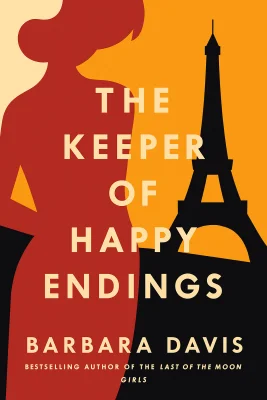
The Keeper of Happy Endings
Categories
Fiction, Audiobook, Historical Fiction, Romance, Book Club, Historical, France, Novels, World War II, Drama
Content Type
Book
Binding
Kindle Edition
Year
2021
Publisher
Lake Union Publishing
Language
English
ASIN
B08X48G5VL
ISBN13
9781542021487
File Download
PDF | EPUB
The Keeper of Happy Endings Plot Summary
Introduction
# The Keeper of Happy Endings: Threads of Fate Across Time In the basement of a fire-damaged Boston building, Rory Grant discovers a dress box that will unravel forty years of carefully guarded secrets. The charred remains of what was once L'Aiguille Enchantée hold more than fabric and thread—they contain the fragments of a love story that began in Nazi-occupied Paris and a child stolen from her mother's arms. When Rory returns the box to its owner, the reclusive French seamstress Soline Roussel, she unknowingly sets in motion a chain of revelations that will shatter everything both women believe about their lives. As Rory struggles with her own missing fiancé—a doctor who vanished in war-torn Sudan—she finds herself drawn into Soline's world of loss and longing. Two women, separated by generations but united by the particular agony of loving someone who may never come home, discover that some threads of fate refuse to break. What follows is a journey across time and continents, where the past refuses to stay buried and three generations of women learn that the most powerful magic lies not in guaranteeing happy endings, but in finding the courage to begin again.
Chapter 1: The Abandoned Dress Box: A Connection Across Time
The morning light filters through grimy windows as Rory climbs the narrow staircase of the building she's just leased on Newbury Street. Her footsteps echo in the hollow space where dreams once took shape in silk and satin. The fire that gutted L'Aiguille Enchantée four years ago left behind a skeleton, but Rory sees potential in the bones. She's here to transform this place into an art gallery, a dream deferred too long while she waited for news of Hux. Her fiancé, a doctor with Médecins Sans Frontières, had encouraged her to chase this vision before he disappeared nine months ago in South Sudan. Now the gallery has become both refuge and memorial to the life they'd planned together. Under the stairs, her flashlight beam catches something unexpected. A dress box, battered and water-stained, bears the faded gold lettering of the salon's name. Inside, she finds treasures that speak of a life interrupted: fabric swatches in jewel tones, sketches of gowns that never were, photographs of a young woman with dark hair and knowing eyes. At the bottom lies a man's shaving kit, the initials A.W.P. engraved in tarnished silver. The box belongs to Soline Roussel, the salon's former owner, a woman who vanished from Boston society after the fire. Rory's inquiries lead her to a small café in the North End, where she learns that Soline still lives in the city, a recluse who emerges only for necessities. The café owner provides an address with a warning: Madame Roussel doesn't welcome visitors. But Rory feels compelled to return what was lost. Something about the photographs, the careful way each item was preserved, suggests these aren't mere possessions but pieces of a heart that never learned to let go. The red door on Marlborough Street stands like a guardian to secrets, waiting for someone brave enough to knock.
Chapter 2: Threads of Magic: The Legacy of the Dress Witch
When the door finally opens, Rory finds herself face to face with a woman carved from shadows and memory. Soline Roussel moves with the careful grace of someone who has learned to protect herself from the world's sharp edges. Her hands, always gloved, gesture toward the dress box with a tremor that speaks of old wounds. Inside Soline's pristine home, time feels suspended. Every surface gleams, every object has its place, as if order might hold chaos at bay. But when Soline opens the box, her composure cracks. She lifts each item like a relic, her fingers tracing the edges of photographs with reverence and pain. The story spills out in fragments. Paris, 1943. The American Hospital where she volunteered, translating for wounded soldiers. Her mother Esmée, the legendary seamstress whose wedding gowns were whispered to guarantee happiness through ancient charms woven into silk and lace. The Roussel women were spell weavers, descendants of an old line that understood the magic hidden in needle and thread. When Esmée died of tuberculosis, she passed more than just her business to Soline. She revealed the family secret: they were the daughters of love affairs with soldiers, women who understood that war could steal everything except the memories we choose to keep. The locket she pressed into Soline's hands contained the photograph of Erich Freede, the German soldier who was her father—a man Esmée loved but lost to the war's cruel machinery. Soline speaks of those days with a mixture of longing and bitterness. She had believed in her mother's magic, in the power of love to triumph over darkness. The war would teach her otherwise, but not before she met the man who would define the rest of her life. His name was Anson Purcell, and he would break her heart so completely that forty years later, she still wore gloves to hide the scars.
Chapter 3: Wartime Shadows: Love Amidst Resistance
After her mother's death, Soline closed the shop and volunteered at the American Hospital. On her first day, overwhelmed by the sight of wounded soldiers, she vomited in a bathroom where a young American ambulance driver found her. Anson Purcell handed her his monogrammed handkerchief and stayed with her until the nausea passed. His kindness in that moment of vulnerability planted the seed of something that would grow into consuming love. Anson was a Yale dropout from Newport's elite circles who had abandoned his privileged life to drive ambulances for the American Field Service. Soline found herself drawn to his easy confidence, his belief that good could triumph over evil. They stole moments between shifts—coffee in the hospital mess, walks through blacked-out streets, whispered conversations about the future they'd build when the war ended. But Anson harbored dangerous secrets. He wasn't merely an ambulance driver; he was part of a Resistance cell smuggling Allied airmen and French Jews out of Nazi-occupied territory. When Soline accidentally discovered his clandestine activities in the hospital basement, she demanded to join the cause. Against his better judgment, Anson allowed her to become a courier, carrying forged documents and coded messages through the streets of Paris. Their love deepened as the danger mounted. In a world where death lurked around every corner, they found solace in each other's arms. Anson spoke of Newport summers and sailing races, while Soline dreamed aloud of the salon she would open after the war, where she would create gowns that celebrated love rather than merely promising it. The Gestapo's net was tightening around the Resistance cell. When Anson was captured during a routine mission, his interrogators didn't torture him for information—they threatened Soline instead. The Nazis had identified her as his weakness, the lever they could use to break him. Faced with the choice between protecting the network and saving the woman he loved, Anson made the only decision he could live with.
Chapter 4: Patterns of Loss: Lives Interrupted by Absence
On their last night together, Anson arranged for Soline's immediate evacuation from France. They finally became lovers, their union desperate and tender in equal measure. Soline sewed a charm into her wedding dress—a spell meant to bind their hearts across distance and time. At dawn, she left Paris with nothing but a cardboard dress box and Anson's leather shaving kit, a promise that he'd reclaim it when he came home to marry her. The journey to America was a nightmare of seasickness, fear, and uncertainty. Soline traveled the underground railroad designed for escaping airmen—safe houses in Spain, a cargo ship to England, then passage to Boston. She arrived at Newport's train station expecting to meet her future father-in-law, but found only a chauffeur who drove her to the Purcell mansion in uncomfortable silence. Owen Purcell greeted his son's fiancée with barely concealed hostility. The family patriarch, wounded in World War I and hardened by loss, saw Soline as an opportunistic foreigner who had ensnared his heir. The mansion that should have been her sanctuary became a prison of cold politeness and whispered disapproval. Only Anson's younger sister Thia showed her genuine warmth. The telegram arrived on a gray October morning. Anson William Purcell was missing, presumed dead. His ambulance had been found abandoned, blood-soaked, with witnesses reporting German soldiers marching a man matching his description into the woods. Owen delivered this news to Soline with cold satisfaction, as if her grief validated his judgment of her character. But Soline carried a secret that changed everything—she was pregnant with Anson's child. When she revealed this to Owen, his response was swift and merciless. He arranged for her removal to a home for unwed mothers in Providence, promising to ensure both mother and child were "properly placed" after the birth. The threat was clear: cooperate, or face ruin.
Chapter 5: Unfinished Seams: The Courage to Begin Again
At the Family Aid Society, Soline endured months of shame and isolation among other fallen women. When her daughter Assia was born prematurely, Soline heard the baby's cry—proof of life, however brief. But the child died within hours, and Soline was told the body had already been taken away for burial in an unmarked grave. She never held her daughter, never said goodbye. Released from the home with nothing but her dress box and a few dollars, Soline made her way to Boston. She found work in a shoe repair shop, taking in sewing to supplement her meager wages. Her salvation came in the form of Myles Madison, a disgraced tailor whose homosexuality had cost him his wealthy clientele. Soline found him drunk and suicidal, wallowing in self-pity over his social exile. Together, they rebuilt Madison's business from the ground up. Soline's talent for design, combined with Maddy's technical expertise, created something new—a couture house that served Boston's elite while secretly helping its outcasts. When Maddy died of lung cancer years later, he left everything to Soline, who transformed the shop into L'Aiguille Enchantée. For thirty years, she created gowns for other women's dreams while her own remained locked away in tissue paper. The fire that ended her career also ended her pretense. Standing in the hospital room, staring at her ruined hands, she finally understood what her mother had tried to teach her—that some things must be released, no matter how precious. Rory listens to this story with growing recognition. She knows this particular brand of loss, the way hope can become poison in the blood. Her own vigil for Hux has taught her that love doesn't die simply because its object disappears. It transforms, becoming something harder to carry but impossible to set down.
Chapter 6: Charmed Needles: The Healing Power of Creation
The friendship between Rory and Soline blooms over shared sorrow and pastries from Sugar Kisses café. Soline, emerging from years of self-imposed exile, finds herself drawn to this young woman whose pain echoes her own. She visits Rory's makeshift studio, marveling at textile art that transforms fabric into seascapes of impossible beauty. Here is talent being wasted on doubt and grief. Soline becomes Rory's unlikely mentor, helping her navigate the transformation from grieving fiancée to confident gallery owner. She takes Rory shopping, arranges for a dramatic haircut, teaches her the difference between fashion and style. But more importantly, she offers something Rory's well-meaning mother cannot: permission to grieve without timeline or apology. The revelation comes like a thunderbolt through clear sky. Doug Glennon, the Globe reporter helping Rory search for a photograph of the dead war hero, calls with news that shatters everything. Anson Purcell isn't dead. The man Soline has mourned for forty years is alive, well, and living a life of quiet philanthropy in Newport. The photographs Doug provides show a man aged by time but unmistakably the same face from Soline's treasured memories. Recent articles detail his work with humanitarian organizations, his donations to worthy causes, his status as heir to the Purcell shipping fortune. But nowhere is there mention of a wife, children, or the French girl he left behind in Paris. Rory faces an impossible choice. Should she tell Soline the truth and risk destroying the fragile peace she's built around her grief? Or should she let sleeping ghosts lie, protecting Soline from a revelation that might prove more devastating than the original loss? The weight of the secret becomes unbearable, driving her to seek answers from the man himself.
Chapter 7: Binding Stitches: Finding Faith in Uncertainty
The drive to Newport feels like a journey into the past. The Purcell estate looms against the Atlantic sky, a monument to old money and older secrets. Thia Purcell, Anson's sister, greets Rory with wariness that quickly transforms into something more complex. There's a familiarity in Rory's features that makes Thia's eyes widen with recognition. In Thia's study, surrounded by the detritus of her father's life, the truth emerges like a cancer exposed to light. Owen Purcell's ledger books tell a story of systematic cruelty, payments made to ensure his son's future remained untainted by foreign entanglements. Dorothy Sheridan, the woman who ran the Family Aid Society, had been well compensated for her lies. The baby who supposedly died had been sold to the highest bidder, her existence erased with the stroke of a pen. But the most devastating revelation is yet to come. As Thia places a photograph in Rory's hands, the world tilts on its axis. The child in the picture could be Thia herself, but the date stamp tells a different story. This is Rory's mother Camilla at age eight, her face a mirror of the Purcell bloodline. The adoption papers confirm what the photograph suggests: Camilla Nicole Lowell, born to Soline Louise Roussel, placed with George and Gwendolyn Lowell of Boston. When Rory finally confronts Anson, she encounters not the romantic hero of Soline's memories but a man hardened by years of believing himself betrayed. His coldness cuts like winter wind. He speaks of Soline with contempt, describing her as a woman who abandoned him when she learned of his injuries. The private investigator's photographs he produces tell a different story than the one he believes, but his interpretation has calcified into unshakeable truth. He walks away from the table, from the truth, from the chance at redemption that has been forty years in the making. But Rory presses his father's ledger into his hands before the elevator doors close between them. Sometimes the truth must be delivered whether or not it's welcome, and some stories are too important to let pride destroy them.
Summary
The opening night of Rory's gallery becomes the stage for revelations that will reshape three generations of women's lives. When Anson appears in the doorway, his presence sends shockwaves through the celebration. The look that passes between him and Soline carries forty years of longing and recrimination, love and loss tangled into something too complex for words. In the aftermath, as the truth about their connected histories finally emerges, all three women—Soline, Camilla, and Rory—discover that the threads binding them were stronger than the forces trying to tear them apart. The magic was never in the dresses or the charms sewn into hidden seams. It was in the courage to believe that love could survive anything, even death, even time, even the lies we tell ourselves to make loss bearable. In the gallery on Newbury Street, where Soline once created gowns for other women's happy endings, Rory now displays art that dares to see beauty in broken things. The building has been reborn, like the people who inhabit it, scarred but not defeated, transformed by fire into something stronger than what came before. And in the evening light that slants through restored windows, you can almost see them: the echoes of all the love stories that refused to end, all the hearts that learned to beat again, all the magic that happens when we finally find the courage to come home.
Best Quote
“There is a grief worse than death. It is the grief of a life half-lived. Not because you don’t know what could have been—but because you do. You realize too late that it was there for the taking—right there in your hands—and you let it slip away. Because you let something—or someone—keep you apart.” ― Barbara Davis, The Keeper of Happy Endings
Review Summary
Strengths: The book effectively manages multiple perspectives and timelines without causing confusion. Both contemporary and historical timelines are equally engaging, with well-developed characters whose actions and emotions are realistic and relatable. The descriptions of the Roussel wedding gowns and the magical elements add depth to the narrative. The book also contains numerous memorable quotes. Weaknesses: The story suffers from an extremely slow beginning and a contrived ending, which detracts from the overall enjoyment. Overall: The reviewer appreciates the book's premise and execution, despite some pacing issues. The character development and integration of timelines are praised, making it a recommended read with some reservations.
About Author

Barbara Davis
Davis delves into the intricate tapestry of family secrets, personal transformation, and historical continuity in her literary works, employing a unique blend of mystery, historical fiction, and emotional narrative. Her stories often feature strong female protagonists who navigate the complexities of reconciliation and new beginnings, revealing the profound impact of the past on present lives. This thematic exploration is particularly evident in "The Echo of Old Books," where Davis charts a narrative rich with historical soundness and emotional depth. Her experience as an executive in the jewelry industry and a technology consultant enriches her storytelling with diverse perspectives and insights.\n\nBeyond her novels, Davis contributes to the literary world with her versatility, extending her storytelling to screenwriting, as demonstrated by her short film "Daddy," which was screened at the Hoboken International Film Festival. Her books are celebrated for their layered emotional narratives and have achieved bestseller status, demonstrating their resonance with a wide audience. This engagement with complex themes provides readers with a reflective journey, encouraging an understanding of the enduring effects of history and personal evolution. For those interested in women's fiction with a captivating narrative, Davis's books offer a rewarding exploration of life's intricate connections.\n\nWhile her work has not been recognized with major national literary awards, Davis has garnered positive acclaim from both critics and readers. This bio illustrates the author’s commitment to crafting stories that not only entertain but also offer profound insights into the human experience. Currently residing in Rochester, New Hampshire, Davis continues to write actively, drawing inspiration from her love of music, reading, and travel. Her background and thematic focus make her a significant voice in contemporary women's fiction, appealing to readers who appreciate richly woven narratives that blend mystery, history, and emotional exploration.
Read moreDownload PDF & EPUB
To save this Black List summary for later, download the free PDF and EPUB. You can print it out, or read offline at your convenience.

The Keeper of Happy Endings
by Barbara Davis
