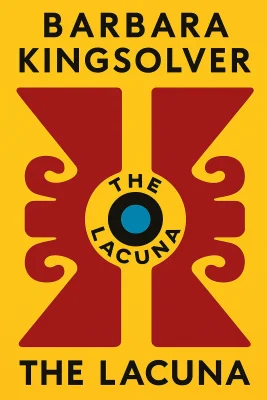
The Lacuna
Categories
Fiction, Art, Unfinished, Audiobook, Historical Fiction, Literature, Book Club, Historical, Novels, Literary Fiction
Content Type
Book
Binding
Hardcover
Year
2009
Publisher
Harper
Language
English
ASIN
0060852577
ISBN
0060852577
ISBN13
9780060852573
File Download
PDF | EPUB
The Lacuna Plot Summary
Introduction
# The Lacuna: Passages Between Worlds and Words In the sweltering heat of a Mexican kitchen in 1935, a teenage boy named Harrison Shepherd learns to navigate more than recipes. He's cooking for Diego Rivera and Frida Kahlo, Mexico's most celebrated artists, when the world's most hunted man arrives at their door. Leon Trotsky, architect of the Russian Revolution and Stalin's greatest enemy, needs sanctuary. What begins as a simple job preparing meals becomes something far more dangerous: bearing witness to history's most intimate moments. Harrison's journey starts on a remote island where underwater caves connect hidden worlds, teaching him that some passages can only be made alone, in darkness, with nothing but faith to guide the way. From revolutionary Mexico to McCarthy's America, he discovers that the act of witnessing can transform observer into target, and that sometimes the gaps in our stories reveal more truth than the words themselves.
Chapter 1: Between Two Shores: A Childhood Divided by Borders and Waters
The howler monkeys began their dawn chorus as ten-year-old Harrison Shepherd pressed his face against the salt-stained window. Isla Pixol floated in the Gulf of Mexico like a forgotten dream, connected to the mainland by a causeway that vanished twice daily beneath the tides. His mother Salomé paced their small house like a caged bird, her beauty wasted on an American engineer husband who spoke no Spanish and showed no interest in learning. Harrison belonged to neither world. Too Mexican for the American children, too gringo for the local workers' families, he found refuge in the island's hidden places. The most magical was an underwater cave that connected the lagoon to the open sea. Swimming through this submerged tunnel required perfect timing and desperate courage. One mistake meant drowning in the darkness between worlds. When Salomé finally abandoned her marriage, she dragged Harrison to Mexico City, where the sprawling capital overwhelmed him with vendors shouting in rapid Spanish and streets that writhed with revolutionary fervor. His mother's beauty attracted a succession of suitors while Harrison learned to make himself invisible, a skill that would serve him well. In their boarding house kitchen, he discovered his gift for languages and his talent for disappearing into the background. The pattern repeated itself across his childhood: restless moves, new cities, his mother's endless search for something she could never name. But Harrison carried with him the memory of that underwater passage, the knowledge that escape was always possible for those brave enough to hold their breath and swim through darkness toward uncertain light.
Chapter 2: In the Blue House: Secretary to Artists and Revolutionaries
The telegram arrived on a morning when light fell through their kitchen window like honey. Diego Rivera, the great muralist, needed a cook who could prepare American food for his wife, the painter Frida Kahlo. Someone discrete, reliable, invisible. At sixteen, Harrison found himself in the blue house in Coyoacán, where revolution simmered in every pot and politics seasoned every meal. Frida moved through the house like a wounded bird of paradise, her long skirts hiding the damaged leg that never healed properly from a streetcar accident. She painted her pain in colors that seemed to bleed off the canvas while Diego covered walls with murals celebrating Mexico's indigenous past and socialist future. The house buzzed with visitors: artists, writers, revolutionaries plotting the overthrow of various governments. Harrison learned to serve meals while making himself transparent, to clean studios without disturbing the creative chaos. He absorbed languages like a sponge, not just Spanish but the coded speech of conspiracy, the careful euphemisms of those who lived always under surveillance. When Frida's health worsened and she required surgery in New York, Harrison accompanied her, carrying paintings wrapped in newspaper and tied with string. The galleries of Manhattan opened before him like treasure chests, but even here politics followed them. Protests erupted when Diego's Rockefeller Center mural included Lenin's face. The commission was canceled, the mural destroyed. Back in Mexico, the blue house felt different. Frida's pain had deepened, and with it her art's intensity. When word came that León Trotsky needed sanctuary, Diego offered their home without hesitation. Harrison watched history walk through their front door, carrying nothing but a few books and the weight of a failed revolution.
Chapter 3: Witness to Assassination: The Death of Revolution's Architect
Trotsky arrived like a man already dead, his white hair wild, his eyes burning with the fever of the perpetually hunted. Stalin's assassins had followed him across Europe, and now they would follow him here. The blue house became a fortress, with guards and high walls and the constant tension of people living under siege. Harrison found himself promoted from cook to secretary, his careful handwriting and growing fluency making him invaluable. He typed Trotsky's memoirs, his political analyses, his desperate attempts to warn the world about Stalin's betrayals. The old revolutionary spoke of the future as if he could see it clearly: the purges, the show trials, the millions who would die for ideological purity. The first assassination attempt came on a May morning in 1940. Machine guns shattered the pre-dawn quiet, bullets splintering walls and windows. Harrison threw himself to the floor, listening to chaos below: shouts, screams, running feet. When silence returned, they found Trotsky's grandson wounded but alive. The old man had survived by rolling under his bed, but the message was clear: nowhere was safe. Three months later, a man named Jacson Mornard came with flowers for Frida. He seemed harmless, even charming, discussing art and politics with easy European confidence. When he asked to show Trotsky an article he'd written, Harrison felt a chill he couldn't explain. The scream from the study was unlike anything he'd ever heard, not quite human, the sound of a soul being torn from its body. Harrison found Trotsky on the floor, blood pooling around his head, an ice axe buried in his skull. Mornard sat calmly in a chair, as if waiting for applause. The revolution had finally caught up with its wayward son.
Chapter 4: The Writer's Ascent: Finding Voice in the American Dream
With Trotsky dead and the blue house empty of purpose, Harrison found himself adrift. Frida gave him a small collection of paintings to take to New York, along with enough money for passage to America. "You've seen too much," she told him. "Go somewhere you can forget." But forgetting proved impossible. In New York, Harrison delivered the paintings to galleries where dealers spoke of art in terms of investment potential and market trends. He found work teaching Spanish, then as a translator for cultural organizations. When Pearl Harbor brought America into the war, he volunteered for civilian service, helping evacuate precious artworks from Washington's museums alongside other men deemed unfit for military service. In the storage facilities where masterpieces waited out the war, Harrison began writing. At first, just notes about the paintings he handled, but gradually stories emerged: tales of ancient Mexico, of conquest and resistance, of civilizations that rose and fell like tides. He wrote about Aztec warriors and Spanish conquistadors, about the clash of worlds that had shaped his mother's homeland. The stories found their way to a publisher, then to readers hungry for escape from wartime anxieties. Harrison Shepherd, the invisible man who had served history's makers, discovered he could make history himself through the quiet magic of words on paper. His novels sold hundreds of thousands of copies, making him wealthy and, more dangerously, visible in a country that was beginning its own purge of suspected subversives.
Chapter 5: Red Shadows: When History Turns Against the Witness
By 1950, Senator Joseph McCarthy's list of suspected Communists grew daily, fed by informants who made careers from naming names. Harrison's past became evidence of treasonous intent: his years in Mexico, his service to Trotsky, his friendships with Diego and Frida. The fact that Trotsky had been Stalin's greatest enemy mattered little to investigators who saw only the word "Communist" and assumed guilt. The FBI came first with questions, then accusations. Agent Myers, a tired man who seemed almost apologetic, explained that Harrison's wartime government employment made him subject to loyalty investigations. The evidence was laughable: a photograph that clearly showed someone else, testimony from informants who'd never met him, quotes from his fictional characters attributed to him personally. But in the fevered atmosphere of the Cold War, facts mattered less than fear. Harrison's books disappeared from libraries and bookstores. His publisher canceled his contracts. The motion picture deal evaporated. Letters arrived daily, filled with hatred from people who'd never read his work but knew he'd been branded un-American. His secretary, Violet Brown, remained loyal despite the personal cost. A mountain widow who'd worked her way up from poverty, she understood that some things mattered more than safety. She answered hate mail with dignity, typed his manuscripts when no publisher would consider them, and stood by him when neighbors crossed streets to avoid association with a suspected traitor. The hearing before the House Un-American Activities Committee was a foregone conclusion, congressmen who'd already decided his guilt asking questions designed to trap rather than illuminate.
Chapter 6: The Final Dive: Escape Through the Underwater Passage
By 1951, Harrison's world had contracted to the size of his house in Asheville. The man who'd once moved freely between countries and cultures now feared to venture beyond his front door. Neighbors who'd once sought his autograph whispered about the Communist in their midst. Children threw rocks at his windows. The postman delivered death threats along with utility bills. Violet Brown suggested they travel to Mexico, ostensibly for research on a new book. She arranged everything: tickets under false names, hotel reservations, transportation to the coast where Harrison had spent his boyhood. Perhaps she understood what he was planning, or perhaps she simply recognized that a drowning man needed to reach for something, even if it was only memory. Isla Pixol had changed little in the decades since Harrison's childhood. The same limestone cliffs rose from the same blue waters, honeycombed with the same underwater caves he'd explored as a boy. The villagers remembered him, though they were amazed to see the pale child returned as a famous man. Fame, they understood, was often another word for trouble. Harrison spent his days diving, exploring the cenotes and underwater passages with the same methodical patience he'd once applied to typing Trotsky's manuscripts. He studied the tides, the moon phases, the hidden currents that connected caves beneath the sea. On the day of the full moon, Harrison made his final dive. The tide was perfect, the conditions exactly right. The underwater passage he'd discovered as a child beckoned like a birth canal leading to rebirth. Violet waited on the beach as hours passed, watching water for a sign that would never come. Harrison Shepherd had simply vanished, as completely as if he'd never existed. Only ripples remained, spreading outward until they reached the shore and broke into foam.
Summary
Harrison Shepherd's greatest creation was not his novels but his disappearance, a final act of authorship that transformed him from victim to mystery. Like the ancient Maya who walked away from their cities when the calendar demanded it, he chose his own ending rather than accepting the one history had written for him. The lacuna he discovered was more than a physical passage through underwater rock; it was a gap in the official record, a space where truth could hide until it was safe to surface. In that hidden place between life and death, between one identity and another, he found the freedom that had been stripped from him in the world above. The boy who had learned to hold his breath underwater had finally found a use for that strange skill: not to search for treasure, but to become treasure himself, something precious hidden away until the right moment for discovery. His story reminds us that sometimes the most profound truths are found not in what we say, but in what we choose to leave unsaid, in the gaps between words where meaning swims like light through dark water.
Best Quote
“The most important thing about a person is always the thing you don't know.” ― Barbara Kingsolver, The Lacuna
Review Summary
Strengths: The review highlights the engaging historical perspective and emotional content in the latter part of the book. The use of varying voices through archivist notes, journals, and letters is praised for working well. The writing is described as beautiful with rich imagery, and the comparison of historical events is noted as impressive. Weaknesses: The review criticizes the book for its overlong backstory and lack of involvement in the early sections. It mentions that the book is dull for much of its length and suggests that significant editing could have improved it. Overall: The reader finds "The Lacuna" to be a good book with worthwhile historical content but feels it suffers from excessive length and dullness in parts. The recommendation is moderate, suggesting potential improvement with editing.
About Author

Barbara Kingsolver
Kingsolver interrogates the complex interplay between humanity and the natural world, weaving her narratives with themes of social justice and environmental responsibility. Her work, including celebrated titles like "The Poisonwood Bible," explores the human condition through the lens of family and community interactions, often set against the backdrop of cultural and ecological diversity. By creating stories that focus on these intricate relationships, Kingsolver challenges readers to reconsider their place within both local and global contexts.\n\nIn her literary journey, Kingsolver has seamlessly blended fiction with nonfiction to emphasize the importance of ecological sustainability and local engagement. "Animal, Vegetable, Miracle" exemplifies her commitment to this cause, documenting her family's year-long endeavor to consume only locally grown food. Her narratives are grounded in a deep understanding of biology and ecology, subjects in which she holds academic degrees. This scientific perspective enriches her storytelling, offering readers an insightful exploration of the world’s ecosystems and humanity’s role within them.\n\nKingsolver’s recognition extends beyond her compelling narratives; she has been honored with prestigious awards such as the Pulitzer Prize for "Demon Copperhead" and has twice received the Women’s Prize for Fiction. Her influence is not only literary but also social, as evidenced by her establishment of the Bellwether Prize to support literature that fosters social change. Readers who seek books that address pressing global issues and explore human experiences through a compassionate and critical lens will find her works both enlightening and transformative.
Read moreDownload PDF & EPUB
To save this Black List summary for later, download the free PDF and EPUB. You can print it out, or read offline at your convenience.
The Lacuna
by Barbara Kingsolver
