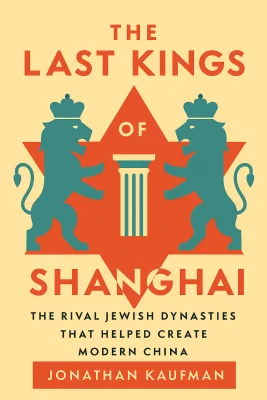
The Last Kings of Shanghai
The Rival Jewish Dynasties That Helped Create Modern China
Categories
Business, Nonfiction, Biography, History, China, Asia, Book Club, Historical, Judaism, Jewish
Content Type
Book
Binding
Hardcover
Year
2020
Publisher
Viking
Language
English
ASIN
0735224412
ISBN
0735224412
ISBN13
9780735224414
File Download
PDF | EPUB
The Last Kings of Shanghai Plot Summary
Introduction
# The Last Kings of Shanghai: Rise and Fall of Two Jewish Dynasties in Modern China In the swirling chaos of nineteenth-century Shanghai, two Jewish families from Baghdad would rise to become titans of commerce, their rivalry shaping not just a city but the destiny of modern China itself. The Sassoons and the Kadoories arrived as refugees and outsiders, yet within decades they commanded empires that stretched across Asia, controlled the flow of global capital, and wielded influence that reached the highest corridors of power from London to Beijing. Their story illuminates one of history's most fascinating paradoxes: how foreign merchants, operating in the shadows of empire and revolution, became both the architects of China's modernization and the symbols of its humiliation. Through opium fortunes and electrical grids, luxury hotels and refugee sanctuaries, these families navigated the treacherous waters of colonialism, war, and revolution. Their rise and fall offers profound insights into the forces that created modern China, the complex relationship between capitalism and imperialism, and the enduring tensions between East and West that continue to shape our world today.
Chapter 1: From Baghdad Refugees to Shanghai Merchants: The Founding of Two Dynasties
The Sassoon story begins not in the bustling ports of Asia, but in the ancient city of Baghdad, where for eight centuries a Jewish merchant family had served as advisors to rulers and masters of trade. David Sassoon, the family patriarch, embodied both the confidence of inherited wealth and the desperation of the displaced when Turkish persecution forced him to flee Baghdad in 1829, carrying only pearls sewn into his cloak and an unshakeable belief in his destiny. Landing in British-controlled Bombay, David faced a choice that would define his family's future: embrace the expanding British Empire or resist it. Unlike many who saw colonialism as oppression, David recognized opportunity. He allied himself completely with British power, calling the British government "malka chased" - a just and kind government. This wasn't mere opportunism but strategic vision. David understood that the British Empire was creating the world's first truly global economy, and he intended to master it. The Sassoon innovation lay not just in their business acumen but in their systematic approach to empire-building. David created the Sassoon schools, training centers that transformed poor Jewish refugees into a loyal workforce fluent in multiple languages and modern business practices. This network of educated, motivated employees became the nervous system of a commercial empire that would soon stretch from London to Shanghai. Meanwhile, the Kadoorie story began more humbly. Elly Kadoorie arrived in Hong Kong in 1880 as a fifteen-year-old apprentice, one of four brothers sent by their widowed mother to work for the mighty Sassoons. But where others saw permanent subordination, Elly saw temporary apprenticeship. His break with the Sassoons came over a barrel of disinfectant during a plague outbreak, a moment that revealed both his humanitarian instincts and his refusal to accept the callous calculations of established power. When Britain's Opium Wars forced China open to foreign trade in 1842, both families were positioned to seize the moment. The Sassoons dispatched Elias to Shanghai, then little more than a muddy settlement outside the ancient Chinese city walls. What he found was a blank canvas upon which to paint a new kind of city, one where East met West, where ancient Chinese civilization encountered modern Western technology, and where fortunes could be made by those bold enough to bridge two worlds.
Chapter 2: Building Commercial Empires: Opium Fortunes and Infrastructure Control in Colonial Shanghai
Shanghai in the 1850s was a city being born from the collision of civilizations. The International Settlement, carved out of Chinese territory by British gunboats, became something unprecedented: a republic of merchants where business leaders wielded the power of government and foreign law ruled over Chinese soil. The Sassoons understood that true power lay not just in trade, but in controlling the infrastructure of modernization itself. The foundation of Sassoon wealth was opium, and their mastery of this trade revealed both their business genius and the moral compromises of empire. When Britain legalized the opium trade after the Second Opium War in 1857, the Sassoons revolutionized the business. They bypassed middlemen by contracting directly with Indian farmers, used telegraph technology to coordinate prices across continents, and partnered with Chinese minorities to create efficient distribution networks. Within two decades, they controlled seventy percent of the opium flowing into China. Yet opium was merely the beginning. The Sassoons built warehouses, founded banks, established steamship lines, and created the financial networks that transformed Shanghai from a regional port into Asia's commercial capital. Their success attracted waves of Chinese entrepreneurs who learned Western business methods and began building their own fortunes. Shanghai became China's window to the world, a place where ancient traditions bent to accommodate modern ambitions. Elly Kadoorie, meanwhile, was building his own empire through cunning and an outsider's willingness to break social barriers. Unlike the Sassoons, who maintained rigid separation from Chinese society, Elly cultivated relationships across racial and cultural lines. His partnership with Robert Hotung, Hong Kong's richest Chinese businessman, marked a new kind of colonial relationship based on mutual respect rather than racial hierarchy. The human cost of this transformation was immense. Millions of Chinese suffered from opium addiction, while the wealth generated by the drug trade funded the very infrastructure that would eventually help China modernize. The foreign merchants lived in a bubble of colonial privilege, served by armies of Chinese workers whose lives they barely acknowledged. This willful blindness to the suffering their wealth created would become a recurring theme, one that would ultimately contribute to their downfall when revolutionary forces they never saw coming swept them from power.
Chapter 3: Rivalry and Competition: The Kadoories Challenge Sassoon Dominance in the Golden Age
The 1920s and 1930s marked Shanghai's emergence as one of the world's great cities, a cosmopolitan metropolis that rivaled New York or London in its sophistication and energy. Victor Sassoon, the playboy heir who transformed himself into a shrewd businessman, embodied this golden age. His Cathay Hotel became the symbol of Shanghai's glamour, an art deco masterpiece that attracted celebrities, diplomats, and adventurers from around the world. The Kadoories' return to Shanghai announced their arrival as serious rivals to Sassoon dominance. Marble Hall, their palace-like mansion, became the social center of Shanghai's international community. More importantly, Elly began systematically acquiring control of Shanghai's essential infrastructure: the gas company, the land development corporation, and the electrical grid. Working with fellow outsiders like Hotung, he launched corporate raids that wrested control from the established British elite. But Shanghai's glitter masked profound contradictions. The city that produced China's most advanced industries and most progressive culture was also a place of stunning inequality. Foreign residents lived like royalty while Chinese workers died of starvation in the streets. The International Settlement, governed by a council of foreign businessmen including Sassoon representatives, created a "republic of merchants" that excluded the vast majority of the city's Chinese residents from political participation. These contradictions fueled the revolutionary movements that would eventually destroy the world the Sassoons and Kadoories had built. Mao Zedong held the first meeting of the Chinese Communist Party just miles from Sassoon and Kadoorie mansions, protected by the very colonial legal system that the Communists sought to overthrow. The foreign-controlled International Settlement's relative political freedom allowed radical ideas to flourish, creating the intellectual ferment that would eventually sweep away foreign privilege entirely. Victor Sassoon's alliance with Chiang Kai-shek's Nationalist government seemed to promise stability and continued prosperity. But this partnership was built on mutual misunderstanding and incompatible goals. When the Nationalists began asserting greater control over the economy, Victor realized that his Chinese partners had their own agenda, one that didn't necessarily include permanent foreign dominance.
Chapter 4: War and Humanitarian Crisis: Japanese Occupation and the Jewish Refugee Rescue
The Japanese invasion of China in 1937 shattered the illusion of foreign invulnerability that had sustained Shanghai's colonial community for nearly a century. When Japanese bombs fell outside the Cathay Hotel, killing hundreds of Chinese civilians, the age of gunboat diplomacy was ending. The Japanese represented a new kind of imperial power that didn't respect the racial hierarchies and international agreements that had protected Western interests in China. As Nazi persecution drove thousands of Jewish refugees toward Shanghai, the city became an unlikely sanctuary. Unlike virtually every other destination worldwide, Shanghai required no visas or permits for entry. For desperate families fleeing Europe, it represented their last hope for survival. Victor Sassoon initially resisted involvement in refugee affairs, but when Elly Kadoorie confronted him directly, appealing to both his ego and his ancestry, Victor agreed to join the relief effort. Their collaboration created one of the most successful refugee rescue operations of the war, ultimately saving over 18,000 lives. Victor provided buildings, funding, and his considerable political influence, while the Kadoories focused on education and community services. Horace Kadoorie emerged as an unlikely hero, establishing the Kadoorie School in the refugee district and providing education for hundreds of children who might otherwise have been lost to despair. Victor found himself walking a diplomatic tightrope with Captain Inuzuka, a Japanese naval officer who had developed a bizarre plan to use the refugees as hostages to gain Jewish-American support for Japan's war effort. Victor pretended to consider Japanese proposals while secretly gathering intelligence for the Allies, his charm and wit keeping the Japanese convinced of his cooperation even as he worked against their interests. When Pearl Harbor brought America into the war, the careful balance that had sustained foreign privilege in Shanghai collapsed overnight. The Kadoories found themselves imprisoned in Japanese internment camps, reduced from masters of the city to prisoners surviving on bowls of rice. The war stripped away the illusions of permanent dominance and revealed the ultimate fragility of colonial power, yet it also demonstrated the capacity for both families to rise to extraordinary humanitarian challenges when history demanded it.
Chapter 5: Communist Revolution: The Collapse of Foreign Privilege and Dynasty Exodus
The Communist victory in 1949 marked the end of more than a century of foreign dominance in China, sweeping away the world that had made the Sassoons and Kadoories among the richest families on earth. As Mao Zedong's peasant army marched into Shanghai, they found a city that embodied everything they sought to destroy: foreign privilege, capitalist exploitation, and the humiliation of Chinese sovereignty. The Communists' treatment of foreign businesses revealed both their ideological commitment and their practical cunning. Rather than simply seizing foreign assets, they implemented a slow strangulation designed to extract maximum value while humiliating their former oppressors. Victor Sassoon's cousin Lucien Ovadia found himself trapped in Shanghai, unable to leave until impossible tax bills were paid and labor demands met. The Cathay Hotel, once the symbol of foreign glamour, became a prison for its owners. For the Kadoories, the Communist victory meant the loss of everything they had built in Shanghai. Marble Hall was seized and turned into government offices, while their gas company and other enterprises were nationalized. Horace Kadoorie, who had devoted his life to educating refugee children and supporting Chinese charities, found his school confiscated and his name erased from its walls. Yet the Communist victory also represented a kind of historical justice. The wealth that had built Sassoon and Kadoorie empires had been extracted from Chinese labor and Chinese resources, often through systems that treated Chinese lives as expendable. The opium trade that founded Sassoon fortunes had addicted millions of Chinese and weakened the country's ability to resist foreign invasion. Even in defeat, both families demonstrated resilience. Victor rebuilt a smaller empire in the Bahamas, while the Kadoories used their Hong Kong base to create new opportunities. They understood that the Communist victory, while devastating in the short term, was part of China's longer historical trajectory. Their willingness to accept losses while maintaining dignity and relationships would prove crucial when China eventually reopened to the world.
Chapter 6: Economic Reform and Return: Reclaiming Legacy in Modern China's Opening
The story comes full circle with China's economic opening in the 1980s and the families' return to Shanghai, though in very different circumstances. China's leaders recognized that the country's development required foreign investment and expertise. The same cosmopolitan, commercially-oriented culture that the Communists had once condemned was now seen as essential for China's modernization. Lawrence Kadoorie, despite being in his eighties, played a crucial role in this transformation. His nuclear power project with China represented one of the first major foreign investments in the reform era, demonstrating confidence in China's future when many investors remained skeptical. His meetings with Deng Xiaoping and other Chinese leaders helped establish the framework for foreign investment that would drive China's economic miracle. The Kadoories' return to Shanghai with the Peninsula Hotel represented more than just a business venture. It symbolized the restoration of Shanghai's international character and China's willingness to acknowledge the positive aspects of its cosmopolitan past. The hotel's location on the Bund, just blocks from where Elly Kadoorie had first established his business over a century earlier, created a powerful sense of historical continuity. Victor Sassoon's posthumous rehabilitation was equally significant. The restoration of the Cathay Hotel and the creation of exhibits celebrating his contributions to Shanghai reflected China's more nuanced understanding of its modern history. Rather than viewing all foreign involvement as exploitation, Chinese historians began to recognize how figures like Victor had contributed to Shanghai's development as an international city. The families' different fates illustrated important lessons about adaptation and survival. The Sassoons' complete withdrawal from China after 1949, while understandable given their losses, meant they missed the opportunity to participate in the country's eventual revival. The Kadoories' decision to maintain some connection to China, even during the most difficult periods, positioned them to benefit from the country's reopening and demonstrated the value of patient relationship-building across political upheavals.
Summary
The rise and fall of the Sassoon and Kadoorie dynasties illuminates the central paradox of modern Chinese history: how foreign exploitation and Chinese modernization became inextricably intertwined. These families were simultaneously agents of imperialism and catalysts of progress, creators of wealth and perpetrators of injustice. Their story reveals how global capitalism first penetrated China, bringing both the tools of modernization and the instruments of domination, while their humanitarian efforts during the refugee crisis demonstrated that even colonial relationships could transcend pure exploitation. The legacy of these merchant princes continues to shape China's relationship with the world today. The "century of humiliation" that began with the Opium Wars and ended with Communist victory remains a defining narrative in Chinese politics, influencing everything from trade negotiations to territorial disputes. Understanding this history helps explain why China approaches international relations with such sensitivity to questions of sovereignty and such determination never again to be subordinated to foreign powers. For modern businesses and governments engaging with China, the lesson is clear: sustainable success comes from building genuine partnerships rather than simply extracting profits, and from understanding that today's adversaries may become tomorrow's allies in an ever-changing world.
Best Quote
Review Summary
Strengths: The review highlights the book's informative nature, particularly its exploration of Jewish economic influence in China through the Sassoon and Kadoorie families. It praises the author's ability to fill historical gaps and provide a readable account of the families' impact on Chinese and world history. Weaknesses: The review notes that the book lacks depth ("not meaty") and does not focus extensively on the families' efforts during the Holocaust, despite a chapter on the topic. It also clarifies that Vidal Sassoon is not related to the Sassoons discussed. Overall: The reader finds the book engaging and informative, particularly for those interested in Jewish history and economic influence in China. The book is recommended for its historical insights, despite some limitations in depth and specific focus areas.
About Author

Jonathan Kaufman
Kaufman reflects on complex intersections of race, identity, and geopolitics through his work. With a career that traverses journalism and academia, he engages deeply with themes of Jewish history and race relations, both in the United States and globally. His method involves weaving rigorous research with engrossing narrative journalism, which humanizes the intricacies of historical and social issues. Kaufman’s early book, "Broken Alliance: The Turbulent Times Between Blacks and Jews in America", showcases this approach by providing balanced insights into racial dynamics, earning him the National Jewish Book Award. His focus on systemic inequalities and cultural identity resonates throughout his career, whether reporting from China as a Beijing Bureau Chief for "The Wall Street Journal" or leading teams to Pulitzer-winning coverage at Bloomberg News.\n\nReaders and students of journalism and history benefit from Kaufman’s work, as it illuminates crucial social narratives across diverse contexts. His contributions extend beyond writing, influencing journalism education as the Director of the School of Journalism at Northeastern University, where his leadership fosters new explorations of race and identity in media. Another notable book, "A Hole in the Heart of the World: Being Jewish in Eastern Europe", further exemplifies his commitment to uncovering the stories of Jewish communities during tumultuous periods, earning acclaim as a finalist for the National Jewish Book Award. His exploration of the Sassoon and Kadoorie families in "The Last Kings of Shanghai" connects these historical narratives with broader geopolitical and economic themes, demonstrating his adeptness at situating personal stories within global contexts.\n\nKaufman's distinguished career is marked by a commitment to bringing marginalized voices and stories to light, earning recognition through numerous awards, including two Pulitzer Prizes. This short bio underscores his impact as both an author and an educator, charting a path that continues to influence how race and identity are discussed and understood in contemporary discourse.
Read moreDownload PDF & EPUB
To save this Black List summary for later, download the free PDF and EPUB. You can print it out, or read offline at your convenience.
The Last Kings of Shanghai
by Jonathan Kaufman
