Categories
Fiction, Audiobook, Horror, Mystery, Romance, Thriller, Fantasy, Adult, Magical Realism, Gothic
Content Type
Book
Binding
Hardcover
Year
2023
Publisher
William Morrow
Language
English
File Download
PDF | EPUB
The Last Tale of the Flower Bride Plot Summary
Introduction
In a hotel bar draped in luxury and indifference, a historian meets Indigo Maxwell-Casteñada, the heiress of a magnificent fortune. She is all grace, midnight hair and sultry voice, seduction incarnated into human form. They dance through conversation, sharp-edged smiles, and the historian falls—helplessly, hopelessly. When Indigo blindfolds him and takes him to her bed, she whispers a warning: "Don't look." This begins their dance of secrets, where promises are the currency and the rules of their marriage. "If you pry," she tells him, "you'll destroy our marriage." But the historian cannot help himself when they arrive at the House of Dreams, the mansion where Indigo grew up alongside her childhood friend Azure. In this house where walls whisper and secrets lurk behind animal heads, the historian discovers his wife holds a darker truth than he imagined. The House of Dreams has its own agenda. It sees what others cannot, and as the historian delves deeper into Indigo's past, he uncovers a history stained with blood. Memories shift like shadows on the wall—unreliable narrators all. There is Azure, Indigo's mirror and shadow, who disappeared years ago. There is Hippolyta, Indigo's blind aunt, raving about starling keys and thresholds crossed. And there is the Otherworld, a magical realm that calls to both girls with promises of transformation. As the historian unravels the truth of Azure's disappearance, he realizes too late that some secrets are meant to stay buried in glass caskets beneath oak trees.
Chapter 1: The Enchanted Meeting: A Dance of Seduction
The historian sat in a lavish Paris hotel bar, waiting for a meeting he was certain would never occur. He had traced a thirteenth-century grimoire to the private collection of the Casteñada family, and after months of unanswered letters, he'd finally received a cryptic invitation from I.M.C.—Indigo Maxwell-Casteñada, heir to the Casteñada fortune. Across the room, a couple engaged in a spectacle with a diamond martini. The woman drank it down, diamond and all, after her companion mocked her greed. The historian turned away, uncomfortable with the display of wealth and cruelty. "The drink on the left will fill your belly for the rest of your days, but you will only be able to speak truths," read a note delivered with two identical whiskeys. "The drink on your right will leave you hungrier than before, but it will polish every lie that leaves your tongue." Without hesitation, he chose the right. As the whiskey burned down his throat, a soft laugh reached him. He turned to see a woman—not a man as he'd expected—approaching his table. She moved with preternatural grace, as if even light held her preciously. "I am Indigo, and you chose to go hungry," she said, settling into the chair opposite him. "Why?" "Between the two choices, I may not be able to live long without food, but I don't have a life worth living without the other." Indigo smiled, and the historian felt the world widen around her presence. They spoke of mythologies and ancient stories until she leaned across the table and kissed him. When she pulled back, her teeth were stained with his blood. That night she led him to her penthouse, blindfolded him, and told him not to look. "Do you know the tale of Eros and Psyche?" she asked, unbuckling his belt. But he couldn't resist—he tore off the blindfold. Rather than fleeing like the god of the myth, Indigo merely studied him, curious about his defiance. "To prove that I am not afraid of being tested," he explained. "Is that so?" she settled into his lap. "And what if that test kills you?" "Then it kills me." In that moment, surrounded by the glittering lights of Paris, the historian knew he would love Indigo forever. He didn't yet understand what that love would cost.
Chapter 2: A Marriage Built on Shadows: The Unspoken Promise
Their wedding was an intimate affair beneath a canopy of pale orchids, with no witnesses except the officiant and musicians who all wore blindfolds. After a feast of wild boar and wine dark as blood, they retreated to their Tuscan villa. That night, the historian woke screaming from a nightmare of shadows suffocating him. Indigo didn't speak. She simply took his trembling hand and pressed it to her throat, letting him feel her pulse until their heartbeats synchronized. In this silent comfort, the historian found a peace he hadn't known since childhood. Their marriage settled into rhythm. They moved into Indigo's glass house on the Pacific Northwest coast, where transparent walls allowed him to observe her every move—how she sank into armchairs with her feet tucked beneath her, how she held her pen, how she lit candles by striking matches against her teeth. The glass house was their compromise: he could see all of her but never know all of her. For their first anniversary, he presented her with handblown glass slippers. To the delight of their bejeweled audience, she insisted on wearing them. They danced on a platform disguised as a gilded nest, and only when she sat did he notice the blood pooling in her slippers, the fine crack along one side. "Two of her toes were blue," he recalled. "Later, we would discover they were broken." The historian was captivated by her devotion, how she carved herself to fit into the narrow confines of his expectations. This was love as sacrifice, grotesque but true. Years passed in their glass house by the sea. The historian learned not to question the glazed expression that crept into Indigo's eyes when she thought he wasn't looking. He avoided the Gallery of Beasts—a hallway lined with bronze animal heads connecting their bedroom to his study. Then one day, he found a strand of braided hair hidden beneath a sphinx's paw in the gallery. At the end of the braid dangled a pair of teeth, one engraved with the letter A. Indigo caught him examining it. "You were prying," she said, her voice flat with fury. "You know you're not supposed to do that." She vanished for days. When she returned, she stared at him with frightening intensity: "I am scared of you. You terrify me, and that is how I know I love you... but you're not scared of me at all, are you?" The historian realized then that fear tethered love in place. Without the terror of imagining life without one's beloved, there was no urgency in loving them. "I am scared of you," he finally admitted, and she smiled.
Chapter 3: Return to the House of Dreams: Whispers of Azure
One spring day, the phone rang in their glass house. Indigo answered, her expression immediately shuttering closed. "Tati, my aunt, is dying," she announced after hanging up. "She needs to see us. I don't know how much time she has left." The House of Dreams materialized before them like an architectural phantom. Four stories of crimson brick with steep, gabled roofs supported by frowning satyrs and caryatids. In a slender turret sat an oddly shaped window—an eye, blue and unblinking, with a pupil of perfect gold. As they approached, the historian felt a strange sensation, as if childhood memories were trying to surface. Memories of a brother he never had, of playing hide-and-seek in a cedar armoire. The House was already working its magic on him. Mrs. Revand, the housekeeper, greeted them warmly. She led the historian to Hippolyta's room while Indigo spoke with lawyers. The blind woman lay in her bed, surrounded by strange art and wilting flowers. "Are you beautiful?" she rasped. "She always collected exquisite things." The old woman clutched his wrist, her bracelets sliding down her thin arm. They felt wrong—warm and too soft. "They say you're good at finding things," she said. "Baubles, stories... secrets." When he tried to leave, Hippolyta grabbed him again. "Tell me, how well do you know your bride? Does she love you?" "Yes," he managed, though something caught in his throat. He reached into his mouth and pulled out a long, black hair. He had seen it before—in the bracelet hidden in the Gallery of Beasts, with a tooth engraved with the letter A. Azure. In the hallway, a woman called Indigo's name. The historian turned to see a young woman approaching his wife. Indigo stiffened. "You're not Azure... Indigo?" the woman said, correcting herself. "The one and only," Indigo replied coldly. The woman asked if Indigo still spoke with Azure. "I haven't seen her in years," Indigo said. "She left the island." When they were alone in their hotel room, the historian couldn't stop thinking about the pain on Indigo's face when Azure's name was mentioned. "Who is Azure?" he asked. "She was my best friend," Indigo admitted. "We had a fight. She ran away after graduation. She was the closest I had to a sister growing up. It's hard to speak of her."
Chapter 4: Unraveling the Spell: The Search for Truth
The historian returned to the House of Dreams alone, determined to discover the truth about Azure. He climbed the wrought-iron staircase to a turret that Indigo had forbidden him to enter. Inside was a large blue door, centuries old with decorative ironwork. This was Indigo's childhood bedroom. The room was dimly lit, with yellowed candle stubs scattered about. Her bookcase held familiar fairy tales—Grimms', the Ramayana, the Chronicles of Narnia. On the floor beside an antique mirror sat a small jar containing a single tooth. In a bone-colored dresser, he found a cassette tape with faded writing: "You're my favorite blue. Love, Lyric." Suddenly, he heard Indigo's footsteps on the iron staircase. He crouched behind the bed, clutching his discoveries. When she entered, he expected her rage, but instead, she spoke softly to an empty room: "No one knows," she said. "You belong to me. I own you, body and soul. Even if I see little bits and pieces of you everywhere, Catskins." She sighed, tugging her hair. "I see you in this room and in the shadows, and it makes no sense because I killed you." The historian remained frozen, barely breathing as Indigo continued her one-sided conversation: "Oh, Catskins. Why aren't you dead yet?" When she left, he slipped out, his heart pounding with the realization that Indigo had done something terrible to Azure—something the House was urging him to uncover. Meanwhile, in Hippolyta's room, doctors and nurses swarmed as machines wailed in distress. "Sir, get away, now," a physician commanded, shouldering past him. As he stumbled out, he heard a nurse telling Indigo her aunt wouldn't last the night. In the hallway, Indigo studied his disheveled appearance, her eyes lingering on his dusty pants and shoes. "Where have you been wandering, my darling?" The historian saw her lipstick caught on her canines, staining them like blood. "I got lost," he lied. Indigo didn't press him. Instead, she announced that Hippolyta had requested a final feast in the formal dining room—the Camera Secretum, the Room of Secrets—before she died. As they made plans, the historian realized with mounting dread that whatever Indigo had done to Azure, she might now intend for him.
Chapter 5: The Glass Casket: Secrets Unearthed in the Otherworld
In the Camera Secretum, walls lined with taxidermied heads and skulls watched as the historian and Indigo sat down to their final meal. He proposed a game—he would tell her a fairy tale, and if she showed any emotion, she must reveal where she kept her secrets. "Once upon a time," he began, "a king promised his dying wife that he would not marry unless it was to a woman who equaled her in beauty. As time passed, the only one who fit that description was his own daughter." He told the tale of a princess who fled her father's advances wearing a mantle of furs, finding work in another kingdom where she was called Allerleirauh—or Catskins. The wine glass trembled in Indigo's grip. When he finished, she swept her plate and glass onto the floor in rage. "You have the tale all wrong," she snarled, rising. "And you have lost the game," he replied calmly. "Tell me where you keep your secrets." Indigo's face settled into a jagged grin. "I hid my secrets inside an egg, inside a box, inside a beast the opposite of foresight." She reached into a pocket of her feathered gown, but suddenly swayed. The historian caught her before she fell, revealing the curved hunting knife that had slipped from her grasp. He had crushed Hippolyta's sedatives into her wine. "Was our life so terrible that you had to destroy it?" Indigo asked, her voice small and childlike. "I'm not trying to destroy anything," he said. "I'm merely trying to survive you." After Indigo collapsed, the historian deciphered her riddle. The opposite of foresight was hindsight—a female deer, or hind. He found the golden box hidden in the mounted deer's neck, containing a rusted starling key on a golden chain. With the key in hand, he made his way to the Otherworld, a small stone wall enclosing half an acre of land. Inside was a large oak tree and a stone turret covered in ivy and wild roses. The Otherworld sighed as he entered, disappointed that he was not who it had expected. His flashlight beam caught something beneath a black tarp—not a table, but a glass casket. Inside lay a body, its flesh decayed, strands of black hair clinging to the skull. In its bony hands was a starling key with a blue jewel in its eye—the twin of the key he held. "You must be Azure," he said. "I have heard a great deal about you." Suddenly, a voice commanded: "Get away from her." Indigo stood a few feet away, the sedative wearing off, tears streaming down her face and a gun trembling in her grip. The historian raised his hands slowly, his mind racing. Staring at the starling key in the corpse's chest, he remembered Hippolyta's words: "Indigo wanted a blue-eyed starling and Azure wanted a red, and if I'd never stopped to look then nobody would be dead." The key on the corpse's chest had a blue eye. The one in his hand had a red eye. With stunning clarity, he looked at his wife and spoke a name that broke the spell: "Azure."
Chapter 6: Identity Unveiled: The Final Transformation
A story unfolds from another perspective—Azure's, the girl with the long black hair who became Indigo's mirror. Their friendship began when they were ten, meeting outside the House of Dreams. Indigo was performing a ritual, placing a bowl of milk and blood beneath a hydrangea bush to summon faeries who might take her away. "Wait!" Azure had called out. "Take me with you!" They bonded through rituals and magic, creating an "Otherworld" where they ruled as fairy queens. As they grew older, Indigo convinced Azure they shared a single soul split between two bodies. They were inseparable until their teenage years when cracks began to form. While Indigo remained fixated on their magical destiny, Azure found herself drawn to the mortal world. At warehouse concerts, she discovered music that made her feel vast and infinite. She began to dream of college, of cities beyond their island. "I'm not ready to transform," Azure finally confessed to Indigo. "I feel... unfinished." Indigo was devastated. Azure planned to escape after their graduation party, to catch a bus to the mainland where her mother had saved money for her future. The night of the party, Indigo led Azure to the Otherworld to show her a "gift"—a glass casket. "This is where we belong, Azure," Indigo explained. "This is how we leave the mortal world for good. And then we'll be in the Otherworld forever." Indigo lunged with a knife. In the struggle, she slipped and fell from the turret, landing beside the glass casket. Azure arranged her body, closed her eyes, and fled. But when she returned to the House, a terrible realization awaited. When Tati and others saw her, they called her Indigo. Even Azure's mother rejected her, believing she had been caught with her boyfriend Jupiter. Azure realized that the Otherworld had granted Indigo's wish—they had become one, with Azure wearing Indigo's identity like a second skin. "I will keep your secrets, Indigo," Tati told her, not realizing she was speaking to Azure. "I will keep your secrets until they poison me, but you have to leave. Now." Left with no choice, Azure accepted her new identity. She cut her hair, burying it as a sacrifice, and lived as Indigo until she met the historian—a man who might finally see her for who she truly was. In the Otherworld, facing the corpse in the glass casket, the historian made his choice. "Azure," he repeated, lowering the gun. "I see you."
Chapter 7: Living with Ghosts: A New Beginning
The historian finds Azure on the porch of the House of Dreams and hands her a cup of tea. The candelabra he's brought casts flickering light on his face as he sits beside her. She studies him—his tall frame, his golden hair, the ink smudges on his scholarly hands. When he reaches for her, she doesn't pull away. "Azure," he says, and she tries not to flinch at the name she hasn't answered to in years. When he looks at her, the light in his eyes is soft. For a long time, she's been waiting for judgment, for some god to strike her dead. But in his gaze, she finds only recognition—the singular truth that she is not alone. "Azure," he says again, testing the name against his teeth. "Tell me your story." She reaches for his hand, their wedding rings touching. She has never before considered what makes a good marriage. Perhaps it's finding someone whose heart is like a mirror, whose love can make you stand the sight of yourself. "The first thing you have to understand," she begins, "is that I loved her."
Summary
In the House of Dreams, a king and queen quietly tend to their ghosts, knowing all the shadows by name. Sometimes they get lost, but when that happens, they hold each other's hands and whisper, "It was once upon a time." A prayer and a promise in one—a single page composed of the past. The truth of their story has softened to a palimpsest of lost words and snowfall, starlings and sparrow wings and blue ink. The historian and Azure have crafted a tale of their own, one where broken things find meaning in their cracks. Their marriage is built not on the perfection of fairy tales but on the recognition of each other's wounds. The historian has learned to see beyond enchantment to the woman beneath—not a flower bride or a siren, but Azure in Indigo's skin, carrying the weight of what she's done. Together they navigate the boundaries between memory and reality, finding that some doors cannot be closed once opened. In this haunted existence, they have found something rare—the courage to face what has been buried. For in the end, they did not find happily ever after. They found something more precious: they lived.
Best Quote
“In the end, a fairy tale is nothing more than a sense of hope. Hope lures and tricks. It tempts with shining thrones, exquisite nectars, and loving arms. It whispers to us that we are extraordinary. Exempt. Thus lured, we follow its path. Sometimes we are led to riches. Other times, we are led astray. But this hope never hides its shape, and for its honesty we reach for it and pull its sweet and stinking furs up to our chins, for to live without it means living without magic.” ― Roshani Chokshi, The Last Tale of the Flower Bride
Review Summary
Strengths: The review highlights the book's "lovely" writing style, "gorgeous prose," and "lush atmosphere." It praises the book's experimental nature, gothic horror elements, and the author's storytelling ability. The review also appreciates the book's capacity to evoke a sense of escape and suspense. Weaknesses: The reviewer mentions a lack of full understanding of the book, indicating potential complexity or ambiguity in the narrative. There is also a suggestion to check trigger warnings, implying the presence of potentially disturbing content. Overall: The reader expresses a positive sentiment, describing the book as haunting, poetic, and richly atmospheric. Despite some confusion, the reviewer recommends it for those interested in unique, beautifully written stories, and considers it a top read for 2023.
About Author

Roshani Chokshi
Chokshi interrogates the timeless allure of myth and folklore by embedding ancient narratives within contemporary settings. Her writing draws heavily on world mythology, as seen in her major works, including "The Star-Touched Queen" duology and the "Aru Shah and The End of Time" series, the latter earning a spot on Time Magazine's Top 100 Fantasy Books of All Time. This deep engagement with myth allows her to reimagine familiar tales, thereby offering readers a fresh perspective on age-old stories. Her creative journey began early, fostered by an extensive mythology collection in her school library and the encouragement of her teacher, Dee Koscik.\n\nRoshani Chokshi's books resonate widely due to her unique storytelling style that merges cultural narratives with fantasy. Her novels have been translated into more than two dozen languages, reflecting their universal appeal. The author's academic background in 14th-century Breton lais further informs her work, exploring how stories transcend cultures and epochs. Meanwhile, her persistence in refining her debut manuscript after facing multiple rejections exemplifies her dedication to her craft. As a result, her novels consistently appear on Best of The Year lists, and her influence extends beyond literature, with her series optioned for film adaptation by Paramount Pictures.\n\nChokshi’s bio offers insight into her thematic focus and dedication to her readers, especially young adults and middle-grade audiences. Her adult debut, "The Last Tale of the Flower Bride," achieved significant recognition as a #1 Sunday Times bestseller, showcasing her versatility across genres. Beyond writing, she serves on the National Leadership Board for the Michael C. Carlos Museum, contributing to the cultural dialogue. Chokshi’s works captivate those who appreciate the weaving of ancient tales with modern storytelling, offering both entertainment and a profound exploration of cultural myths.
Read moreDownload PDF & EPUB
To save this Black List summary for later, download the free PDF and EPUB. You can print it out, or read offline at your convenience.

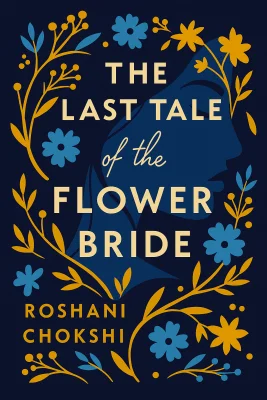
The Last Tale of the Flower Bride
by Roshani Chokshi
