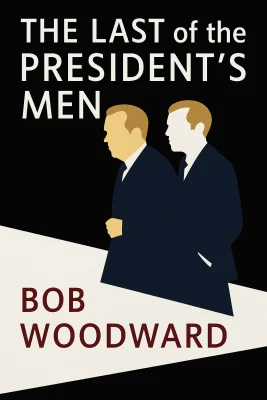
The Last of the President's Men
Categories
Nonfiction, Biography, History, Politics, Audiobook, Biography Memoir, Journalism, Historical, Presidents, American History
Content Type
Book
Binding
Hardcover
Year
2015
Publisher
Simon & Schuster
Language
English
ISBN13
9781501116445
File Download
PDF | EPUB
The Last of the President's Men Plot Summary
Introduction
On a sweltering July afternoon in 1973, a relatively unknown White House aide named Alexander Butterfield walked into a Senate hearing room and uttered eight words that would topple a presidency: "I was aware of listening devices, yes, sir." In that moment, the secret that had protected Richard Nixon's inner circle for over two years was shattered forever. The revelation of the White House taping system would ultimately provide the smoking gun evidence that forced Nixon to become the first American president to resign from office. Butterfield's story illuminates far more than just the mechanics of Watergate. Through his unique vantage point as Nixon's deputy assistant and gatekeeper, we witness the daily operations of one of America's most complex and controversial presidencies. His journey from loyal Air Force colonel to reluctant whistleblower reveals the profound moral challenges faced by those who serve at the highest levels of power. This account offers readers an intimate understanding of the personal cost of truth-telling, the corrosive effects of unchecked presidential authority, and the delicate balance between loyalty and conscience that defines public service in America.
Chapter 1: Origins and Early Military Career: The Path to the White House
Alexander Porter Butterfield's path to the corridors of power began not in the political backrooms of Washington, but in the cockpits of military aircraft soaring over the Pacific. Born into a Navy family, Butterfield embodied the disciplined excellence that would later make him indispensable to President Nixon. His father, Rear Admiral Horace Butterfield, instilled in him the values of duty, precision, and unquestioning service that would both elevate and ultimately complicate his White House years. The young Butterfield distinguished himself early, earning recognition as "Most Collegiate Looking Male" at UCLA and later as one of the Air Force's most accomplished pilots. His military career sparkled with achievements that read like a Pentagon recruiting poster: combat missions over Vietnam, formation aerobatic team member, and aide to high-ranking generals. By the time he reached Australia in 1968 as a senior military representative, Butterfield had accumulated the kind of sterling record that typically led to four-star rank and the Air Force's top position. Yet fate intervened in the form of a chance newspaper article mentioning H.R. "Bob" Haldeman as Nixon's chief aide. Butterfield recognized the name from their college days at UCLA, where their girlfriends had been sorority sisters. What followed was a desperate gambit born of career frustration and ambitious calculation. Stuck in what he saw as a career-killing assignment far from the "smoke" of Washington or Vietnam, Butterfield crafted a letter that would change his life forever. His bold request for a face-to-face meeting with Haldeman revealed both his strategic mind and his willingness to take calculated risks. The subsequent flight from Australia to New York, the tense meeting at the Pierre Hotel, and Haldeman's unexpected job offer demonstrated how personal connections could reshape destinies at the highest levels of American government. In accepting the position as Haldeman's deputy, Butterfield traded his military uniform for civilian clothes and his predictable Air Force future for a front-row seat to history.
Chapter 2: The Reluctant Insider: Navigating Nixon's Inner Circle
Butterfield's entry into the Nixon White House revealed immediately that he had entered a world unlike anything his military experience had prepared him for. The man who had confidently commanded aircraft and managed complex operations suddenly found himself walking on eggshells around a president who seemed allergic to new faces. Nixon's peculiar behavior during their first meeting left Butterfield stunned and questioning his decision to abandon his military career. The elaborate rituals Haldeman prescribed for managing Nixon read like something from a psychological manual rather than a presidential briefing book. Butterfield was instructed to become a "carbon copy" of Haldeman, using the same yellow legal pads, sitting in the same position, and even mimicking Haldeman's mannerisms to avoid unsettling the president. This bizarre indoctrination process revealed the extraordinary lengths to which Nixon's staff went to manage his anxieties and social discomfort. Yet beneath the president's awkwardness, Butterfield began to recognize flashes of the political genius that had carried Nixon to the White House. The man who could barely speak during casual encounters transformed into a strategic mastermind when discussing policy or political maneuvering. Nixon's ability to compartmentalize his personal insecurities while maintaining laser focus on his presidential objectives fascinated and disturbed Butterfield in equal measure. The establishment of strict protocols around everything from paper flow to social interactions demonstrated the administration's obsession with control. Butterfield learned to navigate this environment by becoming indispensable, mastering the complex choreography required to keep Nixon comfortable and productive. His role evolved from simple aide to essential buffer, shielding the president from unwanted intrusions while managing the delicate ecosystem of the Oval Office. This position of trust would ultimately place him at the center of one of the most significant constitutional crises in American history.
Chapter 3: The Presidency Up Close: Odd Behaviors and Dark Impulses
Living in such proximity to presidential power, Butterfield witnessed behavior that ranged from endearingly human to deeply troubling. Nixon's relationship with his wife Pat revealed a man capable of casual cruelty, ignoring her simple requests for family time with a coldness that shocked even his hardened aide. The president's need for absolute control extended to the most trivial matters, including a directive to remove all photographs of John F. Kennedy from government offices, reflecting his deep-seated resentments and psychological wounds. The various "enemies lists" that circulated through the administration demonstrated Nixon's systematic approach to grudge-holding. From barring the Harvard president from White House grounds to using church services as political opportunities, Nixon's paranoia and vindictiveness infected every aspect of his presidency. Butterfield watched as the administration's moral compass steadily deteriorated, with each compromise making the next one easier to justify. Nixon's treatment of staff revealed a man who viewed subordinates as extensions of his will rather than as individuals deserving of basic courtesy. His explosive outbursts over minor infractions, such as the Virgin Islands legislative memo incident, showed a president whose emotional regulation failed him at crucial moments. Yet these same character flaws coexisted with moments of genuine empathy, such as Nixon's tender interaction with Butterfield's injured daughter, revealing the complex contradictions that defined the man. Perhaps most disturbing were the incidents that suggested Nixon's struggles with appropriate boundaries, including his uncomfortable behavior toward female staff members during official functions. These episodes, combined with his increasing isolation and reliance on a small circle of enablers, painted a picture of a presidency gradually losing its ethical moorings. Butterfield found himself simultaneously serving and judging a leader whose personal demons were reshaping the institution of the presidency itself.
Chapter 4: Inside the White House Recording System: The Secret Tapes
The installation of the White House taping system in February 1971 represented both Nixon's desire for historical vindication and his fatal overconfidence in his ability to control information. Butterfield's role as one of only five people who knew about the system placed him in an extraordinary position of power and responsibility. The voice-activated recorders, hidden in desk lamps and furniture, captured everything from momentous policy discussions to Nixon's most petty grievances and profane outbursts. Nixon's rationale for creating what he hoped would be the most comprehensive presidential record in history reflected his deep insecurity about how history would judge his administration. Having witnessed the inadequate note-taking of his staff and Henry Kissinger's chronic tardiness in filing meeting summaries, Nixon sought an objective record that would support his version of events. The irony that these same tapes would ultimately destroy his presidency was lost on a man who believed his power extended to controlling even the historical narrative. Butterfield's unique burden was knowing that every conversation, every crude remark, every questionable decision was being preserved for posterity. While Nixon seemed to forget about the tapes' existence after the initial installation, Butterfield remained acutely aware that they were documenting not just policy deliberations but also the moral compromises and legal violations that would eventually surface during the Watergate investigation. The system's very existence demonstrated the administration's fundamental misunderstanding of presidential accountability. Rather than promoting transparency, the secret recordings became the ultimate symbol of Nixon's duplicity. Butterfield's intimate knowledge of this hidden surveillance network would eventually transform him from loyal insider to reluctant guardian of constitutional democracy, a role he neither sought nor initially welcomed but could not ultimately escape.
Chapter 5: Vietnam and My Lai: Witnessing Policy Failures
The Vietnam War provided perhaps the starkest example of the gap between Nixon's public pronouncements and his private assessments. Butterfield's access to classified documents and internal discussions revealed an administration publicly committed to "peace with honor" while privately acknowledging the futility of its military strategy. Nixon's handwritten notation on a January 1972 memo declaring the bombing campaign's results as "zilch" contradicted his public claims of the bombing's effectiveness just days earlier. The administration's response to the My Lai massacre revelations demonstrated how Nixon's personal resentments could corrupt official policy. Rather than confronting the moral implications of the atrocity, Nixon ordered investigations into the whistleblowers and journalists who exposed it. Butterfield watched as the White House deployed its opposition research apparatus against Seymour Hersh and others, treating the revelation of war crimes as a political problem rather than a moral crisis. Nixon's private comments about Lieutenant William Calley revealed a president more concerned with political damage control than with justice for the Vietnamese victims. The administration's efforts to discredit witnesses and minimize the massacre's significance showed how the presidency's moral authority had been subordinated to electoral calculations. Butterfield's meticulous documentation of these conversations provided a window into decision-making processes that prioritized political survival over ethical leadership. The contradiction between Nixon's public role as commander-in-chief and his private acknowledgment of military failure created cognitive dissonance that pervaded the entire administration. Butterfield witnessed firsthand how the president's inability to admit error led to the prolongation of a conflict he privately knew was unwinnable, resulting in thousands of additional casualties in service of domestic political considerations rather than legitimate military objectives.
Chapter 6: Moral Crossroads: The Decision to Reveal the Tapes
Butterfield's decision to reveal the taping system emerged from a complex interplay of personal integrity, professional duty, and accumulated frustration with Nixon's behavior. By 1973, having moved to head the Federal Aviation Administration, Butterfield watched the Watergate hearings with the unique knowledge that definitive evidence of presidential involvement lay hidden in the White House basement. John Dean's detailed accusations against Nixon resonated with Butterfield's own observations of the administration's ethical deterioration. The moment of truth came not through careful planning but through a routine Senate staff interview that unexpectedly focused on the source of detailed presidential quotes in White House documents. When directly asked about recording systems, Butterfield faced an instant moral choice between loyalty to his former boss and truthfulness to Congress. His military training and personal values ultimately trumped his political allegiances, leading to his historic admission. Butterfield's internal struggle reflected the broader challenge facing public servants in an administration that demanded absolute loyalty while engaging in questionable conduct. His decision to cooperate with investigators rather than invoke executive privilege or simply lie demonstrated the power of individual conscience to check governmental abuse. The personal cost of this choice would follow him for decades, as former colleagues shunned him and career opportunities vanished. The revelation process itself revealed Butterfield's character under pressure. Rather than seeking publicity or attempting to profit from his knowledge, he reluctantly provided information that he knew would destroy the president he had served faithfully for four years. His measured testimony and obvious discomfort with his role as Nixon's nemesis lent credibility to his revelations while highlighting the tragic nature of his position as both insider and whistleblower.
Chapter 7: The Aftermath: From White House to Watergate Testimony
The immediate aftermath of Butterfield's taping system revelation transformed him from anonymous bureaucrat to central figure in a constitutional crisis. His testimony before the Senate Watergate Committee created a media sensation that fundamentally shifted the investigation's focus from political espionage to presidential accountability. The existence of comprehensive recordings promised to settle definitively the question of Nixon's involvement in the cover-up. Butterfield's subsequent cooperation with House impeachment investigators demonstrated his commitment to truth-telling despite mounting personal costs. His detailed knowledge of White House operations provided crucial context for understanding how Nixon's personality and management style had enabled the culture of corruption that produced Watergate. His testimony that Nixon micromanaged every aspect of the administration contradicted the president's claims of ignorance about the cover-up activities. The professional and personal isolation that followed Butterfield's revelations illustrated the price of choosing principle over loyalty in Washington's political culture. Former colleagues treated him as a pariah, potential employers viewed him as untrustworthy, and even military friends questioned his betrayal of the commander-in-chief. His experience demonstrated how the capital's ecosystem of mutual dependence and shared secrets creates powerful incentives for silence even in the face of wrongdoing. Yet Butterfield's role in Nixon's downfall also established him as an unlikely hero of constitutional democracy. His willingness to sacrifice his career and social standing to provide Congress with essential information about presidential misconduct exemplified the kind of civic courage that democratic institutions require to function. His transformation from loyal aide to conscientious objector embodied the tension between personal loyalty and public duty that defines service in democratic government.
Summary
Alexander Butterfield's journey from dutiful military officer to reluctant whistleblower illuminates the profound moral challenges that confront those who serve at the pinnacle of American power. His unique position as witness to both Nixon's presidency and its ultimate collapse provides essential insights into how personal character shapes institutional behavior and how individual conscience can serve as democracy's last line of defense against governmental abuse. The lessons of Butterfield's experience resonate far beyond the specific circumstances of Watergate, offering guidance for public servants who may face similar conflicts between loyalty and truth. His story demonstrates that sometimes the greatest service one can provide to country and constitution is the willingness to speak difficult truths, even when doing so comes at enormous personal cost. For readers seeking to understand the delicate balance between institutional loyalty and moral courage, Butterfield's example provides both inspiration and sobering reflection on the price of integrity in public life.
Best Quote
“The next month the Senate voted 77–0 to set up the Watergate committee. The unanimity was almost unheard of. Even Republicans smelled something.” ― Bob Woodward, The Last of the President's Men
Review Summary
Strengths: The review highlights the book's ability to provide new insights into Watergate, particularly through the lens of Alexander Butterfield's honesty and integrity. The narrative is engaging, capturing the reader's interest and encouraging further exploration of the topic. Weaknesses: The review does not explicitly mention any weaknesses of the book, though it suggests that it may not be the definitive account of Alexander Butterfield's role in Watergate. Overall: The reader expresses a positive sentiment, finding the book both informative and captivating. It is recommended for those interested in learning more about Watergate and its key figures, with a particular emphasis on the parallels drawn between Nixon and contemporary political figures. Rating: 4.5/5.
About Author

Bob Woodward
Woodward delves into the intersections of journalism and political power through a meticulous investigative approach. His career has been marked by groundbreaking work that led to significant political repercussions, most notably through the Watergate scandal, where his relentless reporting, alongside Carl Bernstein, exposed presidential misconduct, resulting in President Nixon's resignation. This pursuit of truth exemplifies Woodward's commitment to uncovering hard news and Washington's power dynamics, themes that recur throughout his extensive body of work.\n\nWoodward's method involves deep investigative research, enabling him to produce authoritative accounts of political events and figures. This approach has made his books essential reads for those interested in American politics and journalism. While he gained fame for "All the President's Men," his other works, such as "The Final Days" and "The Brethren: Inside the Supreme Court," further highlight his ability to offer in-depth insights into political and institutional processes. Therefore, readers and aspiring journalists gain not only a better understanding of political history but also an appreciation for the rigorous research required in investigative journalism.\n\nHis contributions to journalism have earned him numerous awards, including two Pulitzer Prizes, underscoring his influence in the field. Woodward’s bio reflects a career dedicated to probing the core of political machinations, making his books valuable resources for understanding the complexities of governance and the vital role of journalism in maintaining accountability.
Read moreDownload PDF & EPUB
To save this Black List summary for later, download the free PDF and EPUB. You can print it out, or read offline at your convenience.

The Last of the President's Men
by Bob Woodward
