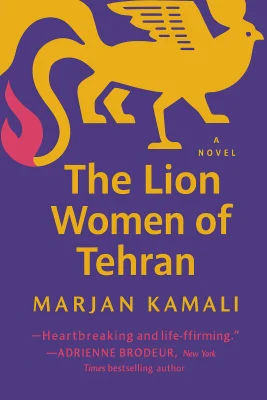
The Lion Women of Tehran
Categories
Fiction, Audiobook, Feminism, Historical Fiction, Book Club, Historical, Coming Of Age, Literary Fiction, Iran, Middle East
Content Type
Book
Binding
Hardcover
Year
2024
Publisher
Gallery Books
Language
English
ISBN13
9781668036587
File Download
PDF | EPUB
The Lion Women of Tehran Plot Summary
Introduction
# The Homa Bird: Shadows of Friendship and Betrayal in Revolutionary Iran Tehran, 1963. In the marble corridors of power, a seventeen-year-old girl makes a casual remark that will destroy her dearest friend. Ellie sits in Colonel Delldaar's tobacco-scented study, champagne warming her tongue, boasting about her brilliant communist friend to a man whose gentle questions mask deadly intent. She speaks of Homa's courage, her protest organizing, her revolutionary translations—never knowing she feeds intelligence to SAVAK's hungry machine. The friendship began thirteen years earlier in Tehran's dusty alleys, where two seven-year-olds from opposite worlds discovered they could own everything together. Ellie, the fallen princess mourning her father's death. Homa, the communist's daughter who called her "Donkey" with fierce affection. They jumped over bonfires and dreamed of becoming lion women who would reshape Iran. But revolution has a way of devouring its children, and some betrayals echo across decades, leaving wounds that span continents and generations.
Chapter 1: Childhood Bonds: The Formation of an Unlikely Friendship
The alley stank of rotting fruit when ten-year-old Ellie first encountered the girl who would reshape her world. Her father's death had stripped away everything—the mansion, the servants, the silk curtains that once shielded her from Tehran's harsh realities. Now she lived in two cramped rooms downtown, her mother's grief filling every corner like stagnant air. "Guess what?" The poke in her back came during school lineup. Ellie turned to find gap-toothed grin and wild black curls that refused any attempt at taming. "Nothing!" Homa squeezed her eyes shut with silent laughter, her breath smelling of radishes and mischief. But when the other girls mocked Ellie's royal pretensions, it was Homa who stepped forward. "Do you want to play with me?" she asked, grabbing Ellie's hand before she could answer. In that moment, friendship chose them both. Homa's house became Ellie's sanctuary. Seven steps down into the stone kitchen, where Monir Khanom taught them to slice onions into perfect cubes and transform pomegranate seeds into molasses. Baby Sara crawled between their feet while Homa's father—a communist waiter at the Palace Hotel—brought home leftover delicacies from the rich man's table. Here was everything Ellie's cold home lacked: warmth, laughter, the abundance of spirit if not of gold. They spent afternoons by the pond where fat orange fish swam lazy circles, sharing dreams that seemed possible in the golden light filtering through the courtyard. Homa declared they would become "shir zan"—lion women who would own the world together. In her presence, Ellie discovered courage she never knew she possessed, a fierce joy that made her mother's warnings about dangerous friendships seem like whispers from another life. The bond deepened through adventures that scandalized proper society. They skipped school to explore the Grand Bazaar, getting lost in maze-like corridors while sampling ice cream sandwiches. They climbed mountains to reach teahouses where old men played backgammon and the city spread below them like a carpet of possibilities. But even as their friendship flourished, the weight of Tehran's rigid social hierarchy pressed down on them, setting the stage for separations that would test everything they believed about loyalty and love.
Chapter 2: Uptown Separation: Diverging Paths of Two Girls
Fortune smiled when Ellie's mother married Uncle Massoud, her late husband's brother, catapulting them back to wealth and respectability. The move to an uptown mansion meant leaving Homa behind, trading stone kitchens for crystal chandeliers, shared dreams for silk-draped solitude. "These friendships don't last," her mother declared as Ellie packed her few belongings. "That girl will be the death of you. The sooner you get rid of her, the better." The goodbye tore something inside Ellie's chest. In Homa's courtyard, by the pond where their friendship had bloomed, she received a gift that would haunt her for years: a delicate gold chain with a bird charm, turquoise wings spread in eternal flight. "If you can't have me, you can have my namesake," Homa whispered, her eyes bright with unshed tears. The new school existed in a different universe. Here, girls wore French perfume and discussed European vacations with casual sophistication. Ellie learned to pile her hair into towering beehives and paint her eyes with kohl, becoming beautiful, popular, desired—everything her mother had dreamed. She played the part of the perfect uptown princess while the bird charm burned against her throat like a secret. Letters came at first, written on pages torn from the notebook Ellie had given as farewell, pressed flowers still clinging to dried ink. But distance proved stronger than childhood bonds. The letters stopped. The visits ended. Their friendship became memory, beautiful and painful and lost. At night, alone in her silk-draped bedroom, Ellie touched the bird charm and remembered the taste of pomegranate ghotab, the sound of Homa's laughter echoing off stone walls. The lump in her throat never fully dissolved, even as she learned to smile and flirt and play her assigned role. Seven years would pass before fate thrust them together again, in a literature classroom where the past walked through the door like an uninvited ghost demanding recognition.
Chapter 3: Political Awakenings: Growing Ideological Rifts
The reunion came without warning in the literature classroom of Reza Shah Kabir High School. Homa strode through the door like she owned the world, her uniform threadbare but her spine straight, eyes holding the same fierce confidence that had once called a ten-year-old princess "Donkey" and meant it as love. "I would like you to welcome our new student, Homa Roozbeh," Mrs. Roshanfekr announced, and Ellie's carefully constructed world tilted on its axis. Homa walked to the front as if addressing parliament. "I'm very happy to be here. I am so fortunate to attend Reza Shah Kabir High School—it has been a dream of mine, and hey, I made it before graduation, right?" Then came the moment that shattered Ellie's facade: "And that is why I am so happy to be here with my dear and bestest friend in all the world: Elaheh Soltani!" Afarin Molavi's laughter rippled through the classroom like poison. The other girls joined in, their snickers echoing off walls as Homa waved frantically, holding up the faded pink notebook like a trophy of their shared past. Ellie raised her hand in the weakest greeting ever attempted, her face burning with embarrassment. At university, their differences deepened into chasms. Homa threw herself into communist activism, organizing protests and translating revolutionary pamphlets. Her father had been imprisoned since the 1953 coup, her family surviving on her mother's sewing and Sara's housecleaning jobs. She spoke of justice and equality with the fervor of a true believer, her eyes blazing as she described the changes that must come. Ellie preferred the safety of silence. Her family had clawed back to wealth and status—why risk it all for abstract ideals? She studied English literature and dreamed of marriage, of children, of a life insulated from the political storms raging outside her comfortable bubble. "You're turning into a rightful royalist," Homa accused during one heated argument. "You've always cared about women's rights, but now you just want to serve your husband dinner and make his bed." The words stung because they held truth. Ellie had chosen comfort over courage, security over solidarity, becoming everything Homa despised about the privileged classes.
Chapter 4: The Unintended Betrayal: Words That Cannot Be Unsaid
The engagement party glittered with all the excess Homa had always criticized. Sousan's mansion blazed with lights, champagne flowed like water, and Tehran's wealthy elite celebrated Niloo's upcoming marriage with characteristic extravagance. Ellie arrived in emerald silk, her hair piled high, heart racing at the prospect of seeing Mehrdad. Instead, she found him in the kitchen with Homa, standing close as she lifted a spoon to his lips, both laughing at some private joke. Jealousy struck like lightning, white-hot and irrational. Every insecurity Ellie had harbored about her friend came flooding back—Homa's intelligence, her authenticity, her ability to command attention without trying. The confrontation in the garden was swift and brutal. "It's not enough that you stole my friends and competed with me every step of the way? Now you have to flirt with my fiancé too?" Homa's confusion only fueled Ellie's rage. She watched her oldest friend climb into a taxi and disappear into the night, taking seventeen years of shared history with her. Later, seeking refuge in Colonel Delldaar's study, Ellie found herself trapped in conversation with Sousan's husband. He seemed so interested in her studies, so progressive in his views about women's education. When he praised the courage of young communist women, Ellie felt safe enough to boast about Homa's bravery. "She even helped organize the university protest last week," Ellie said, pride overcoming caution. "She translates pamphlets, you know. She's so brave, so committed to the cause." The Colonel's eyes lingered on her face, and something cold slithered down her spine. But the words were already spoken, the trap sprung. Somewhere in Tehran's darkness, forces were moving to destroy the girl who had once been her dearest friend. The betrayal was complete, wrapped in champagne bubbles and casual conversation, delivered with a smile that would haunt Ellie's dreams for decades to come.
Chapter 5: Aftermath and Exile: Living with Consequences Across Oceans
They came for Homa the next morning, two men in black suits who grabbed her off the street and shoved her into an unmarked car. Ellie watched from across the road, her scream dying in her throat as her friend disappeared into SAVAK's machinery of terror. The truth came in fragments, each piece more devastating than the last. Sousan's confession in the park: "He doesn't need to talk to them. He is one." The Colonel was SAVAK, a spy who had played the role of progressive husband while feeding information to the regime's enforcers. Ellie had delivered Homa directly into the hands of her enemies. For six months, Homa vanished into Evin Prison's black hole. When she emerged, hollow-eyed and pregnant, married to gentle Abdol who had taken her in despite the shame that clung to her like smoke, she made one request that shattered what remained of their friendship: "I don't want to see you again. Ever. If you care about me, you won't come back." Ellie kept that promise, carrying her guilt like a stone in her chest as she married Mehrdad and settled into the comfortable life Homa had once scorned. When Mehrdad received his research position at Rockefeller University in 1977, America beckoned like salvation. In New York's bustling streets, she could reinvent herself as simply "Ellie," an Iranian immigrant building a new life far from the ghosts of her past. But even surrounded by Manhattan's energy, working at Bloomingdale's cosmetics counter and learning American ways from her friend Angela, Ellie felt the absence of the friend she had destroyed. The bird charm lay buried in her jewelry box, its turquoise wings spread in eternal flight toward a freedom neither of them had found. Back in Iran, revolution erupted with stunning speed. The Shah fled, Ayatollah Khomeini returned, and their homeland transformed into something unrecognizable. From their apartment overlooking the East River, Ellie and Mehrdad watched Iran consume itself in violence, creating a generation that knew only conflict and repression. The country that had shaped both friends' dreams was burning, and there was no going back.
Chapter 6: The Next Generation Bridge: Bahar's Journey to America
The letter arrived on thin airmail paper in December 1981, its Persian script carrying desperation across continents. After seventeen years of silence, Homa was reaching out with an impossible request: could Ellie take in her seventeen-year-old daughter Bahar until the war ended and Iran found peace again? The girl was traumatized by nightly bombings and her father Abdol's horrific death in the Cinema Rex fire, where hundreds had burned alive in a terrorist attack. Homa's words trembled with maternal fear: "She needs to get out before this war destroys her completely. You're the only person I trust with my daughter's life." At JFK Airport, Ellie and Mehrdad waited nervously for their unexpected charge. The teenager who emerged from customs was tall and serious, carrying a blue suitcase and the weight of her war-torn homeland. Bahar's English was halting, her eyes held depths no seventeen-year-old should possess, yet she thanked them with genuine grace for this unprecedented kindness. Adjusting to American high school proved challenging for a girl who had lived through revolution and war. Bahar struggled with the language, the casual cruelty of teenagers, and the strange rituals of American adolescence. Her friendship with Madison, a wealthy blonde classmate, opened doors to a world of privilege that both fascinated and bewildered her. The culture clash reached its peak at Madison's after-prom party. Bahar arrived in her formal gown, expecting elegant refreshments, only to find a house full of drunk teenagers and absent parents. Her attempt to fit in led to alcohol poisoning and a terrifying night in the hospital, where Homa's worst fears about American teenage culture seemed confirmed. Yet through it all, Bahar displayed the resilience inherited from her mother. She excelled academically, gained admission to Queens College, and slowly found her place in this strange new world. Her presence in Ellie and Mehrdad's childless marriage brought unexpected joy, filling a void they had carried for years. The girl they had taken in as a favor became the daughter they had never been able to have, bridging the chasm between two women whose friendship had been shattered by history's cruel hand.
Chapter 7: Reconciliation and Truth: Healing Old Wounds
Homa's arrival in New York for Bahar's graduation carried the weight of twenty years' separation. At JFK Airport, the reunion between mother and daughter brought tears to everyone's eyes, but for Ellie, seeing her old friend again awakened emotions she had buried for decades. Homa looked older, thinner, marked by years of struggle, yet her spirit burned as bright as ever. Their first day together felt like stepping back in time. In the marble halls of the New York Public Library, surrounded by the books that had always been Homa's sanctuary, they began to bridge the chasm that had divided them. Homa spoke of how reading had saved her after prison, how walking Tehran's streets had slowly restored her sense of self, how she had rebuilt her life from ashes. The conversation Ellie had dreaded for twenty years finally came in a hospital room, as they watched over Bahar's unconscious form after her alcohol poisoning. With machines beeping around them and fear clutching their hearts, the truth spilled out at last. Ellie confessed her role in Homa's arrest, expecting anger, rejection, perhaps even hatred. Instead, Homa revealed the devastating reality Ellie had never imagined. The secret police hadn't wanted Homa—they had wanted the translator of those communist pamphlets. They had wanted Ellie. For six months, they had tortured and violated Homa, demanding she reveal who had helped their cause. But Homa had never broken, never given up her friend's name, choosing her own destruction over Ellie's safety. "They kept asking who else was involved in the translations," Homa whispered, her voice barely audible above the hospital's mechanical hum. "They knew someone with better English was helping. They wanted you, Ellie. But I never told them. I never said your name." The weight of this revelation crushed and liberated Ellie simultaneously. Her guilt over causing Homa's arrest paled beside the magnitude of Homa's sacrifice. In that sterile hospital room, watching over the daughter who had brought them back together, they found forgiveness and understanding. The friendship that had begun in Tehran's dusty streets was reborn in New York's fluorescent-lit corridors, stronger for having survived betrayal, separation, and the test of time.
Chapter 8: Legacy of the Lioness: Fighting for Freedom Across Generations
Homa's return to Iran in 1982 was meant to be temporary, just long enough to arrange her permanent immigration to America. Instead, she was arrested at Tehran airport and disappeared into prison for four more years. When she finally emerged in 1986, the authorities confiscated her passport, making her a prisoner in her own country for the next two decades. Through letters, phone calls, and later emails, the friendship endured across continents. Ellie and Mehrdad raised Bahar as their own daughter, watching her graduate from college, marry her Irish-American boyfriend Steve, and build a successful career in hospital administration. When Bahar's daughter Leily was born, Homa became a grandmother she could only know through video calls and photographs. In 1997, Homa was finally allowed to visit America, but by then her life's work in Iran had become too important to abandon permanently. She had founded women's rights organizations, taught generations of students, and become a symbol of resistance against oppression. Her brief stay in Massachusetts showed her a different life she might have lived, but her heart remained with the women still fighting for freedom in Iran. The years passed with Homa aging into a legendary figure in Iran's women's movement. She survived multiple arrests, government harassment, and the constant threat of violence, yet never stopped organizing, teaching, and inspiring others. Her white hair became a beacon of hope for younger activists who saw in her the embodiment of unbreakable spirit. In September 2022, when a young woman named Mahsa Amini died in police custody for improper hijab, Iran exploded in protests. Women took to the streets chanting "Woman, Life, Freedom," burning their mandatory headscarves and demanding an end to decades of oppression. Among them, captured on a cell phone video that traveled around the world, walked a seventy-nine-year-old woman with white hair and a pronounced limp. Her fist was raised in defiance, her voice clear and strong as she chanted for freedom. The girl who had once declared they would be lion women together had never stopped fighting, never surrendered her dreams, never allowed oppression to break her spirit. She had given her life to ensuring other women could claim their rightful place in the world, carrying forward the courage that had first bloomed in a stone kitchen where two children learned to transform simple ingredients into magic.
Summary
In her café in Lexington, Massachusetts, Ellie watches the video of her oldest friend marching with protesters half a century younger, and she understands finally what it means to be a lion woman. The friendship that began with two seven-year-olds playing in Tehran's dusty streets had survived revolution, betrayal, imprisonment, and exile to become something larger than either woman had imagined. Through Bahar and her daughter Leily, their bond extends into a new generation, carrying forward the legacy of women who refused to be silenced. Homa's greatest victory was not the battles she won, but the courage she inspired in others to keep fighting long after she was gone. The lioness had indeed claimed the world, not for herself, but for all the daughters who would follow in her footsteps, roaring their own songs of freedom into the endless night. And in that eternal song, two girls still run through Tehran's alleys, their laughter echoing off stone walls, their friendship a flame that burns across decades and oceans, proving that some bonds are stronger than betrayal, deeper than guilt, and more enduring than the empires that rise and fall around them.
Best Quote
“When I am surrounded by books, I feel most at peace.” ― Marjan Kamali, The Lion Women of Tehran
Review Summary
Strengths: The review highlights the book's beautiful prose, evocative storytelling, and realistic depiction of the evolving friendship between the main characters, Ellie and Homa. It praises the exploration of significant themes such as social class, feminism, and the immigrant experience, alongside a vivid portrayal of Iranian culture and history. The audiobook narration by Mozhan Navabi and Nikki Massoud is also commended. Weaknesses: The review notes a lack of depth in some secondary characters and desires a more detailed perspective from Homa, particularly towards the novel's conclusion. Overall: The reviewer expresses a positive sentiment, finding the novel immersive and thought-provoking, with a strong recommendation for readers interested in themes of friendship, courage, and women's rights.
About Author

Marjan Kamali
Kamali reframes Iranian history through the lens of personal narratives and emotional depth. Her work often delves into the complexities of diaspora, immigration, and the intertwining of past and present across cultures, drawing on historical events such as the 1953 coup and the 1979 revolution. In her book "The Stationery Shop," she explores a love story set against the 1953 Iranian coup d'état, demonstrating her ability to blend historical research with intimate storytelling. This novel has gained international acclaim, earning the Prix Attitude award in France and being adapted into an HBO TV series.\n\nKamali’s method involves combining detailed character development with strong emotional resonance, offering readers a nuanced portrayal of life in exile and in Iran. Her debut novel, "Together Tea," is a semi-autobiographical story that captures the immigrant experience and was adapted for the stage, reflecting her skill in creating relatable narratives. Meanwhile, her latest work, "The Lion Women of Tehran," charts friendship and betrayal in Tehran, spanning several decades and highlighting her focus on personal and cultural transformation. Her novels, translated into over 25 languages, resonate with audiences seeking to understand the intricate tapestry of Iranian life and diaspora.\n\nReaders of Kamali’s works benefit from a deepened understanding of cultural upheavals and personal resilience. Her essays, featured in prestigious publications such as The Wall Street Journal and Literary Hub, further reflect her engagement with these themes. Kamali, recognized by the National Endowment for the Arts with a Creative Writing Fellowship, continues to impact the literary world, crafting stories that invite reflection on historical and personal identities. Her role as an adjunct business writing professor at Boston University complements her literary contributions, enhancing her author bio with a commitment to education and storytelling.
Read moreDownload PDF & EPUB
To save this Black List summary for later, download the free PDF and EPUB. You can print it out, or read offline at your convenience.

The Lion Women of Tehran
by Marjan Kamali
