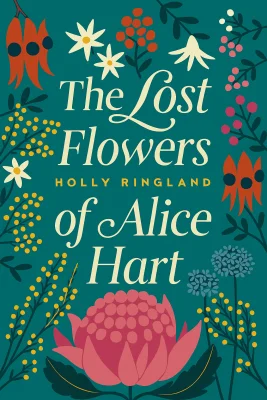
The Lost Flowers of Alice Hart
Categories
Fiction, Audiobook, Romance, Adult, Family, Book Club, Contemporary, Literary Fiction, Australia, Drama
Content Type
Book
Binding
Paperback
Year
2018
Publisher
HarperCollins Publishers Australia
Language
English
ISBN13
9781460754337
File Download
PDF | EPUB
The Lost Flowers of Alice Hart Plot Summary
Introduction
# Where Wildflowers Bloom: A Journey of Voice, Trauma, and Reclaimed Power Nine-year-old Alice Hart sits at her eucalyptus desk, dreaming of ways to set her father on fire. Outside her window, the Pacific wind carries salt and seaweed through the sugar cane fields of coastal Australia. Inside, the house reeks of fear and violence. Her pregnant mother bears fresh bruises behind her ear, explained away as kitchen accidents and dizzy spells. The kerosene lamp Alice lights in her father's forbidden workshop will consume everything she loves and thrust her into a world where flowers speak the words that voices cannot. From the ashes of her childhood home to the red heart of Australia's desert, Alice's journey becomes a testament to the power of finding voice after violence, of breaking cycles that seem as inevitable as seasons, and of learning that some gardens grow most beautiful in the harshest soil.
Chapter 1: Seeds of Silence: Childhood Trauma and the Language of Loss
The weatherboard house holds its breath each evening, waiting for Clem Hart's truck to rumble up the drive. Alice learns to read the signs in her father's face like weather patterns, watching for the shadow that crosses his features before the storm breaks. Her mother Agnes moves through their home like a ghost, beautiful and fragile, tending her garden of native flowers while bruises bloom purple and yellow across her skin. The night of the cyclone, Alice makes a choice that will haunt her forever. In her father's workshop, surrounded by dozens of wooden carvings of a mysterious woman and girl, she leaves a kerosene lamp burning among the wood shavings. The fire spreads faster than her small legs can carry her. The explosion throws her into darkness, her father's final beating still fresh on her broken body. Alice wakes in a hospital bed, her throat scarred from smoke, her voice stolen by trauma. Her parents are dead. Her newborn brother hovers between life and death. The weight of what she believes she has done presses against her chest like smoke in her lungs. June Hart arrives like a weathered angel, her silver-streaked hair and work-worn hands speaking of decades spent coaxing life from difficult soil. Alice's grandmother, a stranger whose face Alice recognizes from her father's obsessive carvings, drives her away from the coast toward an inland flower farm called Thornfield. The journey stretches across changing landscapes while Alice clutches a book about a girl who fell into wonderland and wonders if she will ever find her way home.
Chapter 2: Thornfield's Garden: Sanctuary Among the Flowers
Thornfield reveals itself like a secret garden, sprawling fields of native flowers tended by women who call themselves the Flowers. June's house is vast and lamp-lit, filled with pressed flower jewelry and books that smell of vanilla and time. In the bell tower room that becomes Alice's sanctuary, she finds a desk carved with moons and stars and windows that open onto an ocean of blooms. Candy Baby, with her fairy-floss blue hair and kitchen magic, leaves cupcakes and letters that speak of queens who turned into orchids. Twig, the farm manager with kind eyes and gentle hands, teaches Alice to communicate through flowers when words fail. Each bloom carries meaning passed down through generations of women who learned to speak in petals when voices were too dangerous. Alice discovers the Victorian language of flowers, where desert peas mean courage and wattle whispers secret love. June teaches her to press flowers in resin, creating jewelry that holds conversations in amber. The work becomes meditation, the flowers a bridge between her broken past and uncertain future. In this world where women's stories grow from soil watered with tears, Alice learns that survival sometimes means learning new ways to be heard. But even in sanctuary, shadows linger. June drinks too much and speaks too little about Alice's father. The other women exchange glances when certain topics arise. Sometimes, late at night, Alice hears June crying behind her bedroom door, mourning losses that go deeper than the death of her son. The flower language that feels like liberation carries its own secrets, beautiful words that might mask ugly truths.
Chapter 3: Bitter Roots: Betrayal and the Prison of Protection
Alice's voice returns gradually, unlocked by friendship with Oggi, a Bulgarian boy with wheat-colored hair and gentle hands. His mother Boryana works as Thornfield's cleaner, and together they live in careful invisibility, undocumented immigrants who could be separated and deported at any moment. Oggi teaches Alice that roses can be made into jam and tells her stories of the Valley of the Roses where his grandmother waits, where flowers grow sweet from gold buried in the soil with ancient kings. The river behind Thornfield becomes their secret meeting place, where a giant red gum bears the carved names of Alice's female ancestors stretching back generations. Alice and Oggi add their own names to the tree's living history, sealing their bond with the ancient ritual of lovers who believe their connection will outlast the wood that holds it. As Alice grows from child to teenager, she begins to imagine a future beyond Thornfield's protective boundaries. At eighteen, Alice stands between duty and desire, her future mapped out in June's careful plans like rows in a flower field. When Oggi presents her with plane tickets to Bulgaria, June's mask slips. The confrontation comes swift and brutal, revealing the iron fist beneath her grandmother's velvet glove. June's public humiliation of Oggi's gift shows Alice the possessive nature of the love that saved her. The night Alice waits by the river for their planned escape, Oggi never comes. Days pass without word, then weeks. The truth emerges through June's drunken confession during another storm: June had called Immigration, reporting Oggi and Boryana as illegal immigrants to protect Alice from what she saw as inevitable heartbreak. The deportation was swift and merciless, tearing the boy from Alice's life before he could explain or say goodbye. June's love had become a weapon, her protection a prison, her fear of loss creating the very abandonment she sought to prevent.
Chapter 4: Desert Fires: Repeating Cycles in Red Earth
Alice flees Thornfield in the teeth of the storm, her truck aquaplaning through flooded roads as she races toward any horizon that doesn't hold June's betrayal. The desert finds her before she finds it, red dirt and endless sky swallowing her truck like a mouth hungry for refugees from greener lands. In Agnes Bluff, a mining town squatting at the base of towering red rocks, Alice collapses from dehydration and heartbreak. She wakes in a medical center with Dylan Rivers watching over her, a park ranger whose slow smile and dangerous charm awaken desires she's never felt before. Dylan is everything Oggi wasn't—unpredictable, possessive, with shadows in his past that mirror Alice's own darkness. Their attraction burns like wildfire in drought conditions, consuming everything in its path. Alice finds work at Kililpitjara National Park, where thousands of Sturt's desert peas bloom in a perfect circle around an ancient meteor crater. The Aboriginal women who are traditional custodians teach her that the crater formed when a grieving mother's heart fell from the stars to Earth, and every desert pea that blooms is a piece of that celestial heart. Alice learns to guide visitors through this sacred site, translating between scientific fact and spiritual truth. But Dylan's love comes with conditions Alice doesn't recognize until she's already trapped. His jealousy masquerades as devotion, his possessiveness as protection. When Alice stays late for drinks with coworkers, Dylan's rage erupts in violence that leaves bruises on her throat and terror in her heart. Like her mother before her, Alice finds herself making excuses, minimizing the abuse, believing she can love him into being better. The pattern repeats with escalating intensity until Dylan isolates her completely, punishing her for imagined betrayals with the same calculated cruelty June used against Oggi.
Chapter 5: Breaking Ground: Escape from the Flames of Control
Alice's escape comes not through her own strength but through the intervention of others who recognize the signs she's learned to hide. Ruby, an Aboriginal elder and senior ranger who sees through facades to truth beneath, offers Alice protection in the form of traditional medicine and ancient wisdom. Lulu, a fellow ranger who once suffered Dylan's abuse in silence, finally speaks up when she sees the familiar marks on Alice's throat. The confrontation comes during a controlled burn, where Alice's job requires her to set fires to prevent larger blazes. The irony cuts deep—she who started the fire that destroyed her family now wields flame as a tool of renewal. When Dylan corners her in the workshop, his violence escalating beyond anything before, Alice finally sees him clearly: not as a damaged man she can heal, but as a predator who feeds on others' pain. Her departure from Kililpitjara is swift and decisive. She packs her few belongings, says goodbye to the desert peas that taught her about sacred hearts and healing, and drives east toward the coast. But this time she's not running blindly—she carries with her an envelope from Twig containing documents that will change everything she thought she knew about her family. The papers reveal that Alice's baby brother survived the fire and was adopted by Sally Morgan, the town librarian who once read to Alice during her hospital stay. More shocking still: Sally is Alice's half-sister, the daughter of a brief affair between Alice's father and a young woman who lost her own child to leukemia. The web of secrets and lies that shaped Alice's life begins to unravel, revealing connections she never imagined possible.
Chapter 6: Hidden Blooms: Discovering Family in the Ashes
Alice returns to her childhood town to find Sally living in a cottage overlooking the sea, surrounded by a garden that blooms with both native Australian flowers and the tropical plants their father once carved in wood. The reunion is emotional and complex—two women bound by shared trauma and a man who damaged them both in different ways. Sally reveals the truth about Alice's mother's will, which named Sally as guardian should June prove unfit. She explains how she sat vigil during Alice's coma, reading stories and sending books, how she raised Alice's brother Charlie with full knowledge of his origins. The boy has grown into a gentle young man who works with plants and dreams of meeting the sister he's always known existed. When Charlie arrives for dinner, the resemblance between siblings is unmistakable—the same dark hair, the same green eyes that change color with emotion, the same careful way of moving through the world that speaks of early trauma transformed into resilience. Their connection is immediate and profound, built on shared genetics and parallel experiences of loss and recovery. Together, Alice and Charlie visit their parents' graves, where Alice finally confronts the full truth of that night long ago. The fire that killed their father and nearly destroyed their family was both accident and inevitability—the culmination of years of abuse that could only end in destruction. Alice's role was that of a child caught in an impossible situation, not the architect of tragedy she'd believed herself to be. The weight she's carried for decades begins to lift, replaced by something lighter but no less powerful: the knowledge that survival itself is a form of victory.
Chapter 7: Full Flowering: Reclaiming Voice Through Sacred Story
Alice's final transformation comes through the act of storytelling itself. She applies for and wins a writing residency where she will spend months crafting the story of her life into something that might help others recognize the patterns of trauma and control that shaped her journey. Before leaving Australia, Alice performs a ritual of release in Sally's garden. She builds a bonfire and feeds it with notebooks filled during her years of silence and struggle—pages of pressed flowers and their meanings, sketches of desert landscapes, fragments of memory transformed into art. She also burns every email Dylan sent after she left him, watching his words of manipulation and rage turn to ash and smoke. But she saves one book from the flames: the Thornfield Dictionary that June bequeathed to her, the collection of flower meanings that represents generations of women's wisdom about survival and healing. As the fire burns, Alice wears the necklace Ruby gave her—seeds from the bat's wing coral tree, whose meaning in the flower language is cure for heartache. The seeds smell of smoke and earth, of destruction and renewal, of all the fires that have shaped her life from childhood trauma to desert healing to this moment of conscious choice. Charlie and Sally stand with her as the flames consume the old story, making space for whatever new narrative Alice will create. She thinks of her mother's garden, of June's flower farm, of the sacred desert peas blooming in their eternal circle, of all the ways women have learned to speak their truths through the language of growing things. The flower language that once seemed like prison becomes liberation when Alice claims the authority to write her own meanings, to speak her own truths, to tend her own garden of memory and hope.
Summary
Alice Hart's story blooms from the ashes of generational trauma into something fierce and beautiful—a testament to the possibility of breaking cycles that seem as inevitable as seasons. Her journey from silenced child to speaking woman mirrors the life cycle of the flowers that sustained her: planted in darkness, growing through struggle, finally opening to light. The novel's power lies not in easy redemption but in the hard-won recognition that healing is both individual and collective work, happening in community among damaged women who learn to protect without controlling, to love without possessing. In the end, Alice carries forward not just her own story but the accumulated wisdom of all the women who came before her. The flower language that once seemed like prison becomes liberation when she claims the authority to write her own meanings. The lost flowers of her childhood have bloomed into the found voice of her adulthood, proving that even the most damaged seeds can grow into something magnificent when planted in soil rich with love and tended with the patience of those who understand that true strength grows not from protection, but from the courage to face whatever storms may come.
Best Quote
“Alice would always remember this day as the one that changed her life irrevocably, even though it would take her the next twenty years to understand: life is lived forward but only understood backward. You can't see the landscape you're in while you're in it” ― Holly Ringland, The Lost Flowers of Alice Hart
Review Summary
Strengths: The book is praised for its beautiful cover and the detailed, effective descriptions of the Australian countryside. Some characters, particularly Alice, are noted for being interesting and embodying strength and courage. The flower theme is highlighted as a redeeming feature, adding depth to the story of abuse and loss. The imagery is appreciated for its vividness, creating a sensory experience for readers. Weaknesses: The narrative is criticized for being overly long and disjointed, with new characters introduced too late in the story. The main character's reactions are seen as exaggerated, and the portrayal of abusive relationships is mentioned unfavorably. The book's melodrama is noted as detracting from the underlying story. Overall: The book receives mixed reviews, with some readers appreciating its thematic elements and imagery, while others find it disjointed and overly dramatic. It is recommended for those interested in floral themes, but not universally appealing.
About Author

Holly Ringland
Ringland situates her narratives in the complex interplay between nature, trauma, and resilience, inviting readers to explore the healing power of landscapes. Her literary works delve into themes of survival and personal growth, using richly detailed storytelling to weave family sagas and fairy tale elements into the fabric of her narratives. In her debut book, "The Lost Flowers of Alice Hart", Ringland employs Australian native flowers to symbolize trauma and recovery, crafting a tale that has captured international attention and earned the 2019 Australian Book Industry Award for General Fiction Book of the Year. Meanwhile, "The Seven Skins of Esther Wilding" offers a mythic quest narrative, securing critical acclaim as Booktopia’s 2022 Book of the Year.\n\nRingland's approach to storytelling is informed by her diverse experiences, from growing up amidst the tropical flora of Australia's east coast to working in Indigenous communities and studying creative writing in the UK. These experiences are reflected in her work, which often portrays the natural world as a source of solace and transformation. Her non-fiction work, "The House That Joy Built", further blends memoir and research, focusing on creativity and personal empowerment. This ability to connect personal history with broader themes provides a unique resonance, appealing to readers who appreciate stories that intertwine human experiences with the natural world.\n\nBeyond her written work, Ringland has extended her influence into television, co-hosting the series "Back to Nature", which underscores her commitment to sharing environmental stories. Her bio reflects an author whose life and writing are deeply interconnected, offering insights into the power of narrative to foster understanding and change. Through her storytelling, Ringland invites readers to engage with themes of trauma and healing, encouraging a deeper appreciation for the resilience found in both human and natural worlds.
Read moreDownload PDF & EPUB
To save this Black List summary for later, download the free PDF and EPUB. You can print it out, or read offline at your convenience.
The Lost Flowers of Alice Hart
by Holly Ringland
