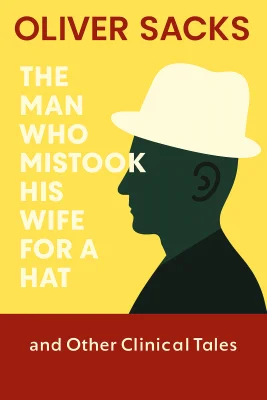
The Man Who Mistook His Wife for a Hat and Other Clinical Tales
Categories
Nonfiction, Psychology, Science, Short Stories, Mental Health, Audiobook, Essays, Medicine, Medical, Neuroscience
Content Type
Book
Binding
Paperback
Year
1998
Publisher
Touchstone
Language
English
File Download
PDF | EPUB
The Man Who Mistook His Wife for a Hat and Other Clinical Tales Plot Summary
Introduction
In the quiet corridors of a neurological ward, a distinguished music teacher reaches out to put on what he believes is his hat, only to grasp his wife's head instead. Nearby, an elderly woman suddenly hears the Irish folk songs of her childhood playing with crystal clarity, though no radio is turned on. These aren't scenes from a surreal novel, but real encounters that reveal the extraordinary mysteries hidden within the human brain. This collection of clinical tales invites us into a world where the boundaries between normal and abnormal dissolve, where loss becomes revelation, and where the most puzzling neurological conditions illuminate fundamental truths about human nature. Through the compassionate eyes of a neurologist who sees beyond symptoms to the whole person, we discover that our minds are far more fragile, adaptable, and wondrous than we ever imagined. Each story offers not just medical insight, but profound lessons about resilience, identity, and the remarkable ways we adapt when our familiar world suddenly changes.
Chapter 1: The Mind's Eye: Visual Recognition and Identity
Dr. P. had been a celebrated music teacher for decades when his students began noticing something peculiar. He would sometimes fail to recognize familiar faces, greeting fire hydrants as if they were children or addressing carved furniture knobs as people. What started as amusing quirks gradually revealed a profound neurological mystery that would challenge everything we think we know about perception and recognition. When Dr. P. visited the clinic, his intelligence and musical abilities remained completely intact. He could identify complex geometric shapes instantly and discuss sophisticated musical compositions with ease. Yet when shown a glove, he could only describe it as "a continuous surface, infolded on itself, with five outpouchings" but couldn't recognize it as something that belonged on a hand. He had lost the ability to see objects not as collections of features, but as meaningful wholes connected to human experience. The most poignant moment came during a home visit when Dr. P. sat at his magnificent piano and performed Schumann's Dichterliebe with the skill and sensitivity that had made him famous. In music, his world remained complete and coherent. But the walls displayed his paintings from over the years, showing a tragic progression from realistic portraits to abstract geometry, and finally to meaningless chaos as his visual agnosia advanced. Dr. P.'s condition reveals a fundamental truth about human perception: we don't simply see objects, we recognize them through emotional and experiential connections. His intact musical abilities showed that some forms of recognition transcend visual processing, accessing deeper patterns of meaning and beauty. The tragedy wasn't just that he couldn't see properly, but that he had lost the capacity to feel the emotional significance of what he saw, living in a world of pure abstraction without the warmth of human connection.
Chapter 2: Memory's Architecture: Time, Continuity, and Self
Jimmie had the engaging personality of a young sailor and could discuss his naval service with vivid enthusiasm, recounting details of submarines, shipmates, and wartime adventures. The only problem was that Jimmie believed it was still 1945, when in reality he was a gray-haired man in his sixties living in a nursing home in 1975. A severe case of Korsakov's syndrome had left him trapped in a moment thirty years in the past, unable to form new memories or recognize the passage of time. Each conversation with Jimmie began as if meeting for the first time. He would greet visitors cheerfully, tell the same stories with identical enthusiasm, and react with genuine shock when shown his reflection in a mirror. The horror of seeing his aged face would consume him completely until some distraction allowed him to forget even that terrible revelation within minutes. His world reset constantly, leaving him perpetually surprised by a reality that never matched his frozen expectations. Yet something remarkable happened when Jimmie attended chapel services. In those moments of prayer and communion, he found a peace that transcended memory. His attention became focused and serene, his participation complete and meaningful. The ritual and spiritual elements seemed to bypass his damaged memory systems, connecting him to something eternal that didn't depend on conscious recollection. The contrast between Jimmie's fragmented daily existence and his wholeness during religious observance illuminated a profound truth about human identity. While we often think of ourselves as the sum of our memories, Jimmie's experience suggested that our deepest sense of self might reside in something beyond conscious recollection, in the capacity for connection, meaning, and transcendence that no neurological damage can completely destroy.
Chapter 3: Embodied Experience: The Body in Neurological Disorders
Christina had always been athletic and confident in her body when she entered the hospital for routine gallbladder surgery. But the night before the operation, she had a disturbing dream of losing control of her movements, of being unable to feel her hands or feet. When she woke, the dream had become reality. A rare inflammation had damaged the nerve fibers that normally tell us where our bodies are in space, leaving her completely disconnected from her physical self. Without proprioception, the hidden sense that normally keeps us aware of our body's position and movement, Christina faced an unimaginable challenge. She could no longer sit upright without looking at herself, couldn't walk without watching her feet, and had to consciously control every gesture that had once been automatic. She described feeling "disembodied," as if her body had become alien and unfamiliar, no longer truly belonging to her. Through extraordinary determination and the development of compensatory strategies, Christina learned to use her eyes as a substitute for her lost body sense. She developed an almost theatrical precision in her movements and speech, consciously performing the physical presence that had once been effortless. Yet despite these adaptations, she never regained the fundamental feeling of inhabiting her body naturally. Christina's experience reveals how much of our sense of self depends on the unconscious feedback from our bodies. The tragedy wasn't just the loss of automatic movement, but the profound alienation from her physical being. Her courage in adapting to this invisible disability reminds us that identity encompasses not just mind and memory, but the intimate connection between consciousness and our embodied existence in the world.
Chapter 4: Excesses and Intensities: When Brain Functions Amplify
Ray discovered he had Tourette's syndrome after reading about it in a newspaper, finally understanding the explosive tics, curses, and involuntary movements that had plagued him since childhood. Despite the embarrassment and social difficulties his condition caused, Ray had found ways to channel his neurological chaos into creative expression, becoming a brilliant jazz drummer whose sudden, unpredictable improvisations arose directly from his tics. When medication finally controlled his symptoms, Ray experienced an unexpected loss. The drug that eliminated his tics also dampened his creativity, spontaneity, and the quick wit that had been part of his identity. He felt "dull" and "square," missing the manic energy that, despite its problems, had been the source of his artistic inspiration and unique perspective on the world. Ray developed a remarkable solution: he would take his medication during the work week to function in conventional society, then stop it on weekends to reconnect with his creative, uninhibited self. This allowed him to experience both states deliberately, becoming "witty ticcy Ray" when he chose to embrace his condition's gifts along with its challenges. His story illustrates that neurological conditions can be simultaneously devastating and enriching, robbing us of normalcy while potentially offering unexpected forms of insight and creativity. Ray's wisdom lay in recognizing that neither his medicated nor unmedicated state represented his complete self, and that true adaptation sometimes means learning to navigate between different ways of being rather than seeking a single cure.
Chapter 5: Reminiscence and Reality: Temporal Lobe Mysteries
Mrs. O'C. woke one January night to the sound of Irish folk songs playing with extraordinary clarity and beauty. At eighty-eight, she had been deaf for years, yet now she heard every note and word of the songs from her childhood in Ireland perfectly. She checked for radios, wondered if her dental fillings were somehow receiving broadcasts, and finally realized the impossible truth: the music was playing inside her head. The songs continued for weeks, sometimes overwhelmingly loud, sometimes gentle and nostalgic. Medical tests revealed that a small stroke in her temporal lobe had triggered a form of epileptic reminiscence, causing her brain to replay memories of music from seventy years earlier with startling vividness and emotional intensity. These weren't hallucinations but actual retrieved experiences, complete with all their original feelings and associations. As the acute phase of her stroke resolved, the music gradually faded, but Mrs. O'C. found herself unexpectedly mourning its loss. The neurological accident had given her back memories of her mother and early childhood that she had thought were lost forever. For a few precious weeks, she had been reunited with the most cherished experiences of her life, feeling connected to a past that had shaped her but remained largely inaccessible to conscious recall. Her experience reveals the vast storehouse of memories that our brains preserve, far more detailed and emotionally rich than we normally access. The temporal lobe seizures acted as an unexpected gift, opening doors to experiences that conscious memory couldn't reach. Mrs. O'C.'s gratitude for even this pathological form of reminiscence speaks to our profound need for continuity with our past selves and the healing power of recovered memories.
Chapter 6: Inner Worlds: The Concrete Mind and Artistic Expression
Jose was considered hopeless when he arrived at the clinic, labeled as severely retarded and autistic, unable to speak or care for himself. Yet when given a pocket watch to draw, something extraordinary happened. His restless, distracted behavior disappeared, replaced by intense concentration as he created a remarkably detailed and accurate representation that captured not just the watch's appearance but its essential character and function. Further drawings revealed Jose's exceptional visual memory and artistic ability. He could glance at a magazine illustration, look away, and then recreate it from memory with stunning precision. More remarkably, his drawings showed genuine creativity and humor, transforming a simple fish into a whimsical character with distinctly human expressions and personality. This wasn't mere copying but true artistic interpretation. Jose's breakthrough came when he was taken outside to the hospital garden for the first time in years. Kneeling among the dandelions, he drew directly from nature with the focused attention of a medieval botanical illustrator. His detailed, loving representation of the flower revealed a profound connection to the natural world that had survived despite his multiple disabilities and years of institutional neglect. The contrast between Jose's profound intellectual limitations and his artistic gifts challenges our assumptions about intelligence and creativity. His story suggests that the human capacity for beauty, meaning, and authentic expression can flourish even when conventional cognitive abilities are severely impaired. Jose's art became his language, allowing him to communicate truths about the world that words could never capture.
Summary
These clinical tales reveal that the human brain's failures often illuminate its most remarkable capacities. Through stories of individuals who have lost fundamental abilities—the power to recognize faces, form new memories, or feel their own bodies—we discover that our minds are both more fragile and more resilient than we ever imagined. Each neurological condition, however devastating, reveals alternative pathways to meaning, connection, and even transcendence. The profound lesson emerges that human identity extends far beyond our rational, conscious minds to encompass our capacity for music, art, spiritual connection, and creative adaptation. When conventional abilities fail, the brain often finds extraordinary compensations, revealing hidden talents and untapped potentials. These stories remind us to look beyond surface deficits to recognize the full humanity and unique gifts present in every individual, no matter how different their experience of the world might be.
Best Quote
“If a man has lost a leg or an eye, he knows he has lost a leg or an eye; but if he has lost a self—himself—he cannot know it, because he is no longer there to know it.” ― Oliver Sacks, The Man Who Mistook His Wife for a Hat and Other Clinical Tales
Review Summary
Strengths: The book contains fascinating studies of neurological disorders, with patient stories that are easily understood and often enthralling. Weaknesses: The reviewer criticizes the book for its complex and convoluted sentence structures, which can be difficult to decipher. The use of specialized terminology without explanation assumes a prior knowledge of neurology, which may not be accessible to all readers. The writing style includes many digressions and sudden turns, making it challenging to follow. Overall: The reader expresses frustration with the book's dense and complex language, suggesting it may be difficult for those without a background in neurology. While the content is intriguing, the writing style may hinder comprehension, leading to a mixed recommendation.
About Author
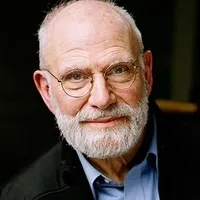
Oliver Sacks
Sacks delves into the human condition by intertwining his deep scientific understanding with empathetic storytelling. His work often focuses on the profound impacts of neurological disorders, weaving patient narratives with broader philosophical reflections on identity and resilience. In books like "Awakenings" and "Musicophilia," Sacks probes how individuals navigate the challenges posed by conditions like encephalitis lethargica and explores the significant influence of music on the brain. Therefore, his narrative style serves not only to inform but also to connect readers emotionally to the experiences of those affected by such disorders.\n\nThroughout his career, Sacks utilized his experiences and observations to humanize the practice of medicine, emphasizing the narrative of each patient beyond their symptoms. This approach is evident in works like "The Man Who Mistook His Wife for a Hat," where he explores complex neurological phenomena through accessible and moving stories. Readers benefit from his ability to demystify intricate medical concepts, gaining insights into the interplay between brain function and personal identity. His books have thus found a receptive audience among both the medical community and the general public.\n\nSacks's contributions extend beyond his publications; his legacy includes pioneering narrative medicine, which bridges scientific inquiry with humanistic understanding. Recognized as a "poet laureate of medicine," his accolades include the Lewis Thomas Prize for Writing about Science and the title of Commander of the Order of the British Empire (CBE). This bio of the author highlights how his compassionate approach and profound insights continue to inspire those seeking a deeper understanding of the brain and its mysteries.
Read moreDownload PDF & EPUB
To save this Black List summary for later, download the free PDF and EPUB. You can print it out, or read offline at your convenience.
The Man Who Mistook His Wife for a Hat and Other Clinical Tales
by Oliver Sacks
