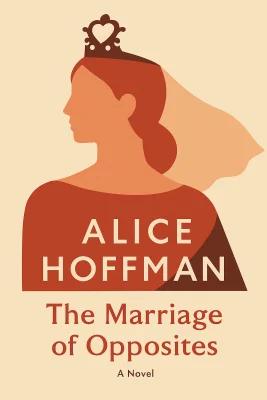
The Marriage of Opposites
Categories
Fiction, Art, Audiobook, Historical Fiction, Romance, Adult, Book Club, Historical, Magical Realism, Jewish
Content Type
Book
Binding
Hardcover
Year
2015
Publisher
Simon & Schuster
Language
English
ISBN13
9781451693591
File Download
PDF | EPUB
The Marriage of Opposites Plot Summary
Introduction
# Love Defiant: Jewish Identity and Revolution in Colonial Caribbean In the sweltering heat of nineteenth-century St. Thomas, where Danish colonial authority mingled uneasily with the vibrant cultures of Jewish merchants, freed slaves, and Caribbean traders, the most profound revolutions often began not with grand political declarations but with quiet acts of personal defiance. Here, in this crossroads of the Atlantic world, individual choices about love, faith, and identity would ripple outward to challenge the very foundations of colonial society, revealing how the most intimate human decisions can become catalysts for sweeping social transformation. This remarkable story illuminates three crucial aspects of Caribbean colonial life that have long been overlooked by traditional histories. First, it reveals how Jewish communities in the diaspora navigated the treacherous waters between maintaining religious orthodoxy and adapting to local realities, often creating unique hybrid cultures that defied easy categorization. Second, it demonstrates how women in colonial societies, despite legal and social constraints, could wield significant influence through their roles as mothers, business managers, and cultural transmitters, shaping not only their immediate families but entire artistic movements. Finally, it shows how the Caribbean served as a laboratory for new forms of social organization, where the collision of European, African, and indigenous cultures created possibilities for human connection and creative expression that would have been impossible in more rigid metropolitan societies.
Chapter 1: Trapped Between Tradition and Dreams in Colonial St. Thomas
The early decades of the nineteenth century found the Jewish community of St. Thomas precariously balanced between the security that came from Danish religious tolerance and the constant awareness that such acceptance could be revoked at any moment. This precarious position shaped every aspect of daily life, from business partnerships to marriage arrangements, creating a culture where individual desires were consistently subordinated to communal survival. The Pomié family embodied these tensions perfectly, having fled European persecution only to find themselves bound by new forms of social constraint in their tropical refuge. Rachel Pomié's childhood was marked by a profound sense of displacement that no amount of material comfort could alleviate. Her family's apple tree, transplanted from France but struggling to survive in the Caribbean climate, served as a living metaphor for their entire existence—European in origin but forced to adapt to an alien environment that never quite felt like home. The bitter, hard fruit it produced reminded Rachel daily of everything her family had sacrificed in their quest for safety and respectability. The rigid social hierarchies that governed island life extended even into the Jewish community itself, where families like the Pomiés occupied positions of privilege while still remaining vulnerable to the whims of both colonial authorities and their own religious leadership. The synagogue elders wielded enormous power over daily life, their decisions affecting everything from business partnerships to educational opportunities for children. This concentration of authority created a system where conformity was not merely encouraged but essential for survival. Rachel's friendship with Jestine, the daughter of their family's cook, represented one of the few authentic relationships in her constrained world, yet even this connection was viewed with suspicion by her mother, who understood instinctively that such bonds across racial lines threatened the careful social boundaries that protected their family's position. The young Rachel's collection of local folklore and her voracious reading of European fairy tales revealed her desperate hunger for stories that transcended the narrow confines of her prescribed existence, foreshadowing the rebellious spirit that would later reshape her entire community.
Chapter 2: Arranged Marriage and the Weight of Family Duty
When financial necessity forced Moses Pomié to arrange his daughter's marriage to Isaac Petit, a widower nearly thirty years Rachel's senior, the transaction represented everything that was both practical and soul-crushing about their society's approach to human relationships. The marriage was designed not to create happiness but to prevent economic disaster, merging two struggling merchant families into a single enterprise capable of weathering the increasingly competitive Caribbean trade environment. Rachel approached this arrangement with the same methodical attention to detail that her father had taught her to apply to business ledgers, recognizing that her success in managing this complex household would determine not only her own comfort but the welfare of Isaac's three motherless children. Her insistence on meeting the children before agreeing to the match revealed both her practical intelligence and her capacity for genuine maternal love, qualities that would prove essential in navigating the emotional complexities of her new situation. The presence of Isaac's deceased first wife, Esther, pervaded every aspect of Rachel's married life, both as literal supernatural manifestation and as the impossible standard against which she would always be measured. Rather than competing with this ghostly rival, Rachel chose to honor Esther's memory, regularly visiting her grave and acknowledging her continued claim on Isaac's heart. This accommodation allowed Rachel to carve out her own space within the marriage without engaging in a battle she could never win. Isaac proved to be a kind and considerate husband within the limitations of their arrangement, and Rachel bore him three children while successfully raising his existing family. Yet the marriage remained fundamentally a partnership rather than a passion, providing stability and respectability while quietly suffocating Rachel's dreams of authentic connection and European sophistication. The relationship represented both the security that came from conforming to social expectations and the spiritual emptiness that such conformity often entailed, setting the stage for the dramatic choices that would define the next phase of her life.
Chapter 3: Forbidden Love Challenges Religious and Social Boundaries
The arrival of Frédéric Pizzarro from Paris transformed Rachel's carefully ordered world in ways that neither could have anticipated. At twenty-two, Frédéric was seven years younger than Rachel and technically her nephew through marriage, making any romantic relationship between them not merely scandalous but forbidden by Jewish law. Yet from their first encounter, when he discovered her caring for her children in the intimate setting of her home, an electric attraction sparked between them that defied every social convention and religious prohibition that governed their world. Frédéric brought with him not just Parisian sophistication and mathematical brilliance, but a fundamentally different understanding of human relationships and individual rights. His European education had exposed him to Enlightenment ideas about personal freedom and authentic emotion that stood in stark contrast to the rigid social hierarchies and arranged marriages that defined Caribbean colonial society. For Rachel, who had spent her entire life dreaming of European culture and intellectual sophistication, Frédéric represented everything she had imagined but never dared to hope she might actually experience. Their relationship developed with the inexorable force of a natural phenomenon, as both recognized the impossibility of their situation while being unable to resist their growing attraction. The contrast between Rachel's experience as a widow and mother and Frédéric's youthful idealism only intensified their connection, creating a dynamic where each provided what the other most desperately needed. She offered him insight into the island's mysteries and the wisdom that came from surviving loss and disappointment, while he shared with her his dreams of mathematical perfection and his memories of Parisian intellectual life. The night they first came together, watching ancient sea turtles emerge from the ocean to lay their eggs on the moonlit beach, became a transformative experience that sealed their fate. Surrounded by these primordial creatures following their instinctual drive to reproduce, Rachel and Frédéric acknowledged their own irresistible attraction as something equally ancient and powerful. They understood that they, too, were following imperatives that transcended social convention and religious law, driven by forces as old and inevitable as the turtles' journey from the depths of the sea to the warm sand of the shore.
Chapter 4: Community Exile and the Fight for Legitimate Recognition
As Rachel and Frédéric's secret relationship deepened into open defiance of community standards, they found themselves living increasingly isolated lives that required constant vigilance and careful deception. By day, they maintained the proper distance expected between a widow and her late husband's nephew, conducting business with formal politeness while avoiding any behavior that might arouse suspicion. By night, they came together in passionate encounters that violated every social and religious prohibition that governed their insular world. The discovery of their relationship by community members who had grown suspicious of their obvious contentment despite supposedly difficult circumstances marked the beginning of a campaign of systematic ostracism designed to force them back into conformity. Madame Halevy and other community leaders understood that allowing such a flagrant violation of religious law to go unpunished would undermine their authority over all aspects of Jewish life on the island, potentially opening the door to other challenges to traditional arrangements. The couple's decision to seek official recognition of their marriage from higher religious authorities in Denmark represented an unprecedented challenge to local leadership that threatened to expose the arbitrary nature of much community governance. Their appeal forced everyone to choose sides in a conflict that went far beyond personal relationships to encompass fundamental questions about individual rights, religious authority, and the nature of legitimate love in a world governed by economic necessity and social convention. The community's response was swift and brutal, involving public denunciation in newspapers, exclusion from religious services, and threats of permanent excommunication that would have destroyed not only their own social standing but that of their children as well. Yet their persistence in the face of such hostility, combined with their continued participation in business and community life despite the obstacles placed in their path, gradually began to shift public opinion among those who recognized genuine devotion when they saw it, even if they could not officially approve of the circumstances that had created it.
Chapter 5: Artistic Awakening in the Next Generation
The children born from Rachel and Frédéric's controversial union inherited both the benefits and burdens of their parents' rebellion against social convention. Growing up as outsiders within their own community, they developed the keen observational skills and independent thinking that would prove essential for navigating a world that viewed them with suspicion. Young Camille Pissarro, in particular, showed early signs of the artistic genius that would eventually transform his family's social disgrace into international acclaim. Camille's education at the Moravian school, necessitated by his family's exclusion from Jewish institutions, exposed him to different ways of seeing and understanding the world that would prove crucial to his artistic development. His teachers encouraged his natural talent for drawing and painting, recognizing in his work a unique perspective that combined European artistic traditions with Caribbean sensibilities in ways that had never been attempted before. The tension between artistic calling and family expectations created the central conflict of Camille's youth, as his parents' hard-won acceptance within the community made them reluctant to support pursuits that might again mark their family as different or rebellious. Rachel, who had sacrificed so much for authentic love, found herself in the ironic position of trying to impose conventional expectations on her son, fearing that artistic pursuits would further marginalize him in a society already suspicious of their family's unconventional history. Yet Camille's talent was undeniable, and his determination to pursue art regardless of social expectations demonstrated that the spirit of rebellion had passed successfully to the next generation. His early works captured not just the physical beauty of the Caribbean landscape but also the complex social dynamics of a society built on racial and economic hierarchies, revealing an artistic vision that was shaped by his unique position as someone who belonged fully to neither the Jewish community that had rejected his family nor the broader colonial society that would never fully accept them.
Chapter 6: From Caribbean Rebellion to Parisian Artistic Revolution
The decision to send Camille to Paris for his artistic education represented both the fulfillment of Rachel's long-held dreams of European sophistication and a painful acknowledgment that her son's talents could never be fully realized within the constraints of Caribbean colonial society. Paris offered everything that St. Thomas could not: cosmopolitan culture, intellectual stimulation, and the possibility of acceptance based on artistic merit rather than family background or religious orthodoxy. Camille's years in the French capital exposed him to artistic movements and intellectual currents that would fundamentally reshape not only his own understanding of art but the entire trajectory of modern painting. The city's vibrant cultural life provided the perfect environment for a young man already predisposed to question authority and conventional wisdom, while his experiences with other artists who shared his outsider status helped him understand that his Caribbean background, rather than being a limitation, offered unique perspectives that could enrich his artistic vision. The brilliant tropical light of his childhood provided a crucial counterpoint to the more subtle illumination of French landscapes, while the social complexities of colonial life informed his understanding of human relationships and power dynamics in ways that proved essential to his revolutionary approach to painting. His synthesis of Caribbean and European influences created an artistic style that was both deeply personal and universally appealing, demonstrating how individual authenticity could transcend cultural boundaries. The artistic community that formed around Impressionism provided Camille with the acceptance and understanding that had been denied to his family in colonial St. Thomas. Fellow artists like Monet, Renoir, and Cézanne appreciated his unique vision and technical innovations, creating a new kind of family based on shared artistic values rather than social conventions or religious orthodoxy. This community demonstrated how creative collaboration could transcend traditional boundaries of class, nationality, and background, offering a model for human connection that was both more inclusive and more meaningful than the rigid hierarchies that had defined his childhood.
Chapter 7: Legacy of Defiance: How Personal Courage Transforms Culture
The ultimate vindication of Rachel's controversial choices came through her son's artistic achievements, which transformed personal rebellion into universal cultural innovation. Camille Pissarro's development as a founding father of Impressionism demonstrated how the courage to defy social conventions could create new possibilities not just for individuals and families but for entire artistic movements that would influence human culture for generations to come. Rachel's later years in Paris allowed her to witness firsthand the transformation of her son's artistic vision into international recognition and influence, providing a satisfying conclusion to her own journey of defiance and determination. The woman who had once been ostracized for marrying for love rather than convenience now found herself celebrated as the mother of one of France's most important painters, demonstrating how history often vindicates those who have the courage to follow their authentic impulses despite social disapproval. The story of the Pissarro family illustrates how individual acts of courage and authenticity can ripple through generations, creating possibilities that extend far beyond personal satisfaction to encompass broader cultural transformation. Rachel's willingness to risk everything for genuine love, combined with her eventual support of her son's artistic calling, helped create conditions for innovations that would revolutionize how human beings understand and represent their visual experience of the world. The artistic techniques that Camille developed, particularly his revolutionary approach to light and color, can be traced directly back to the unique perspective he gained from growing up as an outsider within his own community. His ability to see beyond conventional categories and social boundaries, learned from parents who had defied similar constraints in their own lives, became the foundation for artistic innovations that continue to influence painters and art lovers throughout the world, proving that the most profound cultural revolutions often begin with the simple decision to live authentically regardless of social consequences.
Summary
The intertwined stories of Rachel Pissarro and her son Camille reveal how personal rebellion against social conventions can become the foundation for broader cultural transformation that extends far beyond individual lives to influence entire artistic movements and historical periods. Their journey from colonial St. Thomas to the artistic salons of Paris demonstrates that authentic love and creative expression often require the courage to stand apart from mainstream society, accepting temporary isolation and social disapproval in pursuit of more meaningful connections and lasting achievements. The central tension between individual authenticity and social conformity that defined the Pissarro family's experience continues to resonate powerfully in contemporary life, offering valuable lessons for anyone struggling to balance personal integrity with social expectations. Their example suggests that meaningful progress often requires individuals willing to challenge established boundaries, whether in personal relationships, artistic expression, or social justice, and that the price of such defiance, while often high in the short term, can yield rewards that benefit not only the individuals involved but society as a whole. Today's readers can draw inspiration from Rachel's fierce determination to love authentically and support her son's creative vision, recognizing that our own willingness to embrace unconventional paths and defend our deepest values may create possibilities we cannot yet imagine for ourselves, our families, and future generations who will inherit the world we help to shape through our choices.
Best Quote
“Whoever knows you when you are young can look inside you and see the person you once were, and maybe still are at certain times.” ― Alice Hoffman, The Marriage of Opposites
Review Summary
Strengths: The review highlights Alice Hoffman's masterful storytelling and her ability to evoke strong emotional responses, as evidenced by the reader's tears. Hoffman's skill in bringing historical characters and settings to life, particularly the vivid depiction of St. Thomas and the complex character of Rachel, is praised. The novel's exploration of Jewish history and familial relationships adds depth and resonance. Overall: The reader expresses profound admiration for "The Marriage of Opposites," finding it a powerful and moving novel. The emotional impact and historical richness make it a memorable read, highly recommended by the reviewer, who appreciates Hoffman's storytelling prowess.
About Author

Alice Hoffman
Hoffman synthesizes magical realism and everyday experiences to create narratives that explore the search for identity and the interplay between the ordinary and the extraordinary. Her literary work often weaves together themes of personal discovery, especially among women, while incorporating supernatural elements that enhance the depth and relatability of her characters. For instance, her celebrated novel "Practical Magic," which gained further popularity through a film adaptation, exemplifies this blend of the mundane with the mystical, drawing readers into a world where enchantment is just a heartbeat away from reality.\n\nBeyond her thematic focus, Hoffman's unique narrative style appeals to a wide audience by combining emotional depth with fantastical elements, offering readers a chance to reflect on their personal journeys. Her works like "The Marriage of Opposites" and "The World That We Knew" not only captivate with their rich storytelling but also provide insights into historical and personal struggles, enriching readers' understanding of diverse experiences. Those interested in narratives that challenge conventional boundaries will find value in her books, which consistently engage the imagination while grounding readers in relatable emotions.\n\nFurthermore, Hoffman's impact extends beyond literature into personal and philanthropic efforts. She has received recognition for her contributions, including a Hammett Prize for "Turtle Moon." Additionally, she actively supports breast cancer awareness and research, having established the Hoffman Breast Center after her own battle with the illness. Her engagement with broader intellectual questions is further demonstrated by her fellowship at Harvard Divinity School, indicating her commitment to exploring profound human experiences both in her writing and personal endeavors.
Read moreDownload PDF & EPUB
To save this Black List summary for later, download the free PDF and EPUB. You can print it out, or read offline at your convenience.
The Marriage of Opposites
by Alice Hoffman
