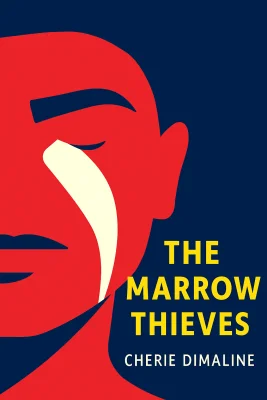
The Marrow Thieves
Categories
Fiction, Science Fiction, Audiobook, Young Adult, Fantasy, School, Book Club, Indigenous, Canada, Dystopia
Content Type
Book
Binding
Paperback
Year
2017
Publisher
Dancing Cat Books
Language
English
ISBN13
9781770864863
File Download
PDF | EPUB
The Marrow Thieves Plot Summary
Introduction
In a world where dreams themselves have become weapons, sixteen-year-old Frenchie crouches in the branches of a pine tree, watching his brother Mitch sacrifice himself to the Recruiters below. The government vans prowl the wasteland that was once Canada, hunting Indigenous people whose bone marrow holds the last reserves of human dreams. Climate catastrophe has shattered the earth, and the survivors have lost their ability to sleep peacefully. Only the Indigenous retain this gift, making them both precious and doomed. Frenchie escapes that day, but his freedom comes at a terrible price. He stumbles through the devastated landscape until he collapses, half-dead from starvation, only to be rescued by Miig's band of survivors. This ragtag family of the dispossessed becomes his world: Rose, whose fierce spirit ignites something in his chest; RiRi, a seven-year-old in bright pink boots; Minerva, their ancient Elder who hums forgotten songs; and the others who have lost everything but still carry the dreams that could save or damn them all. Together they flee north toward safety that may not exist, pursued by a machine that harvests souls and calls it progress.
Chapter 1: The Flight from Recruiters: Frenchie's Separation and Survival
The Doritos bag crackles between Mitch's fingers, a sound that cuts through the afternoon silence like a blade. They've been hiding in this tree house for three days, two brothers alone in a world that wants to hollow out their bones. The solar lamp casts weak shadows on the walls as Frenchie touches the metallic surface, unable to believe their luck. Outside, spring rain has turned everything soft and treacherous. The first pop of pressurized air escapes when Mitch opens the bag. Frenchie sees his brother's face change, sees him turn toward the north window with sudden terror. Below them, men in navy shorts and mesh sneakers move across the unmown grass, their silver whistles catching sunlight. Recruiters. The government's dream hunters have found them. Mitch's voice becomes steel. "You're going to climb out the back window onto the roof. Then you're going to grab that pine tree and climb up into it. Stay close to the trunk, in the shadows." His hands shake as he speaks, but his eyes burn with purpose. When Frenchie protests, Mitch uses the name only their mother had called him. "Listen, Francis. Now. Move it." The whistle's shriek splits the air as Frenchie scrambles up the roof slats, belly pressed to wood, terror launching him into the pine's scratchy embrace. Through the needles he watches them drag Mitch away, watches his brother scream and rage to cover the sound of escape, watches until the van's engine fades and he's alone in a tree, holding a half-empty bag of Doritos and a world of silence. Three days of walking on torn shoes through suburbs where guinea pigs have gone feral and cockroaches rule the abandoned stores. Frenchie's tooth screams with infection, his stomach clenches with hunger, and the weight of survival sits on his shoulders like lead. He thinks of his parents, disappeared into government promises, and knows with crystal clarity that this is how the world ends. Not with bombs, but with the slow harvest of hope, one dream at a time.
Chapter 2: Finding Family in the Wilderness: Miigwans' Group of Survivors
The fire burns low when consciousness returns, and voices speak in the pulled vowels of home. Frenchie opens his eyes to see a man with a mohawk feeding him warm broth, a girl with one eye watching from the shadows. He's been dying in the woods for days, and now these strangers tend to him like family, wrapping him in blankets while he shivers and weeps. Miig speaks his name like a prayer, and Frenchie recognizes it from his father's reverent whispers. This is the man who escaped the schools, who knows what waits for the captured. Around the fire sit others like him: Chi-Boy, tall and silent as a hunting bird; Wab with her scarred face and bitter strength; the twins Tree and Zheegwon, marked by horrors they're too young to carry; Slopper with his round belly and nervous laughter; seven-year-old RiRi in her bright boots; and Minerva, ancient and dreaming, who chews porcupine quills and hums lullabies in a language the schools tried to kill. They move north through forests growing wild again, away from the dead cities and poisoned lakes. Miig teaches them to hunt and hide, to read the signs that mean safety or death. At night around carefully hidden fires, he tells them Story. How the world broke under its own weight, how the waters rose and the people scattered, how the survivors lost their dreams and turned to harvesting others. The residential schools, he says, never really ended. They just found new reasons to steal souls. When Rose arrives, fierce and lovely with her grandmother's rifle and her uncle's teachings, something shifts in Frenchie's chest. She carries loss like armor and speaks the old words Minerva taught her in secret moments. Around the fire she argues with Miig about fighting back, about becoming hunters instead of prey. Her eyes reflect the flames when she looks at Frenchie, and he feels something dangerous growing in the space between his ribs, something that might be worth dying for.
Chapter 3: Loss and Vengeance: The Cost of Protecting What Remains
The betrayers come disguised as family, speaking Cree and sharing food while sharpening knives behind their backs. Travis and Lincoln seem like other survivors, weathered men with hunting stories and fresh meat. But Wab recognizes Travis from her brutal past in the city, and that recognition becomes prophecy when the whistles wake them in darkness. Violence erupts like a fever dream. Chi-Boy bleeds from his own knife thrust through his arm. The twins stand back-to-back at gunpoint. RiRi dangles from Lincoln's thick arm, her bright boots kicking air as she gasps for breath. The betrayers have called the Recruiters, trading Indigenous lives for whatever rewards the government offers to Judas with red skin. In the chaos of escape, they chase Lincoln toward the cliff's edge where sweetgrass once grew. The moon illuminates everything in silver mockery: Wab collapsed on the ground, Rose bent double and vomiting fear, Miig clinging to the cliff's edge in despair. And there at the precipice, one bright pink boot lies empty, abandoned like hope itself. RiRi and her captor have fallen together into the darkness, his greed becoming her anchor to death. Back at the camp, Travis bleeds and pleads and calls Frenchie "brother" while tied like an animal. The rifle feels heavier than grief in Frenchie's hands. Time moves slow in the vacuum of rage, each second stretching like taffy as he aims for the man's chest, remembering Miig's teachings about sure targets. The trigger pulls smooth as silk, and the world stops breathing. The price of RiRi's life is paid in full, but the debt will never be settled.
Chapter 4: Minerva's Sacrifice: Language as the Ultimate Refuge
The barn offers false sanctuary, hay-soft and warm in the loft while Minerva refuses to climb the ladder. She sets her bed in the center of the floor below, humming old songs and braiding sweetgrass while the others drift toward sleep. When the Recruiters' flashlights pierce the darkness, she's ready, having moved the ladder hours before, trapping her family in safety while sacrificing herself to the dream hunters. They drag her away in jumpsuit blue, hair shorn like a convict's, while she smiles secrets and holds her finger to her lips. The survivors jump from the hayloft onto hastily thrown hay, bones jarring against earth as they race north toward rumors of resistance. In Minerva's abandoned bed they find jingles made from tin can lids, rough-edged and stamped with expiry dates, proof that even prisoners can dance when no one's listening. The truth reaches them through Father Carole, their man inside the machine. Minerva didn't break under the dream-harvesting apparatus. She shattered it. When they connected the wires to her neural pathways, seeking to drain her marrow of dreams, she began to sing. Every dream she'd ever carried was wrapped in Cree syllables, protected by words the machines couldn't process, couldn't translate, couldn't steal. Her voice became thunder, pulling every dream from bone and blood and hurling them against the conductors until metal screamed and computers died. The school collapsed in flames and electrical failure, brought down by an old woman who carried her language like a weapon, who dreamed in words too old and sacred for the harvesters to touch. She died as she lived, keeping the dreams safe in the marrow of memory, proving that some things cannot be stolen, only given freely.
Chapter 5: The Reunion and Rescue Mission: Finding Father and Council
Through caves hidden in living rock, past guards who melt from tree shadows like spirits, Frenchie follows strangers into the earth itself. The tunnels open onto a secret valley where sweetgrass grows thick as hair and the air tastes of cedar smoke. At the far wall stands a sweat lodge, steam rising like prayers into the morning sky. When the last man emerges from ceremony, stretching tall despite his missing leg, Frenchie's world tilts and rights itself in the space of a heartbeat. Jean Dusome, his father, stands impossibly alive after years of assumed death, older and scarred but real as stone. The embrace that follows contains five years of grief and hope, all the unsaid words of a son who learned to be a man while dreaming of coming home. The Council chambers hum with purpose and broken histories. Seven survivors from scattered nations have gathered here: Clarence the Cree tracker, Bullet the one-eyed Inuit warrior, General with his graying braids and careful wisdom. They've built more than sanctuary in this hidden valley. They've created the seed of something the government fears most: organized resistance with knowledge intact and dreams undimmed. When Father Carole brings word that Minerva still lives, imprisoned in Espanola but scheduled for transport through their territory, the rescue plan crystallizes like ice. Nineteen fighters armed with makeshift weapons and desperate love. The convoy will pass close enough to touch, arrogant in its assumed safety. For once, the hunters will become prey, and the dreams they've stolen so long will fight back through gun barrels and arrow points, through children who remember their grandmothers' songs.
Chapter 6: The Failed Ambush: Minerva's Final Message
The road curves between living walls of pine and memories, nineteen bodies pressed against earth and hope. Frenchie breathes shallow in the balsam branches, rifle loaded with vengeance, while across the narrow asphalt Derrick mirrors his position. Below them, fighters crouch behind rocks that once tumbled from fractured hills, arrows nocked and hearts hammering prayers against ribs. The red car comes first, followed by the white van of nightmares. Arrows fly like deadly rain, punching through tires and glass while the vehicles spin and slide across broken pavement. Gunfire erupts in sharp counterpoint. General falls clutching his shoulder. The driver of the red car dies pinned with shafts, blood pooling crimson in his seat. But the van's horn begins its terrible keen, and footsteps splash through April mud toward the woods. Chi-Boy drags the escaped Recruiter back in restraints while the twins whoop victory, trading their shared baseball cap back and forth. The keys turn in reluctant locks. The van's rear doors swing open like hope itself, revealing Minerva propped against metal walls, waiting for rescue with her ancient smile intact. But the bullet hole in her chest blossoms dark as peonies against institutional blue. She dies whispering Cree into Miig's ear, words that make him weep and smile simultaneously. Her voice carries the traveling song that will guide her home, notes that rise above the broken road and shattered plans. Rose cuts her own hair with shaking hands, sends the curls after their Elder like letters to the dead. Frenchie's braid follows, shorn with grief and guilt, while Minerva's last word echoes in the cooling air: "Kiiwen." Go home. Always go home, no matter how far the journey leads from the place where dreams are born.
Chapter 7: Inheritance of Dreams: Discovering the True Keepers of Memory
In the camp that follows exile, Wab grows round with Chi-Boy's child while the Council scratches syllabics into birchbark and tries to rebuild a world from fragments. Rose grieves in silence, packing her belongings with the careful precision of someone preparing for a long journey. When she finally leaves, Frenchie hides in the pines rather than watch another piece of his heart walk away into uncertainty. His father's stories circle like smoke around the question of staying or going, roots or wings, the terrible choice between safety and purpose. Jean speaks of running toward something instead of away, of how love makes cowards brave and the brave reckless. When Frenchie confesses his need to follow Rose into the wilderness, his father kisses his head like benediction and lets him go with tears that taste of pride and terror. The forest road leads to revelation stranger than prophecy. The welcome party intercepts five strangers: two black nurses who steal children from government hospitals, a mullet-haired Métis tracker, and two pale men whose skin tells stories of time spent indoors. One speaks casual Cree when Clarence slips into his mother tongue, responding with fluency that cuts deeper than accident or study. When Isaac pushes back his dark hair, the buffalo tattoo on his hand catches moonlight like a promise kept. Miig's partner, mourned as dead for seven years, stands breathing and whole in their midst. The glass vial that held his dreams like a reliquary becomes meaningless beside the living man who carried them home. In the clearing where sweetgrass once grew, two broken hearts meet and mend while the survivors learn the deepest truth of all: as long as dreamers live, there will never be want for dreams, and love lost can find its way back through any darkness.
Summary
In the ruins of a world that devoured its own future, the last carriers of dreams discover that survival is not about what remains, but what refuses to die. Frenchie's journey from hunted child to guardian of memory maps the territory between grief and hope, between the individual heart and the collective soul. Through loss that cuts bone-deep and love that burns like sacred fire, he learns that family is not blood but choice, not staying but returning, not forgetting but remembering in ways that make the past live again. The dreams hidden in marrow prove stronger than the machines built to harvest them, protected by languages older than conquest and love deeper than despair. Minerva's sacrifice becomes not ending but transformation, her Cree syllables the key that unlocks more than schools, more than prisons, more than the narrow imagination of those who mistake power for strength. In the end, the dreamers inherit not the earth but something more precious: the knowledge that what makes us human cannot be stolen, only shared, only given freely like Miig's reunited heart, like Rose's returned love, like the promise that home is not a place but a belonging that survives all exile.
Best Quote
“Sometimes you risk everything for a life worth living, even if you're not the one that'll be alive to see it.” ― Cherie Dimaline, The Marrow Thieves
Review Summary
Strengths: The review highlights the book's powerful Indigenous narrative, focusing on themes of cultural loss, resilience, and survival. It is praised for its potential to educate non-Indigenous teens about the impacts of white supremacy on Indigenous people, without mythologizing them. The book's eloquent depiction of historical abuse and cultural genocide is noted as a significant strength. Weaknesses: Criticisms include a meandering plot and lack of character development, particularly with the protagonist, French. The speculative elements are deemed unimportant, and the book is described as trying too hard to be profound. Forced happy-ending reunions and an unsatisfying conclusion are also mentioned. Overall: The review presents a mixed sentiment. While the book is valued for its educational potential and powerful themes, it is critiqued for its execution and narrative pacing. The recommendation level is moderate, with appreciation for its thematic depth but reservations about its storytelling.
About Author

Cherie Dimaline
Dimaline interrogates the complex interplay of Indigenous identity and colonial impact through her compelling speculative and young adult fiction. Her works, deeply rooted in her Métis heritage, explore themes of cultural resilience, survival, and the enduring effects of colonialism. Notably, her writing transcends simple narratives by interweaving cultural memory and folklore with dystopian elements, creating rich tapestries that reflect Indigenous histories and perspectives. This approach is particularly evident in her acclaimed book, "The Marrow Thieves", which not only garnered the Governor General’s Literary Award but also resonated globally for its exploration of Indigenous survival amidst exploitation.\n\nWhile Dimaline has produced several notable works, each with unique contributions to literature, her storytelling methodology and thematic focus consistently amplify Indigenous voices. Her first novel, "Red Rooms", set the stage by winning Fiction Book of the Year at the Anskohk Aboriginal Literature Festival. Meanwhile, "Empire of Wild" demonstrated her versatility by becoming a bestseller and being adapted into an opera. Her latest release, "VENCO", further extends her influence, debuting at the top of Canadian bestseller lists. Readers interested in narratives that challenge conventional perspectives and highlight Indigenous experiences will find Dimaline’s body of work particularly enriching.\n\nHer recognition extends beyond literary circles, with honors such as the Emerging Artist of the Year at the Ontario Premier's Award for Excellence in the Arts. By mentoring emerging writers and engaging in literary culture through initiatives like the Indigenous Writers' Gathering, Dimaline also plays a pivotal role in shaping future narratives. This bio captures her journey as an author whose work is not just an artistic endeavor but a cultural assertion and educational experience, contributing profoundly to the literary understanding of Indigenous identities and stories.
Read moreDownload PDF & EPUB
To save this Black List summary for later, download the free PDF and EPUB. You can print it out, or read offline at your convenience.
The Marrow Thieves
by Cherie Dimaline
