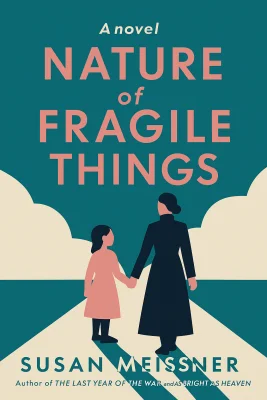
The Nature of Fragile Things
Categories
Fiction, Audiobook, Mystery, Historical Fiction, Adult, Family, Book Club, Historical, Adult Fiction, Suspense
Content Type
Book
Binding
Hardcover
Year
2021
Publisher
Berkley
Language
English
ASIN
0451492188
ISBN
0451492188
ISBN13
9780451492180
File Download
PDF | EPUB
The Nature of Fragile Things Plot Summary
Introduction
# The Fragile Dance of Truth: Bonds Forged in Fire The ferry cuts through San Francisco Bay's choppy waters on a March morning in 1905, carrying Sophie Whalen toward a marriage she has never wanted but desperately needs. In her worn carpetbag lies a photograph of Martin Hocking, the widowed insurance man whose advertisement promised escape from New York's suffocating tenements. His eyes seem to pierce straight through the camera lens, cold and calculating in a way that should have warned her. But desperation makes poor counsel, and Sophie has learned that survival sometimes requires bargains with strangers. What she cannot know, as the city's fog-shrouded hills rise before her, is that Martin Hocking is not the grieving widower he claims to be. Behind his devastating handsomeness lies a web of deception so intricate it ensnares multiple women across the American West. When the earth itself begins to convulse beneath San Francisco's foundations thirteen months later, Sophie will discover that some secrets run deeper than bedrock, and that the most fragile bonds between strangers can prove stronger than steel when everything else crumbles to ash.
Chapter 1: A Marriage of Convenience: Sophie's Bargain with a Stranger
The courthouse marble echoes with Sophie's footsteps as she follows Martin Hocking toward their wedding ceremony. Her hands tremble as she adjusts the blue velvet hat that once belonged to her mother, the only fine thing she owns in this world of strangers. Martin moves with predatory grace, his golden hair perfectly groomed despite the San Francisco fog, his coffee-colored suit speaking of prosperity she has never known. The justice of the peace barely glances up from his ledger. No witnesses, no flowers, no joy. Just the scratch of fountain pens on legal documents and the mechanical recitation of vows that feel hollow in Sophie's mouth. When the photographer offers his services, Martin initially refuses with cold practicality. "Please," Sophie touches his arm, surprised by her own boldness. "Shouldn't we have something to remember this day?" Martin considers her request with the same detached calculation she notices in all his responses. He hands over the money as if purchasing any other commodity, his expression revealing nothing of what lies beneath that handsome mask. They collect Katharine from Mrs. Lewis's boarding house afterward. The child is six years old, with cinnamon hair and eyes exactly like her father's, clutching a black-haired doll with a cracked porcelain face. She has not spoken since her mother's death from consumption, Martin explains with clinical detachment. Mrs. Lewis watches their departure with troubled eyes, as if she wants to voice some warning but cannot find the courage. The house on Polk Street takes Sophie's breath away. Three stories of deep blue paint and ivory trim, with gas fireplaces and indoor plumbing that seem like miracles after the tenements. Martin shows her through the rooms with the air of a man displaying his possessions rather than sharing his home. The previous owners left everything behind when they fled to Argentina, he explains. Sophie wonders what drove them to abandon such luxury, but Martin's cold smile discourages further questions. That first night, as Sophie tucks Kat into bed, she places the photograph of the child's dead mother under her pillow. "It will seem like you're resting your head in her lap," she whispers. When she looks up, Martin stands in the doorway watching with those calculating eyes, his expression unreadable as granite. Something in his stillness makes her skin crawl, though she cannot yet name the source of her unease.
Chapter 2: Silent Threads: Building a Life with a Child Who Won't Speak
Mrs. Lewis's parting words echo in Sophie's mind as she watches Martin with Kat over the following weeks. He never touches the child, never shows affection, treats her more like furniture than his daughter. The boarding house keeper's concerns begin to make terrible sense as Sophie realizes the depth of the child's fear. Kat speaks only in whispers to Sophie, and only when Martin disappears on his mysterious business trips. She is brilliant, solving complex puzzles and absorbing lessons like a sponge, but something broken in her silence runs deeper than grief. When Sophie asks about her mother, the child's eyes fill with tears she refuses to shed. Sophie creates a world of gentle learning at the kitchen table. They work with colored beads and maps of distant countries, choosing a new word each day from her father's dictionary. Kat's favorite is "luminescent," something that glows with its own inner light. The irony is not lost on Sophie, who sees that inner glow flickering behind the child's frightened eyes. Martin's absences grow longer and more frequent. He claims to work for an insurance company, assessing risk for wealthy clients, but Sophie never sees evidence of this employment. No telephone calls interrupt their quiet evenings, no business correspondence arrives, no colleagues visit their elegant home. When she asks the name of his company, Martin deflects with practiced ease that makes her wonder what other lies he tells so smoothly. Their physical relationship, when it finally begins months after their wedding, proves as emotionally barren as everything else between them. Martin takes her body with mechanical precision, never kissing her lips, never whispering endearments in the darkness. Afterward he always returns to his own room, leaving Sophie to stare at the ceiling and wonder if she has simply traded one form of loneliness for another. The small earthquakes that occasionally rattle San Francisco's foundations seem like omens now, warnings of instability beneath the surface. Martin assures her that everyone who lives in the city grows accustomed to the tremors, but Sophie senses deeper fault lines running through their lives, fractures that no amount of wishing can repair. She has built her new existence on shifting ground, and some part of her knows the reckoning is coming.
Chapter 3: Duplicity Unveiled: The Discovery of Martin's Other Life
The woman standing on Sophie's doorstep is heavily pregnant, her strawberry-blonde hair disheveled by wind and worry. She clutches a small envelope in trembling hands, her blue eyes bright with unshed tears and desperate hope. "Is this the home of Martin Hocking?" she asks breathlessly. "Yes, I am Mrs. Hocking," Sophie replies, noting the woman's condition with immediate concern. "I'm looking for my husband, James Bigelow. Mr. Hocking asked a favor of him and he's been gone longer than expected. I thought perhaps..." Sophie's blood turns to ice water in her veins. She invites the stranger inside, her mind racing through possibilities none of which make sense. In the sitting room, the pregnant woman's gaze falls upon the wedding photograph displayed prominently on the mantel. Color drains from her face as she staggers forward, grasping the silver frame with desperate fingers. "That's James," she whispers, pointing to Martin's image with a shaking hand. "That's my husband." The teakettle screams from the kitchen as Sophie's carefully constructed world tilts on its axis. This woman, Belinda Bigelow, married Martin four months after Sophie's own wedding ceremony. She owns an inn in San Rafaela, inherited from her father who died in a mining accident. Martin courted her with tender affection, something he never showed Sophie, winning her heart before making her his second wife. As they piece together Martin's elaborate deception through the long night, Sophie realizes the scope of his betrayal extends far beyond simple adultery. He has been living multiple lives, traveling between multiple wives, maintaining separate identities with the skill of a professional actor. But the question that haunts both women is why. What could he possibly gain from such an intricate charade? The answer lies in Martin's locked desk. Sophie picks the lock with hairpins, her hands shaking as she discovers the truth that will change everything. Marriage certificates under different names. Death certificates for identities Martin has stolen. Bank statements showing modest wealth accumulated through means she dare not contemplate. And then she finds Candace's letter, written from Las Palomas Sanatorium in Arizona nineteen months ago. Kat's mother is not dead. She is alive, begging Martin to bring their daughter to see her, pleading for a chance to be the mother she failed to be during her illness. Martin has stolen more than money or property. He has stolen a mother from her child, and Sophie realizes she has been complicit in this cruelest of deceptions.
Chapter 4: When the Earth Shattered: Survival Amid the Ruins
The first tremor catches them in the pre-dawn darkness of April 18th. Sophie is in the kitchen with Martin, who has returned unexpectedly from his latest trip, his clothes mud-stained and his eyes holding a cold purpose that makes her blood freeze. He has discovered their investigation, seen the broken bottles in the basement where he stored gold stolen from Belinda's father's mine. "Where is he?" Kat whispers from the stairs, staring down at her father's crumpled form at the bottom of the staircase. The confrontation has ended with Martin's fall, his body twisted at impossible angles, blood pooling beneath his golden hair. "I sent him on his way," Sophie tells the child, dragging Martin's broken form into the kitchen corner, away from innocent eyes that have seen too much already. Then the earth begins its violent dance. The house shudders and groans as massive stone slabs deep beneath San Francisco collide and seek new positions. Plaster rains down like deadly snow. The elegant staircase sways drunkenly. Dishes cascade from shelves in symphonies of destruction that drown out human screams. Sophie grabs Kat and Belinda, whose labor pains have begun with the earthquake's first shock. They stumble into the street as chimneys topple and buildings lean at impossible angles. The world has become a ship on a furious sea, and they are passengers without compass or anchor, clinging to each other as their only certainty. Belinda's water breaks in the cobblestone street, mixing with dust and debris from collapsing facades. The Central Emergency Hospital at City Hall has crumbled, its patients evacuated to the Mechanics' Pavilion. In a milk wagon driven by a terrified man whose horse shies at every aftershock, they make their desperate way through a city transforming into hell before their eyes. The pavilion becomes a cathedral of suffering. On mattresses spread across the exhibition floor where circus performers once entertained crowds, Belinda brings her daughter into a world gone mad. Sophie catches the tiny girl as she emerges, perfect and beautiful despite her early arrival, untouched by the chaos surrounding her birth. "Sarah," Kat whispers, the name she chooses for her half-sister, the first word she has spoken since learning her mother still lives. But their sanctuary proves short-lived. Sparks from approaching fires begin to fall like deadly snow on the pavilion's roof, and they must flee again, this time toward Golden Gate Park, joining the river of refugees flowing west toward whatever safety remains in a city devouring itself with flame.
Chapter 5: Sisters in Circumstance: Finding Strength in Unexpected Bonds
Golden Gate Park becomes a city of the dispossessed. Thousands of refugees spread across the manicured lawns like scattered seeds, their belongings reduced to whatever they could carry in their desperate flight. Sophie and Kat share a single blanket while around them families huddle together, their faces illuminated by the orange glow of fires still raging to the east. The bulletin board near the park entrance tells stories of desperate searching written in shaking hands. "Missing! Four-year-old twins!" one note pleads. "Sylvia and Malcolm Berger are safe," announces another. Sophie tears a page from her father's word book to leave messages for Belinda, who was separated from them during the chaotic evacuation from the burning pavilion. For three days they exist in this liminal space between their former lives and an uncertain future. Sophie stands in endless queues for food, water, and the army tents that provide minimal shelter from the elements. She shares their canvas refuge with two elderly sisters who regard her and Kat with aristocratic disdain, their silk dresses and jewels incongruous in the refugee camp. Kat has retreated into herself again, speaking only in whispers, her dark eyes holding depths of trauma that no child should carry. She knows her father is gone, whether dead or fled, and that her mother lives somewhere beyond the smoke and ash. The knowledge sits in her small frame like a weight too heavy for such narrow shoulders to bear. When Belinda finally appears, stepping from a Red Cross carriage with baby Sarah in her arms, their reunion feels like resurrection. The three women and two children have become a family forged in catastrophe, bound by shared survival and the terrible knowledge of what Martin Hocking truly was beneath his handsome mask. "They took me somewhere else," Belinda explains through tears of relief and exhaustion. "They wouldn't bring me here where I knew you were waiting." Sophie holds them both, woman and child, feeling the fierce protectiveness that has sustained her through the worst days of her life. They are sisters now in ways that blood could never make them, united by their escape from a man who saw them only as means to his selfish ends. The fires finally die on Saturday morning, leaving half of San Francisco as ash and memory. The ferry building still stands at the foot of Market Street, its clock tower reaching into the smoky sky like a beacon of hope for those with somewhere else to go.
Chapter 6: The Hardest Truth: A Mother's Return from the Dead
The train to Arizona carries them through landscapes untouched by earthquake or fire, where the world still makes sense and horizons hold promise instead of smoke. Kat sits quietly beside Sophie, holding her doll with its dress made from outgrown clothes, now passed down to baby Sarah as a gift between sisters who share no blood but everything that matters. Las Palomas Sanatorium sits among desert hills like a white adobe dream. Palm trees cast healing shadows on walkways where patients in wheelchairs take the dry air that promises to restore what consumption has stolen. Sophie's heart pounds as she approaches the reception desk, Kat's small hand tight in hers like an anchor in a storm of uncertainty. "We're here to see Candace Hocking," she tells the nurse, her voice steadier than she feels. "Mrs. Hocking is on the patio. She's been expecting visitors for so long." The woman on the wicker chair is thin as paper, her golden hair faded to silver by illness and desert sun, but her eyes are Kat's eyes, brightening with desperate hope as they approach. Candace Hocking has been dying slowly of consumption, but she has lived long enough for this moment that makes everything else worthwhile. "Katharine?" she whispers, and the name breaks like glass in the desert air. Kat hesitates, caught between the woman she was told was dead and the life she has built believing in that death. Sophie kneels beside her, whispering encouragement while fighting her own heart that screams against this necessary surrender of the child she has learned to love as her own daughter. "Go to her, sweetheart. She's waited so long to see you." The reunion is tentative at first, then overwhelming as years of separation collapse into desperate embraces. Candace weeps as she holds her daughter, apologizing for the years lost to illness and Martin's lies, for the withdrawal that made her seem dead even when she lived. She explains how her father spirited her away to the sanatorium when Martin refused to let her seek treatment, how she begged him in letter after letter to bring Kat for visits that never came. "He told me you were dead," Kat whispers, the longest sentence Sophie has heard her speak. "I know, darling. I know. But I'm here now, and I'm getting better. The doctors say I might have years yet if I'm careful." Sophie watches from across the patio as mother and daughter begin to rebuild what Martin's cruelty destroyed. Her own heart breaks and mends simultaneously, knowing she has done the right thing even as it costs her everything she has learned to love. Some sacrifices are necessary, even when they feel like dying.
Chapter 7: What Love Demands: The Journey to Reunion and Sacrifice
The train back to California carries Sophie alone, her heart hollowed out but strangely at peace. She has left Kat in Arizona with her mother and grandfather, where the child will have the love and security she deserves from those who share her blood. The sacrifice feels like tearing away part of her soul, but honor demanded nothing less. At the Loralei Inn, Belinda waits with baby Sarah and Elliot, the carpenter who has loved her faithfully through all her misguided passion for the man who never existed. The inn has become Sophie's sanctuary now, a place where she can help raise Sarah and find purpose in the ruins of her former dreams of motherhood. "You did the right thing," Belinda tells her as they sit in the garden where herbs grow in neat rows, where life continues its patient work of renewal despite all the destruction they have witnessed. "I know," Sophie replies, though knowing doesn't ease the ache that has settled in her chest like a permanent resident. They have both been changed by their encounter with Martin Hocking's particular brand of evil. Belinda has learned to distinguish between love and manipulation, between genuine affection and calculated charm designed to serve selfish purposes. Sophie has discovered that sometimes the greatest act of love is letting go, that true strength lies not in holding tight but in knowing when to open your hands and release what you cherish most. The gold from the mine sits in a jar in the inn's safe, Martin's reason for marrying Belinda now transformed into something that might serve better purposes. Neither woman wants to touch it yet, this treasure that cost so much in human suffering, but perhaps someday they will find a worthy use for wealth built on such foundations of pain. Letters arrive from Arizona with increasing frequency. Kat is learning to speak again, her voice growing stronger as her mother's health improves under the desert sun. She asks about Sophie, about baby Sarah, about when they might visit the inn where her chosen family waits. The connections forged in catastrophe prove stronger than the lies that brought them together, more durable than the earthquake that revealed the truth. On quiet evenings, Sophie reads from her father's word book to Sarah, just as she once did with Kat. The baby doesn't understand the words yet, but she responds to the rhythm, the love in Sophie's voice that transcends meaning. "Luminescent," Sophie whispers, watching the child's eyes reflect the lamplight like stars. Something that glows with its own inner light, like hope, like resilience, like the human capacity to begin again after everything falls apart and the earth itself betrays the foundations we thought we could trust.
Summary
In the ashes of San Francisco's destruction, three women discovered that some bonds transcend blood, law, or the careful arrangements of desperate circumstances. Sophie Hocking, a name she chose to keep from a marriage built on lies, found her true family not in the fraud who deceived her but in the woman who shared his deception and the children who needed their protection above all else. Her sacrifice of Kat, the child she loved as fiercely as any mother, became the foundation of a different kind of motherhood, one that measures love not by possession but by the courage to serve the beloved's highest good. The earthquake that shattered a city also revealed the fault lines running through carefully constructed deceptions. Martin Hocking's web of lies collapsed not under the weight of investigation or justice, but under the simple power of women who chose to protect each other rather than compete for the hollow affections of a man incapable of genuine love. In choosing compassion over vengeance, truth over comfortable illusion, they discovered that some things prove more durable than stone and steel. The earth may shake and cities may burn, but the human capacity for renewal, like the stubborn green shoots that push through ash, finds a way to flourish even in the most barren ground where nothing should be able to grow.
Best Quote
“I don't think love is something you can start and stop by choosing. Our hearts tell us who we will love, and not the other way.” ― Susan Meissner, The Nature of Fragile Things
Review Summary
Strengths: The review highlights the engaging narrative of "The Nature of Fragile Things," particularly praising its intriguing title, captivating cover, and the historical backdrop of the 1906 San Francisco earthquake. The story's exploration of complex characters, especially the protagonist Sophie and her relationship with Martin's daughter Kat, is noted as a compelling element. The novel's ability to spark interest in historical events is also appreciated. Weaknesses: The review points out repetitive language as a potential drawback, suggesting that this might be more noticeable in the audiobook format. Overall: The reader expresses a highly positive sentiment, awarding the novel 4.5 stars, rounded to 5. The novel is recommended for its strong character development and historical intrigue, despite minor issues with repetitive language.
About Author

Susan Meissner
Meissner investigates the intricate tapestry of human experiences through her deeply researched historical fiction. Her novels, translated into eighteen languages, often intertwine past and present narratives, aiming to illuminate the enduring nature of love and resilience. By delving into diverse historical settings, Meissner connects readers to the emotional truths within these stories, thereby fostering a deeper understanding of the human condition. Her book "The Last Year of the War," for example, situates personal transformation against the backdrop of World War II, highlighting the universal struggle for identity amidst chaos.\n\nIn her writing, Meissner skillfully balances meticulous historical detail with engaging storytelling, which has earned her recognition on numerous prestigious lists, including the Goodreads Readers’ Choice awards and Publishers Weekly’s annual roster of 100 best books. This attention to authenticity and narrative depth ensures that her work resonates well with book clubs and literary enthusiasts. Readers are drawn not only to the historical richness but also to the relatable human emotions depicted in her stories. Beyond the page, Meissner extends her passion for storytelling by conducting writing workshops, further enriching her audience's appreciation for crafted narratives. Her ability to articulate complex emotions in her books makes them a valuable addition to any reader's library and a captivating subject for literary discussions.
Read moreDownload PDF & EPUB
To save this Black List summary for later, download the free PDF and EPUB. You can print it out, or read offline at your convenience.
The Nature of Fragile Things
by Susan Meissner
