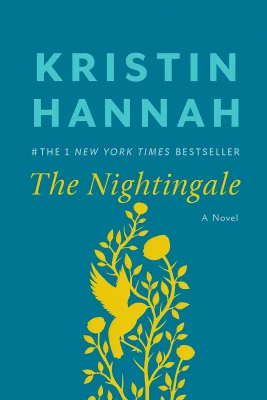
The Nightingale
Categories
Fiction, Audiobook, Historical Fiction, Romance, Adult, Book Club, Historical, France, World War II, War
Content Type
Book
Binding
Hardcover
Year
2015
Publisher
St. Martin's Press
Language
English
ASIN
0312577222
ISBN
0312577222
ISBN13
9780312577223
File Download
PDF | EPUB
The Nightingale Plot Summary
Introduction
# Wings of Resistance: Two Sisters in the Shadow of War The trunk in the Oregon attic held secrets that had festered for seventy years. Vianne's arthritic fingers trembled as she lifted the lid, dust motes dancing in pale light that filtered through cobwebs. Inside, beneath baby shoes and crayon drawings, lay the artifacts of a war that had carved itself into her bones: yellowed identity cards, faded photographs, and a name that made her breath catch—Juliette Gervaise. Her son's voice drifted up from below, calling with the careful concern of a doctor who knew his patient was dying. The cancer had returned, more aggressive this time, and she was preparing to leave the house that had been her sanctuary for fifty years. But first, she needed to confront the ghosts buried in this trunk, the secrets that had rotted in darkness. The war had ended seventy years ago, yet its shadows still reached for her with skeletal fingers, demanding an accounting she had never been brave enough to give. In 1939, she had been Vianne Mauriac, a schoolteacher in occupied France. Her sister Isabelle had been nineteen, burning with fury that would transform her into legend. The war would test them both in ways they never imagined, forcing each to choose her own path through the darkness that swallowed their homeland.
Chapter 1: When Peace Shattered: The Occupation Begins
The refugees came first, a river of broken humanity flowing through Carriveau like blood from an open wound. Vianne watched from her window as thousands of women and children stumbled past her gate, their faces hollow with exhaustion and terror. They had fled Paris ahead of the German advance, carrying their lives in suitcases and baby carriages, leaving behind everything they couldn't hold in their arms. When the wave finally passed, it left destruction in its wake. Vianne's garden was trampled, her gate broken, her sense of security shattered like glass. Then came the soldiers—not the ragged, defeated French troops she had expected, but young German men in crisp uniforms, marching through her village with the confidence of conquerors. They hung their swastika flag from the town hall and smiled at the local girls as if they were tourists rather than invaders. The knock on her door came on a Tuesday evening. Captain Wolfgang Beck stood on her threshold, polite and apologetic, speaking broken French with a Bavarian accent. He was tall and fair, with the kind of face that belonged in a church choir rather than an army uniform. He handed her a requisition order and explained, almost gently, that he would be billeting in her home. Vianne could either make room for him or abandon the house that had been in her family for three hundred years. Her eight-year-old daughter Sophie clutched her teddy bear tighter, asking when Papa would come home. Antoine was already behind barbed wire in a German prison camp, learning what it meant to be defeated. As Beck settled into the guest bedroom beneath her stairs, Vianne felt the walls of her world contracting around her. The enemy now slept under her roof, ate at her table, breathed the same air as her daughter. Winter was coming, and with it, choices that would haunt her for the rest of her life.
Chapter 2: Divided Paths: Sisters Choose Their Wars
Isabelle Rossignol had always been the storm to Vianne's calm, the fire to her sister's ice. At nineteen, she burned with a fury that made her beautiful and dangerous in equal measure. When she arrived at Le Jardin, fleeing Paris ahead of the German occupation, she brought with her the scent of smoke and the wild energy of someone who had seen the world ending and refused to accept it. The sisters had never understood each other. Vianne, the elder by fourteen years, had tried to mother Isabelle after their father's abandonment, but grief and youth had made her clumsy with love. Isabelle had grown up feeling unwanted, shuffled between boarding schools and convents, her rebellious spirit hardened by years of rejection. Now, faced with German occupation, their differences became a chasm that threatened to swallow them both. Beck's presence in the house was the spark that lit the fuse. While Vianne counseled caution and compliance, Isabelle seethed with barely contained rage. She cut off her beautiful blonde hair when Beck complimented it, handed him the severed locks like a declaration of war. She spoke of resistance, of fighting back, of a general named de Gaulle who called for France to rise up against its conquerors. The breaking point came when Beck asked Vianne for a list of teachers at the local school. Vianne, desperate to protect her family and believing it was harmless clerical work, wrote down the names. When her best friend Rachel was fired as a result, the guilt nearly destroyed her. Isabelle saw her sister's collaboration and felt something die inside her chest. They were no longer just sisters divided by temperament—they were two women choosing opposite sides in a war that would test the very meaning of survival. The house could no longer hold them both.
Chapter 3: The Nightingale's Flight: Courage in the Darkness
The bookshop in Paris looked abandoned, its windows boarded up and its door hanging crooked on rusted hinges. But behind that door, in a room thick with cigarette smoke and the smell of fear, Isabelle found her calling. Henri Navarre and his communist cell were printing leaflets, spreading the word that France had not truly surrendered, that resistance was possible. They were an unlikely band of rebels—a butcher, a baker, an old man who had fought in the last war, and a nineteen-year-old girl with more courage than sense. They gave Isabelle her first taste of real purpose, teaching her to distribute their papers in the dark hours before dawn, slipping them into mailboxes like seeds of hope in barren soil. But the underground network wanted more from her than simple courier work. They needed someone who could travel freely, someone young and innocent-looking who could carry messages across occupied France. When Henri offered her the chance to guide downed Allied airmen to safety, Isabelle didn't hesitate. She had found her war at last. The escape route began with a desperate gamble. Lieutenant MacLeish, the wounded British pilot she found hiding in Parisian bushes, needed to reach Spain to return to England and continue fighting. But the Pyrenees stood between them and freedom, a wall of stone and snow that had claimed countless lives. Eduardo, the Basque guide, led them up treacherous paths in freezing darkness, through terrain that tested every limit of human endurance. Isabelle's feet bled in her inadequate shoes, her lungs burned in the thin air, but she pressed on. When they reached the Spanish border and she watched the airmen disappear into safety, Isabelle felt something she had never experienced before: purpose. The Nightingale had taken flight.
Chapter 4: Dangerous Sanctuary: Protecting the Innocent
Winter came to Carriveau like a punishment, bringing with it hunger and cold that seeped into bones and souls alike. Vianne watched her daughter grow thin, watched the light fade from Sophie's eyes as their world contracted to the basic mathematics of survival. Food became currency, warmth became luxury, and hope became a dangerous indulgence they could no longer afford. Beck's presence in their home became both blessing and curse. He brought them fish he had caught, wine from his personal stores, chocolate for Sophie that made the little girl's face light up with forgotten joy. But each gift came with a weight of moral complexity that pressed down on Vianne's chest like a stone. At night, when Beck sat by their fire reading letters from his wife, when he spoke of his children with the same aching love that filled Vianne's own heart, she glimpsed the man beneath the uniform. The crisis came when Rachel appeared at Vianne's door in the middle of the night, her three-year-old son Ari clinging to her coat. The yellow stars had appeared, the deportations had begun, and Rachel knew she would never return from the cattle cars that left Carriveau's station. "Please, Vianne," she whispered, her dark eyes wild with terror. "Hide him. Just until I come back." Beck discovered the child the next morning, his sharp eyes missing nothing. Vianne's heart hammered against her ribs as she waited for him to call the authorities. Instead, he knelt down to Ari's level and spoke gently in German, his voice soft as a lullaby. "He will need papers," Beck said quietly, not looking at Vianne. "New papers. With a French name." The kindness of enemies, Vianne thought, could be the most dangerous trap of all. But she took the boy anyway, transforming Ari into Daniel, her adopted nephew, creating a lie that would have to become truth if any of them were to survive.
Chapter 5: The Price of Defiance: Betrayal and Sacrifice
Isabelle's luck ran out on a spring evening in 1944. She had grown careless, perhaps, or maybe the net was simply closing too tight around all of them. The Gestapo burst into the safe house in the Pyrenees foothills, their black uniforms stark against the whitewashed walls, their dogs snarling with trained violence. The Nightingale had finally been caged. The interrogation room in Girot was a study in calculated brutality. Sturmbannführer Schmidt sat across from her, his pale eyes reflecting nothing human. The questions came like blows: Who was the Nightingale? Where were the safe houses? What were the routes? Isabelle said nothing. She had prepared for this moment, knowing that silence was the only weapon she had left. Every hour she held out gave her network time to scatter, to hide, to survive. When they brought her father into the courtyard, Isabelle felt her world shatter. Julien Rossignol stood before the firing squad with his shoulders squared, his white hair catching the morning light. He had come to save her, this man who had failed her so many times, offering his life as payment for hers. "I am the Nightingale," he declared, his voice carrying across the cobblestones with the authority of a poet who had finally found his greatest verse. The shots echoed off the stone walls like thunder. Isabelle screamed until her voice gave out, but her father was already gone, taking her secrets with him into whatever darkness awaited beyond the grave. The sacrifice bought her freedom, but freedom came with a price she would carry forever. Some victories, she learned, felt exactly like defeat. The girl who had once run toward every danger now understood that sometimes the bravest thing you can do is let someone else save you.
Chapter 6: Surviving the Unthinkable: Endurance Beyond Hope
The cattle car that carried Isabelle to Ravensbrück was a rolling tomb. Seventy women and children packed into a space meant for livestock, with one bucket for water and another for waste. The journey took four days, and by the time the doors opened, several of the youngest and oldest had already died. The guards processed them with industrial efficiency: heads shaved, bodies searched, identities reduced to numbers tattooed on their arms. Isabelle became F-5491, just another political prisoner in the Nazi machine designed to break human beings into component parts. The work was designed to kill slowly. Twelve-hour shifts hauling massive stone rollers to build roads, the leather harnesses cutting into their shoulders until the wounds festered. The food was thin soup and moldy bread, never enough to sustain life but always enough to postpone death. Women died every day from exhaustion, disease, or the casual violence of guards who saw them as less than human. But Isabelle survived. She survived because of Micheline Babineau, the brave woman who had sheltered airmen in her cottage, who now shared her meager rations and whispered stories in the dark to keep their humanity alive. She survived because of the other women who formed an invisible network of care, sharing warmth and hope and the precious knowledge that somewhere beyond the barbed wire, the war was turning. Most of all, she survived because she carried within her the memory of every airman she had saved, every life that continued because she had been brave enough to act. The Nazis could break her body, but they could not touch the part of her that had chosen love over fear, resistance over submission. Liberation came with American tanks and soldiers who wept at what they found. Isabelle weighed less than eighty pounds, her body ravaged by typhus and pneumonia, but she was alive, and that seemed like miracle enough.
Chapter 7: Legacy of the Brave: Songs That Echo Forever
The reunion at Le Jardin was both homecoming and farewell. Isabelle had so little time left—the damage to her lungs was too severe, the typhus too advanced. But in those final weeks, surrounded by her sister's love and the gentle rhythms of ordinary life, she found a peace she had never known. She sat in the garden with Vianne, watching Sophie play with the children they had saved, and understood that her life had been enough. Gaëtan found her there, this man she had loved in stolen moments between missions. He was thinner too, marked by his own war in the forests with the Maquis, but his eyes still held the same intensity that had first drawn her to him. When he took her in his arms, Isabelle felt something she had thought lost forever: the possibility of joy. "I'm not afraid," she told him on her last night, her voice barely a whisper. "I got to love you. I got to save them. What more could anyone ask for?" Fifty years later, in a hotel ballroom in Paris, the survivors gathered to remember. Vianne stood at the podium, her white hair gleaming under the lights, her voice steady as she spoke of her sister's courage. The audience was filled with the families of the men Isabelle had saved, their children and grandchildren, all the lives that existed because a young woman had chosen to be brave. "She wanted to be remembered," Vianne said, her eyes bright with unshed tears. "Isabelle Rossignol died both a hero and a woman in love." In the crowd, she spotted familiar faces: Ari de Champlain, now a successful American businessman who had never forgotten the woman who saved him; the children and grandchildren of airmen who had made it home because of the Nightingale's courage. After the ceremony, Vianne walked along the Seine, finally ready to tell the full story of the war years. The secrets she had carried for five decades felt lighter now, shared at last with someone who could understand their weight.
Summary
The war that had torn the Mauriac sisters apart ultimately forged them into something stronger than they had ever been alone. Vianne's quiet resistance, protecting Jewish children through careful deception and daily courage, proved as vital as Isabelle's dramatic missions across enemy lines. Both women discovered that heroism came not from grand gestures but from the accumulation of small, dangerous choices made in defense of what mattered most. The kindness of enemies like Beck, the sacrifice of fathers like Julien, the solidarity of women in the camps—all of it wove together into a tapestry of human complexity that defied simple categories of good and evil. In the end, their different paths had led to the same destination: the understanding that love and family were worth any sacrifice, any risk, any price. The children they had saved, the families they had protected, the small acts of defiance that had added up to something larger than themselves—these were the true victories of the war. As Vianne stood on the bridge where she had walked as a young woman, she could almost hear it: the song of the nightingale, clear and sweet and defiant, echoing across the years. It was the sound of resistance, of love that refuses to surrender, of the human spirit that no darkness can fully extinguish. And in that song, Isabelle lived on, forever young, forever brave, forever the sister who had taught her that sometimes the most important battles are fought not with weapons, but with the simple, radical act of refusing to give up hope.
Best Quote
“If I have learned anything in this long life of mine, it is this: in love we find out who we want to be; in war we find out who we are.” ― Kristin Hannah, The Nightingale
About Author

Kristin Hannah
Hannah synthesizes historical events with personal narratives to illuminate the often-overlooked stories of women. Her transition from law to literature underscores a dedication to exploring resilience and the human spirit through fiction. While her early career focused on historical romance, she soon evolved to tackle women’s fiction and historical fiction, emphasizing strong female protagonists. Her narratives, such as in "The Nightingale" and "The Great Alone", are marked by rich character development and emotional depth, intertwining personal dramas with broader historical contexts. This approach not only captivates readers but also fosters a deeper appreciation for the genre of historical fiction.\n\nFor readers, Kristin Hannah’s work offers a profound exploration of themes like love, loss, endurance, and recovery. Her books evoke strong emotional responses, drawing readers into the lives and struggles of her characters. By highlighting women's experiences during pivotal moments in history, her stories resonate with a diverse audience. "Firefly Lane", adapted into a Netflix series, exemplifies her ability to connect personal relationships with cultural touchstones. This bio showcases how her literature inspires reflection on personal and collective histories, cementing her status as a bestselling author dedicated to crafting narratives that honor the strength of the human spirit.
Read moreDownload PDF & EPUB
To save this Black List summary for later, download the free PDF and EPUB. You can print it out, or read offline at your convenience.
The Nightingale
by Kristin Hannah
