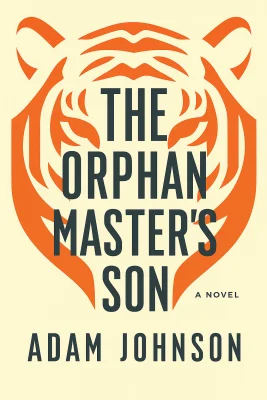
The Orphan Master's Son
Categories
Fiction, Audiobook, Historical Fiction, Literature, Asia, Book Club, Historical, Contemporary, Novels, Literary Fiction
Content Type
Book
Binding
Hardcover
Year
2012
Publisher
Random House
Language
English
ASIN
0812992792
ISBN
0812992792
ISBN13
9780812992793
File Download
PDF | EPUB
The Orphan Master's Son Plot Summary
Introduction
# The Weight of Stolen Names: Identity and Sacrifice in the Land of Whispers In the suffocating darkness of a North Korean uranium mine, a nameless prisoner strips the uniform from a dead commander's body. The fabric still holds the warmth of its previous owner, Commander Ga Chol Chun, whose brutal reign over Prison 33 has just ended in violence. Above ground, the sun cuts through Pyongyang's smog like a blade, illuminating a city built on lies and sustained by fear. In a mansion overlooking the capital, actress Sun Moon waits for a husband who will never return, unaware that the man walking through her door carries the scent of underground tunnels and the hollow stare of someone who has crawled back from the dead. This is the story of Jun Do, a man who learned early that identity in North Korea is as fluid as the roles assigned by the state. From orphanage to kidnapping vessel, from diplomatic mission to prison camp, he has worn many names like discarded clothes. But when he emerges from that mine wearing Commander Ga's uniform, he faces his greatest performance yet. In a regime where love is rebellion and truth is treason, Jun Do must navigate the treacherous world of Pyongyang's elite while protecting the family of the man he killed. The Dear Leader Kim Jong Il watches from his bunkers, orchestrating lives like pieces on a chess board, unaware that his perfect system is about to face its ultimate test.
Chapter 1: The Orphan's Education: From Tunnel Fighter to State Servant
The coal shovel burned Jun Do's skin with the precision of practiced cruelty. The Orphan Master at Long Tomorrows held the glowing metal against the boy's shoulder, watching flesh bubble and char while explaining the mathematics of survival. Jun Do was different from the other children, though the old man would never acknowledge their blood connection. The photograph in the master's quarters showed a woman with sideways eyes and lips pursed around an unspoken word. Beautiful women from the provinces got shipped to Pyongyang, everyone knew that. Jun Do's mother had been taken, leaving behind a man so broken by loss that he could only show love through punishment. When the floods came, Jun Do learned his first lesson in state service. The boys were given ropes and gaffs to snare bodies from the swollen Chongjin River. The water churned with debris while boxcars tumbled along the riverbed like dice thrown by an angry god. Jun Do watched Bo Song, a deaf boy he'd named after a martyr, disappear beneath the roiling surface while trying to save a drowning woman. The boy's silent mouth opened wide as the current claimed him, another casualty of a disaster the loudspeakers refused to acknowledge. The famine that followed taught Jun Do about hunger that gnawed deeper than bone. When families started eating bark and the old people began dying of blackfinger, the Orphan Master loaded the surviving boys into a military truck. The Soviet Tsir they called "the crow" carried them through a landscape emptied of hope, past villages where smoke no longer rose from chimneys and fields lay fallow under gray skies. At fourteen, Jun Do became a tunnel soldier, trained in the art of zero-light combat beneath the DMZ. Eight years in those tunnels carved away everything soft in Jun Do's soul. He learned to navigate by sound and instinct, to fight in darkness so complete it felt like drowning in ink. When Officer So finally found him, the old man's calculating eyes saw potential in this ghost who moved without sound through underground passages. The sack containing blue jeans and Nike sneakers felt foreign in Jun Do's hands, but he understood their significance. The state had new work for him, work that required him to become someone else entirely.
Chapter 2: Voices Across Dark Waters: The Kidnapper's Awakening
The Sea of Japan stretched before their commandeered fishing boat like a dark promise. Jun Do stood on deck wearing the clothes of previous victims, feeling salt spray sting his face while Officer So recounted his twenty-seven successful missions. The old man's stories shifted like the waves beneath their hull, but the method remained constant: find someone alone on a beach, take them, and let the darkness swallow their screams. Gil, their translator and son of a minister, painted watercolor landscapes during the day and spoke of his comfortable Pyongyang life with the casual arrogance of the privileged. Their first target walked his dog on a moonlit shore near Kagoshima. Jun Do closed his eyes and ran through the darkness, using tunnel-fighting skills to navigate by sound alone. The tackle came clean, the man dropping hard onto sand while his white dog circled in confusion, dropping a yellow ball at Jun Do's feet. As they dragged the unconscious stranger toward their boat, the animal's baying carried across the water like a lament for all the lives they would steal. The Japanese woman with metal braces said she couldn't swim as Gil wrestled her toward the water's edge. She hit the surface silent as a stone, her big coat billowing around her as she sank into the black depths. The phone in her pocket rang as she drowned, a mother's voice calling out to a daughter who would never answer. Jun Do stood frozen on the beach, watching bubbles rise from where she'd disappeared, understanding for the first time the true weight of what they were doing to these families. Opera singer Rumina became their final target, a woman whose voice could make grown men weep. Jun Do found her in a cottage behind an auditorium, her room lit only by television light. When Gil zipped the black bag over her face, Jun Do grabbed her graphite dress, not knowing why, not understanding the impulse that made him want to save something of her beauty from this ugliness. But Gil had other plans. On the beach, as they waited for Officer So, he simply vanished into the night, choosing uncertain freedom over certain return to a system that would eventually devour them all.
Chapter 3: The Making of a Hero: Pain, Performance, and Propaganda
The lie began with necessity and grew into something larger than truth. When the Second Mate took the life raft and drifted away into the bright morning light, choosing uncertain freedom over certain oppression, Captain and his crew faced a choice that would define them all. They could report his defection and face the camps, or they could craft a story that would save their families and transform tragedy into triumph. Jun Do volunteered for the role of hero, offering his body as evidence for their fiction. The shark they'd been longlining was half-dead when they hauled it aboard, its white eyes rolling as it gasped for oxygen that would never come. Jun Do held out his arm and let the creature's teeth find bone, feeling prehistoric fangs scrape against his radius and ulna. The blood came dark and thick, and as it flowed into the sea, he understood that some stories require sacrifice to make them real. The pain was electric, immediate, but the knowledge that this wound would save lives made it bearable. The interrogation that followed tested every lesson Jun Do had learned about surviving pain. The old man with the flattop and broken hands worked him over methodically, seeking cracks in their narrative about the heroic rescue attempt. But Jun Do had been trained by tunnel instructors who understood that pain was just another form of darkness to navigate. He stayed in the glow of inner light, cordoning off each blow, never letting the blackness take him where people don't return from. When the story was finally accepted, when Jun Do was declared a Hero of the Eternal Revolution, he felt no triumph. Only the hollow weight of a lie that had become more real than reality. The Second Mate's wife tended to his wounds in her tenth-floor apartment, her beauty unmarked by the tragedy that had claimed her husband. She spoke of Pyongyang dreams while Jun Do recovered in the shadow of her hopes, understanding that he had crossed a line from which there was no return. The medal came in a crimson velvet case, but Jun Do never opened it. Heroes were made, not born, and the making required a kind of death.
Chapter 4: Beyond the Border: A Glimpse of Another World
The Ilyushin Il-62 carried Jun Do into a world he'd never imagined, where the sky stretched endless and blue and dogs ran free without purpose or permission. Dr. Song, the diminutive diplomat with trembling hands, had chosen Jun Do for this mission to Texas because heroes made good props, and the Americans needed to see the human cost of their naval aggression. But as they descended toward Dyess Air Force Base, Jun Do sensed he was about to discover truths that would change him forever. Senator and his wife welcomed them with warmth that felt genuine, even as diplomatic games began. The Senator was old but vital, his hearing aid catching light as he guided them through rituals of Texas hospitality. They were taken to a ranch where the horizon seemed to swallow the earth, where cattle grazed on land that stretched beyond comprehension. Jun Do had never seen so much space, so much freedom to simply exist without purpose or permission from the state. The Senator's wife was a former doctor, and when she examined Jun Do's infected wounds, her touch carried gentleness he'd never known. She spoke of his tattoo, the actress Sun Moon whose face adorned his chest, with compassion that made him invent a marriage, a love story to explain the permanent mark over his heart. In the bright kitchen filled with photographs of smiling families, she removed his stitches while he spoke of Sun Moon's sadness, her loneliness, the way she played the gayageum with fingers that plucked notes of longing into empty air. Wanda, the intelligence analyst with the yellow ponytail, saw through their deceptions with unsettling clarity. She knew Dr. Song's "Minister" was really his driver, knew the whole delegation was elaborate performance. But instead of exposing them, she seemed curious about Jun Do himself, asking questions that cut to the heart of who he really was. When she gave him the red camera and asked what freedom felt like, Jun Do struggled to explain that freedom wasn't the absence of constraints. It was knowing exactly where you stood, even if that place was terrible. The puppy the Senator's wife gave him, a gift for Sun Moon, became a symbol of all the connections he'd never had, all the love he'd never known.
Chapter 5: The Death and Rebirth of Identity: Becoming Commander Ga
Prison 33 carved away everything human in Jun Do's soul. The mining camp where political prisoners extracted uranium for the state's nuclear program was a place where identity dissolved like salt in water. Prisoners were known only by numbers, their past lives erased by the grinding machinery of forced labor. The cold was so intense it seemed to freeze thought itself, leaving only the animal imperative to survive another day in the tunnels where white ore gleamed like bone in the darkness. Mongnan, an elderly photographer who had once been a university professor, became Jun Do's unlikely savior. She had been imprisoned for teaching dangerous ideas, but in the camp she had found different purpose, documenting the lives and deaths of those the state sought to erase. She taught Jun Do the brutal calculus of survival: which mushrooms were edible, how to trap birds, where to find the ox that could provide life-sustaining protein. More importantly, she taught him to see beyond immediate suffering to larger patterns of power and control. When Commander Ga arrived to inspect the uranium extraction, Mongnan recognized opportunity. The Minister of Prison Mines was corrupt, brutal, and hated even by his own guards, but he was also powerful enough that his identity might be worth stealing. The confrontation came in the depths of the mine, in a chamber lit by a single bulb where Commander Ga had descended to conduct his own twisted form of inspection. He was searching for victims, men he could abuse and photograph for his private collection. The fight was brief but decisive. Commander Ga was a trained martial artist, holder of the Golden Belt in taekwondo, but he had grown soft from years of privilege and sadism. Jun Do had been hardened by prison, his body lean and desperate, his mind focused by proximity to death. When Jun Do shattered the light bulb and plunged the chamber into darkness, he gained the advantage his orphanage years had taught him. In the blackness, Jun Do's hands found Commander Ga's throat and applied the chokehold he had learned in pain training. He held it long past the point where the body went limp, feeling life drain from the man who had terrorized so many. When Mongnan found him, she immediately understood what had happened and what it meant. She helped him strip the uniform from the corpse and coached him in the performance that would save his life.
Chapter 6: Love in the Shadow of Power: Sun Moon and the Imposter's Heart
The house on Mount Taesong was a revelation, a yangban residence with its own garden and a view of all Pyongyang spread below like a promise. But the woman who answered the door was not the goddess from the movie screen. Sun Moon was beautiful, yes, but also tired, angry, and suspicious of the stranger wearing her husband's uniform. She had been waiting for a script that never came, for a career that had been stolen from her by her husband's conflicts with the Dear Leader. The children, a boy and girl whose names they refused to reveal, watched the imposter with the wariness of those who had learned to fear their father's return. For two weeks, Sun Moon banished him to the tunnel beneath the house, a pathetic fifteen-meter burrow that the real Commander Ga had never bothered to complete. Here, among cases of emergency rations and bootleg movies, Jun Do began to understand the man whose life he had stolen. The DVDs revealed a mind obsessed with violence and control, while the hidden weapons cache spoke to paranoia and preparation for betrayal. But there were no family photos, no personal mementos, only the tools of a man who saw relationships as transactions and love as weakness. Slowly, carefully, Jun Do began to win their trust. He taught the children to set bird snares, sharing survival skills that had kept him alive in the prison camp. He cooked simple meals and helped with household tasks, small gestures that gradually convinced Sun Moon that this version of her husband was different. When she finally allowed him into the house proper, it felt like a victory greater than any escape from prison. He was becoming real, becoming human, becoming someone who might deserve love. The transformation was mutual. As Jun Do learned to be a husband and father, Sun Moon began to emerge from the protective shell she had built around her heart. She spoke of her dreams, her fears, the scripts she had been forced to perform both on screen and in life. They watched "Casablanca" together on a smuggled DVD, and when Ingrid Bergman chose duty over love, Sun Moon wept for all the choices she had never been allowed to make. In the flickering light of the television screen, surrounded by the sleeping forms of children who had finally learned to trust, Jun Do understood that he had found something worth dying for.
Chapter 7: The Price of Freedom: Sacrifice and the Weight of Truth
The Dear Leader's summons came through golden tubes shot via pneumatic system, an invitation that was really a command. Deep beneath Pyongyang, in chambers lined with gifts from dictators worldwide, Kim Jong Il revealed his grand plan for humiliating the American delegation. He had constructed an elaborate replica of the Texas ranch, complete with fake cowboys and poisonous snakes, designed to subject the Americans to the same indignities the North Korean diplomats had suffered. But the Dear Leader's true prize was hidden deeper in the bunker: one of the American rowers who had disappeared in the Sea of Japan, now a broken woman forced to transcribe his writings by hand. The plan required Jun Do's expertise, his knowledge of American customs gained during the Texas mission. But as he helped prepare the elaborate charade, Jun Do began to formulate his own desperate gambit. The arrival of the Americans would create chaos, a moment of distraction when the regime's attention would be focused elsewhere. It was the opportunity Mongnan had told him to wait for, the crack in the system that might allow escape. Sun Moon had been given a new script, a propaganda film that told the story of a woman who must choose between personal happiness and duty to the state. The parallels to her own situation were unmistakable. The exchange ceremony unfolded like a deadly ballet. The Dear Leader presented the American rower, now dressed in golden silk, her eyes glazed with drugs or surgery. Sun Moon sang a haunting farewell song, her voice carrying coded messages of longing and loss. Jun Do stood at attention, playing his role as the loyal commander while his heart hammered against his ribs. Hidden in barrels marked as food aid, Sun Moon and her children were loaded onto the American plane. When Jun Do released the guard dog, chaos erupted in a frenzy of teeth, claws, and gunfire. The cargo plane's engines roared to life as the Dear Leader stood frozen, watching his perfect world collapse. His most precious possession was vanishing into the sky, and there was nothing his absolute power could do to stop it. Jun Do felt strange peace descend as the Pubyok surrounded him. He had succeeded beyond his wildest dreams. Sun Moon was free, her children safe, the evidence of the regime's crimes on its way to the world. When the Dear Leader demanded answers, Jun Do smiled with the satisfaction of a man who had finally found his purpose. He had given the dictator something no one else ever had: the taste of genuine loss.
Summary
In the interrogation chambers of Division 42, painted the color of hope, Jun Do endured tortures that would have broken lesser men. But his spirit remained intact because he had tasted love, had known the weight of protecting something precious. That knowledge sustained him through the darkest hours, when Commander Park's blade carved away pieces of his flesh and identity. Above ground, the propaganda machine worked overtime to rewrite the story, but truth has a way of surviving even the most determined efforts to kill it. In America, Sun Moon stood before television cameras and sang the song she had carried in her heart for years, her voice becoming a weapon against the regime that had tried to silence her. The man who stole Commander Ga's identity achieved something the real commander never could: he became truly human. Through love and sacrifice, he transformed from a nameless ghost into someone worthy of memory. His story became a testament to the power of choice, to the possibility of redemption even in the darkest places. In choosing love over survival, in protecting others at the cost of his own life, he had written the most important biography of all. Not the story of who he had been, but the story of who he chose to become. Some stories refuse to die, living on in the space between official narrative and reality, inspiring acts of courage that ripple outward like stones thrown into still water.
Best Quote
“But people do things to survive, and then after they survive, they can't live with what they've done.” ― Adam Johnson, The Orphan Master's Son
Review Summary
Strengths: The review praises the novel's imaginative storytelling, clear and direct prose, and brilliant structure. It highlights the successful blend of thriller and social satire elements, as well as the effective use of intercalated chapters that contrast the narrative with North Korean propaganda. The novel's ability to evoke horror and fascination is also noted. Weaknesses: The review points out a few plot elements that seem implausible, though these are attributed to literary license. It also mentions the challenge for readers to accept the story's veracity due to its dystopian nature. Overall: The review conveys a strong recommendation for the novel, appreciating its gripping narrative and insightful commentary on North Korean society, despite some minor plausibility issues.
About Author

Adam Johnson
Johnson synthesizes a deep commitment to storytelling with a focus on uncovering marginalized voices, driving his readers to explore often overlooked narratives. He intricately weaves themes of indigeneity, the oral tradition, and counter-narrative, making his work resonate with those who appreciate both literary depth and social consciousness. As a professor of creative writing at Stanford University, Johnson imparts these themes to his students, thereby influencing the next generation of writers to think critically about the stories they tell. \n\nHis significant contributions to contemporary literature are evident in major works like "The Orphan Master's Son," which won the Pulitzer Prize, and "Fortune Smiles," recipient of the National Book Award. These books exemplify his skill in transforming implausible fact into believable fiction, a method praised by critics for its imaginative approach. Readers gain not only engaging narratives but also insights into complex human experiences, particularly through characters and settings that challenge the status quo. \n\nMoreover, Johnson’s engagement with speculative fiction and trauma theory provides a rich, multidimensional reading experience. His writing, appearing in prestigious magazines such as Esquire and The Paris Review, showcases his versatility and command over language. While his accolades, including the Guggenheim Fellowship and the National Endowment for the Arts Fellowship, recognize his literary prowess, it is his dedication to illuminating the stories that often go unheard that makes his work indispensable for those seeking a deeper understanding of the world through fiction.
Read moreDownload PDF & EPUB
To save this Black List summary for later, download the free PDF and EPUB. You can print it out, or read offline at your convenience.
The Orphan Master's Son
by Adam Johnson
