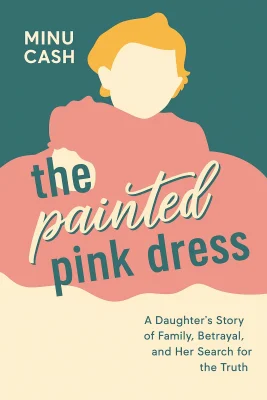
The Painted Pink Dress
A Daughter’s Story of Family, Betrayal, and Her Search for the Truth
Categories
Nonfiction, Biography, Memoir
Content Type
Book
Binding
Kindle Edition
Year
2024
Publisher
Sandra Jonas Publishing House
Language
English
ASIN
B0CY7LR177
ISBN13
9781954861145
File Download
PDF | EPUB
The Painted Pink Dress Plot Summary
Introduction
In the scorching cotton fields of Arizona, under a relentless desert sun, a young girl with curly light hair and pale skin stood out like a wildflower among thorns. While her Mexican family worked alongside her, their bronze skin glistening with sweat, she burned pink under the same sun, a living question mark in a world where she never quite belonged. This was the beginning of a remarkable journey that would span continents and decades, as one woman refused to accept the silence surrounding her origins. Minu's story unfolds against the backdrop of mid-20th century America, where migrant workers followed the harvest seasons and secrets were buried as deep as the desert roots. Her quest for identity would take her from the fields of Cashion to the military bases of Turkey and the Philippines, from the depths of personal tragedy to the heights of unexpected wealth. Through this extraordinary life, readers will discover the transformative power of truth-seeking, the resilience required to break generational cycles, and the profound courage it takes to forge one's own path when the ground beneath feels uncertain. Her journey illuminates how our deepest wounds can become our greatest sources of strength, and how the search for belonging sometimes leads us not to where we came from, but to who we are meant to become.
Chapter 1: Roots in Isolation: Growing Up as the Outsider
From her earliest memories, Minu Becerra existed in a state of perpetual otherness. In a household where eight other children bore the unmistakable features of their Mexican heritage, she stood out with her fair skin, high cheekbones, and curly light brown hair. Her father called her "Güera," Spanish slang for "white girl," a nickname that felt both endearing and alienating. While her siblings tanned golden under the Arizona sun, Minu burned red as a lobster, requiring aloe vera treatments that became as routine as the daily tortillas. The Becerra family worked the cotton fields together, rising before dawn to join the army of migrant workers who followed the seasons from cotton to onions to tomatoes. In these vast expanses of Arizona farmland, Minu learned early that survival meant keeping pace, keeping quiet, and keeping her questions to herself. Her parents, Julio and María, had immigrated from Mexico with dreams of better opportunities, but found themselves trapped in cycles of poverty and manual labor. The family lived in a small house in Cashion, one of the few Mexican families in a predominantly white neighborhood that was slowly declining as residents fled to bigger cities. Questions about her appearance haunted Minu throughout her childhood. Neighbors whispered about the "white girl living with a Mexican family," and even family friends seemed puzzled by her presence. When she pressed her mother for explanations, María would deflect with increasing irritation, insisting that Minu resembled her grandmother. But the black-and-white photograph of Abuelita Ángela hanging on their bedroom wall told a different story. Even with the revered Spanish ancestry, her grandmother's features bore little resemblance to Minu's delicate bone structure and fair complexion. The sense of not belonging was compounded by her father's volatile mental illness. Julio Sr. suffered from what would later be diagnosed as manic depression, creating an atmosphere of constant uncertainty in the household. His moods swung from tender moments where he would dance with Minu in the living room to explosive rages that sent children scrambling for safety. During his episodes, he would disappear for weeks or months, leaving María to support the family alone. These absences created financial hardship but also emotional relief, as the children never knew which version of their father would walk through the door. School offered little refuge from the confusion at home. Teachers struggled with Minu's learning differences, which would later be identified as dyslexia, and classmates mocked her unusual name and questioned her ethnicity. She was too Mexican for the white students and too white for the Mexican students, existing in a lonely middle ground that seemed to have no clear boundaries. The constant code-switching between Spanish at home and English at school, combined with her reading difficulties, made academic success an uphill battle that required extraordinary determination. Despite these challenges, or perhaps because of them, Minu developed an inner resilience that would serve her throughout her life. She learned to read people's moods, to anticipate trouble, and to find safety in small moments of beauty. Whether it was the texture of cotton bolls in her hands or the vast expanse of desert sky at dawn, she cultivated an appreciation for the world beyond her immediate circumstances. This ability to find wonder amid hardship became one of her most defining characteristics, a skill that would carry her through far greater trials than those cotton fields could ever present.
Chapter 2: Escape from Cashion: Breaking Family Cycles
As Minu entered her teenage years, the weight of family secrets and neighborhood violence made Cashion feel increasingly suffocating. The once-quiet community had transformed into a rough area plagued by drugs, gang activity, and poverty. Her brother Julio, unable to endure their father's violent outbursts, had run away multiple times, eventually dropping out of school to live with adoptive families who showed him the kindness his own home lacked. Watching her siblings struggle with addiction and violence, Minu recognized that staying in Cashion meant accepting a predetermined fate of limitation and hardship. Her first taste of escape came through education, despite the obstacles. When her parents pulled her out of school during her junior year to work full-time in a manufacturing factory, Minu felt as though her dreams were being crushed before they could fully form. The older women at the factory, cutting metal parts with resigned expressions, warned her to stay in school or end up like them. Their words echoed in her mind as she handed over her paychecks to her parents, watching her hopes for becoming a flight attendant and traveling the world seem to slip further away with each passing day. The cycle of poverty and limited expectations that had trapped her parents seemed destined to claim her as well. Her mother worked multiple jobs, from the laundromat to the tortilla factory to the fields, yet the family barely scraped by. Her father's inability to maintain steady employment, combined with his untreated mental illness, created a household atmosphere of constant stress and unpredictability. The violence that periodically erupted, culminating in a particularly brutal beating that left Minu hospitalized, demonstrated that some patterns could only be broken through complete separation. Love complicated her escape plans when she became involved with Alberto Espinosa, a young man whose own troubled background mirrored her community's struggles. Their relationship, passionate but unstable, was further complicated when Alberto was sentenced to five years in prison for armed robbery. During his incarceration, Minu found herself caught between loyalty to their relationship and her growing awareness that waiting for him meant remaining tethered to the same destructive patterns that had defined her childhood. His world represented everything she wanted to leave behind. The turning point came when Minu realized that breaking free required not just physical distance but emotional courage. Her involvement with Alberto had shown her that she was capable of deep love, but also that love without shared values and goals led nowhere. When she met Ernie, a Filipino-American airman with stability and ambition, she recognized an opportunity to build a different kind of life. Though leaving Alberto meant abandoning someone she cared about, she understood that staying loyal to the familiar would mean abandoning herself. Her final departure from Cashion was both dramatic and decisive. At nineteen, with little more than a small bag of belongings and a heart full of determination, she boarded a Greyhound bus bound for California. As the desert landscape faded behind her, she felt the weight of generations lifting from her shoulders. She was choosing uncertainty over the certainty of limitation, possibility over the comfort of the familiar. This leap of faith represented more than geographic relocation; it was a declaration that she would not be defined by her circumstances or confined by others' expectations. The girl who had once felt like a stranger in her own family was finally free to discover who she might become on her own terms.
Chapter 3: Building a New Life: Marriage, Motherhood and Career
Military life offered Minu the structure and opportunities she had never experienced growing up. Married to Ernie and stationed first in Turkey, then the Philippines, she found herself immersed in cultures that were both foreign and liberating. The experience of being a genuinely foreign person in these countries somehow felt more comfortable than being the outsider in her own family. In Turkey, she completed her GED and began to glimpse the educational possibilities that had been denied her in Arizona. The base libraries, classes, and international community exposed her to ideas and opportunities that expanded her vision of what life could offer. Motherhood brought unexpected joy and purpose to her life. When Jeremy was born in 1982, followed by Jacqueline the next year, Minu discovered a fierce protective love she had never experienced. Despite medical predictions that having children would be difficult due to ovarian cysts, both pregnancies came as miraculous surprises. She was determined that her children would have the stability, encouragement, and opportunities that had been absent from her own childhood. Every bedtime story, every homework session, every celebration became an act of healing, a conscious choice to break the cycles of neglect and limitation that had defined her upbringing. The military lifestyle, with its frequent moves and cultural diversity, suited Minu's adventurous spirit while providing the security she craved. Living in the Philippines, she learned to navigate multiple cultures and languages, skills that served her well beyond the military years. She volunteered with the Red Cross, taught aerobics classes, and worked various jobs on base, steadily building confidence and competence. Each role, each skill, each small success contributed to a growing sense of personal agency that stood in stark contrast to the helplessness she had felt as a child. However, marriage also brought its own challenges. Ernie's infidelity during her second pregnancy shattered her trust and forced her to confront difficult questions about loyalty, forgiveness, and self-worth. The experience of being betrayed while vulnerable and pregnant echoed some of her childhood feelings of abandonment and confusion. Yet this crisis also revealed her strength. Rather than simply accepting the betrayal or lashing out destructively, she took time to process her emotions and make thoughtful decisions about her future. Her temporary return to Arizona with her children demonstrated both her continued connection to family and her unwillingness to simply endure an unsatisfactory situation. Building a new life required constant navigation between competing loyalties and values. Minu found herself torn between the military community's expectations of dependent wives and her own growing desire for educational and professional achievement. When the family returned to Arizona, she pursued dental hygiene training while managing the demands of marriage and motherhood. The discovery that she had dyslexia provided both explanation and motivation. Understanding that her childhood struggles with reading and writing stemmed from a learning disability rather than lack of intelligence gave her the tools and confidence to pursue her goals with renewed determination. The process of establishing herself professionally while raising children and managing a troubled marriage required extraordinary juggling skills. Late-night study sessions, early morning clinical rotations, and constant coordination of childcare demands tested her resilience daily. Yet each milestone, from completing her dental assistant certification to eventually becoming a licensed dental hygienist, represented not just professional achievement but personal vindication. She was proving to herself and the world that the girl who had been dismissed as different and difficult possessed both intelligence and determination. These accomplishments laid the groundwork for the financial independence that would become crucial in later life decisions.
Chapter 4: Tragedy and Resilience: Facing Profound Loss
The loss of Jeremy to a drug overdose in 2010 shattered Minu's world in ways she had never imagined possible. Her son, brilliant and beloved, had struggled with addiction despite every advantage his parents could provide. The years of watching him cycle through treatment programs, temporary recoveries, and devastating relapses had prepared her for many outcomes, but not for the finality of his death at twenty-eight. The moment she performed CPR on her own child, trying desperately to call him back to life, became a dividing line in her existence. Everything before that morning belonged to one version of herself; everything after belonged to another. Grief consumed her in ways that made previous hardships seem manageable by comparison. The woman who had survived childhood poverty, family violence, and marital betrayal found herself unable to get out of bed some days. Wine became a dangerous companion as she attempted to numb the pain that seemed to have no bottom. The fall in her backyard, where she hit her head on a rock pillar while intoxicated, served as a wake-up call. She realized that her son's death did not have to become a double tragedy that claimed her life as well. Jacqueline needed her mother to survive and eventually to heal. The accumulation of losses in her extended family created an atmosphere of perpetual mourning that threatened to overwhelm her capacity for hope. Nephews killed in drive-by shootings, accidental deaths, suicides, and overdoses seemed to plague the Becerra family with relentless frequency. Each funeral felt like another weight added to an already unbearable load. The pattern of tragedy that had defined her childhood continued into her adult years, suggesting that geography alone could not provide escape from certain kinds of suffering. Yet within the depths of her grief, Minu began to discover resources she had not known she possessed. Therapy, spiritual guidance, and the support of true friends provided lifelines during the darkest periods. She learned to distinguish between numbing her pain and processing it, between avoiding her emotions and working through them constructively. The realization that Jeremy would want her to live fully rather than merely survive gave her a framework for moving forward without feeling guilty about experiencing joy again. The process of healing revealed the profound connections between her various experiences of loss and abandonment. Jeremy's death forced her to confront not only the immediate tragedy but also the accumulated grief of a lifetime spent feeling disconnected from her origins. The questions about her identity that had haunted her since childhood became more pressing rather than less important. Understanding who she was and where she came from felt essential to making sense of who she needed to become in the aftermath of such devastating loss. Resilience, she discovered, was not about returning to her previous state but about integrating her experiences of suffering into a more complete understanding of herself and life. The skills she had developed as a child, reading people's emotions and finding beauty in difficult circumstances, served her well as she learned to navigate grief without being consumed by it. She began to see that her capacity to survive and even thrive in the face of adversity was not just personal strength but a gift she could offer others facing their own dark nights of the soul.
Chapter 5: The Search for Truth: Discovering Maurice Cash
The revelation of her biological father's identity came through a carefully orchestrated conversation with her mother, using a fabricated story about blood tests to finally crack the wall of secrecy that had surrounded Minu's origins for nearly five decades. When María finally admitted that Julio was not her biological father and spoke the name "Maurice Cash," the words hung in the air like a bridge between two worlds. This cotton farm owner from the Anderson Clayton Cotton Farm, the very fields where Minu had spent countless childhood days picking and plucking, had been her father all along. The irony was almost overwhelming, the man whose land had provided her family's meager income had unknowingly employed his own daughter. The initial details were sparse but tantalizing. Maurice had helped María when Julio disappeared during one of his manic episodes, providing not just financial support but also the money for the house in Cashion and those rare birthday parties that had made Minu feel special as a child. The professional photograph in the pink dress, painted over the original yellow because Maurice preferred pink, revealed itself as a father's gift to capture his daughter's image. Every clue that had been hiding in plain sight suddenly made sense, from her unusual privileges within the family to her father's nickname of "Güera" that simultaneously celebrated and othered her. The search for more information became an obsession that drove Minu to explore genealogy websites, public records, and obituary archives. The discovery that Maurice had died in 1961, when she was only three years old, brought both closure and profound sadness. She would never have the opportunity to meet him, to ask him questions, or to experience the father-daughter relationship she had always wondered about. Yet finding his obituary, learning about his business success, his education, and his other family provided pieces of the puzzle that had been missing her entire life. The DNA tests that followed confirmed what her heart already knew to be true. The results showing Scandinavian, Norwegian, British, and minimal Mexican ancestry validated her lifelong sense of not quite belonging to the family that had raised her. More importantly, they connected her to extended family members with names like Cash, Hanna, and Oldman, creating a genetic map that explained her physical features and perhaps some of her personality traits. The scientific proof provided the foundation for a more complete understanding of her heritage. Contact with Elizabeth Cash, Maurice's adopted daughter, opened a window into the man who had been her biological father. Learning that he was educated, well-traveled, and loved literature and theology helped explain interests and aptitudes that had seemed to come from nowhere. The fact that he had named her Minu, a gift from a father she had never known, felt like a posthumous embrace across the decades. Elizabeth's willingness to share memories, photographs, and even personal items like his fraternity pin created tangible connections to a heritage that had been denied her. The search for truth revealed not just facts about her parentage but insights about the complexity of family, loyalty, and identity. Understanding that both her parents had carried this secret, that her uncle Chalio had known all along, and that the entire family structure had been built around maintaining this fiction highlighted the power of secrets to shape entire lifetimes. Yet rather than feeling angry about the deception, Minu began to feel compassion for the impossible situation her mother had navigated, raising a child who was living evidence of a relationship that threatened the family's stability and her marriage's survival.
Chapter 6: Reconciliation: Embracing a Complex Heritage
The final pieces of Minu's identity puzzle fell into place not through detective work or DNA tests, but through the deathbed revelations of those who had carried the secret longest. Uncle Chalio's confession at her mother's funeral provided not just confirmation but context. His account of driving María to the hospital when Minu was born, of witnessing her mother's fear about the baby's light coloring, and of Maurice's subsequent support for the family painted a picture of adults trying to navigate an impossible situation with as much dignity as they could manage. Learning that Maurice had not only acknowledged her existence but had specifically requested her professional photograph and had chosen her name transformed Minu's understanding of her place in his life. Rather than being simply the product of an affair, she had been a daughter he recognized and cared for within the constraints of his circumstances. The fact that he had helped Uncle Chalio establish himself in California suggested a man who took responsibility for those connected to him, even when that connection had to remain hidden from the world. The process of forgiveness began with understanding the historical and social context that had made such secrecy necessary. In 1950s Arizona, the relationship between a successful white businessman and a young Mexican woman would have been scandalous by the standards of the time. Both María and Maurice had families and reputations to protect. The choice to allow Julio to believe he was Minu's father, while Maurice provided financial support from the shadows, represented a compromise that prioritized the child's security while maintaining the adults' positions in their respective communities. Embracing her complex heritage meant accepting that identity could not be reduced to simple categories or single sources. She was simultaneously the daughter of Mexican immigrants who had worked their fingers raw in American fields and the daughter of an educated businessman who had traveled the world and donated land for schools. She carried the resilience of her mother's survival instincts and the intellectual curiosity that seemed to have been inherited from Maurice. These apparently contradictory elements had been at war within her for decades, but understanding their sources allowed them to coexist peacefully. The legal act of taking the name Cash after her divorce from Steve represented more than just a return to maiden name traditions. It was a claiming of identity that had been hidden for nearly sixty years, a public acknowledgment of heritage that had been denied and concealed. Minu Cash embodied the integration of all aspects of her background rather than the rejection of any part of it. She remained proud of her Mexican heritage while also claiming her Anglo ancestry, understanding that both had contributed to making her who she was. Perhaps most importantly, the search for truth had revealed that belonging is not always about where you come from but about who you choose to become. The girl who had felt like an outsider in every community she had encountered discovered that her outsider status had been a source of strength rather than just pain. The ability to observe from the margins, to question assumptions, and to forge her own path had enabled her to transcend the limitations that had confined others in her family. Her complex heritage became not a burden to bear but a richness to celebrate, a reminder that human identity is far more nuanced and beautiful than any simple categories can contain.
Summary
Minu Cash's extraordinary journey from the cotton fields of Arizona to a life of international travel and personal discovery illustrates the transformative power of refusing to accept others' definitions of who we are meant to be. Her story demonstrates that the search for truth about our origins is not mere curiosity but essential work that allows us to integrate all aspects of ourselves into a coherent and authentic identity. Through decades of questioning, searching, and ultimately discovering her biological father's identity, she learned that belonging comes not from fitting neatly into predetermined categories but from embracing the full complexity of our heritage and choosing to write our own stories. The courage to break cycles of poverty, violence, and limitation requires both external action and internal transformation. Minu's willingness to leave behind the familiar, even when it meant abandoning people she loved, created space for possibilities that would never have emerged within the confines of her original circumstances. Her journey offers hope to anyone who feels trapped by their origins, showing that with determination, education, and the courage to ask difficult questions, it is possible to transcend even the most challenging beginnings. Most profoundly, her story reveals that the search for identity often leads us not just to understand where we came from, but to discover who we have the power to become.
Best Quote
“I’m good, Mom. Don’t worry about me.” How could I not worry? Our children don’t understand the meaning of worry.” ― Minu Cash, The Painted Pink Dress: A Daughter’s Story of Family, Betrayal, and Her Search for the Truth
Review Summary
Strengths: The review highlights the book's engaging narrative and emotional depth, with the writing described as smooth and gripping. The characters are vividly portrayed, making the story relatable and immersive. The book is praised for its inspirational and heartwarming qualities, as well as its exploration of family dynamics and the immigrant experience. The memoir's authenticity and Minu's perseverance are commended, with readers finding it a captivating and relatable read. Overall: The general sentiment is highly positive, with readers expressing strong emotional connections to the story. The book is recommended as an exceptional and must-read memoir, particularly for those interested in themes of self-discovery, family, and overcoming adversity.
About Author

Minu Cash
Cash interrogates the complexities of personal identity and familial bonds in her writing, driven by her own life experiences. As a memoirist, she seeks to uncover layers of family secrets, exploring themes of resilience, self-discovery, and the impact of trauma. Her narrative, particularly in her notable book "The Painted Pink Dress", delves into her turbulent childhood marked by poverty and instability, offering a powerful account of her journey toward self-acceptance. Cash’s empathetic style and unflinching detail resonate with readers, providing insights into the human capacity for healing and growth.\n\nCash’s shift from dental hygiene to writing was spurred by a profound revelation at age 45, redirecting her focus to documenting her life story. This transition exemplifies her commitment to personal growth and advocacy for healing from trauma. Readers benefit from Cash's candid exploration of mental illness, racism, and emotional neglect, gaining a deeper understanding of these complex issues. Her memoir has received positive reviews for its honesty and emotional depth, making significant contributions to trauma literature.\n\nMinu Cash is more than an author; she embodies resilience and transformation. Her bio reveals a woman deeply connected to her Arizona roots, balancing her love for culinary arts, particularly her renowned spicy salsa, with her passion for storytelling. Her family, especially her grandchildren, remains a central joy in her life, illustrating her profound commitment to personal connections and legacy. While no major literary awards are noted, her impact lies in the raw, transformative narratives she shares, offering readers not only a reflection of her life but a lens through which to view their own journeys.
Read moreDownload PDF & EPUB
To save this Black List summary for later, download the free PDF and EPUB. You can print it out, or read offline at your convenience.
The Painted Pink Dress
by Minu Cash
