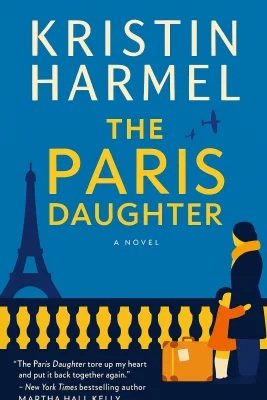
The Paris Daughter
Categories
Fiction, Audiobook, Historical Fiction, Adult, Family, Book Club, Historical, France, World War II, War
Content Type
Book
Binding
Hardcover
Year
2023
Publisher
Gallery Books
Language
English
ISBN13
9781982191702
File Download
PDF | EPUB
The Paris Daughter Plot Summary
Introduction
# Stars Will Guide You Home: A Tale of Mothers and Daughters Across Time Paris, 1942. Two mothers stand in a bombed bookstore, their children's laughter echoing off walls that will soon crumble to dust. One must choose between her daughter's life and her own. The other must promise to guard a secret that will poison seventeen years of love. When Elise LeClair places three-year-old Mathilde into Juliette Foulon's trembling hands, neither woman understands they are writing the first line of a story that will span decades and oceans. The Allied bombs that fall on Boulogne-Billancourt in 1943 will scatter more than rubble. They will tear apart the careful architecture of identity itself, leaving two women to rebuild their shattered lives with the wrong daughters. One will carve her grief into wood on the streets of Paris. The other will recreate her lost world in a Manhattan bookstore, speaking daily to ghosts while the living daughter beside her grows into a stranger's face. Between them lies a truth so devastating that when it finally surfaces on a snowy Brooklyn street, it will take another catastrophe to set them free.
Chapter 1: Bonds Forged in War's Shadow: Two Mothers, Two Daughters, One Promise
The friendship began with blood on autumn leaves. Elise LeClair collapsed in the Bois de Boulogne, her body convulsing with labor pains as German planes droned overhead like mechanical vultures. The stranger who found her was American, pregnant herself, with gentle hands and fierce eyes. Juliette Foulon guided Elise through the birth with the calm of someone who understood that in wartime, angels wore ordinary faces. Their daughters entered the world within weeks of each other. Mathilde LeClair and Lucie Foulon, born as Europe burned. The mothers found solace in La Librairie des Rêves, Juliette's bookstore where children played between towering shelves while their mothers spoke in whispers about ration cards and missing neighbors. Paul Foulon treated the books like sacred objects. His sons Claude and Alphonse built fortresses from picture books while the girls shared crayons and secrets. But Olivier LeClair's communist fervor was painting targets on his family's back. His resistance meetings grew bolder, his art more inflammatory. When the Gestapo came the first time, they left the apartment in ruins but found nothing. Elise knew they would return. She watched her husband's reckless courage with growing terror, understanding that his principles would kill them all. The promise formed itself in desperate moments. Late nights when Elise couldn't sleep, when the weight of occupation pressed down like a physical thing. She would look at Mathilde's sleeping face and whisper to the darkness: if something happens to me, Juliette will keep her safe. If something happens to Juliette, I will guard her children like my own. The words felt like insurance against a world gone mad, but promises made in wartime carry the weight of prophecy.
Chapter 2: The Impossible Choice: When Love Demands the Ultimate Sacrifice
The morning came with frost on the windows and death in the air. Constant Bouet arrived at dawn with forged papers and terrible news. The Gestapo had taken Olivier in the night, tortured him until he broke, extracted names and addresses with methodical precision. Elise's name was on their list. They would come for her within hours. The false documents were perfect, but they were made for one person. A woman traveling alone could disappear into the countryside. A woman with a child would be remembered, questioned, caught. Bouet's voice was gentle but implacable: leave the girl or die together. There was no third option. Mathilde played with wooden blocks on the kitchen floor, building towers that toppled with delighted squeals. She had no understanding that her world was ending, that the mother who had sung her to sleep every night was about to walk away forever. Elise knelt beside her daughter, memorizing the curve of her cheek, the way her hair caught the morning light. Three years old. Too young to understand abandonment, too old to forget it completely. The walk to La Librairie des Rêves felt like a funeral march. Juliette took one look at Elise's face and began to cry before the words were spoken. The children sensed the adults' distress, clustering around their mothers with wide, frightened eyes. When Elise explained what she needed, Juliette's response came without hesitation: yes, of course, always yes. But her hands shook as she reached for Mathilde. The goodbye lasted thirty seconds. Any longer would have been unbearable. Elise kissed her daughter's forehead, whispered words of love that felt like glass in her throat, and walked into the gray Paris morning. Behind her, Mathilde's cries rose like a siren song, calling her back to love and death. Elise kept walking. She had chosen life for her daughter over everything else. Now she had to live with that choice.
Chapter 3: When Bombs Fall: The Day That Changed Everything Forever
April 18th, 1943, dawned clear and bright. The children begged to see the horse races at Longchamp, their voices rising in the sweet harmony of sibling conspiracy. Paul finally relented, gathering coats and coins while Juliette packed sandwiches. But at the last moment, baby Lucie developed a fever. The family stayed home, the children disappointed but quickly distracted by games and stories. The Allied bombers appeared at 12:47 PM, their formation perfect against the blue sky. Their target was the Renault factory, where French workers built tanks for German masters. But bombs are crude instruments, and wind is an unpredictable force. The first explosions shook the ground like an earthquake. The second wave fell short, scattering death across civilian neighborhoods with random precision. Paul gathered the children in the back room as the building shuddered around them. Mathilde and Lucie clung to each other, their faces white with terror. The boys pressed against their father's chest while Juliette clutched the baby. For a moment, they were a perfect tableau of family love. Then the world exploded. The ceiling came down in chunks of plaster and timber. Paul threw himself over the children as debris rained like hail. Juliette felt the floor buckle beneath her feet, heard the terrible sound of walls collapsing. Then darkness, silence, and the taste of dust and blood. When she clawed her way to consciousness, half the building was gone. Sunlight streamed through holes that had been walls moments before. She found Paul first, his body twisted around two small forms. Claude and Alphonse would never build another fort. Near the window, she discovered baby Lucie, her neck bent at an impossible angle. The silence where their laughter had been felt like a physical wound. But from somewhere in the rubble came a small voice, calling for her mother. One child had survived. In her shock and grief, Juliette pulled the girl from the wreckage and held her close, whispering comfort to the only piece of her family left alive.
Chapter 4: Parallel Lives: Rebuilding Across Oceans with the Wrong Daughters
Elise learned of the bombing from a crackling radio in Aurignon, where she tended Jewish children in Madame Roche's hidden attic. The announcer's clinical voice described civilian casualties in Boulogne-Billancourt, but for Elise, those words meant the end of everything. She made the journey back to Paris in September 1944, carried by hope and Bernard's borrowed truck, but the liberation had come too late for her daughter. Where La Librairie des Rêves had stood, only rubble remained. An old woman emerged from the shadows to deliver the crushing news: the bookstore family had died in the bombing, all except Juliette and one child, who had vanished without trace. At Père Lachaise Cemetery, Elise found the fresh graves. Four small headstones, the earth still dark above them. The fourth marker read "Mathilde Foulon," her daughter claimed by death and another family's name. Across the Atlantic, Juliette Wolcott was building a shrine to the dead. Her marriage to Arthur provided wealth and stability, resources she used to recreate La Librairie des Rêves with obsessive precision. Every shelf, every book, every corner of the Manhattan store mirrored her lost world. But the child she had saved from the bombing was growing into a stranger, asking questions about memories that didn't match the stories she was told. The girl called Lucie painted with desperate intensity, her canvases filled with scenes from a childhood that belonged to someone else. She dreamed of stars on bedroom ceilings, of a mother's voice whispering French lullabies. Juliette watched her daughter's artistic awakening with growing unease, recognizing Elise LeClair's talent in every brushstroke. The truth sat between them like a third presence, unspoken but always there. In Paris, Elise carved Mathilde's face from blocks of limewood, her tools coaxing life from dead grain. Each sculpture was an attempt to hold onto what had been lost, to keep her daughter alive in the only way she knew how. But the wooden faces remained cold and still, beautiful but not breathing. They were not Mathilde. They were only memory made manifest, love transformed into art that could never love her back.
Chapter 5: Cracks in the Foundation: When the Past Refuses to Stay Buried
Ruth Levy walked into La Librairie des Rêves on a September afternoon in 1960, carrying news that would shatter seventeen years of carefully constructed peace. She had survived the camps, found her children alive, built a new life in New York. But she remembered the young mother who had cared for Jewish refugees in Aurignon, who had painted stars on her ceiling and whispered about a daughter left behind in Paris. The revelation hit Juliette like a physical blow: Elise LeClair was alive, living in Paris, tending her daughter's grave with the devotion of the eternally bereaved. For seventeen years, she had mourned a child who might still be breathing, while Juliette raised that same child as her own. The irony was too cruel to contemplate, the guilt too vast to process. Ruth's demand was simple but impossible: write to Elise, tell her how Mathilde died, give her the peace of knowing. But Juliette's heart had calcified around her losses. She blamed Elise for the choice Paul had made, for trying to save Mathilde instead of her own sons. The letter she finally wrote was cold as winter stone, offering facts without comfort, truth without love. The girl who called herself Lucie stood in the doorway, listening to revelations that reframed her entire existence. She was twenty now, an artist despite Juliette's attempts to discourage her talent. Her paintings filled a studio above Jack Fitzgerald's gallery, canvases that captured memories she wasn't supposed to have. The Bois de Boulogne emerged from her brushes, complete with painted stars and whispered promises about fate guiding her home. As Ruth prepared to carry Juliette's bitter message across the ocean, the bookstore felt different, as if the very air had changed. The ghosts that had comforted Juliette for so long fell silent. Paul's voice no longer echoed from the shelves. For the first time in years, she was truly alone with the girl she had claimed as her daughter and the terrible knowledge of what she had done. The past, it seemed, had its own gravity, pulling her toward a reckoning she had spent seventeen years trying to avoid.
Chapter 6: The Weight of Truth: Seventeen Years of Beautiful, Terrible Lies
The letter reached Elise on a gray October morning, delivered by Ruth Levy's trembling hands. Juliette's words were precise and brutal, describing Mathilde's final moments with clinical detachment. The child had died in Paul's arms, she wrote. She had not suffered. The facts were true as far as they went, but they carried the weight of everything left unsaid. Elise read the letter three times before its meaning penetrated her grief-numbed mind. Seventeen years of mourning, seventeen years of carving her daughter's face in wood, seventeen years of visiting a grave that held the wrong child. The revelation should have brought relief, but instead it opened wounds that had never properly healed. Somewhere across the ocean, her daughter might still be alive, raised by strangers who had stolen her identity along with her future. In Manhattan, the girl known as Lucie Foulon was painting her way back to herself. Her studio above Fitzgerald's gallery had become a shrine to recovered memory, walls covered with scenes from a childhood that belonged to Mathilde LeClair. She painted the bombing with devastating accuracy, two little girls holding hands as the world exploded around them. She painted the moment of separation, a mother walking away while her daughter cried. She painted stars on bedroom ceilings and wooden sculptures that captured a child's face with impossible precision. Jack Fitzgerald watched her work with growing amazement and concern. Here was raw talent pouring out of a young woman who seemed to be painting her way back to sanity. But each canvas brought her closer to a truth that would destroy the only family she had ever known. The comfortable lies that had shaped her existence were crumbling, replaced by images that felt more real than her waking life. Juliette found herself unable to enter the bookstore she had built as a monument to the dead. The carefully replicated past felt like a mockery now, a stage set for a play that had ended years ago. She had saved one child from the bombing's wreckage, yes, but which child? And what did it mean that she had spent seventeen years loving the wrong daughter while the right one lay buried in a grave an ocean away? The questions multiplied like cancer cells, eating away at the foundation of everything she thought she knew about love, loss, and the price of survival.
Chapter 7: Collision in Brooklyn: When Fate Forces a Reckoning
December 16th, 1960, began with snow falling on Brooklyn like ash from a distant fire. Elise LeClair stood on a street corner, having crossed an ocean to confront the woman who had stolen her daughter's life. She had come to demand answers, to force recognition, to reclaim what had been taken. But fate had its own schedule, its own sense of dramatic timing. The girl emerged from a Christmas tree lot, her arms full of pine boughs, her face lifted to catch the falling snow. Time stopped. Seventeen years collapsed into a single moment of impossible recognition. This was Mathilde's face, aged by years that should never have existed. The same dark eyes, the same delicate bone structure, the same graceful way of moving through the world. Elise's heart hammered against her ribs as she whispered her daughter's name. Mathilde looked up, their eyes meeting across the snowy street. Something deeper than memory stirred in her chest, a recognition that transcended conscious thought. The word escaped her lips like a prayer: "Maman?" It was the first time she had spoken French in seventeen years, but the language felt like coming home. Juliette stood frozen between them, her carefully constructed world crumbling as past and present collided. She had spent seventeen years raising Elise's daughter as her own, telling herself it was mercy, necessity, love. But now, with both mothers facing each other across a Brooklyn street, the truth could no longer be contained. The lies that had held her life together were dissolving like sugar in rain. The sound came from the south, engines screaming through fog and fate. United Airlines Flight 826 hurtled toward them like a missile from the past, thrown off course by weather and human error. For Juliette, it was April 1943 all over again, death falling from a clear sky, the world exploding in fire and smoke. She threw herself forward, trying to shield the girl she had raised, the daughter she had loved with desperate intensity. But some forces are too large for human intervention, some stories too complex for simple heroism. The plane struck the ground with the sound of worlds ending, and in the chaos that followed, the last lies finally crumbled into truth.
Chapter 8: Recognition and Redemption: Finding Home in the Ruins of Deception
The hospital room smelled of disinfectant and dying flowers, but it held more truth than seventeen years of carefully constructed lies. Juliette Foulon lay dying, her body broken by the crash that had finally forced recognition. Around her bed, three women confronted the ruins of their carefully constructed lives, sorting through the wreckage of love and deception with trembling hands. The confession came in whispers, each word a small betrayal of the life Juliette had built. She had pulled a child from the bombing's wreckage, yes, but in her shock and grief, she had convinced herself it was her own daughter. The real Lucie Foulon lay buried in Paris under Mathilde's name, while Mathilde LeClair grew up in Manhattan believing herself an orphan. The deception had been born of desperation, a mother's need to have something left to live for. Elise held the hand of the daughter she had mourned for seventeen years, marveling at the miracle of her survival and the cruelty of their separation. Mathilde looked back at her with eyes that held both recognition and forgiveness. They had been robbed of nearly two decades together, but they had been given something rarer than time: a second chance at love, purchased with another woman's death. Juliette's last words were an apology and a benediction: "Take care of her. She will be your whole life from this day forward." As she slipped away, her face found the peace that had eluded her for seventeen years. She was finally reunited with Paul, with Claude and Alphonse, with the real Lucie who had died in her arms so long ago. The ghosts that had haunted her Manhattan bookstore could rest at last. The girl who had grown up as Lucie Foulon would need time to reclaim her identity as Mathilde LeClair, to sort through the tangle of memories and lies that had shaped her existence. But in her art, she had already begun that journey, painting her way back to truth with brushstrokes that captured both loss and hope. Her canvases would tell the story of two mothers who loved the same child, each in their own desperate way, and of a daughter who survived by becoming someone else entirely.
Summary
The bookstore on East Fifty-Sixth Street closed its doors for the final time in January 1961, its purpose fulfilled in ways its owner had never intended. The carefully replicated past gave way to an uncertain but genuine future as mother and daughter began the delicate work of knowing each other again. Elise returned to Paris with Mathilde, but they carried Manhattan in their hearts, along with gratitude for the woman who had loved the wrong child with such fierce devotion. In the end, love proved stronger than deception, truth more powerful than the most carefully constructed lies. The war had scattered them like seeds on the wind, but they had taken root in foreign soil and somehow found their way back to each other. The stars that Elise had once painted on a bedroom ceiling still guided travelers home, even when the journey took seventeen years and cost more than anyone should have to pay. Some stories end with justice, others with mercy. The rarest ones, like this one, end with both.
Best Quote
“I’ve always believed that books are simply dreams on paper, taking us where we most need to go.” ― Kristin Harmel, The Paris Daughter
Review Summary
Strengths: The review highlights Kristin Harmel's ability to create compelling narratives and develop characters that evoke deep emotional responses. The dual narrative of Elise and Juliette is noted for its emotional depth, allowing readers to connect with the characters' heartaches and life challenges. Weaknesses: The review criticizes the predictability of the plot twist, which diminished the enjoyment of the second half of the book. Additionally, Juliette's portrayal in her grief was seen as unsympathetic, and the ending felt abrupt and disconnected, as if an unrelated historical event was added for excitement. The story was perceived as lacking creativity and originality within the saturated WWII historical fiction genre. Overall: The reader's sentiment is mixed, with appreciation for character development but disappointment in plot execution. The book may appeal to some book clubs, but it left this reviewer dissatisfied due to its predictability and lack of originality.
About Author

Kristin Harmel
Harmel investigates the profound narratives of resilience and identity through historical fiction, often set against the backdrop of World War II. Her books, such as "The Book of Lost Names" and "The Forest of Vanishing Stars," draw on true stories and meticulous research, highlighting the experiences of Jewish refugees and the challenges they faced. Harmel’s commitment to depicting human connection during adversity allows readers to explore themes of survival and hope. This approach not only deepens the emotional impact of her work but also provides a lens through which historical events are humanized and understood in new ways.\n\nWhile Harmel's transition from journalism to fiction writing began during a break from her work at PEOPLE magazine, it was her early career as a sportswriter that laid the foundation for her storytelling skills. Her professional journey includes contributions to various publications, illustrating her versatility as a writer. The evolution of her career from sports reporting to acclaimed novelist underscores a dedication to capturing the stories of ordinary individuals facing extraordinary circumstances. As an author, Harmel has achieved significant recognition, with her novels being translated into over 30 languages, appealing to a global audience that values narratives of perseverance.\n\nThe reader benefits from Harmel's ability to weave historical facts with engaging storytelling, providing both educational and emotional experiences. Her books serve as a testament to the impact of well-researched fiction in illuminating lesser-known historical narratives. Moreover, her work as a co-host of the podcast Friends & Fiction showcases her commitment to fostering literary communities. Through her novels, readers gain insight into the complexities of history and the enduring strength of the human spirit, making her bio a compelling exploration of both her literary and personal journeys.
Read moreDownload PDF & EPUB
To save this Black List summary for later, download the free PDF and EPUB. You can print it out, or read offline at your convenience.
The Paris Daughter
by Kristin Harmel
