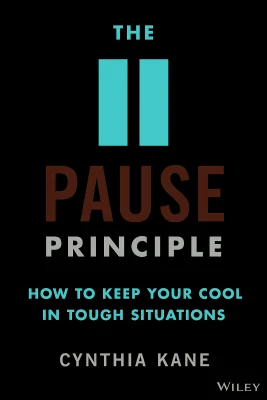
The Pause Principle
How to Keep Your Cool in Tough Situations
Categories
Self Help
Content Type
Book
Binding
Hardcover
Year
2025
Publisher
Wiley
Language
English
ISBN13
9781394283408
File Download
PDF | EPUB
The Pause Principle Plot Summary
Introduction
Communication sits at the heart of every meaningful human connection we make. Whether we're leading teams, building relationships, or navigating challenging conversations, how we express ourselves shapes our reality and defines our success. Yet despite its fundamental importance, effective communication remains one of life's most elusive skills. We've all experienced those moments when communication breaks down - the misunderstanding that spirals into conflict, the important point that somehow gets lost in translation, or that frozen feeling when emotions overwhelm our ability to express ourselves clearly. These communication gaps aren't just frustrating; they're costly, limiting our potential and keeping us from the connections we truly desire. But within these challenges lies tremendous opportunity. By mastering the art of mindful communication, we can transform how we relate to others and create pathways to profound personal and professional success.
Chapter 1: Recognize Your Communication Patterns
Communication patterns form the invisible architecture of our interactions with others. These recurring behaviors and responses shape how we express ourselves, how we listen, and ultimately how we connect with those around us. Our patterns often operate below the level of conscious awareness, yet they profoundly influence the quality of our relationships and our ability to navigate challenging conversations. Jessica, a senior executive at a technology firm, prided herself on her directness and efficiency. In meetings, she would quickly identify problems and propose solutions without hesitation. While this approach helped her rise through the ranks, it was creating tension with her team. During one particularly challenging project review, Jessica interrupted a junior team member mid-presentation with a flurry of critical questions. The room fell silent as the young analyst struggled to respond. It wasn't until Jessica noticed the uncomfortable expressions around the table that she realized her communication pattern was shutting down dialogue rather than encouraging it. Through feedback and self-reflection, Jessica began to recognize that her pattern of rapid-fire communication worked well in crisis situations but was counterproductive in collaborative settings. She identified that her tendency to interrupt stemmed from an underlying fear that problems wouldn't be addressed quickly enough. By bringing awareness to this pattern, Jessica could start to transform it. She began practicing active listening, deliberately pausing before responding, and asking open-ended questions that invited others to contribute their perspectives. The transformation wasn't immediate, but the changes became evident within weeks. Team meetings evolved from tense, one-sided exchanges to genuine collaborative discussions. Ideas flowed more freely, and solutions emerged that Jessica acknowledged were more innovative than what she might have developed alone. The junior analyst who had previously been interrupted began to contribute valuable insights, eventually becoming one of the team's strongest performers. To recognize your own communication patterns, start by observing yourself in different contexts. Notice how you respond when you feel stressed, criticized, or uncertain. Pay attention to feedback from others about how you come across. Consider recording yourself in conversations or meetings to gain objective insights. Most importantly, approach this exploration with curiosity rather than judgment. Your patterns developed for valid reasons, often as protective mechanisms. Remember that awareness precedes change. Simply noticing your patterns as they arise gives you the power to make different choices. You might ask trusted colleagues for specific feedback about how you communicate under pressure. Creating this awareness is the essential first step toward more intentional, effective communication.
Chapter 2: Pause Before You React
The space between stimulus and response is where our greatest power lies. This pause—this momentary suspension of automatic reaction—creates the opportunity for thoughtful communication rather than impulsive expression. Learning to pause before reacting fundamentally transforms how we navigate difficult conversations and challenging emotions. Michael, a department manager at a healthcare organization, was known for his passionate outbursts during meetings. When faced with opposing viewpoints or criticism, his face would redden, his voice would rise, and words would tumble out before he had fully processed his thoughts. After one particularly heated exchange with the finance team over budget cuts, Michael's supervisor pulled him aside. "Your ideas have merit," she told him, "but your delivery is undermining your effectiveness." This feedback hit home, forcing Michael to confront how his reactivity was sabotaging his leadership potential. Determined to change, Michael began practicing the pause principle. He started by simply counting to three silently before responding to challenging comments. Initially, those three seconds felt excruciatingly long in conversation, but they provided just enough space for his initial emotional surge to subside. During one crucial meeting about resource allocation, Michael felt his familiar anger rising when a colleague questioned his department's priorities. Instead of launching into a defensive response, he took a deep breath, counted silently, and then asked a clarifying question. This small shift completely altered the conversation's trajectory, turning a potential conflict into a productive discussion. To develop your own pause practice, start with physical awareness. Notice the bodily sensations that arise when you're triggered—perhaps tension in your shoulders, a knot in your stomach, or a change in your breathing pattern. These physical cues are valuable early warning signs that you're entering reactive territory. When you notice these signals, implement a simple pause technique: take a deep breath, count silently, or simply name what you're feeling internally ("I notice I'm feeling defensive"). The pause doesn't need to be lengthy or obvious to others. Even a moment of internal awareness creates space for choice. With practice, you can extend this pause gradually, developing greater capacity to respond thoughtfully even in emotionally charged situations. Remember that pausing isn't about suppressing your authentic response—it's about ensuring that your response comes from your wisest self rather than your reactive impulses. Consider setting a specific intention before important conversations: "I will pause before responding to challenging comments." This primes your awareness and makes the pause more accessible when you need it most. With consistent practice, what once required conscious effort will become an integrated aspect of your communication style.
Chapter 3: Connect With Your Body
Our bodies are constantly communicating with us, sending signals that can guide our interactions if we learn to listen. Physical sensations offer a direct pathway to emotional awareness, allowing us to recognize and regulate our responses in real time. By connecting with our bodies during communication, we access a deeper level of presence that transforms our relationships with others. David, a negotiation specialist at a legal firm, prided himself on his logical approach and ability to remain detached during tense discussions. Yet he found himself consistently drained after client meetings, sometimes experiencing headaches that lasted for days. During a particularly difficult contract negotiation, David noticed his jaw clenching tightly as the opposing counsel presented terms he found unreasonable. Rather than dismissing this physical response as irrelevant, David recognized it as valuable information—his body was signaling discomfort before his conscious mind had fully processed the situation. Intrigued by this connection, David began deliberately tuning into his physical sensations during professional interactions. He discovered that subtle tensions—a tightening chest, shallow breathing, or stiffening shoulders—reliably preceded his most reactive moments. By noticing these sensations without judgment, David found he could catch himself before becoming defensive or confrontational. During one pivotal negotiation, he felt his chest constricting as discussions grew heated. Instead of pushing through, he suggested a brief break. This simple act of honoring his body's signals completely shifted the dynamic, leading to a more collaborative atmosphere when they reconvened. To strengthen your connection with your body during communication, begin with a brief body scan before important conversations. Take a few moments to notice any areas of tension or discomfort without trying to change them. During interactions, periodically check in with your physical state—are you breathing fully? Are your shoulders relaxed? Is your posture open or closed? These quick internal check-ins ground you in the present moment and provide early warning signs when emotional reactivity is building. Practice naming the sensations you experience during different types of interactions: "I notice tightness in my throat when I feel criticized" or "My breathing becomes shallow when I'm anxious about being heard." This naming process builds your emotional vocabulary and helps you recognize patterns more quickly. Remember that physical sensations are neither good nor bad—they're simply information that can help you communicate more effectively. For many of us, connecting with our bodies represents a significant shift from our habitual focus on thoughts and words. Be patient with yourself as you develop this awareness. Even small moments of bodily connection can have a profound impact on your communication quality and overall well-being.
Chapter 4: Practice Mindful Breathing
Breath is the bridge between body and mind, a powerful tool that can transform our communication in the most challenging moments. Mindful breathing offers an immediate pathway to presence, helping us remain centered and responsive rather than reactive. By developing awareness of our breath patterns, we gain access to a portable practice that supports effective communication in any context. Sarah, a high school principal, faced constant demands for her attention throughout the day. Between student issues, parent concerns, and administrative responsibilities, she found herself perpetually rushed and frequently interrupting others mid-sentence. After one particularly fragmented conversation with a concerned teacher, Sarah realized she had barely heard what was being said, already mentally moving on to her next task. This recognition led her to explore how her breathing patterns might be contributing to her scattered communication style. Sarah began incorporating brief breathing practices throughout her day. She noticed that her breath became shallow and rapid when she felt pressured, reinforcing her sense of urgency and diminishing her capacity to listen fully. Before meetings, she would take three deliberate breaths, feeling her abdomen expand and contract. During conversations, she used the natural pauses in dialogue to reconnect with her breath. The effect was remarkable. In a meeting with a parent who was upset about their child's academic progress, Sarah's habitual response would have been to quickly offer solutions and reassurance. Instead, she maintained awareness of her breathing, which allowed her to listen more deeply to the parent's concerns before responding. This created space for a more meaningful exchange that addressed the underlying issues rather than just the surface complaints. To incorporate mindful breathing into your communication practice, start with a simple observation of your natural breath pattern. Notice the qualities of your breath during different emotional states—is it deep or shallow, smooth or constricted, even or irregular? This awareness itself begins to transform your relationship with your breath. When preparing for important conversations, try taking three conscious breaths, feeling the full cycle of inhalation and exhalation. This brief practice signals to your nervous system that you're present and ready to engage fully. During conversations, you can discreetly return to breath awareness whenever you notice tension arising. You don't need to change your breathing pattern dramatically—simply bringing gentle attention to the sensation of breathing provides an anchor to the present moment. If you find yourself becoming reactive, the breath offers a reliable path back to centeredness. Remember that mindful breathing isn't about achieving a particular state or controlling your emotions. Rather, it's about creating enough internal spaciousness to respond skillfully rather than react habitually. With consistent practice, your breath becomes a trusted ally in communication, available at any moment to support your intention to connect authentically with others.
Chapter 5: Shift Your Perspective
The way we perceive a situation fundamentally shapes how we communicate within it. Our perspective—the lens through which we interpret events and others' intentions—can either limit or expand our capacity for effective communication. By developing the ability to shift perspective, we unlock new possibilities for understanding, connection, and resolution in even the most challenging interactions. Robert, a product manager at a software company, found himself increasingly frustrated with Elena, a developer on his team. From his perspective, Elena was resistant to feedback, defensive about her code, and unwilling to meet deadlines. Their interactions had become tense, with brief exchanges often escalating into heated disagreements. After one particularly unproductive meeting, Robert's mentor suggested he try to see the situation through Elena's eyes before their next interaction. Though initially reluctant, Robert made an effort to imagine Elena's experience. He considered the multiple projects on her plate, the technical complexity of what he was asking for, and the impact of his communication style. When they next met, Robert began by acknowledging the challenges Elena faced and asking open questions about her process rather than focusing immediately on the deadline. To his surprise, Elena opened up about specific technical obstacles she'd encountered and shared innovative solutions she was exploring. As Robert continued practicing perspective shifts in their interactions, a collaborative relationship began to emerge where conflict had previously dominated. The power of perspective shifting lies in its ability to move us from judgment to curiosity. When we make assumptions about others' motivations or character based on their behavior, we create barriers to effective communication. By contrast, approaching situations with genuine curiosity about alternative viewpoints opens new channels for understanding and connection. This doesn't mean abandoning your own perspective—rather, it means holding it more lightly while making space for other possibilities. To practice perspective shifting, start by identifying a challenging relationship or recurring communication difficulty. Ask yourself: "What might this situation look like from the other person's viewpoint? What pressures, priorities, or concerns might they be experiencing that I haven't fully considered?" You might even physically change positions, sitting in the other person's chair to help embody a different perspective. During conversations, listen for underlying needs and values rather than focusing solely on positions or demands. Remember that the goal isn't to determine who's "right"—it's to enrich your understanding of the situation and expand the possibilities for resolution. Perspective shifting requires humility and a willingness to have your assumptions challenged, but the rewards are substantial: more productive conversations, deeper connections, and creative solutions that might otherwise remain undiscovered.
Chapter 6: Choose Words That Heal
Words carry tremendous power—they can wound or heal, create barriers or build bridges. The language we choose shapes not only how our message is received but also how we experience our own thoughts and emotions. By becoming more intentional about our word choice, we can transform our communication from sources of disconnection to powerful tools for healing and growth. Alan, a financial advisor, prided himself on his straightforward approach with clients. He believed in giving unvarnished feedback about their financial decisions, often using phrases like "That was a mistake" or "You're not saving enough." During a review with long-time clients Beth and Marco, Alan bluntly stated that their retirement strategy was "completely inadequate" and they were "falling way behind." Though he intended to motivate them to make changes, the session ended with Beth in tears and Marco angrily scheduling a meeting with another advisor. This wake-up call prompted Alan to examine how his word choices were affecting his clients and his business. Working with a communication coach, he began exploring alternatives that would convey necessary information without triggering shame or defensiveness. Instead of labeling decisions as "mistakes," he shifted to language like "this approach hasn't produced the results we were hoping for." Rather than telling clients they weren't saving "enough," he began discussing "opportunities to increase savings to better align with your goals." When Alan met with Beth and Marco again, he apologized for his approach and demonstrated his new communication style. He shared his concerns about their retirement readiness using language that acknowledged their efforts while clearly explaining the challenges they faced. The difference was remarkable—the couple engaged actively in the conversation, asked questions, and committed to specific actions. What had previously felt like criticism now felt like collaboration toward shared goals. To cultivate healing language in your own communication, start by becoming aware of trigger words and phrases that tend to create defensiveness or shutdown in others. Words like "always," "never," "obviously," or absolute statements often signal judgment rather than understanding. Replace accusatory "you" statements ("You didn't follow through") with "I" statements that express your experience ("I felt concerned when I didn't receive the report"). Pay particular attention to how you frame feedback or disagreement. Instead of negating others' perspectives ("That's not right"), try additive language ("I see it somewhat differently" or "Another perspective to consider is..."). When addressing problems, separate the person from the behavior or situation to avoid shame-inducing communication. Rather than "You're disorganized," try "The current system seems to be creating some challenges with organization." Remember that healing language isn't about avoiding difficult truths—it's about conveying those truths in ways that maintain connection and dignity. By choosing words with care and intention, you create the conditions for authentic dialogue even around challenging topics.
Chapter 7: Build Resilient Relationships
Resilient relationships withstand challenges, recover from setbacks, and even grow stronger through difficulty. Unlike fragile connections that break under pressure, resilient relationships provide a secure foundation for honest communication, creative problem-solving, and mutual growth. Building this resilience is perhaps the most valuable investment we can make in our personal and professional lives. Thomas, a team leader at a nonprofit organization, faced an unprecedented challenge when funding cuts forced a restructuring of his department. Tensions ran high as team members worried about their positions and projects. Recognizing the importance of maintaining trust during uncertainty, Thomas committed to transparent communication even when he didn't have all the answers. During one critical meeting, he acknowledged the team's fears without minimizing them, shared what information he could, and admitted when he didn't know something rather than offering false reassurance. As the restructuring progressed, Thomas made himself available for both group discussions and individual conversations. He created space for team members to express frustration while also maintaining focus on what remained within their control. When difficult decisions became necessary, he explained the reasoning clearly while honoring the impact on those affected. Though the transition period was undeniably stressful, the team's relationships emerged stronger. Team members later reflected that Thomas's authentic communication during crisis had built a level of trust that transformed how they worked together going forward. Resilient relationships are built through consistent practices rather than grand gestures. Regular check-ins create continuity and demonstrate investment in the relationship beyond immediate tasks or goals. These don't need to be lengthy—even brief, genuine inquiries about someone's well-being or perspective contribute to relationship strength. During these interactions, practice full presence—putting away devices, maintaining appropriate eye contact, and truly listening rather than formulating your response while the other person speaks. Repair is another essential element of relationship resilience. When misunderstandings or conflicts arise, address them directly rather than hoping they'll resolve on their own. Take responsibility for your contribution to any difficulty, express understanding of the other person's experience, and focus on learning and moving forward together rather than assigning blame. These repair conversations, while sometimes uncomfortable, actually strengthen relationship bonds by demonstrating commitment to the connection. Remember that resilient relationships accommodate both connection and autonomy. Respect boundaries, honor differences in communication preferences and styles, and allow space for individual expression. The strongest relationships aren't those without conflict—they're those where conflict can be navigated with respect and result in deeper understanding. By consistently investing in relationship quality through your communication choices, you build connections that can weather challenges and support growth for everyone involved.
Summary
The journey toward masterful communication begins with a single, transformative insight: we always have a choice in how we express ourselves and how we receive others. As we've explored throughout these chapters, this choice becomes accessible when we develop awareness of our patterns, learn to pause before reacting, connect with our physical experience, breathe mindfully, shift perspectives, choose healing words, and build resilient relationships. These practices work together to create a foundation for authentic connection in every area of life. The path to communication mastery isn't about perfection—it's about presence and practice. As author Cynthia Kane reminds us, "Communication is a body-mind practice, which means you can't pause in a high-stakes conversation without paying attention to the body first, thinking mind second." This wisdom invites us to begin exactly where we are, with one conscious breath, one mindful pause, one moment of genuine curiosity about another's perspective. Today, commit to bringing awareness to just one conversation, noticing how you show up physically and emotionally, and making one intentional choice about how you communicate. This single practice, repeated with patience and compassion, opens the door to profound transformation in your relationships and your life.
Best Quote
Review Summary
Strengths: The book is praised for being based on the author's personal experiences rather than theoretical concepts, which adds authenticity and relatability. The material is described as clear and feasible, making it accessible to readers. Chapter 1, in particular, is highlighted as a standout section, effectively addressing the challenges of pausing in difficult conversations.\nOverall Sentiment: Enthusiastic\nKey Takeaway: The book is valued for its practical approach to improving communication in challenging situations, drawing on the author's own experiences to offer insights that are both clear and applicable. Chapter 1 is especially noted for its effectiveness in discussing the difficulties of pausing during tough conversations.
About Author

Cynthia Kane
Cynthia Kane is a certified meditation and mindfulness instructor and a communications expert. She is the founder of the Kane Intentional Communication Institute. Kane created the "Kane Intentional Communication Method" to help people break patterns of reactive, aggressive, or passive-aggressive speech.\n\nShe is the author of How to Communicate Like a Buddhist. Kane argues that most communication problems stem from a lack of presence. We listen to reply, not to understand. She adapts the Buddhist principles of "Right Speech" (telling the truth, not gossiping, using helpful language) for the modern world. Her work offers practical steps to pause, clarify intention, and speak with kindness, even in conflict.
Read moreDownload PDF & EPUB
To save this Black List summary for later, download the free PDF and EPUB. You can print it out, or read offline at your convenience.

The Pause Principle
by Cynthia Kane
